Topic
- Activism
- Animated Documentary
- Archival Footage
- Arts/Culture
- Coming of Age
- Digital Culture
- Eastern German
- Environment
- Experimental
- Family
- Gender
- History
- Human Rights
- Humour
- Labour/Economy
- LGBTQIA2S+
- Music
- Politics/Current Affairs
- Portrait/Biography
- Psyche/Mind
- Religion/Spirituality
- Social Issues
- Sports
- Underrepresented Communities
- War/Conflict
- Youth
Filmtype
Accessibility
Custom type
Topic
- Activism
- Animated Documentary
- Archival Footage
- Arts/Culture
- Coming of Age
- Digital Culture
- Eastern German
- Environment
- Experimental
- Family
- Gender
- History
- Human Rights
- Humour
- Labour/Economy
- LGBTQIA2S+
- Music
- Politics/Current Affairs
- Portrait/Biography
- Psyche/Mind
- Religion/Spirituality
- Social Issues
- Sports
- Underrepresented Communities
- War/Conflict
- Youth
Accessibility
Cold River: I Am in Leipzig
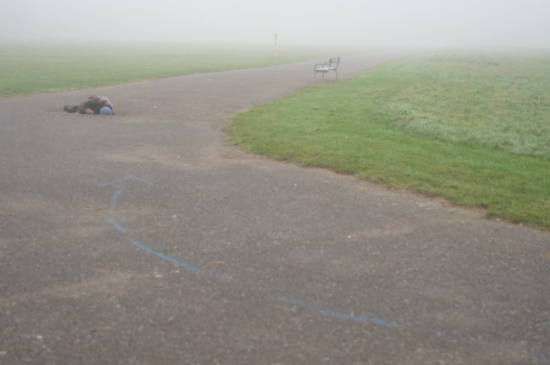
Haiguang dreams. Of his dead grandmother, his birthplace Lěng Shuǐ Jiāng in China, his performances and art projects and his job at a wholesale warehouse in Leipzig. But Haiguang not only dreams, he also films. Himself and his surroundings. Persistent, stoical, sometimes with a handheld camera, sometimes using a tripod – knowing that there is another layer under one’s everyday life that can only be perceived if one dares to search for meaning beyond the visible. If you dare to lie down on a crossing in the park and wait for what happens. If you dare to address the pressure to perform in Chinese society through a performance dragging a car tyre through Beijing. If you dare acknowledge your own fears and doubts and reveal them. Stylistically confident and constantly shifting between places and levels of meaning, Haiguang interlaces his life and dream in eight vignettes in which emotions condense and take on a form that goes beyond the personal. He interweaves the elements of his everyday life between the art academy and his parents’ coal shop in Changsha with equally precise and poetic descriptions. Thus, a puddle by the roadside can become the very place that connects him with his granny across space and time.

Luc-Carolin Ziemann
Trailer
Screenings & Tickets
Credits
Contact
lihaiguang02@gmail.com
Moving Sisters
Sisters Nazieh, Shazieh and Hanieh are from Afghanistan and live with their father at a refugee camp in Athens without any idea of how long they will stay there. Their mother has already arrived in Germany, where a new law now prevents the family from reuniting there as planned. They start growing up in a situation where waiting is the norm. The film accompanies the trio over seven years and shows the fragile normality they establish separately and together in the face of adversity: sport training sessions, language classes and shooting their own film scenes, which are marked by their experiences as refugees. Educator and filmmaker Christos Stefanou got to know the three sisters at the refugee camp, where he worked for five years as a teacher. Aware of the vulnerability of their situation and this phase in life, he follows a collaborative approach in his first feature-length documentary. Drawing on close-up observation, he captures the three sisters’ gestures, thoughts and everyday routines, which reveals their developmental steps and the passing of time not just in physical terms. And while their learning successes sometimes lose any meaning in the face of their constantly changing life situation, one essential question remains: will the family manage to get back together despite all the imponderabilities?
Tina Jany
Screenings & Tickets
Credits
Contact
christef@gmail.com
Nicole Nicole
Alberte and Nicole are mother and daughter, three decades apart. At 55 and 87, they still live together in a villa by Lake Geneva, having settled into a codependent dynamic: Nicole is reluctant to leave her mother, while Alberte struggles to let her go, fearing living alone. In a house filled with memorabilia, cats, and too many clocks, the familiar feels safe for the mother‑daughter duo who often doze off like synchronised swimmers. However, as time passes, the family grows concerned about Nicole’s autonomy. Nicole is considered neuroatypical, “ambivalent” regarding the perceived condition, and few facilities are equipped to provide adequate support. Nicole’s sister, Danielle, then decides to assist her in a search for a flat and a job. These scenes unfold alongside the family’s daily life and the intimate conversations in front of the camera. Nicole also embarks on a playful creative exercise with her filmmaker niece Lauren, imagining life’s many scenarios.
Sevara Pan
Contains depictions of mental health conditions
Trailer
Screenings & Tickets
Free entry
Credits
Contact
Petrolheads
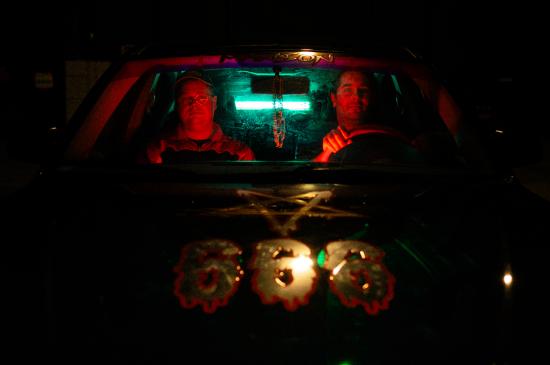
Martin doesn’t dream of a life full of riches. His greatest wish is a 1994 Honda Civic and a driver’s license. He joined his foster family at five months old. At nine, he received a diagnosis of autism, ADHD, and so-called attachment disorder. Then he met Casper, and the two formed a bond born out of their shared love for cars, Trabant jokes, and an understanding of each other’s struggles, shaped by their disabilities and early days spent in an orphanage that affected their self-esteem. Lensed by his brother, director Emil Langballe, with honesty and care, the film follows Martin as he is caught in a spiral of drug addiction and troubles. All the while, he and Casper continue patching up their Honda Civic. A film about ruptures and repairs, of cars and relationships, support systems, and the tenderness of friendship.
Sevara Pan
Contains depictions of drug-use, mental health conditions
Trailer
Screenings & Tickets
Credits
Contact
jasmina@verita-films.com
The Autoharp Crushing on Hot Guys
Franka Sachse
Contains mentions of mental health conditions
Screenings & Tickets
Free entry
Credits
Contact
festivals@famu.cz
Uncle Thuận
He is „always sad“, says Uncle Thuận. Connected via mobile phone with his family who are scattered across the world he sings sentimental songs about spring in Hanoi. Meanwhile, his wife Thúy tirelessly looks after the restaurant that the two have been managing in North Rhine-Westphalia for twenty years. They came to the GDR as contract workers at the age of 19. In conversations with their daughters, life stories unfold in which they were rarely expected to decide anything but always to work hard and to function. A role they accept without complaint and justify even today. But the protective shell accumulated over decades increasingly begins to show cracks. And somewhere in the endless routines and tasks of a restaurant kitchen which also structure the film, a question quietly emerges: the question of happiness. In Minh Anh Nguyễn, a post-migrant generation speaks up who regard contract work and racism in the GDR not as a closed chapter but as part of their history. Casual and very close to her protagonists, she tells of colonial legacies that have inscribed themselves into biographies and across generations. At the same time, she shows how this cycle can be broken: By the daughters asking questions which – even outside the Vietnamese community and above all in the East – are long overdue.
Grit Lemke
Trailer
Screenings & Tickets
Credits
Contact
nguyen.minh-anh@web.de