Filmtype
Accessibility
Custom type
Topic
Accessibility
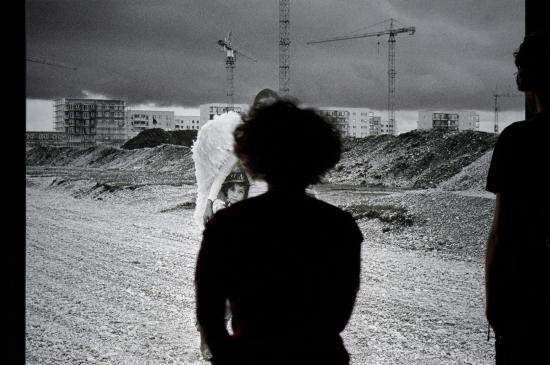
Maro’s Photo
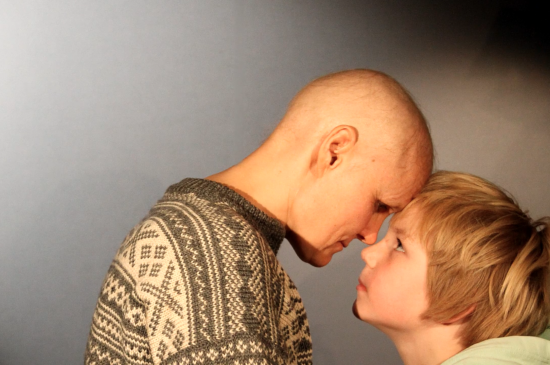
In the early 2000s, Maria Nikolaidou took a photo on Munich’s “Panzerwiese” (tank meadow): Her son Alexandros and another little boy playing war. A woman with angel’s wings wraps her arms protectively around the two of them. Twenty-three years later, mother and son return to the spot where the black and white photo was taken. Alexandros now uses the same camera to make a photo film about the image and also meets with his former playmate. Their voice-over memories and associations reveal different perspectives and moods. The history and stories behind a photograph are being reconstructed: What was overlooked at the time? Why were Alexandros’ grandparents not allowed to give him a gun? Who is the person on the hill in the background? In the end, a new image emerges.
Anke Leweke
Trailer
Screenings & Tickets
Free entry
Credits
Contact
a.murboeck@posteo.de
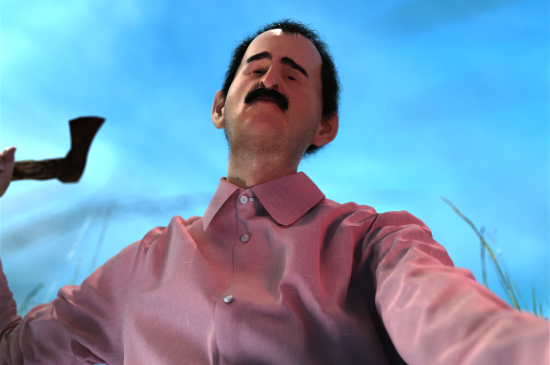
Melk
André Eckardt
Contains depictions of violence against animals, murder, physical violence
Screenings & Tickets
Credits
Contact
Mother Didn’t Know
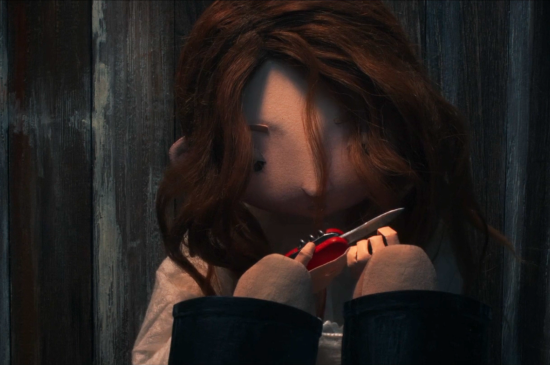
A girl is crying, carving scratches into the wood with a Swiss army knife – exactly as if they were flesh wounds. On top of that, she cuts off her hair. But she is not alone with her sadness: A tender “Nisse” (a household spirit) watches her. When she seems to vanish in the thicket of her dark thoughts, he drops a small injured bird in her way so that both can learn to fly. “Mother Didn’t Know” is a magical and dark tale of childhood depression and of the importance to recognise it and react without delay. The girl’s emotions are given ample space; the camera is close to her and her demons. All around, delicate dust motes float in the air like fairy dust. Killi’s film, though, could also be a tale about the burden of growing up, a burden that becomes unrelatable in retrospect. In any case, there are windows, exits, light – if you only look closely enough.
Marie Ketzscher
Contains depictions of mental health conditions
Screenings & Tickets
Credits
Contact
claus@trollfilm.no
Moving Sisters
Sisters Nazieh, Shazieh and Hanieh are from Afghanistan and live with their father at a refugee camp in Athens without any idea of how long they will stay there. Their mother has already arrived in Germany, where a new law now prevents the family from reuniting there as planned. They start growing up in a situation where waiting is the norm. The film accompanies the trio over seven years and shows the fragile normality they establish separately and together in the face of adversity: sport training sessions, language classes and shooting their own film scenes, which are marked by their experiences as refugees. Educator and filmmaker Christos Stefanou got to know the three sisters at the refugee camp, where he worked for five years as a teacher. Aware of the vulnerability of their situation and this phase in life, he follows a collaborative approach in his first feature-length documentary. Drawing on close-up observation, he captures the three sisters’ gestures, thoughts and everyday routines, which reveals their developmental steps and the passing of time not just in physical terms. And while their learning successes sometimes lose any meaning in the face of their constantly changing life situation, one essential question remains: will the family manage to get back together despite all the imponderabilities?
Tina Jany
Screenings & Tickets
Credits
Contact
christef@gmail.com
Mum’s Hair
Losing your hair through chemotherapy is a painful experience for many people, not least because a bald head displays one’s new vulnerability so blatantly. But Maja Arnekleiv, the daughter of Norwegian animation director Anita Killi, turns the steps of the transformation – the original mum’s hair, the near-baldness, the new growth which is so different from the pre-chemo hair – into a tribute to resilience, love and family solidarity even in difficult times of illness. In a pixilation documentary produced over a period of two years, she captures in 755 single frames (selected from more than 3,000) how she and her siblings comb, blow-dry, style, braid and spray Anita Killi’s hair, while Killi always has her eyes firmly on the viewers. Sometimes laughing, sometimes serious, always loving. In 2017, Marja Arnekleiv won the Golden Dove for this tender, very touching film which celebrates the mother of four, whatever she looks like.
Marie Ketzscher
Screenings & Tickets
Credits
Contact
claus@trollfilm.no
My Brilliant Father
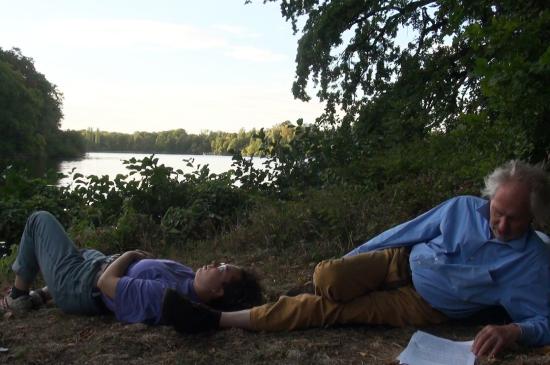
When the writer Jan Christ talks about himself and his work, the words take on a life of their own. “The asshole in which I exist”, he says, referring to his progressive dementia, which causes not only the loss of memory, but also of language and authority. He is working on his last great oeuvre, a “Buch vom Grunde” (Book from the Depth). He struggles for lofty words. As an artist, he supports the artistic work of his daughter, who accompanies him with her camera during his final eight years. He directs himself or allows himself to be directed, while the filmmaker insists and does care work at the same time. In between, we see a vixen roaming the nocturnal streets of Berlin. Tete Hoffmann’s portrait of her father is at once a tribute, a confrontation, a crafty game and a helpless observation of the disintegration of a beloved person. Who has the right here to get attention, and when? Is it still permissible to continue exploring when the father and the writer have drifted apart? Clinging to language is contrasted with the letting go of images. “You are a vixen”, the brilliant father tells his brilliant daughter.
Jan Künemund
Contains depictions of mental health conditions
Trailer
Screenings & Tickets
Credits
Contact
tetehoffmann@web.de