Films A–Z

Programme & Tickets

A-Z
Filters
Filter by
View by

Retrospective

The struggle for liberation of the people in Latin America in the 1960s/70s was a recurring theme of politically engaged film festivals on both sides of the Wall. The resulting connection between Leipzig, East Berlin and West Berlin is evidenced by the analogue film material of militant cinema from countries like Argentina, Chile or Cuba that is held in the archive of Arsenal Filminstitut and the German Federal Archives today.

Read more about the Retrospective.

Retrospective
Filmstill Eine Minute Dunkel macht uns nicht blind
Eine Minute Dunkel macht uns nicht blind
Walter Heynowski, Gerhard Scheumann, Peter Hellmich
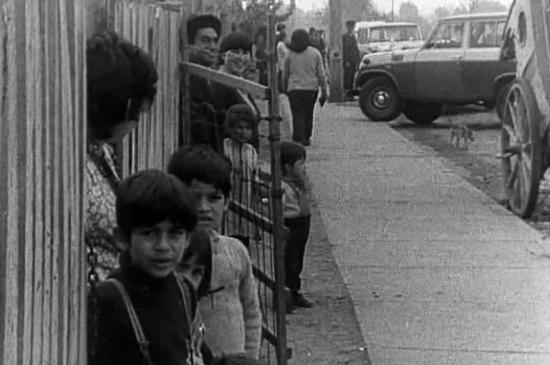
Two years after the military coup. People gather around the camera in the streets of Santiago. They say they can’t speak here. Everyone is afraid. And yet, Chile begins to speak.

Filmstill Eine Minute Dunkel macht uns nicht blind

Eine Minute Dunkel macht uns nicht blind

Eine Minute Dunkel macht uns nicht blind
Walter Heynowski, Gerhard Scheumann, Peter Hellmich
Retrospective
Documentary Film
GDR
1976
66 minutes
Spanish,
German
Subtitles: 
English
No Premiere

This documentary, whose title is a line from one of Pablo Neruda’s poems, is a snapshot of Chile after two years of military dictatorship. In the agitational Cold War rhetoric typical of Studio H & S, it portrays both representatives of the regime and the victims of the terror, who are beginning to organise themselves as they search for the arrested and disappeared. Walter Heynowski, Gerhard Scheumann and Peter Hellmich had spent several months in Chile in early 1973 to record Allende’s reform efforts as well as the machinations of the far-right forces. Hellmich stayed longer: On 11 September 1973, he managed to film the legendary footage of the bombing of the Presidential Palace, conducted the first interview with General Augusto Pinochet after the coup and filmed political prisoners in the Chacabuco concentration camp in the Atacama Desert. For the extremely risky interviews and filming of “Eine Minute Dunkel macht uns nicht blind”, Studio H & S had to send a West German team – Gerhard Biroth, George Boultwood and Frederico Füllgraf – to Chile. Their true intention behind the transparent pretext of “filming the landscape for the promotion of tourism” and documenting “the economic success of the Pinochet government” remained undetected, as Füllgraf remembers, despite constant surveillance and thanks to all kinds of tricks. This screening is the premiere of the restored and digitized version of the film which was supported by the Förderprogramm Filmerbe (Digitisation of German film heritage funding programme).

Florian Wüst

Screenings & Tickets DOK Leipzig Logo

29.10.
#434
CineStar 5
Teil der Kompilation
During Checkout you can apply discounts, your accreditation or season passes
29.10.2026
CineStar 5
#434
Teil der Kompilation
During Checkout you can apply discounts, your accreditation or season passes
Calendar

Credits DOK Leipzig Logo

Director
Walter Heynowski, Gerhard Scheumann, Peter Hellmich
Cinematographer
George Boultwood
Editor
Traute Wischnewski, Ilse Radtke
Producer
Studio H & S
Sound
Gerhard Biroth, Manfred Berger
Score
Sergio Ortega, Grupo Aparcoa

Contact DOK Leipzig Logo

Main Contact
Retrospective
Filmstill El primer año
El primer año
Patricio Guzmán
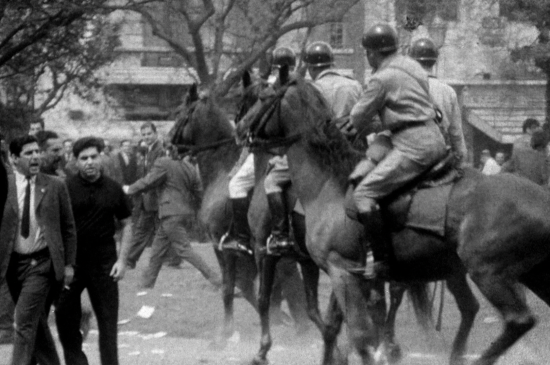
The first year under Allende’s popular government: Chile’s working class celebrates the victory and pitches in. But the right does everything in their power to sabotage the transition to a fairer society.
Filmstill El primer año

El primer año

El primer año
Patricio Guzmán
Retrospective
Documentary Film
Chile,
France
1972
100 minutes
Spanish,
French
Subtitles: 
English
No Premiere

“El primer año” documents the first year of the Unidad Popular: the rude awakening of the ruling classes of Chile as they are faced with the democratically elected socialist government. From the immediate economic sabotage of the right wing through celebrating workers, the situation of the Mapuche, the agrarian reform, the nationalisation of coal and copper mining and Fidel Castro’s visit, up to the “March of the Pots” by bourgeois women crying for bread, of which they have plenty, the cycle of achievements and difficulties is complete. Besides their journalistic interest, Patricio Guzmán and his collaborators sought to capture the atmospheric aspect of the departure towards a fairer society under Salvador Allende, which is what makes “El primer año” such a moving document of its time. Chris Marker offered to produce a French version with the help of the SLON film collective, which is preceded by photographs by Raymond Depardon, accompanied by a foreword on the history of Chile. Guzmán continued his work on the chronicle of events until he was forced to leave the country after the military coup of 11 September 1973. It was only in Cuban exile that he was able to successively finish his masterpiece “La Batalla de Chile” (1975-79) together with Pedro Chaskel. Each of its three parts was acclaimed at the International Leipzig Documentary and Short Film Week and the Berlinale Forum.

Florian Wüst

Screenings & Tickets DOK Leipzig Logo

29.10.
#433
CineStar 5
Teil der Kompilation
During Checkout you can apply discounts, your accreditation or season passes
29.10.2026
CineStar 5
#433
Teil der Kompilation
During Checkout you can apply discounts, your accreditation or season passes
Calendar

Credits DOK Leipzig Logo

Director
Patricio Guzmán
Cinematographer
Toño Ríos
Editor
Carlos Piaggio
Producer
La Escuela de Artes de la Comunicación de la Universidad Católica de Chile, Atacama Productions
Sound
Felipe Orrego
Sound Design
María Eugenia Rodríguez-Peña

Contact DOK Leipzig Logo

Main Contact
Alexandra Galvis
alexandra@bfdistribution.cl
Retrospective
Filmstill La hora de los hornos. Neocolonialismo y violencia
La hora de los hornos. Neocolonialismo y violencia
Fernando E. Solanas
A film like an incendiary device, a radical pamphlet. Like few other films, this call for the liberation of Argentina from oppression and violence moved the 1968 generation across the world.
Filmstill La hora de los hornos. Neocolonialismo y violencia

La hora de los hornos. Neocolonialismo y violencia

La hora de los hornos. Neocolonialismo y violencia
Fernando E. Solanas
Retrospective
Documentary Film
Argentina
1968
88 minutes
Spanish
Subtitles: 
English
No Premiere

A call for radical political change, an agitation pamphlet for the national liberation of Argentina: Like few other films, “La hora de los hornos” stirred the generation of 1968 all over the world. The more than four-hour-long film essay was banned for many years, not just in Argentina. Taking the form of a multilayered documentary collage, it is a masterful exploration of the possibilities of image-sound-editing which unfolds a panorama of the prevailing social and political conditions. “Neocolonialismo y violencia” analyses the colonisation of Latin America, its economic and cultural dependence on the industrialised states of the so-called First World, especially the USA, as well as the omnipresence of violence. The second part, “Acto para la liberación”, delivers a chronicle of Peronism and the resistance after Perón’s fall in 1955. “Violencia y liberación”, the shorter third part, openly advocates armed struggle. After two years of clandestine work by a small team around Fernando E. Solanas and Octavio Gentino, “La hora de los hornos” had its world premiere on 2 June 1968 at the Mostra Internazionale del Cinema Nuovo in Pesaro. The Friends of the German Cinematheque (today: Arsenal Filminstitut) screened the three-part film only a few weeks later on the occasion of the Berlinale. After the opening of the Arsenal cinema in January 1970 on Welserstraße in Berlin-Schöneberg, countless screenings of the distribution prints of the film followed at their own venue and elsewhere.

Florian Wüst

Contains depictions of physical violence, racism

Screenings & Tickets DOK Leipzig Logo

27.10.
#233
CineStar 5
Teil der Kompilation
During Checkout you can apply discounts, your accreditation or season passes
27.10.2026
CineStar 5
#233
Teil der Kompilation
During Checkout you can apply discounts, your accreditation or season passes
Calendar

Credits DOK Leipzig Logo

Director
Fernando E. Solanas
Script
Octavio Getino, Fernando E. Solanas
Cinematographer
Juan Carlos Desanzo
Editor
Juan Carlos Macías, Antonio Ripoll, Norma Torrado
Producer
Grupo Cine Liberación

Contact DOK Leipzig Logo

Main Contact
Victoria Solanas
Retrospective
Filmstill Nuestra voz de tierra, memoria y futuro
Nuestra voz de tierra, memoria y futuro
Marta Rodríguez, Jorge Silva
An indigenous community’s struggle for land and cultural self-determination in southwestern Colombia in the 1970s: Magic and myths strengthen the process of political organisation.
Filmstill Nuestra voz de tierra, memoria y futuro

Nuestra voz de tierra, memoria y futuro

Nuestra voz de tierra, memoria y futuro
Marta Rodríguez, Jorge Silva
Retrospective
Documentary Film
Colombia
1981
107 minutes
Spanish
Subtitles: 
English
No Premiere

Marta Rodríguez and Jorge Silva made their first appearance in Leipzig in 1972, with “Planas, testimonio de un etnocidio” (1971) in the retrospective “Film in the People’s Struggle for Freedom: Latin America” as well as in the television competition and in the cinema competition with “Chircales” (1972). Both films were awarded Golden Doves, Rodríguez and Silva became instant stars of the festival. In 1975, “Campesinos” brought them back to Leipzig. This film marks the beginning of their exploration of the centuries-old oppression of indigenous communities in the Cauca region in southwestern Colombia and their equally long resistance against colonial exploitation and dispossession. Years later, the theme culminated in “Nuestra voz de tierra, memoria y futuro”, in which they used some shots from “Campesinos”. Rodríguez and Silva document the process of political organisation in the Coconuco community during the land reform movement of the 1970s, with extensive critical collaboration by their protagonists. At the same time, it was an attempt to leave the naturalism of the documentary format behind and approach the subconscious mind of the indigenous culture, “to depict its magical world in all its complexity and beauty”, as Silva put it in a conversation with Peter B. Schumann in the information leaflet of the 1982 Berlinale Forum. The film re-celebrated its world premiere in its restored digital version at the 2019 Forum.

Florian Wüst

Screenings & Tickets DOK Leipzig Logo

30.10.
#533
CineStar 5
Teil der Kompilation
During Checkout you can apply discounts, your accreditation or season passes
30.10.2026
CineStar 5
#533
Teil der Kompilation
During Checkout you can apply discounts, your accreditation or season passes
Calendar

Credits DOK Leipzig Logo

Director
Marta Rodríguez, Jorge Silva
Cinematographer
Jorge Silva
Editor
Marta Rodríguez, Jorge Silva, Caíta Villalón
Producer
Fundación de Cine Documental in collaboration with the Instituto Cubano del Arte e Industria Cinematográficos
Sound
Ignacio Jiménez, Eduardo Burgos, Nora Drufovka
Score
Jorge López

Contact DOK Leipzig Logo

Main Contact
Arsenal – Institut für Film und Videokunst
Retrospective
Filmstill Yawar Mallku
Yawar Mallku
Jorge Sanjinés
A crime narrated in flashbacks: US development aid workers secretly sterilise indigenous women. A declaration of war against “Yankee imperialism” and Bolivia’s class society.
Filmstill Yawar Mallku

Yawar Mallku

Yawar Mallku
Jorge Sanjinés
Retrospective
Fictional Film
Bolivia
1969
70 minutes
Quechua,
Spanish
Subtitles: 
English
No Premiere

Jorge Sanjinés’ short film “Revolución” (1963) was one of the first Latin American films, beside the Cuban films, to be screened in Leipzig in 1964. With his documentary feature “Yawar Mallku” (Sangre de Condor), Sanjinés took a step towards a cinema that makes history. Told in flashbacks, the film is based on real events: US American development aid workers secretly sterilise indigenous women. The chief of a Quechua community discovers the crime; the village community takes revenge. He is finally shot down by the police and survives, badly injured. He is taken to town, but the rescue attempt fails: There is no money for a blood transfusion. The film challenges both “Yankee Imperialism” and the Bolivian class society. As a consequence of the initially banned public screening, the so-called Peace Corps had to leave the country. “Yawar Mallku” had its premiere in West Berlin as part of the 1970 Berlinale’s “Week of New Cinema: Latin America”. Thereafter the Friends of the German Cinematheque (today: Arsenal Filminstitut) showned Sanjinés’ film multiple times at the Arsenal Cinema over the years, including under the heading “Birth Control as Genocide” in the context of the First International Women’s Film Seminar in November 1973. It enjoyed the same esteem in the East: One of only three Latin American films found in the “Film-Blätter: Kurzmonographien zu klassischen Filmen" (Film Sheets: Brief Monographs on Classical films) of the GDR’s State Film Archive, “Das Blut des Condors” (The Blood of the Condor) is listed under No. 183.

Florian Wüst

Screenings & Tickets DOK Leipzig Logo

31.10.
#633
CineStar 5
Teil der Kompilation
During Checkout you can apply discounts, your accreditation or season passes
31.10.2026
CineStar 5
#633
Teil der Kompilation
During Checkout you can apply discounts, your accreditation or season passes
Calendar

Credits DOK Leipzig Logo

Director
Jorge Sanjinés
Script
Jorge Sanjinés, Óscar Soria
Cinematographer
Antonio Eguino
Editor
Jorge Sanjinés
Producer
Ukamau Ltd.
Score
Alfredo Domínguez, Ignacio Quispe, Alberto Villalpando

Contact DOK Leipzig Logo

Main Contact
Pedro Lijerón Vargas
pedro@ukamau.org