Topic
- Activism
- Animated Documentary
- Archival Footage
- Arts/Culture
- Coming of Age
- Digital Culture
- Eastern German
- Environment
- Experimental
- Family
- Gender
- History
- Human Rights
- Humour
- Labour/Economy
- LGBTQIA2S+
- Music
- Politics/Current Affairs
- Portrait/Biography
- Psyche/Mind
- Religion/Spirituality
- Social Issues
- Sports
- Underrepresented Communities
- War/Conflict
- Youth
Filmtype
Accessibility
Custom type
Topic
- Activism
- Animated Documentary
- Archival Footage
- Arts/Culture
- Coming of Age
- Digital Culture
- Eastern German
- Environment
- Experimental
- Family
- Gender
- History
- Human Rights
- Humour
- Labour/Economy
- LGBTQIA2S+
- Music
- Politics/Current Affairs
- Portrait/Biography
- Psyche/Mind
- Religion/Spirituality
- Social Issues
- Sports
- Underrepresented Communities
- War/Conflict
- Youth
Accessibility
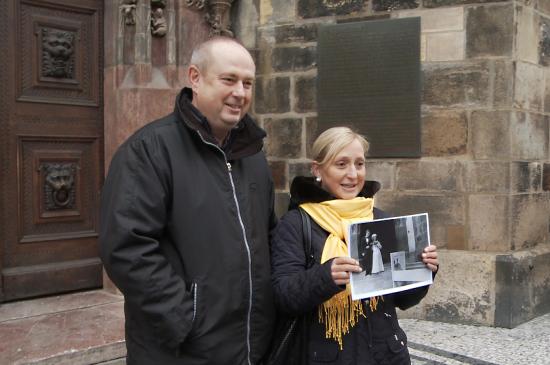
A Marriage Story
Carolin Weidner, DOK Leipzig Catalogue 2017
Screenings & Tickets
Credits
Contact
Afterlives
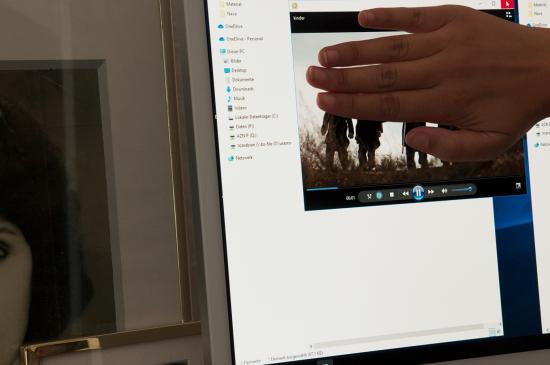
Through numerous video essays in film and media theory, Kevin B. Lee has played a key role in developing the form of the so-called desktop film. The elegant meta-staging reflects the fact that his digital desktop is research tool, media archive and distribution channel at the same time. Lee’s first feature-length film in this style dissects a historical work of propaganda: In 2014, the “Islamic State” terror militia, then at the height of its territorial power, published an elaborately produced film entitled “Flames of War”, which many media outlets compared to the aesthetics of Hollywood blockbusters. Lee manages to abstract and defamiliarize the extreme violence of those images, but comes to the realisation that their ideological power cannot be decoded by the tools of film analysis alone. “Afterlives” broadens the perspective and looks for alternative models in dialogue with experts from the arts, political education and terrorism studies: They reconstruct destroyed cultural assets, develop strategies against extremist radicalisation and study what motivates people to leave terrorist groups. In all this, Lee’s intelligent essay never loses sight of the colonialist western image of the Middle East.
Jan-Philipp Kohlmann
Contains mentions of torture
Contains depictions of war scenes, torture
Trailer
Screenings & Tickets
Credits
Contact
Auber 89
Anca Păunescu
Screenings & Tickets
Credits
Contact
raluca@lightdox.com
Bára – Diary of a Rockstar
Carolin Weidner
Screenings & Tickets
Credits
Contact
barbora.lochmanova@gmail.com
Transition
On New Year's Eve 2023, Thomas Heise begins to shoot his new film. It is to be called “Übergang”. His idea: A film in the “Heimatfilm” tradition revolving around Berlin’s Schönhauser Allee, where he has lived for decades. The author is to be a character in the film. A few months later, Heise falls seriously ill and dies. The small team continues to work on the film, unearthing unpublished texts and images from Heise’s estate and archives. “Images are […] encompassing”, Heiner Müller is quoted, but dreams curdle quickly. As soon as the personal story becomes a false image, it is gently but persistently put into perspective. A touching email exchange Heise had with a female high-school graduate in Karlsruhe who is searching for truth contains a whole primer for documentary filmmaking: “See what you would not otherwise see. Stay patient. […] Never expect financial security. Be happy about that. Because it won’t change.” Peter Badel and Chris Wright have not produced a hermetic artist tribute, but have, utterly in the spirit of Heise, pieced together fragments of lived history.
Jan Künemund
Contains mentions of death
Screenings & Tickets
Free entry
Credits
Contact
Tricontinental, Letter to Open in Case Of
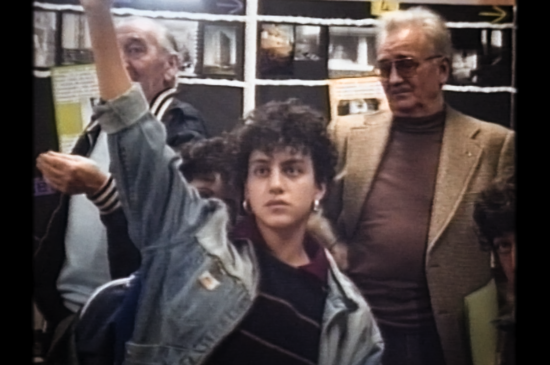
French critic and activist Michèle Firk died at the age of 31 and left little behind: several texts in the film magazine Positif, the draft script for a film never made, diary entries and a farewell letter in case of her death. Taking these writings as a starting point, Laura Cazador traces out her short, radical life in the late 1950s and 1960s. A life that is not just closely connected to film history, but also the left-wing discourses and anti-imperialistic movements of that era. Firk politicised during the Algerian War, got involved in Socialist Cuba and later joined the armed struggle in Guatemala. Ben Barka, Salvador Allende, Fidel Castro and Ché Guevara drift eerily through the fascinatingly dense archival material of this film – everything connected by the idea of the Tricontinental. The Havana conference that Firk worked on was supposed to be held in 1966 and call a new, non-aligned alliance between the countries of Asia, Africa and Latin America into being. Having trained as a film director herself in Cuba, Cazador grasps Firk as a point of contention and of reference for her own filmmaking in the present. The film thus reflects on the connection between cinephilia and political engagement not just based on Firk’s texts, but also with the images of the “Third Cinema”.
Jan-Philipp Kohlmann
Trailer
Screenings & Tickets
Credits
Contact
mrkolexa@gmail.com