Topic
- Activism
- Animated Documentary
- Archival Footage
- Arts/Culture
- Coming of Age
- Digital Culture
- Eastern German
- Environment
- Experimental
- Family
- Gender
- History
- Human Rights
- Humour
- Labour/Economy
- LGBTQIA2S+
- Music
- Politics/Current Affairs
- Portrait/Biography
- Psyche/Mind
- Religion/Spirituality
- Social Issues
- Sports
- Underrepresented Communities
- War/Conflict
- Youth
Filmtype
Accessibility
Custom type
Topic
- Activism
- Animated Documentary
- Archival Footage
- Arts/Culture
- Coming of Age
- Digital Culture
- Eastern German
- Environment
- Experimental
- Family
- Gender
- History
- Human Rights
- Humour
- Labour/Economy
- LGBTQIA2S+
- Music
- Politics/Current Affairs
- Portrait/Biography
- Psyche/Mind
- Religion/Spirituality
- Social Issues
- Sports
- Underrepresented Communities
- War/Conflict
- Youth
Accessibility
Kurtág Fragments
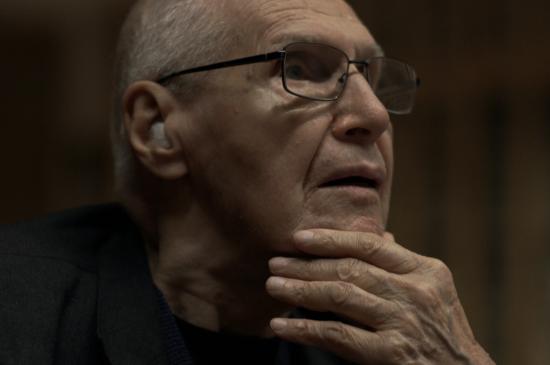
György Kurtág is a renowned Hungarian composer and a major figure of the post-war avant-garde. Born in 1926, he has now reached the age of 100, yet his mind remains wonderfully active. Living in an attic flat of the Budapest Music Center, he continues to work tirelessly with some of the world’s finest musicians who open their creations up to the humbling process of collaboration. Traversing geographies, the film takes us from his birth town of Lugoj to the different places that shaped him, from Transylvania to Budapest to Paris. It traces his early steps into the world of music, which began with dance and four‑hand piano sessions with his mother — something he later continued with his wife and pianist Márta. It then follows his life and many artistic collaborations, including with Icelandic pianist Víkingur Ólafsson and British cellist Steven Isserlis. The film also weaves in the work on his magnum opus “Fin de Partie”. “The map is not the territory; the notes are not music…” To pianists Halla Oddný Magnúsdottir and Ólafsson, Kurtág has “found a way of writing music that is impossible to play without going beyond the notes”. It’s a sentiment shared by Kurtág, who remarks that it’s not about his ideas but about whether the piece, played by a musician, truly “happens” to them. A portrait of a man who lives and breathes music, composing entire worlds brimming with emotion.
Sevara Pan
Trailer
Screenings & Tickets
Credits
Contact
kati.vajda@nfi.hu
Magic Atlas
Marie Ketzscher
Contains depictions of physical violence, drug-use, child abuse
Screenings & Tickets
Credits
Contact
g362005@163.com
My Brilliant Father
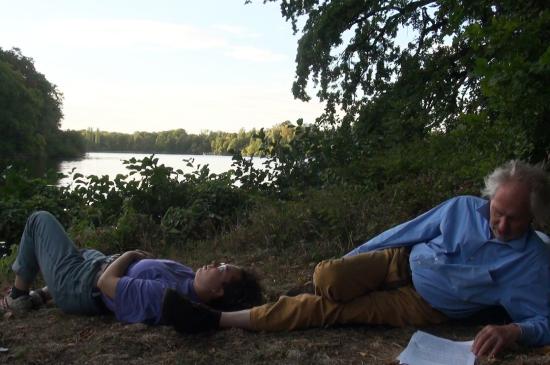
When the writer Jan Christ talks about himself and his work, the words take on a life of their own. “The asshole in which I exist”, he says, referring to his progressive dementia, which causes not only the loss of memory, but also of language and authority. He is working on his last great oeuvre, a “Buch vom Grunde” (Book from the Depth). He struggles for lofty words. As an artist, he supports the artistic work of his daughter, who accompanies him with her camera during his final eight years. He directs himself or allows himself to be directed, while the filmmaker insists and does care work at the same time. In between, we see a vixen roaming the nocturnal streets of Berlin. Tete Hoffmann’s portrait of her father is at once a tribute, a confrontation, a crafty game and a helpless observation of the disintegration of a beloved person. Who has the right here to get attention, and when? Is it still permissible to continue exploring when the father and the writer have drifted apart? Clinging to language is contrasted with the letting go of images. “You are a vixen”, the brilliant father tells his brilliant daughter.
Jan Künemund
Contains depictions of mental health conditions
Trailer
Screenings & Tickets
Credits
Contact
tetehoffmann@web.de
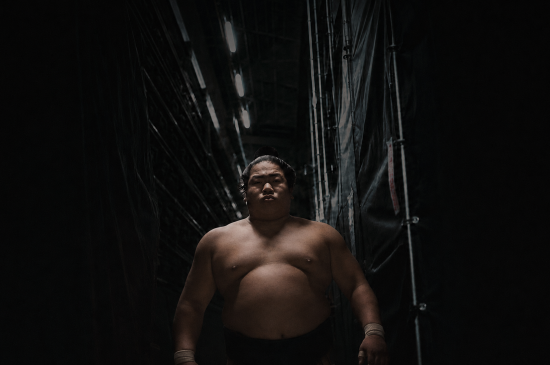
Sumo: Spirit Weighs Nothing
Carolin Weidner
Screenings & Tickets
Credits
Contact
ESPN
The Class of 1990
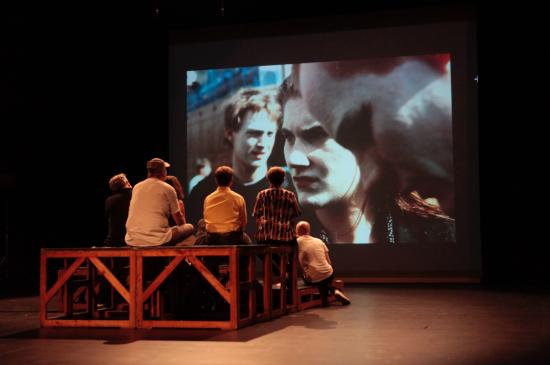
A theatre stage, Hamlet: the "call for freedom": The ones who declaim it have learned their craft. Right here, in Rostock, they had begun their studies a month before the German reunification. 35 years later, they remember. 1990: They come from different backgrounds, from East and West. They are strangers, live in prefabricated homes. And they quickly find themselves in a maelstrom sweeping across the whole of the East: Like the factories around them, the theatre school is to be "phased out". At the same time, the "Sonnenblumenhaus" is burning in Rostock-Lichtenhagen. They must learn to organise themselves. Like pieces of a jigsaw, individual tales, supplemented by archive images and historical rehearsal videos, come together to form a picture of those times. Embodied by today’s students, who re-enact scenes from the past, the past is reflected in the present. The story of the East German student movement of the early 1990s has been almost completely erased from the collective memory today. As in Rostock, nothing at Leipzig University reminds us that the existence of a number of scientific or artistic institutes and institutions is owed solely to their commitment. "Die Klasse von 1990" is an urgently needed corrective to a Western-dominated historiography, and a lesson in self-empowerment and democracy.
Grit Lemke
Screenings & Tickets
Credits
Contact
office@poison-berlin.com
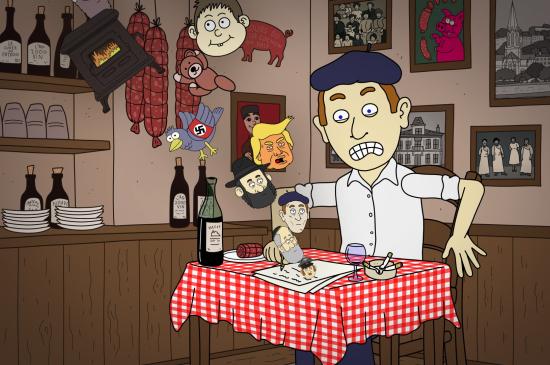
The Masturbator – The Adventures of Edgar Hilsenrath
Ola Staszel
Screenings & Tickets
Credits
Contact
antrag@majade.de
Two Mountains Weighing Down My Chest
Felix Mende
Screenings & Tickets
Credits
Contact
kkiefel@mediawan.com