Topic
- Activism
- Animated Documentary
- Archival Footage
- Arts/Culture
- Coming of Age
- Digital Culture
- Eastern German
- Environment
- Experimental
- Family
- Gender
- History
- Human Rights
- Humour
- Labour/Economy
- LGBTQIA2S+
- Music
- Politics/Current Affairs
- Portrait/Biography
- Psyche/Mind
- Religion/Spirituality
- Social Issues
- Sports
- Underrepresented Communities
- War/Conflict
- Youth
Filmtype
Accessibility
Custom type
Topic
- Activism
- Animated Documentary
- Archival Footage
- Arts/Culture
- Coming of Age
- Digital Culture
- Eastern German
- Environment
- Experimental
- Family
- Gender
- History
- Human Rights
- Humour
- Labour/Economy
- LGBTQIA2S+
- Music
- Politics/Current Affairs
- Portrait/Biography
- Psyche/Mind
- Religion/Spirituality
- Social Issues
- Sports
- Underrepresented Communities
- War/Conflict
- Youth
Accessibility
A Marriage Story
Carolin Weidner, DOK Leipzig Catalogue 2017
Screenings & Tickets
Credits
Contact
Baby Jackfruit Baby Guava
Seggen Mikael
Contains mentions of mental health conditions
Screenings & Tickets
Credits
Contact
tommaso@luminaliafilm.com
Blossoming
Carolin Weidner
Contains mentions of physical violence, suicide
Contains depictions of mental health conditions, death, child abuse
Screenings & Tickets
Free entry
Credits
Contact
ada@lumisenta.com
Child’s Mother
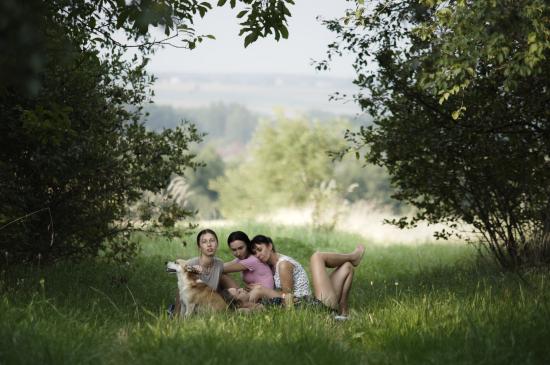
Anne (36) lives in Halle (Saale) and her life is in chaos. An apartment full of moving boxes, a yapping dog. She tells her mother on the phone that the electricity is about to be cut off again. Sometimes her daughter Leonie (14) drops by. Like her mother, she is at risk of slipping into drug addiction. Anne has already lost custody of her two younger children, too. The camera stays purely observational, captures loose scenes from the life of a woman who wants to take responsibility again. The film does not look for psychological explanations but shows Anne as she is. On her drives through the prefabricated housing estate, she seems isolated from her surroundings. Mother and daughter grow closer over an ice cream in a public square. Anne’s visit to her mother provides support but creates pressure, too. We grow ever closer to Anne, sharing her wish that she can become a role model for her daughter.
Anke Leweke
Contains mentions of addiction, death, drug-use
Screenings & Tickets
Credits
Contact
friedemann@inselfilm.de
Concrete Land
James Lattimer
Contains mentions of physical violence, racism, death, war scenes
Photosensitivity warning: Contains flashes of light that may trigger seizures for people with visual sensitivities.
Screenings & Tickets
Credits
Contact
bk.asmahan@gmail.com
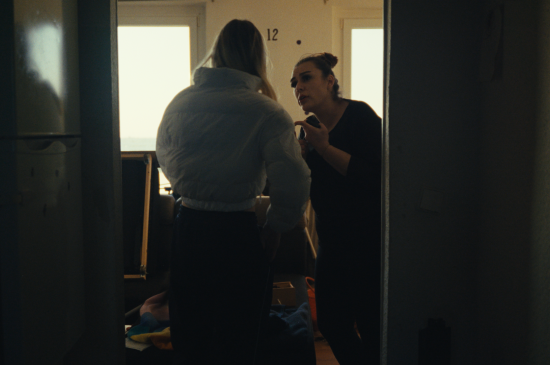
Moving Sisters
Sisters Nazieh, Shazieh and Hanieh are from Afghanistan and live with their father at a refugee camp in Athens without any idea of how long they will stay there. Their mother has already arrived in Germany, where a new law now prevents the family from reuniting there as planned. They start growing up in a situation where waiting is the norm. The film accompanies the trio over seven years and shows the fragile normality they establish separately and together in the face of adversity: sport training sessions, language classes and shooting their own film scenes, which are marked by their experiences as refugees. Educator and filmmaker Christos Stefanou got to know the three sisters at the refugee camp, where he worked for five years as a teacher. Aware of the vulnerability of their situation and this phase in life, he follows a collaborative approach in his first feature-length documentary. Drawing on close-up observation, he captures the three sisters’ gestures, thoughts and everyday routines, which reveals their developmental steps and the passing of time not just in physical terms. And while their learning successes sometimes lose any meaning in the face of their constantly changing life situation, one essential question remains: will the family manage to get back together despite all the imponderabilities?
Tina Jany
Screenings & Tickets
Credits
Contact
christef@gmail.com
My Brilliant Father
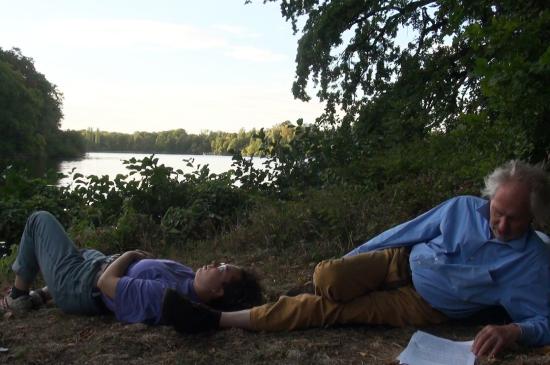
When the writer Jan Christ talks about himself and his work, the words take on a life of their own. “The asshole in which I exist”, he says, referring to his progressive dementia, which causes not only the loss of memory, but also of language and authority. He is working on his last great oeuvre, a “Buch vom Grunde” (Book from the Depth). He struggles for lofty words. As an artist, he supports the artistic work of his daughter, who accompanies him with her camera during his final eight years. He directs himself or allows himself to be directed, while the filmmaker insists and does care work at the same time. In between, we see a vixen roaming the nocturnal streets of Berlin. Tete Hoffmann’s portrait of her father is at once a tribute, a confrontation, a crafty game and a helpless observation of the disintegration of a beloved person. Who has the right here to get attention, and when? Is it still permissible to continue exploring when the father and the writer have drifted apart? Clinging to language is contrasted with the letting go of images. “You are a vixen”, the brilliant father tells his brilliant daughter.
Jan Künemund
Contains depictions of mental health conditions
Trailer
Screenings & Tickets
Credits
Contact
tetehoffmann@web.de
Nicole Nicole
Alberte and Nicole are mother and daughter, three decades apart. At 55 and 87, they still live together in a villa by Lake Geneva, having settled into a codependent dynamic: Nicole is reluctant to leave her mother, while Alberte struggles to let her go, fearing living alone. In a house filled with memorabilia, cats, and too many clocks, the familiar feels safe for the mother‑daughter duo who often doze off like synchronised swimmers. However, as time passes, the family grows concerned about Nicole’s autonomy. Nicole is considered neuroatypical, “ambivalent” regarding the perceived condition, and few facilities are equipped to provide adequate support. Nicole’s sister, Danielle, then decides to assist her in a search for a flat and a job. These scenes unfold alongside the family’s daily life and the intimate conversations in front of the camera. Nicole also embarks on a playful creative exercise with her filmmaker niece Lauren, imagining life’s many scenarios.
Sevara Pan
Contains depictions of mental health conditions
Trailer
Screenings & Tickets
Free entry
Credits
Contact
Private Universe
Lars Meyer, DOK Leipzig Catalogue 2012
Screenings & Tickets
Credits
Contact
Son of a Bitch
Franka Sachse
Contains depictions of murder, physical violence, nudity
Screenings & Tickets
Free entry
Credits
Contact
daniela@lancafilmes.com.br
Two Mountains Weighing Down My Chest
Felix Mende
Screenings & Tickets
Credits
Contact
kkiefel@mediawan.com
Uncle Thuận
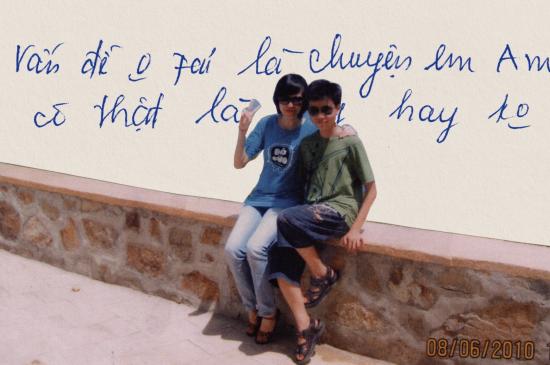
He is „always sad“, says Uncle Thuận. Connected via mobile phone with his family who are scattered across the world he sings sentimental songs about spring in Hanoi. Meanwhile, his wife Thúy tirelessly looks after the restaurant that the two have been managing in North Rhine-Westphalia for twenty years. They came to the GDR as contract workers at the age of 19. In conversations with their daughters, life stories unfold in which they were rarely expected to decide anything but always to work hard and to function. A role they accept without complaint and justify even today. But the protective shell accumulated over decades increasingly begins to show cracks. And somewhere in the endless routines and tasks of a restaurant kitchen which also structure the film, a question quietly emerges: the question of happiness. In Minh Anh Nguyễn, a post-migrant generation speaks up who regard contract work and racism in the GDR not as a closed chapter but as part of their history. Casual and very close to her protagonists, she tells of colonial legacies that have inscribed themselves into biographies and across generations. At the same time, she shows how this cycle can be broken: By the daughters asking questions which – even outside the Vietnamese community and above all in the East – are long overdue.
Grit Lemke
Trailer
Screenings & Tickets
Credits
Contact
nguyen.minh-anh@web.de