Topic
- Activism
- Animated Documentary
- Archival Footage
- Arts/Culture
- Coming of Age
- Digital Culture
- Eastern German
- Environment
- Experimental
- Family
- Gender
- History
- Human Rights
- Humour
- Labour/Economy
- LGBTQIA2S+
- Music
- Politics/Current Affairs
- Portrait/Biography
- Psyche/Mind
- Religion/Spirituality
- Science/Technology
- Social Issues
- Sports
- Underrepresented Communities
- War/Conflict
- Youth
Filmtype
Accessibility
Custom type
Topic
- Activism
- Animated Documentary
- Archival Footage
- Arts/Culture
- Coming of Age
- Digital Culture
- Eastern German
- Environment
- Experimental
- Family
- Gender
- History
- Human Rights
- Humour
- Labour/Economy
- LGBTQIA2S+
- Music
- Politics/Current Affairs
- Portrait/Biography
- Psyche/Mind
- Religion/Spirituality
- Science/Technology
- Social Issues
- Sports
- Underrepresented Communities
- War/Conflict
- Youth
Accessibility
Daughter of the Sun
The stories, myths and reality of the Sámi people are always closely linked to reindeer: travelling with them, keeping them as livestock. Where does this close tie come from? Anita Killi takes up – or imagines – a creation myth: Alits, who roams the land and enjoys his idleness, is gifted the close tie to the reindeers in the shape of Joik (yodelling) by the daughter of the sun when she has to leave him again. The singing magically attracts the animals. Killi captures the yearning in these sounds with poetic imagery and in Sámi language: In the embraces of Alits and the daughter of the sun, but also in the moments when they roam the meadows. Everything is interconnected in this sensual and haptic concept of nature.
Marie Ketzscher
Screenings & Tickets
Credits
Contact
claus@trollfilm.no
Heralds of the Monsoon
Marie Ketzscher
Screenings & Tickets
Credits
Contact
k.meera28@gmail.com
Herminda de la Victoria
In a large-scale operation, a group of homeless families occupy some wasteland on the outskirts of Santiago in March 1967. When the police attempt to evict them, a little girl, Herminda, dies in her mother’s arms. The eviction is called off, the people are allowed to stay and, without any existing infrastructure, build the settlement that exists to this day: Herminda de la Victoria. “Full of errors and mistakes, [the film] is my first approach to cinema, albeit to a ‘new cinema’, a Latin American cinema marked by underdevelopment. Nonetheless, the cinematic process, editing and sound represent a fully valid experience to me. ‘Herminda de la Victoria’ champions the interests of the homeless in Chile, suffers with them, is both testimony and a ‘document’ that forces you to take sides.” (Douglas Hübner)
Florian Wüst
Screenings & Tickets
Credits
Contact
I’d Love to See You
Documentary films for children rarely venture to this place: prison. Four kids in Belgium take us there. They show us the way from the entrance to the visiting area, where they visit their mother or father, usually twice a week. Prisons are definitely not designed for children and yet there are many who regularly enter them. In Belgium alone, more than 16,000 children have a parent behind bars. This film gives a voice to children of prison inmates who tell us how they cope with a situation they did not choose.
Lina Dinkla
Screenings & Tickets
Credits
Contact
sebastien@dokma.be
Inside – Outside
Philip Zengel
Screenings & Tickets
Credits
Contact
Look, We’re in Europe
Anca Păunescu
Trailer
Screenings & Tickets
Free entry
Credits
Contact
riad_arfin@hotmail.com
Nachtcafé
Light is burning in the old Franciscan church. The guests arrive to warm up and sleep. There is soup and Berliner doughnuts. When everyone has been taken care of, the light goes out again. A voice asks the filmmakers: Do you know Cologne well? A few photographs shown in-between a lot of black screen. People, places, Ingo talks. An alternative city tour from the perspective of persons living in the streets. Interesting even when you can’t make out much – possibly even art. At the end of this documentary miniature the light goes on again. And the protagonist steps out onto the street.
Jan Künemund
Contains mentions of drug-use, mental health conditions
Screenings & Tickets
Free entry
Credits
Contact
ute.dilger@khm.de
Neighborhood Autobahn
A cinematic observation of a landscape shaped and still marked by borders. Even 35 years after reunification, borders are still present in Marienborn. There is the memorial recalling the violence of the SED regime. Just a stone’s throw away, new borders have been added. Refugees now live in the former NVA barracks, which have been converted into a collective accommodation centre. To get here, they, too, had to cross borders, often clandestinely and at the risk of their lives. Now another border separates them from the outside world: a combination of wall and fence that inevitably brings to mind the former border security facilities of the GDR. In long tracking shots whose wide-angle view makes them seem almost otherworldly, the film observes this coexistence of opening and delineation. While the images make continuities visible, the sound brings out the subtle differences between the various locations.
Luc-Carolin Ziemann
Contains mentions of racism
Trailer
Screenings & Tickets
Free entry
Credits
Contact
luci.schwingen@gmail.com
The Autoharp Crushing on Hot Guys
Franka Sachse
Contains mentions of mental health conditions
Screenings & Tickets
Free entry
Credits
Contact
festivals@famu.cz
Tire dié
“Tire dié” begins with aerial shots of Santa Fe, Fernando Birri’s hometown. We hear a litany of statistical data that gradually and parodically turn into more and more trivial facts about the city. The camera approaches the town’s outskirts with their informal settlements, drops from its airy heights down to the eye-level of those who talk about their daily struggle for survival. Often it is the children who bring the necessary coins home. Every afternoon, they go begging along the nearby two-kilometre railway bridge. Running barefoot along the train that connects Santa Fe with Buenos Aires, they hold their hands up to the travellers at the windows, incessantly calling “tire dié” (throw a dime). The last third of the film, which marks the birth of the new Latin American cinema, is an equally breathtaking and harrowing montage of this daring endeavour.
Florian Wüst
Screenings & Tickets
Credits
Contact
You Should Dream of Flying
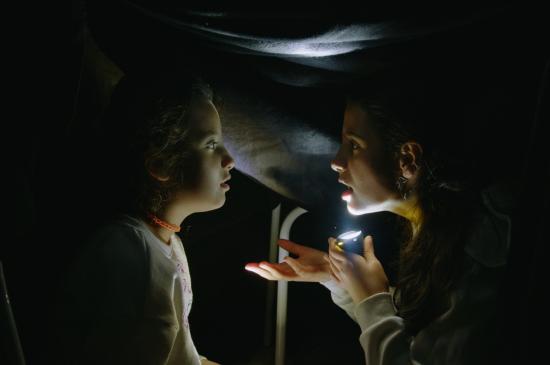
Playing hide and seek, reading out a school essay, taking a driving lesson. These scenes seem casual at first glance, but they turn out to be snapshots of life in exceptional circumstances. Only when the camera pulls back for a long shot does it reveal the refugee homes. The man behind the wheel drives briskly, explaining to the instructor that he obtained his driving license back home long ago. Two girls under a blanket tell each other stories of the time before they fled. What keeps this luminous round of scenes together is the hope of a return to normality.
Anke Leweke
Trailer
Screenings & Tickets
Free entry
Credits
Contact
laura.staab@gmx.de