Nobody’s too young for great cinema! At Kids DOK, we gather films for everyone from the age 3, 5 and 8 who is in the mood for funny and thought-provoking viewing experiences.
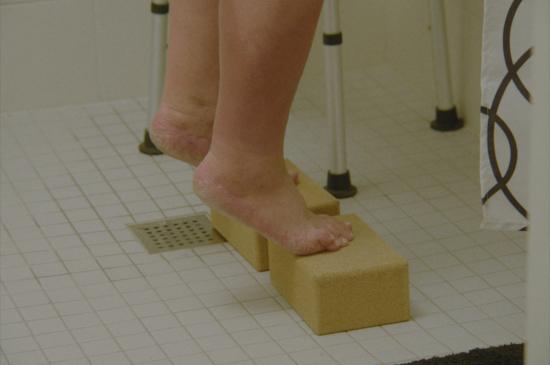
A queer auto-narrative about longing in three acts that addresses seemingly chaotic but systemically functioning cycles of attraction and revulsion, fear and desire, consumption and withdrawal, ecstasy and regret. While the film creates a timeless immediacy, the first-person narrator's commentary, in contrast, sounds like overthinking rather than an unquestioned moment of just-being-there. Whether at the club, by the lake or in the student cafeteria – one’s own judgement is always quicker than the question of how one is actually doing at that moment. But gradually something begins to change: An initially barely perceptible frequency shift sets in. The fragmented staccato of the first comments gradually gives way to a tale that gently settles in the interstices between dune, dream and reality.
Luc-Carolin Ziemann
Contains mentions of addiction, drug-use, mental health conditions, explicit sex scenes
Free entry
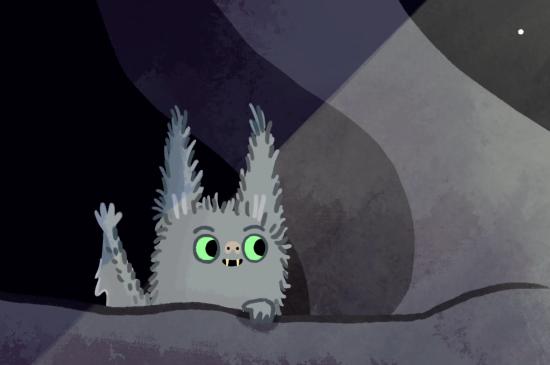
It looks like business as usual deep in the jungle – until one night a lantern lights up and magically attracts countless insects. They fall into a strange trance; even the bat family wake up. While the adults use the bright commotion to hunt, the young bat saves a glowworm, a fly and a moth. The next night, the dangerous light returns. The small bat is determined to try to save her new friends from its spell. A small adventure about friendship and mutual help.
Lina Dinkla
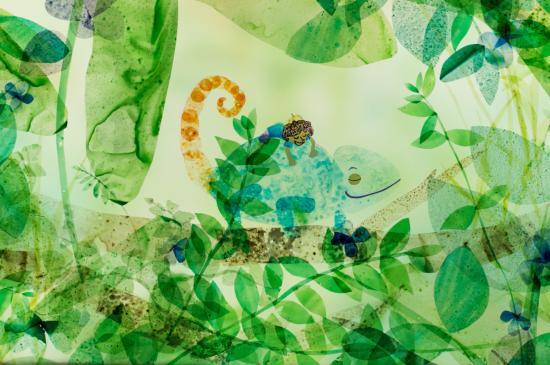
Camille, a very small girl, and the Chameleon who is afraid of heights are inseparable and love to play hide-and-seek in the forest. Camille loves to literally call the tune with her whistling. But one day she becomes too cocky and gives Chameleon an idea that will upset everything. Now they are lost in the green thicket. Can they get over their pride and find each other again?
Lina Dinkla
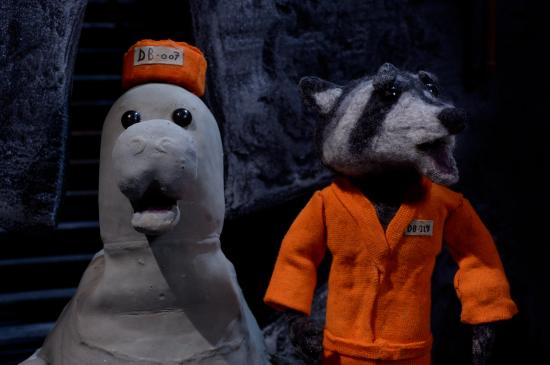
Sam, a grumpy raccoon, must share a prison cell with Bob, a loveable, but somewhat slow-witted manatee. Their chaotic prison break gradually reveals Sam’s soft core, while Bob remains unfailingly loyal to Sam. Will they manage to escape? Suddenly, that no longer matters so much, since together they have already experienced something much better: solidarity. A cute plasticine animation you will absolutely love.
Lina Dinkla
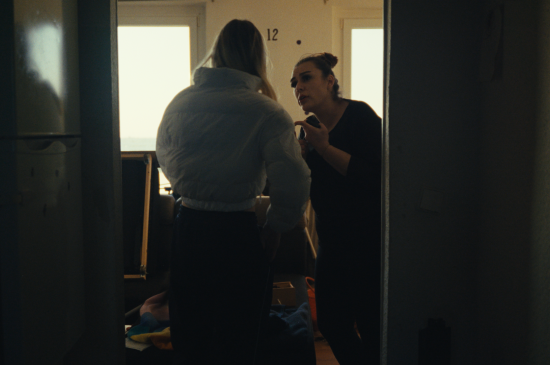
Anne (36) lives in Halle (Saale) and her life is in chaos. An apartment full of moving boxes, a yapping dog. She tells her mother on the phone that the electricity is about to be cut off again. Sometimes her daughter Leonie (14) drops by. Like her mother, she is at risk of slipping into drug addiction. Anne has already lost custody of her two younger children, too. The camera stays purely observational, captures loose scenes from the life of a woman who wants to take responsibility again. The film does not look for psychological explanations but shows Anne as she is. On her drives through the prefabricated housing estate, she seems isolated from her surroundings. Mother and daughter grow closer over an ice cream in a public square. Anne’s visit to her mother provides support but creates pressure, too. We grow ever closer to Anne, sharing her wish that she can become a role model for her daughter.
Anke Leweke
Contains mentions of addiction, death, drug-use
A tiny fish swims through a huge underwater world. It is loud and hectic at times. He would love nothing better than to hide behind the other fish. Is he too small to see the world as the big ones see it? Drawn in enchanting blue and green watercolours, this animation shows that there is no such thing as too big or too small. And wouldn’t it be lovely if we could all fly up to heaven in a big bubble in the end?
Lina Dinkla
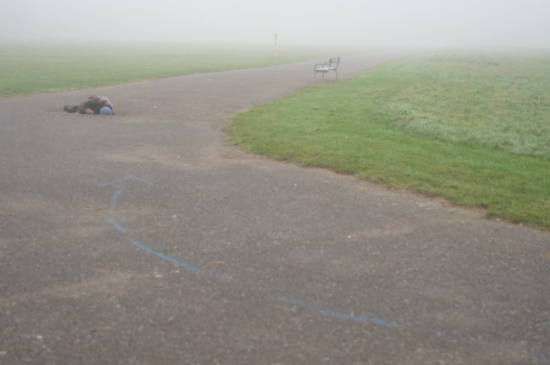
Haiguang dreams. Of his dead grandmother, his birthplace Lěng Shuǐ Jiāng in China, his performances and art projects and his job at a wholesale warehouse in Leipzig. But Haiguang not only dreams, he also films. Himself and his surroundings. Persistent, stoical, sometimes with a handheld camera, sometimes using a tripod – knowing that there is another layer under one’s everyday life that can only be perceived if one dares to search for meaning beyond the visible. If you dare to lie down on a crossing in the park and wait for what happens. If you dare to address the pressure to perform in Chinese society through a performance dragging a car tyre through Beijing. If you dare acknowledge your own fears and doubts and reveal them. Stylistically confident and constantly shifting between places and levels of meaning, Haiguang interlaces his life and dream in eight vignettes in which emotions condense and take on a form that goes beyond the personal. He interweaves the elements of his everyday life between the art academy and his parents’ coal shop in Changsha with equally precise and poetic descriptions. Thus, a puddle by the roadside can become the very place that connects him with his granny across space and time.
Luc-Carolin Ziemann
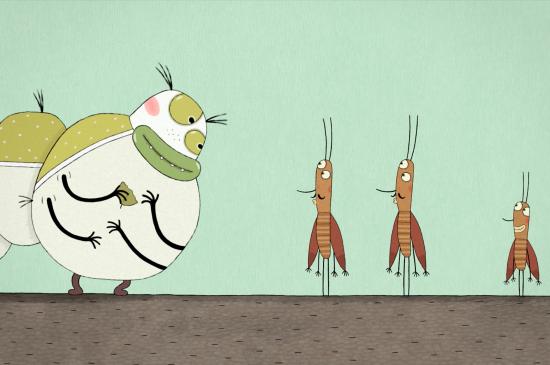
Three butterflies are absorbed in their graceful ballet routine, skilfully turning one pirouette after the other. They ignore the clumsy caterpillar that would really love to dance with them. Only the smallest butterfly reaches out a hand. What a surprise when the caterpillar pupates and hatches! Another episode of the KiKA show “Lenas Farm”.
Lina Dinkla
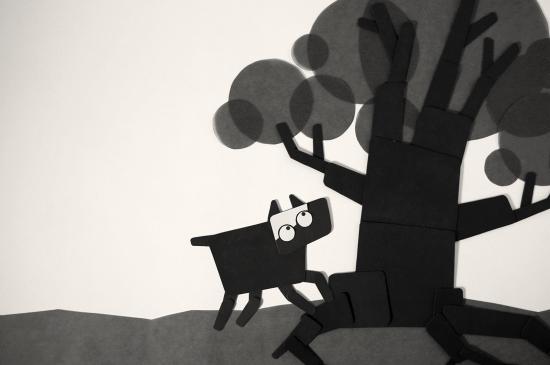
An animated film made entirely out of black and white paper – and told backwards, too! A white she-dog lives in the root cavity of a mighty tree. But what connects the two? Step by step, the film takes us back to their first encounter, when the dog was still a puppy. An equally unusual and strong friendship that withstands even a massive storm.
Lina Dinkla
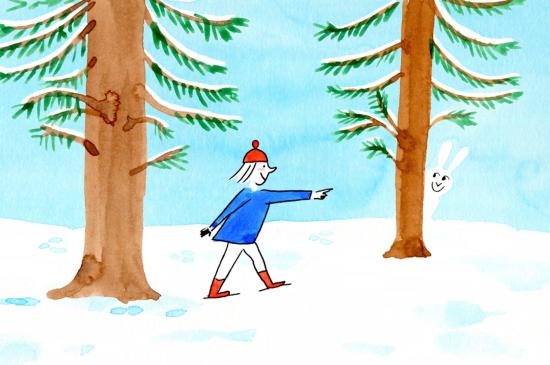
Anna is lured outside by a lively flurry of snow. As she wanders through the snow she comes across an unexpected playmate. A snow hare – or is it just her imagination after all? After playing, she settles down comfortably on the sofa with a hot cup of cocoa. A poetic film about the joys of winter, drawn in clear colours.
Lina Dinkla
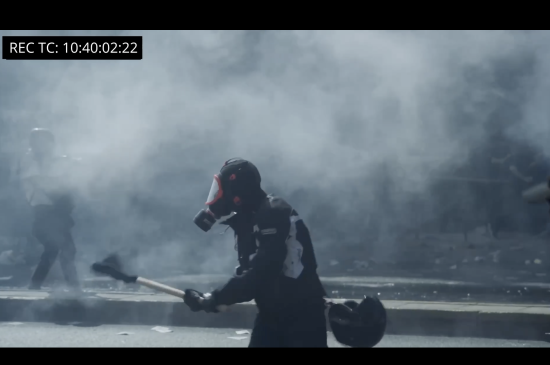
Abtin, a young anarchist from Iran, now lives in Greece after fleeing his own country. Back home he managed an underground library of banned books and was reportedly arrested, detained and tortured because he took part in protests. He continues his political struggle in Athen’s Exarchia district – a place of left-wing utopias and a fiercely contested site of gentrification: He joins the movement for refugees, squats in houses, protests against illegal pushbacks and fights for alternative ways of living, though his own situation is highly precarious, because every contact with the state can jeopardise his residence status. Director Jasmine Alakari follows Abtin over the course of a year, experiences his rage, hope and powerlessness, but also euphoria and solidarity. Time and again, the film returns to the question of how much political activism should be allowed to shape one’s life and what role violence plays in this. Meanwhile, the conflict with the police comes to a head in the street and Abtin finds himself in the crosshairs of the state. Alakari keeps filming but realises that she must also examine her own role. What does it mean to be an observer? How far can a film visualise the fears and hopes of a person who does not have the freedom to escape this situation? “Free Zone” has no easy answer to this question but passes it on. To us – the audience.
Luc-Carolin Ziemann
Contains depictions of physical violence
“How long have you known each other?” – “Six funerals.” Having grown old as a gay man is a privilege in the wake of the Aids crisis. At “Lebensort Vielfalt”, a Berlin housing project for lesbian, gay, bisexual, trans and intersexual persons, lived experiences are exchanged among three generations. They used to be pigeonholed, today children might just be allowed to learn to speak before they define themselves. A wild kind of growing up and ageing. All residents share the desire to be safe, even from having-to-explain-themselves. The camera roams the house, crosses the corridor, moves from one balcony to another, looks out of the window onto the street, develops new perspectives. Social backsliding is registered; sometimes new happiness is found. On deceased persons’ birthdays, the raspberry cake is cut. Falling asleep, the sound of riot rises again.
Jan Künemund
Contains mentions of discrimination against LGBTQIA2S+ persons
Free entry
International Leipzig Festival for Documentary and Animated Film
26 October to 1 November 2026
Leipziger Dok-Filmwochen GmbH
Katharinenstraße 17
04109 Leipzig
Germany
info [at] dok-leipzig [dot] de (info[at]dok-leipzig[dot]de)
+49 (0)341 30864-0