The Young Eyes films are a perfect match for all over 12 and are nominated for the Young Eyes Award, chosen by a jury of people aged 12 to 16.
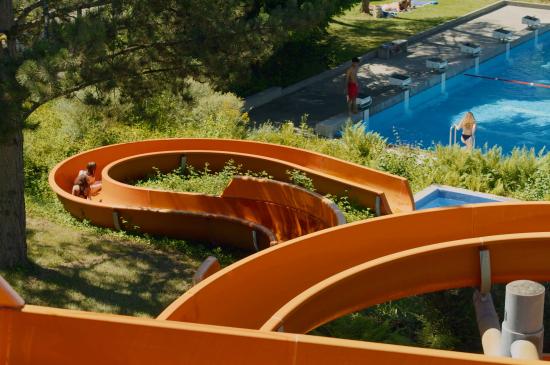
A public swimming pool complex in the middle of a forest which is soon to be renovated: between water slides, French fries, TikTok and sun cream, six teenagers spend the long summer days in the “Badi”, as outdoor pools are called in Swiss German. It is a place to discuss, laugh, try things out and simply hang out together. Whether on the grass, in the water or between the different pools, their conversations revolve around everything that currently moves them. This sun-kissed film accompanies these adolescents at a moment of transition. They talk about the past, think about the future and try to find out who they are and how they will find their place in a changing world. The film stays close to their glances, conversations and encounters, taking an unvarnished look into the inner world of these adolescents – their curiosities, their humour, their contradictions and their insecurities. For one summer long, the Badi becomes a place where childhood and future can exist alongside each other. And while the orange slide is dismantled, the question of what will remain of this summer bubbles up through the water.
Lina Dinkla
Free entry
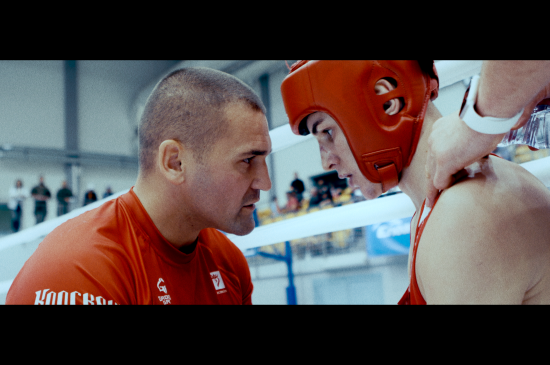
Łukasz dreams of becoming a professional boxer. His mother Monika supports him as much as she can. But the fact that this means he has to move to a sport boarding school over 500 kilometres away is something she can’t fathom. For who will do his washing there and make sure that he turns up to training on time? For Łukasz, the move is a step towards independence, but also a test of his abilities among like-minded people. Between hard training, new friendships and first love, the boarding school doesn’t just become a springboard for his sporting career, but also the place where he comes of age. Over five years, Adam Roszkowski accompanies his taciturn protagonist on his way to the Polish junior championships. In a blend of observation and discreet staging, everyday training routines, family moments and a first date come together to form a narrative that is so close to its characters that the documentary format almost melts into the background. Entirely indebted to the principle of show, don’t tell, “Growing Up” also gives an account of the dedication needed for competitive sport and the price it carries as well as of the silent battles needed to go one’s own way.
Tina Jany
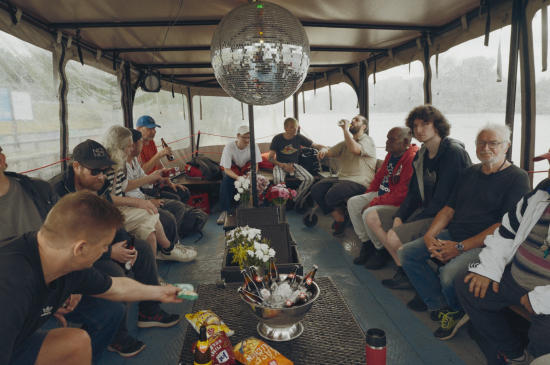
Schnapps is carefully poured into hip flasks and handed to the men. Their faces are marked by the traces of homeless life. A housing project in Berlin Kreuzberg gives them more than a roof over their head. The people who work here listen to them, accompany them to the doctor and hand out controlled amounts of alcohol. The project’s approach is consistently addiction-accepting – without the enforcement of abstinence and with the goal of relieving the affected persons from existential pressure. In this protected space, the men can breathe freely again after many years of living in the streets, rediscover their own personality and dignity. The camera follows some of the residents and social workers over several years, always at eye-level, showing the work of this institution and leaving space for the men’s personal stories. A fragile community emerges in front of the lens.
Anke Leweke
Contains mentions of addiction, death, mental health conditions, drug-use
Contains depictions of addiction
Free entry
Sisters Nazieh, Shazieh and Hanieh are from Afghanistan and live with their father at a refugee camp in Athens without any idea of how long they will stay there. Their mother has already arrived in Germany, where a new law now prevents the family from reuniting there as planned. They start growing up in a situation where waiting is the norm. The film accompanies the trio over seven years and shows the fragile normality they establish separately and together in the face of adversity: sport training sessions, language classes and shooting their own film scenes, which are marked by their experiences as refugees. Educator and filmmaker Christos Stefanou got to know the three sisters at the refugee camp, where he worked for five years as a teacher. Aware of the vulnerability of their situation and this phase in life, he follows a collaborative approach in his first feature-length documentary. Drawing on close-up observation, he captures the three sisters’ gestures, thoughts and everyday routines, which reveals their developmental steps and the passing of time not just in physical terms. And while their learning successes sometimes lose any meaning in the face of their constantly changing life situation, one essential question remains: will the family manage to get back together despite all the imponderabilities?
Tina Jany
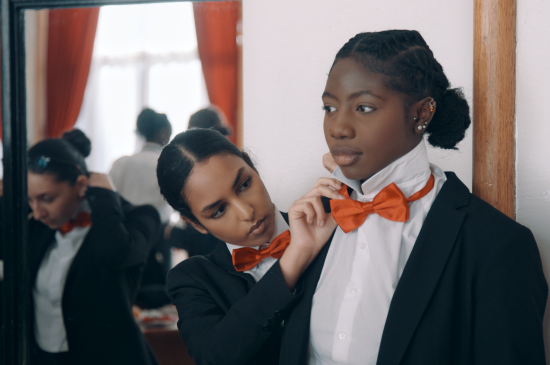
At a vocational college for the hotel industry, Alma, Moussa, Chaïli, Sarah and their classmates swap their everyday clothes, smartphones and chewing gum for uniforms and serving trays. At the college restaurant and in the classroom, they learn the rules and precisely processes linked to French restaurant service: a field in which tradition, discipline and perfection are a priority. Strict, yet fair, the teachers convey the value of a profession that demands patience and putting one’s needs to the side above all else. Between teaching sessions and the different components of service, the portrait of a generation confronted with the expectations of the labour market comes into focus: they need to learn a profession and conform while simultaneously looking for recognition and their own path. The film observes these young people in their training routines with sympathy and attentiveness and explores the contrasts between the idealised image of gastronomy and the harsh reality. For them, this training isn’t always a decision based on conviction, but merely one of the few possible paths into professional life. A lively, unadorned look at becoming an adult and looking for one’s place in a future that offers little and demands many compromises.
Lina Dinkla
International Leipzig Festival for Documentary and Animated Film
26 October to 1 November 2026
Leipziger Dok-Filmwochen GmbH
Katharinenstraße 17
04109 Leipzig
Germany
info [at] dok-leipzig [dot] de (info[at]dok-leipzig[dot]de)
+49 (0)341 30864-0