Films A–Z

Programme & Tickets

A-Z
Filters
Filter by
View by

Glossary AZ - Content » fullInternationalTitle

Retrospective

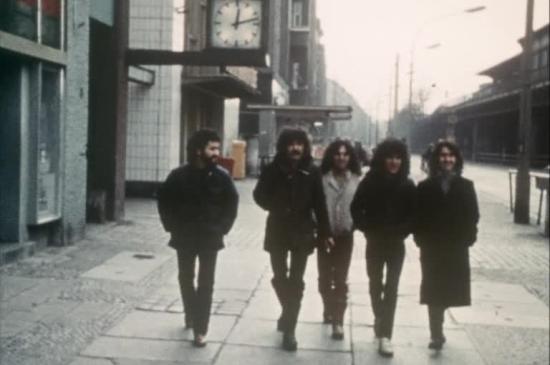
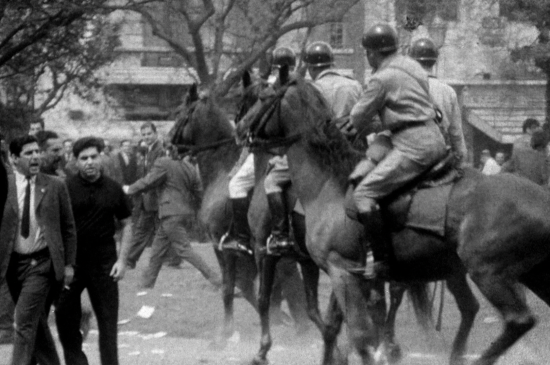
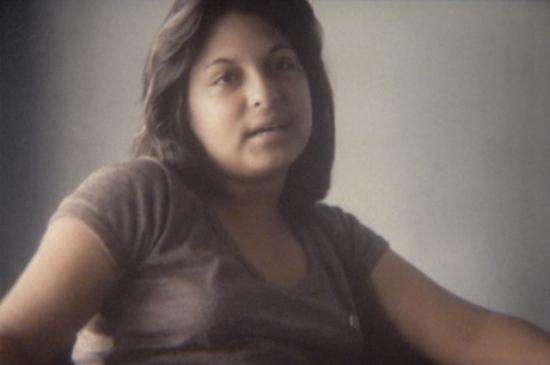
The struggle for liberation of the people in Latin America in the 1960s/70s was a recurring theme of politically engaged film festivals on both sides of the Wall. The resulting connection between Leipzig, East Berlin and West Berlin is evidenced by the analogue film material of militant cinema from countries like Argentina, Chile or Cuba that is held in the archive of Arsenal Filminstitut and the German Federal Archives today.

Read more about the Retrospective.

Hommage: Helena Třeštíková
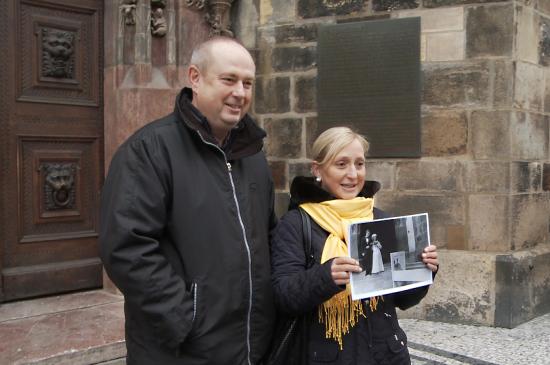
Filmstill A Marriage Story
A Marriage Story
Helena Třeštíková
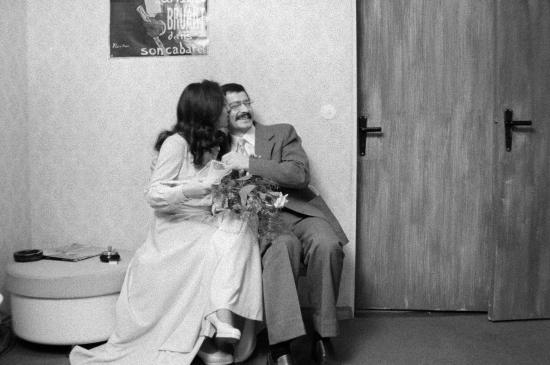
Over three decades, Helena Třestíková observes the seemingly ordinary marriage of Ivana and Vaclav. Until we realize that “ordinary” can only exist for the casual observer.

Filmstill A Marriage Story

A Marriage Story

Strnadovi
Helena Třeštíková
Hommage: Helena Třeštíková
Documentary Film
Czech Republic
2017
102 minutes
Czech
Subtitles: 
English
No Premiere
Prague-based filmmaker Helena Třeštíková has been filming marriage stories since the early 1980s, resulting in several long-term documentaries. Ivana and Václav’s everlasting marriage covenant is the subject of observation in this episode, which ranges from the day before the wedding to the present day. Back then, in December 1980, Ivana is 21 years old and Václav 24. Both study architecture and marry “because we like each other. And other things. Things better not talked about.” The first child is born shortly after the wedding. Třeštíková is obviously attracted to certain places she keeps returning to, but mostly to people and the way they try to give their lives meaningful directions. In this “Marriage Story”, we discern an incredible desire for expansion and growth which becomes evident in an accumulation of objects, children and responsibilities – one of the underlying motives of the Strnads’ marriage which gradually unfolds over 35 years together.
Carolin Weidner, DOK Leipzig Catalogue 2017


Screenings & Tickets DOK Leipzig Logo

30.10.
#573
Passage Kinos Wintergarten
A Marriage Story
During Checkout you can apply discounts, your accreditation or season passes
30.10.2026
Passage Kinos Wintergarten
#573
A Marriage Story
During Checkout you can apply discounts, your accreditation or season passes
Calendar

Credits DOK Leipzig Logo

Director
Helena Třeštíková
Script
Helena Třeštíková
Cinematographer
David Cysař, Vlastimil Hamerník, Jan Malíř, Miroslav Souček, Ervín Sanders, Jiří Chod, Robert Novák, Antonín Kutík
Editor
Jakub Hejna
Producer
Kateřina Černá, Pavel Strnad
Co-Producer
Czech Television
Sound
Richard Müller

Contact DOK Leipzig Logo

Main Contact
Daniel Vadocký
Retrospective
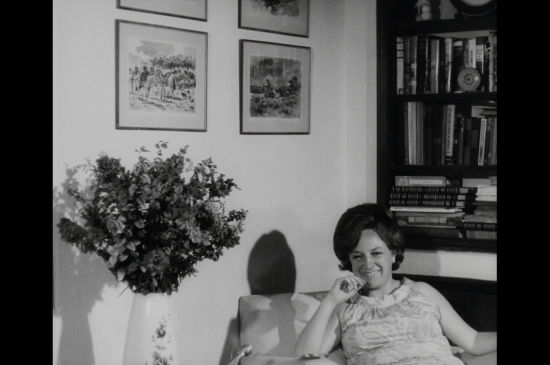
Filmstill Abastecimiento
Abastecimiento
Raúl Ruiz
A woman from a bourgeois background and the socialist Minister for Economic Affairs talk to each other and at cross-purposes via tape: a snapshot of the deeply divided Chilean society.
Filmstill Abastecimiento

Abastecimiento

Abastecimiento
Raúl Ruiz
Retrospective
Documentary Film
Chile
1973
15 minutes
Spanish
Subtitles: 
English
No Premiere

Raúl Ruiz was part of the militant cinema movement that put itself in the service of the Chilean Popular Front, but remained an outsider. He employed experiment and irony to dissect social contradictions. In “Abastecimiento”, Ruiz addresses the supply problems under the Unidad Popular government, confronting the views of a woman from a bourgeois background with those of the socialist Minister for Economic Affairs. He follows this with a depiction of the activities of the Juntas de Abastecimiento y Precios (JAP), locally organised committees for the control and just distribution of food and everyday goods. The provocative juxtaposition paints a picture of an impossible dialogue. The film was banned at the time and was believed lost for ages. It was only recently rediscovered. Leipzig was not the place for the feature film director who emigrated to Paris after the military coup, but Ruiz was a frequent guest at the Berlinale Forum.

Florian Wüst

Screenings & Tickets DOK Leipzig Logo

29.10.
#434
CineStar 5
Teil der Kompilation
During Checkout you can apply discounts, your accreditation or season passes
29.10.2026
CineStar 5
#434
Teil der Kompilation
During Checkout you can apply discounts, your accreditation or season passes
Calendar

Credits DOK Leipzig Logo

Director
Raúl Ruiz
Cinematographer
Sergio Mihovilovic
Producer
Chile Films

Contact DOK Leipzig Logo

Main Contact
With kind support of
Retrospective
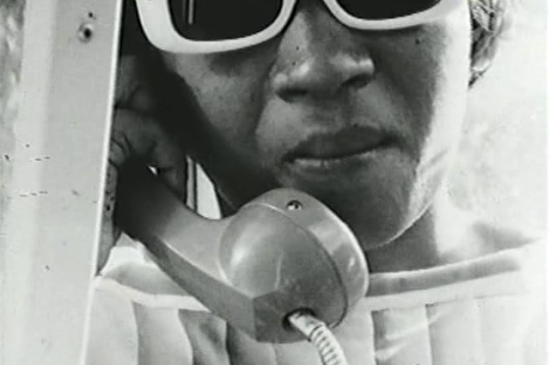
Filmstill Caracas: dos o tres cosas
Caracas: dos o tres cosas
Ugo Ulive
Radio, advertising, Caracas. Their paths cross, yet the people never meet. An experimental collage of social realities in Venezuela in the late 1960s.
Filmstill Caracas: dos o tres cosas

Caracas: dos o tres cosas

Caracas: dos o tres cosas
Ugo Ulive
Retrospective
Documentary Film
Venezuela
1969
16 minutes
Spanish
Subtitles: 
English
No Premiere

Ugo Ulive left his native Uruguay in 1967 to move to the Venezuelan capital of Caracas, where two years later he realised three short films at the newly founded Centro de Cine Documental de la Universidad de los Andes: “Caracas: dos o tres cosas”, “Diamantes” and “Basta!”. The latter was part of the Leipzig retrospective “Film in the People’s Struggle for Liberation: Latin America” in 1972. Inspired by Antonin Artaud’s concept of the “Theatre of Cruelty”, it stands out for disturbing images of an autopsy that reveal the degree of dehumanisation under the influence of imperialism. In “Caracas: dos o tres cosas”, also in the form of an experimental collage, Ulive, roaming the streets of Caracas with his camera, contrasts the public face of a divided society with audio fragments from radio, advertising and pop music.

Florian Wüst

Screenings & Tickets DOK Leipzig Logo

31.10.
#633
CineStar 5
Teil der Kompilation
During Checkout you can apply discounts, your accreditation or season passes
31.10.2026
CineStar 5
#633
Teil der Kompilation
During Checkout you can apply discounts, your accreditation or season passes
Calendar

Credits DOK Leipzig Logo

Director
Ugo Ulive
Cinematographer
Ugo Ulive, Fernando Toro, Roberto Siso
Producer
Centro de Cine Documental de la Universidad de Los Andes

Contact DOK Leipzig Logo

Main Contact
Arsenal – Institut für Film und Videokunst
Retrospective
Filmstill Chile lebt
Chile lebt
Juan Forch, Michael Börner
Artists in exile make visible the solidarity with Chile in the wake of 11 September 1973: a celebration of colours and shapes in opposition to the dictatorship. All in just one minute.
1976
Filmstill Chile lebt

Chile lebt

Chile lebt
Juan Forch, Michael Börner
Retrospective
Animated Film
GDR
1976
1 minute
without dialogue
Subtitles: 
None
No Premiere

The Europe-wide protests against Chile’s military dictatorship were expressed not only by political activism, but by a host of artistic actions. The colourful aesthetics of the Unidad Popular’s street art, popularised by the Ramona Parra Brigades, became a visual trademark. Based on this model, the Brigada Pablo Neruda, for example, whose members included well-known Chilean artists exiled in Paris like José Balmes, Gracia Barrios and Guillermo Núñez, realised a 60-metre-long mural on the fringes of documenta 6 in Kassel in 1977. Its creation was documented in Franz Lehmkuhl’s film “Chilenische Wandmalerei” (1977–80), screened in Leipzig in 1980. In his agitation film “Chile lebt”, co-produced with Michael Börner, the Chilean journalist and filmmaker Juan Forch uses pictures of the Brigada Pablo Neruda to express what keeps hope in his homeland alive: international solidarity. In 1979, Forch returned to Chile from exile in the GDR.

Florian Wüst

Screenings & Tickets DOK Leipzig Logo

01.11.
#733
CineStar 5
Teil der Kompilation
During Checkout you can apply discounts, your accreditation or season passes
01.11.2026
CineStar 5
#733
Teil der Kompilation
During Checkout you can apply discounts, your accreditation or season passes
Calendar

Credits DOK Leipzig Logo

Director
Juan Forch, Michael Börner
Cinematographer
Michael Börner
Editor
Juan Forch, Michael Börner
Producer
DEFA-Studio für Trickfilme
Sound
Heinz Kaiser
Animation Technique
Cutout, Collage

Contact DOK Leipzig Logo

Main Contact
Retrospective
Filmstill Eine chilenische Hochzeit
Eine chilenische Hochzeit
Rainer Ackermann, Valentin Milanow
A young Chilean couple gets married in exile in East Germany. There is joyful celebration, but sadness lingers on the guests’ faces: memories of imprisonment and torture.
Filmstill Eine chilenische Hochzeit

Eine chilenische Hochzeit

Eine chilenische Hochzeit
Rainer Ackermann, Valentin Milanow
Retrospective
Documentary Film
GDR
1977
8 minutes
German
Subtitles: 
English
No Premiere

In 1977, Valentin Milanow, a Bulgarian student at the GDR Academy of Film and Television, sat in at the DEFA Studio for Documentary Films. Director Rainer Ackermann was assigned as his mentor. Milanow came up with the idea of portraying the reality of life of exiled Chileans in the GDR. He was friends with a young couple, Alejandra Holzapfel and José Fuica, who lived in the same prefabricated housing estate in Potsdam-Babelsberg. She studied veterinary medicine, he was training to be a teacher of Marxism-Leninism. Milanow was allowed to film their wedding. On the fringes of the seemingly happy celebration, conversations turn to memories of interrogations and torture by the military junta and worries about relatives who were left behind. What the bride herself did not reveal at the time: As a leftist underground fighter she had been exposed to the worst abuse in the “Venda Sexy” prisoners’ camp and others. Today, this place is the memorial site Asociación de Memoria y Derechos Humanos Irán 3030. It is run by Alejandra Holzapfel.

Florian Wüst

Screenings & Tickets DOK Leipzig Logo

01.11.
#733
CineStar 5
Teil der Kompilation
During Checkout you can apply discounts, your accreditation or season passes
01.11.2026
CineStar 5
#733
Teil der Kompilation
During Checkout you can apply discounts, your accreditation or season passes
Calendar

Credits DOK Leipzig Logo

Director
Rainer Ackermann, Valentin Milanow
Cinematographer
Karl Faber, Eberhard Geick
Editor
Werner Wendt
Producer
DEFA-Studio für Dokumentarfilme

Contact DOK Leipzig Logo

Main Contact
Retrospective
Filmstill Eine Minute Dunkel macht uns nicht blind
Eine Minute Dunkel macht uns nicht blind
Walter Heynowski, Gerhard Scheumann, Peter Hellmich
Two years after the military coup. People gather around the camera in the streets of Santiago. They say they can’t speak here. Everyone is afraid. And yet, Chile begins to speak.
Filmstill Eine Minute Dunkel macht uns nicht blind

Eine Minute Dunkel macht uns nicht blind

Eine Minute Dunkel macht uns nicht blind
Walter Heynowski, Gerhard Scheumann, Peter Hellmich
Retrospective
Documentary Film
GDR
1976
66 minutes
Spanish,
German
Subtitles: 
English
No Premiere

This documentary, whose title is a line from one of Pablo Neruda’s poems, is a snapshot of Chile after two years of military dictatorship. In the agitational Cold War rhetoric typical of Studio H & S, it portrays both representatives of the regime and the victims of the terror, who are beginning to organise themselves as they search for the arrested and disappeared. Walter Heynowski, Gerhard Scheumann and Peter Hellmich had spent several months in Chile in early 1973 to record Allende’s reform efforts as well as the machinations of the far-right forces. Hellmich stayed longer: On 11 September 1973, he managed to film the legendary footage of the bombing of the Presidential Palace, conducted the first interview with General Augusto Pinochet after the coup and filmed political prisoners in the Chacabuco concentration camp in the Atacama Desert. For the extremely risky interviews and filming of “Eine Minute Dunkel macht uns nicht blind”, Studio H & S had to send a West German team – Gerhard Biroth, George Boultwood and Frederico Füllgraf – to Chile. Their true intention behind the transparent pretext of “filming the landscape for the promotion of tourism” and documenting “the economic success of the Pinochet government” remained undetected, as Füllgraf remembers, despite constant surveillance and thanks to all kinds of tricks. This screening is the premiere of the restored and digitized version of the film which was supported by the Förderprogramm Filmerbe (Digitisation of German film heritage funding programme).

Florian Wüst

Screenings & Tickets DOK Leipzig Logo

29.10.
#434
CineStar 5
Teil der Kompilation
During Checkout you can apply discounts, your accreditation or season passes
29.10.2026
CineStar 5
#434
Teil der Kompilation
During Checkout you can apply discounts, your accreditation or season passes
Calendar

Credits DOK Leipzig Logo

Director
Walter Heynowski, Gerhard Scheumann, Peter Hellmich
Cinematographer
George Boultwood
Editor
Traute Wischnewski, Ilse Radtke
Producer
Studio H & S
Sound
Gerhard Biroth, Manfred Berger
Score
Sergio Ortega, Grupo Aparcoa

Contact DOK Leipzig Logo

Main Contact
Retrospective
Filmstill El primer año
El primer año
Patricio Guzmán
The first year under Allende’s popular government: Chile’s working class celebrates the victory and pitches in. But the right does everything in their power to sabotage the transition to a fairer society.
Filmstill El primer año

El primer año

El primer año
Patricio Guzmán
Retrospective
Documentary Film
Chile,
France
1972
100 minutes
Spanish,
French
Subtitles: 
English
No Premiere

“El primer año” documents the first year of the Unidad Popular: the rude awakening of the ruling classes of Chile as they are faced with the democratically elected socialist government. From the immediate economic sabotage of the right wing through celebrating workers, the situation of the Mapuche, the agrarian reform, the nationalisation of coal and copper mining and Fidel Castro’s visit, up to the “March of the Pots” by bourgeois women crying for bread, of which they have plenty, the cycle of achievements and difficulties is complete. Besides their journalistic interest, Patricio Guzmán and his collaborators sought to capture the atmospheric aspect of the departure towards a fairer society under Salvador Allende, which is what makes “El primer año” such a moving document of its time. Chris Marker offered to produce a French version with the help of the SLON film collective, which is preceded by photographs by Raymond Depardon, accompanied by a foreword on the history of Chile. Guzmán continued his work on the chronicle of events until he was forced to leave the country after the military coup of 11 September 1973. It was only in Cuban exile that he was able to successively finish his masterpiece “La Batalla de Chile” (1975-79) together with Pedro Chaskel. Each of its three parts was acclaimed at the International Leipzig Documentary and Short Film Week and the Berlinale Forum.

Florian Wüst

Screenings & Tickets DOK Leipzig Logo

29.10.
#433
CineStar 5
Teil der Kompilation
During Checkout you can apply discounts, your accreditation or season passes
29.10.2026
CineStar 5
#433
Teil der Kompilation
During Checkout you can apply discounts, your accreditation or season passes
Calendar

Credits DOK Leipzig Logo

Director
Patricio Guzmán
Cinematographer
Toño Ríos
Editor
Carlos Piaggio
Producer
La Escuela de Artes de la Comunicación de la Universidad Católica de Chile, Atacama Productions
Sound
Felipe Orrego
Sound Design
María Eugenia Rodríguez-Peña

Contact DOK Leipzig Logo

Main Contact
Alexandra Galvis
alexandra@bfdistribution.cl
Retrospective
Filmstill El tigre saltó y mató, pero morirá... morirá...
El tigre saltó y mató, pero morirá... morirá...
Santiago Álvarez
Five days after the coup, Chile’s most famous singer-songwriter Víctor Jara is brutally murdered by Pinochet’s junta. A tribute to his life and work, recounted through four songs.
Filmstill El tigre saltó y mató, pero morirá... morirá...

El tigre saltó y mató, pero morirá... morirá...

El tigre saltó y mató, pero morirá... morirá...
Santiago Álvarez
Retrospective
Documentary Film
Cuba
1973
16 minutes
Spanish
Subtitles: 
English
No Premiere

Five days after the coup, Chile’s most famous singer-songwriter, Víctor Jara, was brutally murdered. In recognition of his oeuvre, his political stance and also of the “victims of the fascist sadism perpetrated by the military and the CIA in Chile after 11 September 1973”, Santiago Álvarez immediately created a cinematic “report in four songs”. The musical and rhythmic structure and the simultaneous reportage style arising from found news footage and recordings of Jara reflect the agitprop language that is so typical of Álvarez. The title of the film is taken from the poem “Nuestra América” (1891) by Cuban poet José Martí. The end, too, alludes to the continuity of the anti-colonial struggle: A collage of international examples of state repression against insurgents from Puerto Rico to Vietnam and Indonesia is followed by depictions of legendary battles of liberation in 19th century South America.

Florian Wüst

Contains depictions of physical violence

Screenings & Tickets DOK Leipzig Logo

01.11.
#733
CineStar 5
Teil der Kompilation
During Checkout you can apply discounts, your accreditation or season passes
01.11.2026
CineStar 5
#733
Teil der Kompilation
During Checkout you can apply discounts, your accreditation or season passes
Calendar

Credits DOK Leipzig Logo

Director
Santiago Álvarez
Editor
Gloria Argüelles
Producer
ICAIC – Instituto Cubano del Arte e Industria Cinematográficos
Animation
Adalberto Hernández, Santiago Peñate

Contact DOK Leipzig Logo

Main Contact
Arsenal – Institut für Film und Videokunst
Retrospective
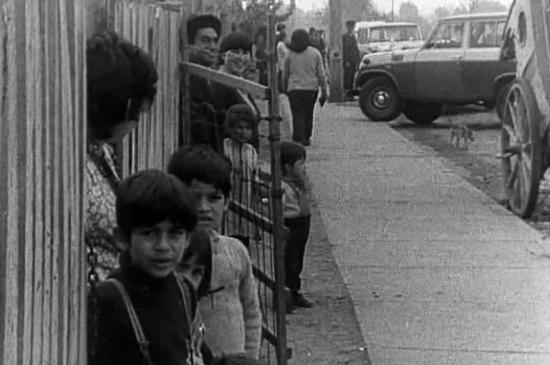
Filmstill Herminda de la Victoria
Herminda de la Victoria
Douglas Hübner
The police clear land on the outskirts of Santiago that is occupied by homeless families. A girl dies. The settlement stays. It bears her name to this day: Herminda de la Victoria.
Filmstill Herminda de la Victoria

Herminda de la Victoria

Herminda de la Victoria
Douglas Hübner
Retrospective
Documentary Film
Chile
1969
16 minutes
Spanish
Subtitles: 
English
No Premiere

In a large-scale operation, a group of homeless families occupy some wasteland on the outskirts of Santiago in March 1967. When the police attempt to evict them, a little girl, Herminda, dies in her mother’s arms. The eviction is called off, the people are allowed to stay and, without any existing infrastructure, build the settlement that exists to this day: Herminda de la Victoria. “Full of errors and mistakes, [the film] is my first approach to cinema, albeit to a ‘new cinema’, a Latin American cinema marked by underdevelopment. Nonetheless, the cinematic process, editing and sound represent a fully valid experience to me. ‘Herminda de la Victoria’ champions the interests of the homeless in Chile, suffers with them, is both testimony and a ‘document’ that forces you to take sides.” (Douglas Hübner)

Florian Wüst

Screenings & Tickets DOK Leipzig Logo

29.10.
#434
CineStar 5
Teil der Kompilation
During Checkout you can apply discounts, your accreditation or season passes
29.10.2026
CineStar 5
#434
Teil der Kompilation
During Checkout you can apply discounts, your accreditation or season passes
Calendar

Credits DOK Leipzig Logo

Director
Douglas Hübner
Cinematographer
Héctor Ríos
Editor
Antonio Puchi
Producer
Cine Experimental de la Universidad de Chile
Score
Sergio Ortega

Contact DOK Leipzig Logo

Main Contact
Bundesarchiv
Retrospective
Filmstill Illapu – Lied von Freiheit und Liebe
Illapu – Lied von Freiheit und Liebe
Carlos Puccio
The Chilean folk band Illapu arrives in East Berlin. Between gigs, they face a difficult question: Should they return home individually if the opportunity arises, or remain in exile together?
Filmstill Illapu – Lied von Freiheit und Liebe

Illapu – Lied von Freiheit und Liebe

Illapu – Lied von Freiheit und Liebe
Carlos Puccio
Retrospective
Documentary Film
GDR
1984
23 minutes
Spanish,
German
Subtitles: 
English
No Premiere

The Chilean folk group Illapu only really became famous under the military dictatorship. The five musicians were allowed to work, but had to “keep a low profile”. When they gradually joined the cultural resistance against the Pinochet regime, they were expelled in 1981. From their French exile, they toured Europe, including East Berlin. This is where Carlos Puccio’s film begins: The Chilean directing student observed Illapu’s rehearsals and concerts for his diploma film project at the Film and Television Academy of the GDR. They talk about their enduring bond with Chile and about what would happen if individual members of the band were given entry permits and Illapu would consequently break up. In 1986, they moved to Mexico together and returned to Chile two years later because of the changing political climate.

Florian Wüst

Screenings & Tickets DOK Leipzig Logo

01.11.
#733
CineStar 5
Teil der Kompilation
During Checkout you can apply discounts, your accreditation or season passes
01.11.2026
CineStar 5
#733
Teil der Kompilation
During Checkout you can apply discounts, your accreditation or season passes
Calendar

Credits DOK Leipzig Logo

Director
Carlos Puccio
Script
Maria Teresa Guerra
Cinematographer
Peter Ziesche
Editor
Karin Geiß
Producer
Hochschule für Film und Fernsehen der DDR im Auftrag des Fernsehens der DDR
Sound
Jochen-Peter Ihle, Volker Werner

Contact DOK Leipzig Logo

Main Contact
Retrospective
Filmstill La hora de los hornos. Neocolonialismo y violencia
La hora de los hornos. Neocolonialismo y violencia
Fernando E. Solanas
A film like an incendiary device, a radical pamphlet. Like few other films, this call for the liberation of Argentina from oppression and violence moved the 1968 generation across the world.
Filmstill La hora de los hornos. Neocolonialismo y violencia

La hora de los hornos. Neocolonialismo y violencia

La hora de los hornos. Neocolonialismo y violencia
Fernando E. Solanas
Retrospective
Documentary Film
Argentina
1968
88 minutes
Spanish
Subtitles: 
English
No Premiere

A call for radical political change, an agitation pamphlet for the national liberation of Argentina: Like few other films, “La hora de los hornos” stirred the generation of 1968 all over the world. The more than four-hour-long film essay was banned for many years, not just in Argentina. Taking the form of a multilayered documentary collage, it is a masterful exploration of the possibilities of image-sound-editing which unfolds a panorama of the prevailing social and political conditions. “Neocolonialismo y violencia” analyses the colonisation of Latin America, its economic and cultural dependence on the industrialised states of the so-called First World, especially the USA, as well as the omnipresence of violence. The second part, “Acto para la liberación”, delivers a chronicle of Peronism and the resistance after Perón’s fall in 1955. “Violencia y liberación”, the shorter third part, openly advocates armed struggle. After two years of clandestine work by a small team around Fernando E. Solanas and Octavio Gentino, “La hora de los hornos” had its world premiere on 2 June 1968 at the Mostra Internazionale del Cinema Nuovo in Pesaro. The Friends of the German Cinematheque (today: Arsenal Filminstitut) screened the three-part film only a few weeks later on the occasion of the Berlinale. After the opening of the Arsenal cinema in January 1970 on Welserstraße in Berlin-Schöneberg, countless screenings of the distribution prints of the film followed at their own venue and elsewhere.

Florian Wüst

Contains depictions of physical violence, racism

Screenings & Tickets DOK Leipzig Logo

27.10.
#233
CineStar 5
Teil der Kompilation
During Checkout you can apply discounts, your accreditation or season passes
27.10.2026
CineStar 5
#233
Teil der Kompilation
During Checkout you can apply discounts, your accreditation or season passes
Calendar

Credits DOK Leipzig Logo

Director
Fernando E. Solanas
Script
Octavio Getino, Fernando E. Solanas
Cinematographer
Juan Carlos Desanzo
Editor
Juan Carlos Macías, Antonio Ripoll, Norma Torrado
Producer
Grupo Cine Liberación

Contact DOK Leipzig Logo

Main Contact
Victoria Solanas
Retrospective
Filmstill La infancia de Marisol
La infancia de Marisol
Bernabé Hernández
A 14-year-old Nicaraguan girl recounts an incredible story: from her involvement in the fight against the dictatorship via imprisonment and torture to her departure into a new life.
Filmstill La infancia de Marisol

La infancia de Marisol

La infancia de Marisol
Bernabé Hernández
Retrospective
Documentary Film
Cuba
1979
14 minutes
Spanish
Subtitles: 
English
No Premiere

Cuban documentary film was never aimed only at its own nation but saw its task as providing information about the events in the so-called Third World. Well-known films by Santiago Álvarez deal with the anti-imperialist struggles in Vietnam and Laos. Starting in the late 1970s, the focus was expanded to include the civil wars in Nicaragua and El Salvador, a shift clearly reflected in the Leipzig festival programmes. Meanwhile, in 1980, Oberhausen screened, in addition to the retrospective “Cinema in Cuba 1959–1979”, Bernabé Hernández’s “La infancia de Marisol”. The film was one of the first Cuban productions made after the victory of the Nicaraguan Revolution in July 1979. It is based on the accounts of 14-year-old Marisol who describes how she joins the Sandinista Liberation Front, fights against the dictatorship, is taken prisoner and, like her father and brother, brutally tortured. The film ends with the prospect of a new life: Marisol’s studies in Cuba.

Florian Wüst

Contains mentions of physical violence, torture

Screenings & Tickets DOK Leipzig Logo

28.10.
#334
CineStar 5
Teil der Kompilation
During Checkout you can apply discounts, your accreditation or season passes
28.10.2026
CineStar 5
#334
Teil der Kompilation
During Checkout you can apply discounts, your accreditation or season passes
Calendar

Credits DOK Leipzig Logo

Director
Bernabé Hernández
Cinematographer
Raúl Rodríguez
Editor
Rolando Baute
Producer
ICAIC – Instituto Cubano del Arte e Industria Cinematográficos
Sound
Leonardo Sorrell, Carlos Fernández

Contact DOK Leipzig Logo

Main Contact
Carsten Spicher
spicher@kurzfilmtage.de