The short film reels bring together short films from the competitions in cross-section programmes.
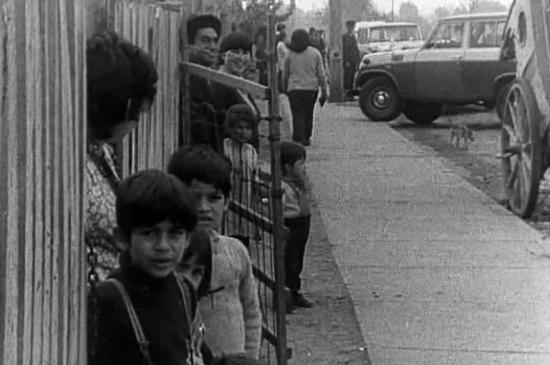
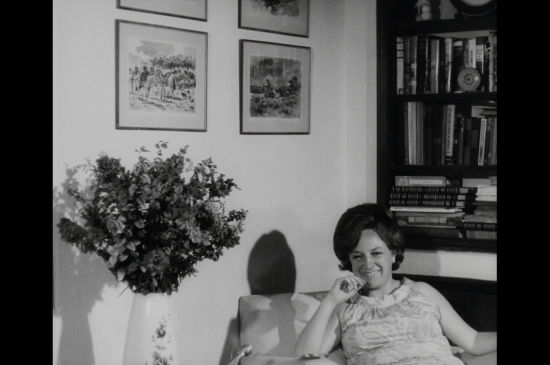
Raúl Ruiz was part of the militant cinema movement that put itself in the service of the Chilean Popular Front, but remained an outsider. He employed experiment and irony to dissect social contradictions. In “Abastecimiento”, Ruiz addresses the supply problems under the Unidad Popular government, confronting the views of a woman from a bourgeois background with those of the socialist Minister for Economic Affairs. He follows this with a depiction of the activities of the Juntas de Abastecimiento y Precios (JAP), locally organised committees for the control and just distribution of food and everyday goods. The provocative juxtaposition paints a picture of an impossible dialogue. The film was banned at the time and was believed lost for ages. It was only recently rediscovered. Leipzig was not the place for the feature film director who emigrated to Paris after the military coup, but Ruiz was a frequent guest at the Berlinale Forum.
Florian Wüst
Contains mentions of death
Contains mentions of murder, racism
Contains depictions of racism
Contains depictions of drug-use, nudity, physical violence
Ugo Ulive left his native Uruguay in 1967 to move to the Venezuelan capital of Caracas, where two years later he realised three short films at the newly founded Centro de Cine Documental de la Universidad de los Andes: “Caracas: dos o tres cosas”, “Diamantes” and “Basta!”. The latter was part of the Leipzig retrospective “Film in the People’s Struggle for Liberation: Latin America” in 1972. Inspired by Antonin Artaud’s concept of the “Theatre of Cruelty”, it stands out for disturbing images of an autopsy that reveal the degree of dehumanisation under the influence of imperialism. In “Caracas: dos o tres cosas”, also in the form of an experimental collage, Ulive, roaming the streets of Caracas with his camera, contrasts the public face of a divided society with audio fragments from radio, advertising and pop music.
Florian Wüst
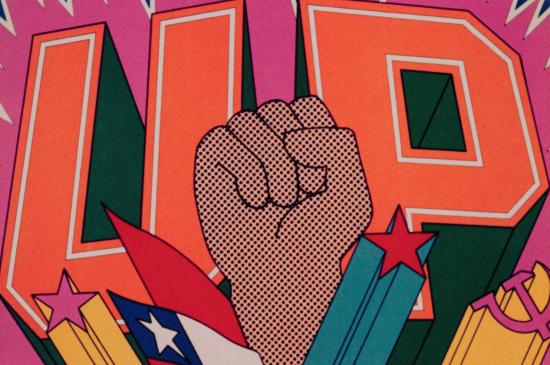
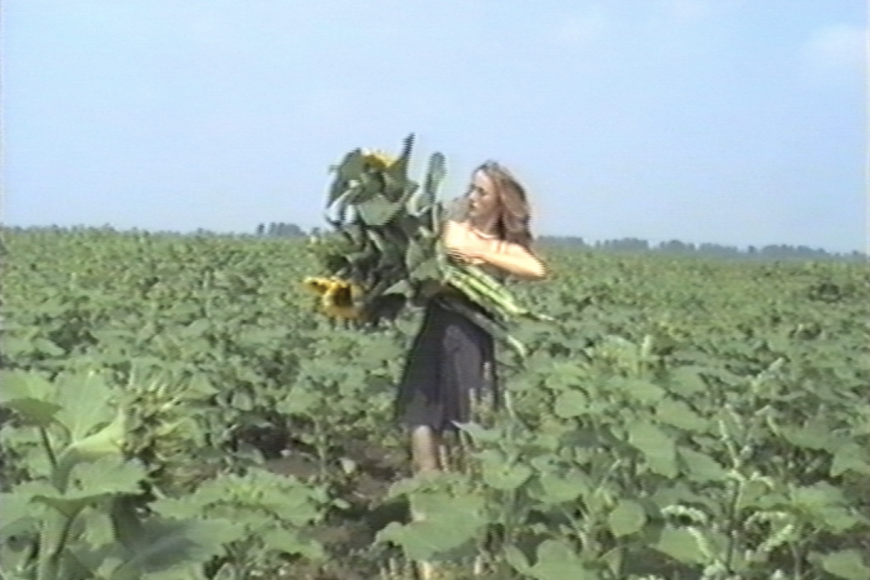
The Europe-wide protests against Chile’s military dictatorship were expressed not only by political activism, but by a host of artistic actions. The colourful aesthetics of the Unidad Popular’s street art, popularised by the Ramona Parra Brigades, became a visual trademark. Based on this model, the Brigada Pablo Neruda, for example, whose members included well-known Chilean artists exiled in Paris like José Balmes, Gracia Barrios and Guillermo Núñez, realised a 60-metre-long mural on the fringes of documenta 6 in Kassel in 1977. Its creation was documented in Franz Lehmkuhl’s film “Chilenische Wandmalerei” (1977–80), screened in Leipzig in 1980. In his agitation film “Chile lebt”, co-produced with Michael Börner, the Chilean journalist and filmmaker Juan Forch uses pictures of the Brigada Pablo Neruda to express what keeps hope in his homeland alive: international solidarity. In 1979, Forch returned to Chile from exile in the GDR.
Florian Wüst
Contains mentions of discrimination against LGBTQIA2S+ persons
Contains mentions of addiction, drug-use, mental health conditions, explicit sex scenes
Contains mentions of sexual violence
Contains mentions of drug-use, death, murder
Contains depictions of physical violence, torture
Contains mentions of racism, murder
Contains depictions of physical violence
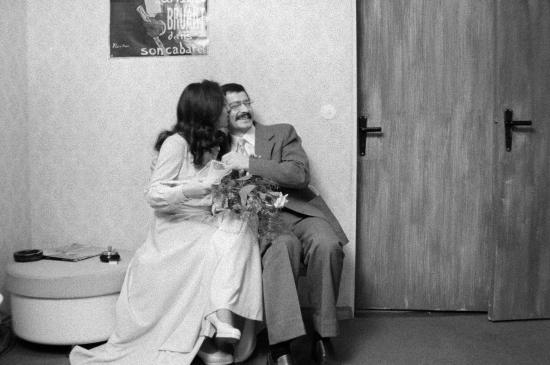
In 1977, Valentin Milanow, a Bulgarian student at the GDR Academy of Film and Television, sat in at the DEFA Studio for Documentary Films. Director Rainer Ackermann was assigned as his mentor. Milanow came up with the idea of portraying the reality of life of exiled Chileans in the GDR. He was friends with a young couple, Alejandra Holzapfel and José Fuica, who lived in the same prefabricated housing estate in Potsdam-Babelsberg. She studied veterinary medicine, he was training to be a teacher of Marxism-Leninism. Milanow was allowed to film their wedding. On the fringes of the seemingly happy celebration, conversations turn to memories of interrogations and torture by the military junta and worries about relatives who were left behind. What the bride herself did not reveal at the time: As a leftist underground fighter she had been exposed to the worst abuse in the “Venda Sexy” prisoners’ camp and others. Today, this place is the memorial site Asociación de Memoria y Derechos Humanos Irán 3030. It is run by Alejandra Holzapfel.
Florian Wüst
This documentary, whose title is a line from one of Pablo Neruda’s poems, is a snapshot of Chile after two years of military dictatorship. In the agitational Cold War rhetoric typical of Studio H & S, it portrays both representatives of the regime and the victims of the terror, who are beginning to organise themselves as they search for the arrested and disappeared. Walter Heynowski, Gerhard Scheumann and Peter Hellmich had spent several months in Chile in early 1973 to record Allende’s reform efforts as well as the machinations of the far-right forces. Hellmich stayed longer: On 11 September 1973, he managed to film the legendary footage of the bombing of the Presidential Palace, conducted the first interview with General Augusto Pinochet after the coup and filmed political prisoners in the Chacabuco concentration camp in the Atacama Desert. For the extremely risky interviews and filming of “Eine Minute Dunkel macht uns nicht blind”, Studio H & S had to send a West German team – Gerhard Biroth, George Boultwood and Frederico Füllgraf – to Chile. Their true intention behind the transparent pretext of “filming the landscape for the promotion of tourism” and documenting “the economic success of the Pinochet government” remained undetected, as Füllgraf remembers, despite constant surveillance and thanks to all kinds of tricks. This screening is the premiere of the restored and digitized version of the film which was supported by the Förderprogramm Filmerbe (Digitisation of German film heritage funding programme).
Florian Wüst
“El primer año” documents the first year of the Unidad Popular: the rude awakening of the ruling classes of Chile as they are faced with the democratically elected socialist government. From the immediate economic sabotage of the right wing through celebrating workers, the situation of the Mapuche, the agrarian reform, the nationalisation of coal and copper mining and Fidel Castro’s visit, up to the “March of the Pots” by bourgeois women crying for bread, of which they have plenty, the cycle of achievements and difficulties is complete. Besides their journalistic interest, Patricio Guzmán and his collaborators sought to capture the atmospheric aspect of the departure towards a fairer society under Salvador Allende, which is what makes “El primer año” such a moving document of its time. Chris Marker offered to produce a French version with the help of the SLON film collective, which is preceded by photographs by Raymond Depardon, accompanied by a foreword on the history of Chile. Guzmán continued his work on the chronicle of events until he was forced to leave the country after the military coup of 11 September 1973. It was only in Cuban exile that he was able to successively finish his masterpiece “La Batalla de Chile” (1975-79) together with Pedro Chaskel. Each of its three parts was acclaimed at the International Leipzig Documentary and Short Film Week and the Berlinale Forum.
Florian Wüst
Five days after the coup, Chile’s most famous singer-songwriter, Víctor Jara, was brutally murdered. In recognition of his oeuvre, his political stance and also of the “victims of the fascist sadism perpetrated by the military and the CIA in Chile after 11 September 1973”, Santiago Álvarez immediately created a cinematic “report in four songs”. The musical and rhythmic structure and the simultaneous reportage style arising from found news footage and recordings of Jara reflect the agitprop language that is so typical of Álvarez. The title of the film is taken from the poem “Nuestra América” (1891) by Cuban poet José Martí. The end, too, alludes to the continuity of the anti-colonial struggle: A collage of international examples of state repression against insurgents from Puerto Rico to Vietnam and Indonesia is followed by depictions of legendary battles of liberation in 19th century South America.
Florian Wüst
Contains depictions of physical violence
In a large-scale operation, a group of homeless families occupy some wasteland on the outskirts of Santiago in March 1967. When the police attempt to evict them, a little girl, Herminda, dies in her mother’s arms. The eviction is called off, the people are allowed to stay and, without any existing infrastructure, build the settlement that exists to this day: Herminda de la Victoria. “Full of errors and mistakes, [the film] is my first approach to cinema, albeit to a ‘new cinema’, a Latin American cinema marked by underdevelopment. Nonetheless, the cinematic process, editing and sound represent a fully valid experience to me. ‘Herminda de la Victoria’ champions the interests of the homeless in Chile, suffers with them, is both testimony and a ‘document’ that forces you to take sides.” (Douglas Hübner)
Florian Wüst
International Leipzig Festival for Documentary and Animated Film
26 October to 1 November 2026
Leipziger Dok-Filmwochen GmbH
Katharinenstraße 17
04109 Leipzig
Germany
info [at] dok-leipzig [dot] de (info[at]dok-leipzig[dot]de)
+49 (0)341 30864-0