Films A–Z

Programme & Tickets

A-Z
Filters
Filter by
View by

Glossary AZ - Content » fullInternationalTitle

Retrospective

The struggle for liberation of the people in Latin America in the 1960s/70s was a recurring theme of politically engaged film festivals on both sides of the Wall. The resulting connection between Leipzig, East Berlin and West Berlin is evidenced by the analogue film material of militant cinema from countries like Argentina, Chile or Cuba that is held in the archive of Arsenal Filminstitut and the German Federal Archives today.

Read more about the Retrospective.

Retrospective
Filmstill Abastecimiento
Abastecimiento
Raúl Ruiz
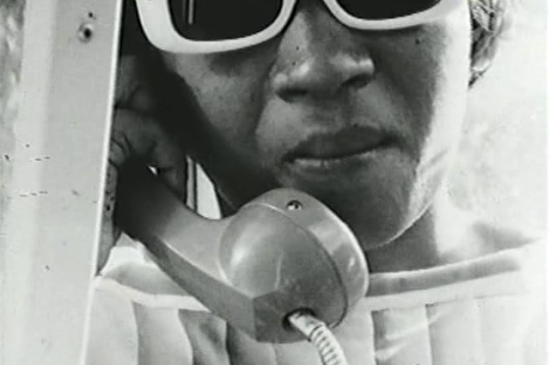
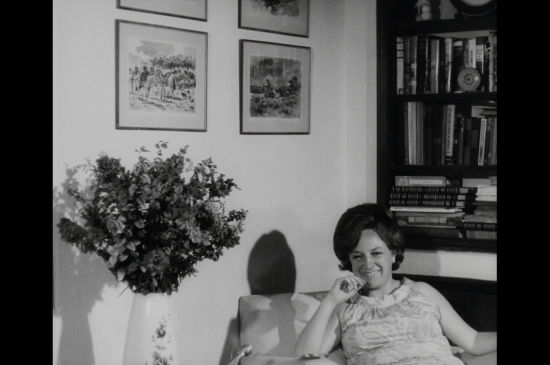
A woman from a bourgeois background and the socialist Minister for Economic Affairs talk to each other and at cross-purposes via tape: a snapshot of the deeply divided Chilean society.

Filmstill Abastecimiento

Abastecimiento

Abastecimiento
Raúl Ruiz
Retrospective
Documentary Film
Chile
1973
15 minutes
Spanish
Subtitles: 
English
No Premiere

Raúl Ruiz was part of the militant cinema movement that put itself in the service of the Chilean Popular Front, but remained an outsider. He employed experiment and irony to dissect social contradictions. In “Abastecimiento”, Ruiz addresses the supply problems under the Unidad Popular government, confronting the views of a woman from a bourgeois background with those of the socialist Minister for Economic Affairs. He follows this with a depiction of the activities of the Juntas de Abastecimiento y Precios (JAP), locally organised committees for the control and just distribution of food and everyday goods. The provocative juxtaposition paints a picture of an impossible dialogue. The film was banned at the time and was believed lost for ages. It was only recently rediscovered. Leipzig was not the place for the feature film director who emigrated to Paris after the military coup, but Ruiz was a frequent guest at the Berlinale Forum.

Florian Wüst

Screenings & Tickets DOK Leipzig Logo

29.10.
#434
CineStar 5
Teil der Kompilation
During Checkout you can apply discounts, your accreditation or season passes
29.10.2026
CineStar 5
#434
Teil der Kompilation
During Checkout you can apply discounts, your accreditation or season passes
Calendar

Credits DOK Leipzig Logo

Director
Raúl Ruiz
Cinematographer
Sergio Mihovilovic
Producer
Chile Films

Contact DOK Leipzig Logo

Main Contact
With kind support of
Positions
Filmstill Atlas of Disappearance
Atlas of Disappearance
Manuel Correa
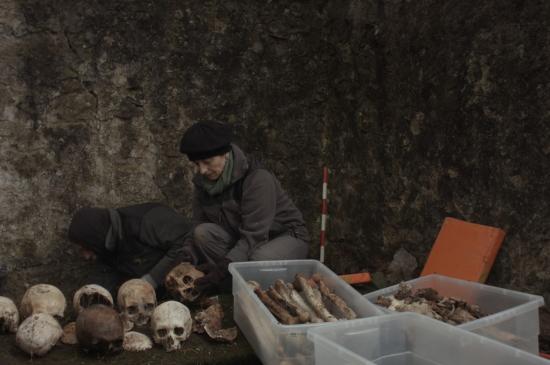
The Franco Regime had over 33,000 bodies secretly transferred to Valle de los Caídos. Three families are looking for relatives. Archives, maps and forensics trace a topography of terror.
Filmstill Atlas of Disappearance

Atlas of Disappearance

Atlas de la Desaparición
Manuel Correa
Positions
Documentary Film
Spain,
Norway
2026
84 minutes
Spanish
Subtitles: 
English
German subtitles
German premiere
Between 1959 and 1981, the Franco regime had over 33,000 bodies transferred from more than 500 mass graves across Spain to the Valle de los Caídos – a monumental mausoleum erected to glorify the fascist victory. Decades later, relatives are still searching for the remains of their loved ones. Three families follow in the footsteps of the disappeared and encounter bureaucratic, legal and social obstacles that persist to this day. Drawing on director Manuel Correa’s own research as part of Forensic Architecture, a research agency that investigates state and corporate violence, the film reconstructs in meticulous detail what the regime sought to conceal. Digital maps, citizens’ archives, official documents and new forensic technologies reveal what remained hidden for decades. The result is a topography of terror that visualises the extent of systematic violence and brings to light the history buried beneath fascist monumentalism.

Seggen Mikael

Contains mentions of murder, death

Trailer DOK Leipzig Logo

Screenings & Tickets DOK Leipzig Logo

28.10.
#3A1
Schaubühne Lindenfels
this, too, will be liquid & Atlas of Disappearance + Discussion with Berlin Critics’ Week
During Checkout you can apply discounts, your accreditation or season passes
28.10.2026
Schaubühne Lindenfels
#3A1
this, too, will be liquid & Atlas of Disappearance + Discussion with Berlin Critics’ Week
During Checkout you can apply discounts, your accreditation or season passes
Calendar
30.10.
#544
CineStar 6
this, too, will be liquid & Atlas of Disappearance
During Checkout you can apply discounts, your accreditation or season passes
30.10.2026
CineStar 6
#544
this, too, will be liquid & Atlas of Disappearance
During Checkout you can apply discounts, your accreditation or season passes
Calendar

Credits DOK Leipzig Logo

Director
Manuel Correa
Script
Manuel Correa
Cinematographer
Manuel Correa
Editor
Manuel Correa, Iván Guarnizo
Producer
Anna Giralt Gris, Jorge Caballero Ramos, Emil Olsen
Sound
Emil Olsen
Sound Design
Emil Olsen
Score
Simón Mesa Giraldo
Animation
Emil Olsen, Alejandro García Muñoz, Diego Guerrero, Xavier Redondo Sánchez

Contact DOK Leipzig Logo

Main Contact
Nominated for: Leipziger Ring
Retrospective
Filmstill Caracas: dos o tres cosas
Caracas: dos o tres cosas
Ugo Ulive
Radio, advertising, Caracas. Their paths cross, yet the people never meet. An experimental collage of social realities in Venezuela in the late 1960s.
Filmstill Caracas: dos o tres cosas

Caracas: dos o tres cosas

Caracas: dos o tres cosas
Ugo Ulive
Retrospective
Documentary Film
Venezuela
1969
16 minutes
Spanish
Subtitles: 
English
No Premiere

Ugo Ulive left his native Uruguay in 1967 to move to the Venezuelan capital of Caracas, where two years later he realised three short films at the newly founded Centro de Cine Documental de la Universidad de los Andes: “Caracas: dos o tres cosas”, “Diamantes” and “Basta!”. The latter was part of the Leipzig retrospective “Film in the People’s Struggle for Liberation: Latin America” in 1972. Inspired by Antonin Artaud’s concept of the “Theatre of Cruelty”, it stands out for disturbing images of an autopsy that reveal the degree of dehumanisation under the influence of imperialism. In “Caracas: dos o tres cosas”, also in the form of an experimental collage, Ulive, roaming the streets of Caracas with his camera, contrasts the public face of a divided society with audio fragments from radio, advertising and pop music.

Florian Wüst

Screenings & Tickets DOK Leipzig Logo

31.10.
#633
CineStar 5
Teil der Kompilation
During Checkout you can apply discounts, your accreditation or season passes
31.10.2026
CineStar 5
#633
Teil der Kompilation
During Checkout you can apply discounts, your accreditation or season passes
Calendar

Credits DOK Leipzig Logo

Director
Ugo Ulive
Cinematographer
Ugo Ulive, Fernando Toro, Roberto Siso
Producer
Centro de Cine Documental de la Universidad de Los Andes

Contact DOK Leipzig Logo

Main Contact
Arsenal – Institut für Film und Videokunst
Retrospective
Filmstill Chile lebt
Chile lebt
Juan Forch, Michael Börner
Artists in exile make visible the solidarity with Chile in the wake of 11 September 1973: a celebration of colours and shapes in opposition to the dictatorship. All in just one minute.
1976
Filmstill Chile lebt

Chile lebt

Chile lebt
Juan Forch, Michael Börner
Retrospective
Animated Film
GDR
1976
1 minute
without dialogue
Subtitles: 
None
No Premiere

The Europe-wide protests against Chile’s military dictatorship were expressed not only by political activism, but by a host of artistic actions. The colourful aesthetics of the Unidad Popular’s street art, popularised by the Ramona Parra Brigades, became a visual trademark. Based on this model, the Brigada Pablo Neruda, for example, whose members included well-known Chilean artists exiled in Paris like José Balmes, Gracia Barrios and Guillermo Núñez, realised a 60-metre-long mural on the fringes of documenta 6 in Kassel in 1977. Its creation was documented in Franz Lehmkuhl’s film “Chilenische Wandmalerei” (1977–80), screened in Leipzig in 1980. In his agitation film “Chile lebt”, co-produced with Michael Börner, the Chilean journalist and filmmaker Juan Forch uses pictures of the Brigada Pablo Neruda to express what keeps hope in his homeland alive: international solidarity. In 1979, Forch returned to Chile from exile in the GDR.

Florian Wüst

Screenings & Tickets DOK Leipzig Logo

01.11.
#733
CineStar 5
Teil der Kompilation
During Checkout you can apply discounts, your accreditation or season passes
01.11.2026
CineStar 5
#733
Teil der Kompilation
During Checkout you can apply discounts, your accreditation or season passes
Calendar

Credits DOK Leipzig Logo

Director
Juan Forch, Michael Börner
Cinematographer
Michael Börner
Editor
Juan Forch, Michael Börner
Producer
DEFA-Studio für Trickfilme
Sound
Heinz Kaiser
Animation Technique
Cutout, Collage

Contact DOK Leipzig Logo

Main Contact
Positions
Filmstill Detention
Detention
Guillaume Massart
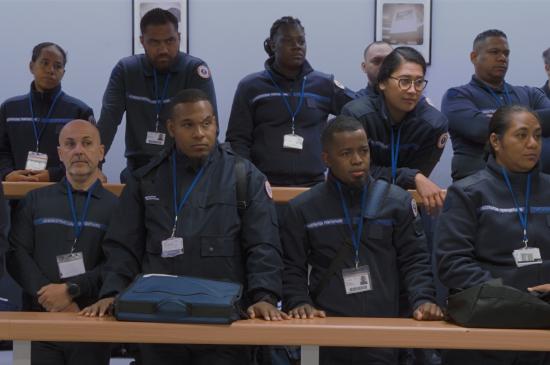
Aspiring prison guards in the classroom. Can there be such a thing as good training for a questionable system? How does a uniform form you? A disturbing dive into a grey area.
Filmstill Detention

Detention

La Détention
Guillaume Massart
Positions
Documentary Film
France
2026
134 minutes
French
Subtitles: 
English
German premiere
The roles at the École nationale d’administration pénitentiaire, ÉNAP for short, are clearly allocated: the trainee prison officers on the one side, the teaching staff on the other. Guillaume Massart’s film maintains this separation in aesthetic terms too. Usually captured from the perspective of the pupils, “Detention” provides a look at a curriculum that is not for the fainthearted: how does one command the prisoners’ respect and obedience? What mental strains go hand in hand with the job? Can these trainee prison officers actually gain legal advantages in potential conflict situations? Over the film’s two-hour running time, a remarkable effect takes hold: as the pupils’ critical voices gradually fall silent, the prison system appears ever more questionable from the audience’s perspective. Can even a “proper” training lead to the abuse of power if this is not explicitly addressed and problematised? How does a uniform shape a person? Having spent a total of one year at the school for “Detention” and undergoing the training himself, Massart finds a unique tonality to convey an ambivalence that is both unsettling and claustrophobic.

Carolin Weidner

Screenings & Tickets DOK Leipzig Logo

29.10.
#4A2
Schaubühne Lindenfels
Detention + Debate with Berlin Critics’ Week
During Checkout you can apply discounts, your accreditation or season passes
29.10.2026
Schaubühne Lindenfels
#4A2
Detention + Debate with Berlin Critics’ Week
During Checkout you can apply discounts, your accreditation or season passes
Calendar
31.10.
#634
CineStar 5
Detention
During Checkout you can apply discounts, your accreditation or season passes
31.10.2026
CineStar 5
#634
Detention
During Checkout you can apply discounts, your accreditation or season passes
Calendar

Credits DOK Leipzig Logo

Director
Guillaume Massart
Cinematographer
Guillaume Massart
Producer
Céline Loiseau, Guillaume Massart

Contact DOK Leipzig Logo

Main Contact
Samy Pollet-Villard
samy@andanafilms.com
World Sales
Stephan Riguet
Andana Films
sriguet@andanafilms.com
Retrospective
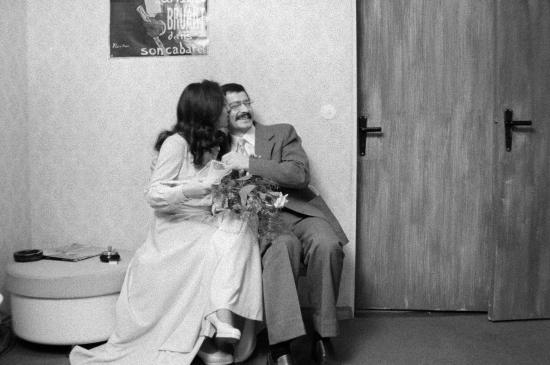
Filmstill Eine chilenische Hochzeit
Eine chilenische Hochzeit
Rainer Ackermann, Valentin Milanow
A young Chilean couple gets married in exile in East Germany. There is joyful celebration, but sadness lingers on the guests’ faces: memories of imprisonment and torture.
Filmstill Eine chilenische Hochzeit

Eine chilenische Hochzeit

Eine chilenische Hochzeit
Rainer Ackermann, Valentin Milanow
Retrospective
Documentary Film
GDR
1977
8 minutes
German
Subtitles: 
English
No Premiere

In 1977, Valentin Milanow, a Bulgarian student at the GDR Academy of Film and Television, sat in at the DEFA Studio for Documentary Films. Director Rainer Ackermann was assigned as his mentor. Milanow came up with the idea of portraying the reality of life of exiled Chileans in the GDR. He was friends with a young couple, Alejandra Holzapfel and José Fuica, who lived in the same prefabricated housing estate in Potsdam-Babelsberg. She studied veterinary medicine, he was training to be a teacher of Marxism-Leninism. Milanow was allowed to film their wedding. On the fringes of the seemingly happy celebration, conversations turn to memories of interrogations and torture by the military junta and worries about relatives who were left behind. What the bride herself did not reveal at the time: As a leftist underground fighter she had been exposed to the worst abuse in the “Venda Sexy” prisoners’ camp and others. Today, this place is the memorial site Asociación de Memoria y Derechos Humanos Irán 3030. It is run by Alejandra Holzapfel.

Florian Wüst

Screenings & Tickets DOK Leipzig Logo

01.11.
#733
CineStar 5
Teil der Kompilation
During Checkout you can apply discounts, your accreditation or season passes
01.11.2026
CineStar 5
#733
Teil der Kompilation
During Checkout you can apply discounts, your accreditation or season passes
Calendar

Credits DOK Leipzig Logo

Director
Rainer Ackermann, Valentin Milanow
Cinematographer
Karl Faber, Eberhard Geick
Editor
Werner Wendt
Producer
DEFA-Studio für Dokumentarfilme

Contact DOK Leipzig Logo

Main Contact
Retrospective
Filmstill Eine Minute Dunkel macht uns nicht blind
Eine Minute Dunkel macht uns nicht blind
Walter Heynowski, Gerhard Scheumann, Peter Hellmich
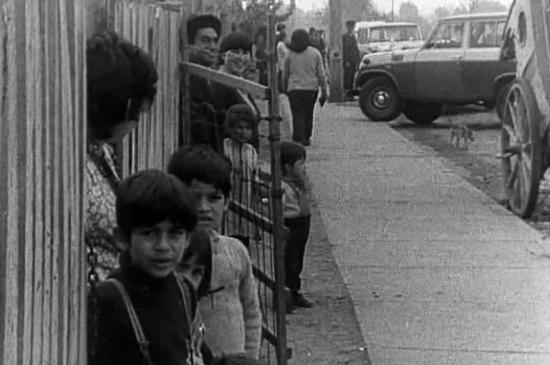
Two years after the military coup. People gather around the camera in the streets of Santiago. They say they can’t speak here. Everyone is afraid. And yet, Chile begins to speak.
Filmstill Eine Minute Dunkel macht uns nicht blind

Eine Minute Dunkel macht uns nicht blind

Eine Minute Dunkel macht uns nicht blind
Walter Heynowski, Gerhard Scheumann, Peter Hellmich
Retrospective
Documentary Film
GDR
1976
66 minutes
Spanish,
German
Subtitles: 
English
No Premiere

This documentary, whose title is a line from one of Pablo Neruda’s poems, is a snapshot of Chile after two years of military dictatorship. In the agitational Cold War rhetoric typical of Studio H & S, it portrays both representatives of the regime and the victims of the terror, who are beginning to organise themselves as they search for the arrested and disappeared. Walter Heynowski, Gerhard Scheumann and Peter Hellmich had spent several months in Chile in early 1973 to record Allende’s reform efforts as well as the machinations of the far-right forces. Hellmich stayed longer: On 11 September 1973, he managed to film the legendary footage of the bombing of the Presidential Palace, conducted the first interview with General Augusto Pinochet after the coup and filmed political prisoners in the Chacabuco concentration camp in the Atacama Desert. For the extremely risky interviews and filming of “Eine Minute Dunkel macht uns nicht blind”, Studio H & S had to send a West German team – Gerhard Biroth, George Boultwood and Frederico Füllgraf – to Chile. Their true intention behind the transparent pretext of “filming the landscape for the promotion of tourism” and documenting “the economic success of the Pinochet government” remained undetected, as Füllgraf remembers, despite constant surveillance and thanks to all kinds of tricks. This screening is the premiere of the restored and digitized version of the film which was supported by the Förderprogramm Filmerbe (Digitisation of German film heritage funding programme).

Florian Wüst

Screenings & Tickets DOK Leipzig Logo

29.10.
#434
CineStar 5
Teil der Kompilation
During Checkout you can apply discounts, your accreditation or season passes
29.10.2026
CineStar 5
#434
Teil der Kompilation
During Checkout you can apply discounts, your accreditation or season passes
Calendar

Credits DOK Leipzig Logo

Director
Walter Heynowski, Gerhard Scheumann, Peter Hellmich
Cinematographer
George Boultwood
Editor
Traute Wischnewski, Ilse Radtke
Producer
Studio H & S
Sound
Gerhard Biroth, Manfred Berger
Score
Sergio Ortega, Grupo Aparcoa

Contact DOK Leipzig Logo

Main Contact
Retrospective
Filmstill El primer año
El primer año
Patricio Guzmán
The first year under Allende’s popular government: Chile’s working class celebrates the victory and pitches in. But the right does everything in their power to sabotage the transition to a fairer society.

Filmstill El primer año

El primer año

El primer año
Patricio Guzmán
Retrospective
Documentary Film
Chile,
France
1972
100 minutes
Spanish,
French
Subtitles: 
English
No Premiere

“El primer año” documents the first year of the Unidad Popular: the rude awakening of the ruling classes of Chile as they are faced with the democratically elected socialist government. From the immediate economic sabotage of the right wing through celebrating workers, the situation of the Mapuche, the agrarian reform, the nationalisation of coal and copper mining and Fidel Castro’s visit, up to the “March of the Pots” by bourgeois women crying for bread, of which they have plenty, the cycle of achievements and difficulties is complete. Besides their journalistic interest, Patricio Guzmán and his collaborators sought to capture the atmospheric aspect of the departure towards a fairer society under Salvador Allende, which is what makes “El primer año” such a moving document of its time. Chris Marker offered to produce a French version with the help of the SLON film collective, which is preceded by photographs by Raymond Depardon, accompanied by a foreword on the history of Chile. Guzmán continued his work on the chronicle of events until he was forced to leave the country after the military coup of 11 September 1973. It was only in Cuban exile that he was able to successively finish his masterpiece “La Batalla de Chile” (1975-79) together with Pedro Chaskel. Each of its three parts was acclaimed at the International Leipzig Documentary and Short Film Week and the Berlinale Forum.

Florian Wüst

Screenings & Tickets DOK Leipzig Logo

29.10.
#433
CineStar 5
Teil der Kompilation
During Checkout you can apply discounts, your accreditation or season passes
29.10.2026
CineStar 5
#433
Teil der Kompilation
During Checkout you can apply discounts, your accreditation or season passes
Calendar

Credits DOK Leipzig Logo

Director
Patricio Guzmán
Cinematographer
Toño Ríos
Editor
Carlos Piaggio
Producer
La Escuela de Artes de la Comunicación de la Universidad Católica de Chile, Atacama Productions
Sound
Felipe Orrego
Sound Design
María Eugenia Rodríguez-Peña

Contact DOK Leipzig Logo

Main Contact
Alexandra Galvis
alexandra@bfdistribution.cl
Retrospective
Filmstill El tigre saltó y mató, pero morirá... morirá...
El tigre saltó y mató, pero morirá... morirá...
Santiago Álvarez
Five days after the coup, Chile’s most famous singer-songwriter Víctor Jara is brutally murdered by Pinochet’s junta. A tribute to his life and work, recounted through four songs.
Filmstill El tigre saltó y mató, pero morirá... morirá...

El tigre saltó y mató, pero morirá... morirá...

El tigre saltó y mató, pero morirá... morirá...
Santiago Álvarez
Retrospective
Documentary Film
Cuba
1973
16 minutes
Spanish
Subtitles: 
English
No Premiere

Five days after the coup, Chile’s most famous singer-songwriter, Víctor Jara, was brutally murdered. In recognition of his oeuvre, his political stance and also of the “victims of the fascist sadism perpetrated by the military and the CIA in Chile after 11 September 1973”, Santiago Álvarez immediately created a cinematic “report in four songs”. The musical and rhythmic structure and the simultaneous reportage style arising from found news footage and recordings of Jara reflect the agitprop language that is so typical of Álvarez. The title of the film is taken from the poem “Nuestra América” (1891) by Cuban poet José Martí. The end, too, alludes to the continuity of the anti-colonial struggle: A collage of international examples of state repression against insurgents from Puerto Rico to Vietnam and Indonesia is followed by depictions of legendary battles of liberation in 19th century South America.

Florian Wüst

Contains depictions of physical violence

Screenings & Tickets DOK Leipzig Logo

01.11.
#733
CineStar 5
Teil der Kompilation
During Checkout you can apply discounts, your accreditation or season passes
01.11.2026
CineStar 5
#733
Teil der Kompilation
During Checkout you can apply discounts, your accreditation or season passes
Calendar

Credits DOK Leipzig Logo

Director
Santiago Álvarez
Editor
Gloria Argüelles
Producer
ICAIC – Instituto Cubano del Arte e Industria Cinematográficos
Animation
Adalberto Hernández, Santiago Peñate

Contact DOK Leipzig Logo

Main Contact
Arsenal – Institut für Film und Videokunst
Positions
Filmstill Fracture
Fracture
Keren Kreizer
Bracingly topical and beautifully fluid, Israeli activist Keren Kraizer’s video diary documents her ambivalence at returning to her home country, where everything is about to explode.
Filmstill Fracture

Fracture

Fracture
Keren Kreizer
Positions
Documentary Film
Belgium
2026
83 minutes
Hebrew,
English
Subtitles: 
English
German subtitles
German premiere
Keren Kraizer left Israel at 20 to study dance in Belgium, but also to escape her home country and its divisions. A visit to her family at the start of 2023 prompts an unexpected desire to reconnect with where she comes from, a process of considerable ambivalence which she decides to document in a video diary. Plucked from everyday life with a beautifully intuitive grasp for structure and montage, the resulting words and images move back and forth between the personal and the political with an inevitability born of the current state of the nation: a conversation with her mother about the lack of vision for lasting peace; footage of a man being shouted at for waving a Palestinian flag during the protests against Netanyahu’s assaults on the rule of law; the heartbreaking poem in English texted to her by a friend she made on an activist trip to the West Bank who didn’t want to be filmed; the nocturnal chat with her new boyfriend while wandering the streets of Jerusalem about all the tensions boiling under the ground, a chat that turns out to be grimly prophetic. For Kraizer’s diary will soon be overtaken by events beyond her control, and ambivalence will give way to anguish and disbelief. What now? How to contain people’s pain? “We are the ones who walk barefoot on the shreds of hope. We didn’t create war, but we created poems from its ruins.”

James Lattimer

Screenings & Tickets DOK Leipzig Logo

28.10.
#3A2
Schaubühne Lindenfels
Fracture + Discussion
During Checkout you can apply discounts, your accreditation or season passes
28.10.2026
Schaubühne Lindenfels
#3A2
Fracture + Discussion
During Checkout you can apply discounts, your accreditation or season passes
Calendar
29.10.
#431
CineStar 5
Fracture
During Checkout you can apply discounts, your accreditation or season passes
29.10.2026
CineStar 5
#431
Fracture
During Checkout you can apply discounts, your accreditation or season passes
Calendar

Credits DOK Leipzig Logo

Director
Keren Kreizer
Cinematographer
Keren Kreizer
Editor
Pauline Piris-Nury, Yannick Leroy, Keren Kreizer
Producer
Joel Curtz, Walid Bekhti
Co-Producer
Javier Packer-Comyn, Gsara Bodien, Mary Jimenez
Sound
Maxime Thomas, Keren Kreizer
Sound Design
Maxime Thomas
Score
Mlondiwethu Dubazane

Contact DOK Leipzig Logo

Main Contact
Philippe Cotte
philippe.cotte@cvb.be
Retrospective
Filmstill Herminda de la Victoria
Herminda de la Victoria
Douglas Hübner
The police clear land on the outskirts of Santiago that is occupied by homeless families. A girl dies. The settlement stays. It bears her name to this day: Herminda de la Victoria.
Filmstill Herminda de la Victoria

Herminda de la Victoria

Herminda de la Victoria
Douglas Hübner
Retrospective
Documentary Film
Chile
1969
16 minutes
Spanish
Subtitles: 
English
No Premiere

In a large-scale operation, a group of homeless families occupy some wasteland on the outskirts of Santiago in March 1967. When the police attempt to evict them, a little girl, Herminda, dies in her mother’s arms. The eviction is called off, the people are allowed to stay and, without any existing infrastructure, build the settlement that exists to this day: Herminda de la Victoria. “Full of errors and mistakes, [the film] is my first approach to cinema, albeit to a ‘new cinema’, a Latin American cinema marked by underdevelopment. Nonetheless, the cinematic process, editing and sound represent a fully valid experience to me. ‘Herminda de la Victoria’ champions the interests of the homeless in Chile, suffers with them, is both testimony and a ‘document’ that forces you to take sides.” (Douglas Hübner)

Florian Wüst

Screenings & Tickets DOK Leipzig Logo

29.10.
#434
CineStar 5
Teil der Kompilation
During Checkout you can apply discounts, your accreditation or season passes
29.10.2026
CineStar 5
#434
Teil der Kompilation
During Checkout you can apply discounts, your accreditation or season passes
Calendar

Credits DOK Leipzig Logo

Director
Douglas Hübner
Cinematographer
Héctor Ríos
Editor
Antonio Puchi
Producer
Cine Experimental de la Universidad de Chile
Score
Sergio Ortega

Contact DOK Leipzig Logo

Main Contact
Bundesarchiv
Positions
Filmstill Hope Is a Word
Hope Is a Word
Maria Galliani Dyrvik
For decades, western oil corporations have been causing devastating environmental damages in Nigeria’s Niger Delta. The local population is fighting for justice – with protests and poetry!
Filmstill Hope Is a Word

Hope Is a Word

Hope Is a Word
Maria Galliani Dyrvik
Positions
Documentary Film
Norway,
Nigeria,
Italy
2026
82 minutes
English
Subtitles: 
English
German subtitles
German premiere

Thick smoke clouds rise at the horizon. Oil bubbles from the ground. The gills of a dead fish are black. A sonorous voice recites a poem about blood, anger and the oil-contaminated landscape of the Niger Delta. A crowd of people join in for the refrain. Writer and activist Nnimmo Bassey has been protesting for decades again the oil extraction in the south of Nigeria and its consequences for humans, nature and agriculture. The Ogoni, an ethnic minority from the region, are particularly affected, with their whole basis for life under existential threat as a result. In the 1990s, they organised a powerful political movement, which was violently put down by the military government – also in the interest of Western oil concerns. How is it possible to put up political resistance in such circumstances? “Hope Is a Word” is the portrait of a man who believes in the power of poetic language. With his workshops, Nnimmo Bassey manages to mobilise a new generation of rhetorically and literarily gifted activists. When they read, rap or recite, the film puts their words into the frame in demonstrative fashion. Poetry becomes a political tool here. For a call can come from a verse, a call that others then follow.

Jan-Philipp Kohlmann

Screenings & Tickets DOK Leipzig Logo

27.10.
#2A1
Schaubühne Lindenfels
Hope Is a Word + Discussion
During Checkout you can apply discounts, your accreditation or season passes
27.10.2026
Schaubühne Lindenfels
#2A1
Hope Is a Word + Discussion
During Checkout you can apply discounts, your accreditation or season passes
Calendar
30.10.
#543
CineStar 6
Hope Is a Word
During Checkout you can apply discounts, your accreditation or season passes
30.10.2026
CineStar 6
#543
Hope Is a Word
During Checkout you can apply discounts, your accreditation or season passes
Calendar
31.10.
DOK Stream 24h
Hope Is a Word
During Checkout you can apply discounts, your accreditation or season passes
31.10.2026
DOK Stream 24h
Hope Is a Word
During Checkout you can apply discounts, your accreditation or season passes
Calendar

Credits DOK Leipzig Logo

Director
Maria Galliani Dyrvik
Script
Maria Galliani Dyrvik
Cinematographer
Anita Jonsterhaug Vedå
Editor
Federico Neri
Producer
Anita Jonsterhaug Vedå
Co-Producer
Femi Odugbemi, Chiara Andrich
Sound
Anuoluwapo Oladipupo, Metong Minwon, Lawrence Rhovenson David
Sound Design
Yngve Leidulv Sætre
Score
Ukpono Bassey, Morgan Urhibo Oghenevwede, Yngve Leidulv Sætre

Contact DOK Leipzig Logo

Main Contact
Anita Jonsterhaug Vedå
anita@smau.no
World Sales
Stephan Riguet
Andana Films
sriguet@andanafilms.com
Nominated for: Leipziger Ring