The Young Eyes films are a perfect match for all over 12 and are nominated for the Young Eyes Award, chosen by a jury of people aged 12 to 16.
Contains mentions of mental health conditions
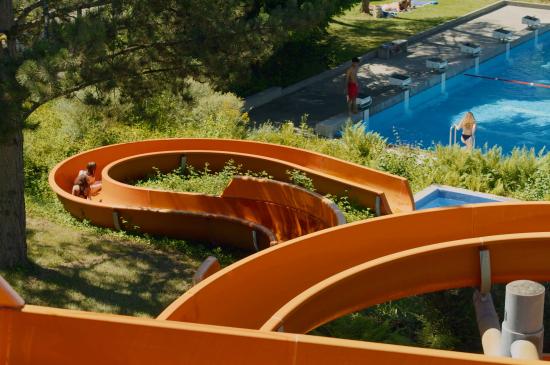
A public swimming pool complex in the middle of a forest which is soon to be renovated: between water slides, French fries, TikTok and sun cream, six teenagers spend the long summer days in the “Badi”, as outdoor pools are called in Swiss German. It is a place to discuss, laugh, try things out and simply hang out together. Whether on the grass, in the water or between the different pools, their conversations revolve around everything that currently moves them. This sun-kissed film accompanies these adolescents at a moment of transition. They talk about the past, think about the future and try to find out who they are and how they will find their place in a changing world. The film stays close to their glances, conversations and encounters, taking an unvarnished look into the inner world of these adolescents – their curiosities, their humour, their contradictions and their insecurities. For one summer long, the Badi becomes a place where childhood and future can exist alongside each other. And while the orange slide is dismantled, the question of what will remain of this summer bubbles up through the water.
Lina Dinkla
Free entry
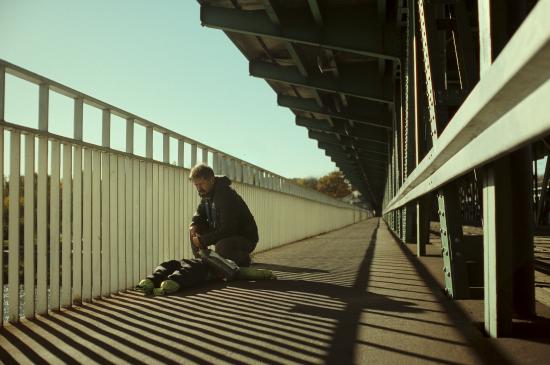
16-year-old Krzysztof was last seen on a bridge over Poland’s Vistula River in 2023. The CCTV camera briefly turned away, and by the time it returned, he had vanished. Following his disappearance, his father Daniel launches a relentless search in Poland’s largest river. As time piles up, the searches persist. Any tech that proves useful gets pulled into it, from drones to metal detectors, trackers, and even loaves of bread, sent floating down the current in the hope of locating the body. The camera matches these rhythms, dredging the river’s depths and combing its banks. The searches, showing the father’s restless energy and the sheer labour of this endeavour, mix with vérité scenes with his family, as well as news snippets about Krzysztof’s alleged sightings. Social media streams are scoured too, providing unsettling insights into the boy’s inner states. Director Michał Marczak – and by extension his camera – accompany Daniel, taking the audience along in a boat and into the heart of a family’s unresolved grief. As closure remains out of reach, Daniel starts assisting other searches, and sombre discoveries are made of other lives lost in the waters.
Sevara Pan
Contains mentions of violence against animals, mental health conditions, suicide
Contains depictions of death, mental health conditions, violence against animals
Photosensitivity warning: Contains flashes of light that may trigger seizures for people with visual sensitivities.
Free entry
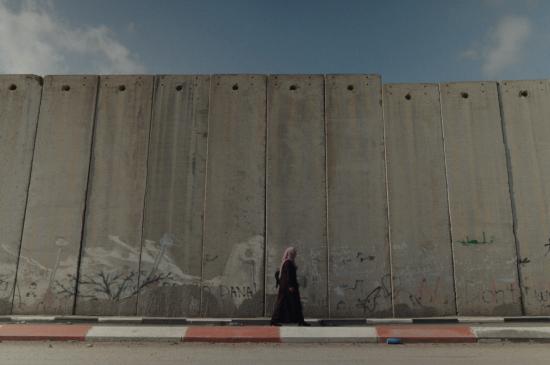
A Palestinian woman, Hind Mashahra, longs for motherhood, but this seems hardly possible as her husband is serving a life sentence in an Israeli prison and is barred from marital visits. Smuggling her husband’s sperm out of prison may be the only chance for her to become a mother again. The documentary follows Hind as she sets out on a risky mission to obtain and deliver her husband’s sample to a fertility clinic. Her repeated attempts are hampered by the traffic, checkpoints, and the short life of semen, perishing within just hours. Unadorned in its language, the film stays close to Hind’s inner experience in the throes of drama, shaped by the reality in the West Bank and East Jerusalem, as well as in quieter moments of waiting that are no less charged. Weaving in accounts of other prisoners’ wives, the documentary chronicles a Palestinian woman’s journey as she pursues motherhood at an extraordinary cost.
Sevara Pan
Contains mentions of death, physical violence
Contains depictions of physical violence, death
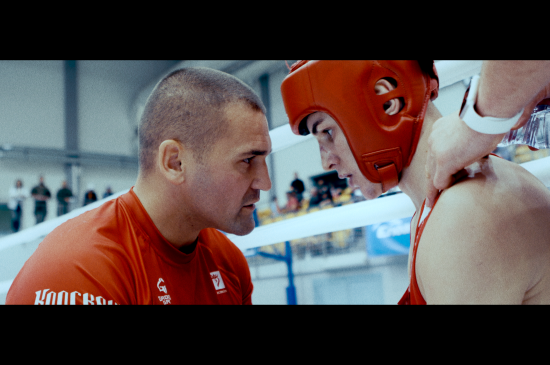
Łukasz dreams of becoming a professional boxer. His mother Monika supports him as much as she can. But the fact that this means he has to move to a sport boarding school over 500 kilometres away is something she can’t fathom. For who will do his washing there and make sure that he turns up to training on time? For Łukasz, the move is a step towards independence, but also a test of his abilities among like-minded people. Between hard training, new friendships and first love, the boarding school doesn’t just become a springboard for his sporting career, but also the place where he comes of age. Over five years, Adam Roszkowski accompanies his taciturn protagonist on his way to the Polish junior championships. In a blend of observation and discreet staging, everyday training routines, family moments and a first date come together to form a narrative that is so close to its characters that the documentary format almost melts into the background. Entirely indebted to the principle of show, don’t tell, “Growing Up” also gives an account of the dedication needed for competitive sport and the price it carries as well as of the silent battles needed to go one’s own way.
Tina Jany
“Trees are life itself”, renowned botanist Stefano Mancuso says, leading a band of kids through what was once a densely wooded area. This becomes the setting for Victor Kossakovsky and Mancuso’s cinematically sprawling journey across Europe, even reaching Vatican City, following the fates of trees. In the Dolomites, trees stand like ghosts after the Storm Vaia devastated the forests. They became more vulnerable due to a planted monoculture of economically valuable fir trees. More damage then followed after the storm, as weakened and fallen trees became breeding ground for bark beetles. What do trees think or feel? Delving into their depths, the camera captures life that’s still sprouting and persisting. However, as winter matures, trees might not make it through the festivities. Chainsaws work tirelessly at fir-tree farms. Like strange cocoons, they are now packed in nets and bundled tightly, waiting for their send-off to homes and public squares. But people’s affection for them might be short-lived.
Sevara Pan
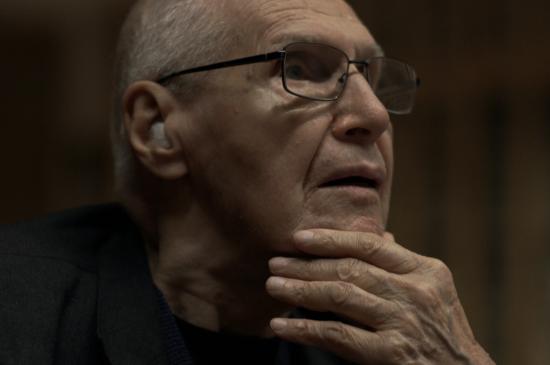
György Kurtág is a renowned Hungarian composer and a major figure of the post-war avant-garde. Born in 1926, he has now reached the age of 100, yet his mind remains wonderfully active. Living in an attic flat of the Budapest Music Center, he continues to work tirelessly with some of the world’s finest musicians who open their creations up to the humbling process of collaboration. Traversing geographies, the film takes us from his birth town of Lugoj to the different places that shaped him, from Transylvania to Budapest to Paris. It traces his early steps into the world of music, which began with dance and four‑hand piano sessions with his mother — something he later continued with his wife and pianist Márta. It then follows his life and many artistic collaborations, including with Icelandic pianist Víkingur Ólafsson and British cellist Steven Isserlis. The film also weaves in the work on his magnum opus “Fin de Partie”. “The map is not the territory; the notes are not music…” To pianists Halla Oddný Magnúsdottir and Ólafsson, Kurtág has “found a way of writing music that is impossible to play without going beyond the notes”. It’s a sentiment shared by Kurtág, who remarks that it’s not about his ideas but about whether the piece, played by a musician, truly “happens” to them. A portrait of a man who lives and breathes music, composing entire worlds brimming with emotion.
Sevara Pan
Sisters Nazieh, Shazieh and Hanieh are from Afghanistan and live with their father at a refugee camp in Athens without any idea of how long they will stay there. Their mother has already arrived in Germany, where a new law now prevents the family from reuniting there as planned. They start growing up in a situation where waiting is the norm. The film accompanies the trio over seven years and shows the fragile normality they establish separately and together in the face of adversity: sport training sessions, language classes and shooting their own film scenes, which are marked by their experiences as refugees. Educator and filmmaker Christos Stefanou got to know the three sisters at the refugee camp, where he worked for five years as a teacher. Aware of the vulnerability of their situation and this phase in life, he follows a collaborative approach in his first feature-length documentary. Drawing on close-up observation, he captures the three sisters’ gestures, thoughts and everyday routines, which reveals their developmental steps and the passing of time not just in physical terms. And while their learning successes sometimes lose any meaning in the face of their constantly changing life situation, one essential question remains: will the family manage to get back together despite all the imponderabilities?
Tina Jany
Alberte and Nicole are mother and daughter, three decades apart. At 55 and 87, they still live together in a villa by Lake Geneva, having settled into a codependent dynamic: Nicole is reluctant to leave her mother, while Alberte struggles to let her go, fearing living alone. In a house filled with memorabilia, cats, and too many clocks, the familiar feels safe for the mother‑daughter duo who often doze off like synchronised swimmers. However, as time passes, the family grows concerned about Nicole’s autonomy. Nicole is considered neuroatypical, “ambivalent” regarding the perceived condition, and few facilities are equipped to provide adequate support. Nicole’s sister, Danielle, then decides to assist her in a search for a flat and a job. These scenes unfold alongside the family’s daily life and the intimate conversations in front of the camera. Nicole also embarks on a playful creative exercise with her filmmaker niece Lauren, imagining life’s many scenarios.
Sevara Pan
Contains depictions of mental health conditions
Free entry
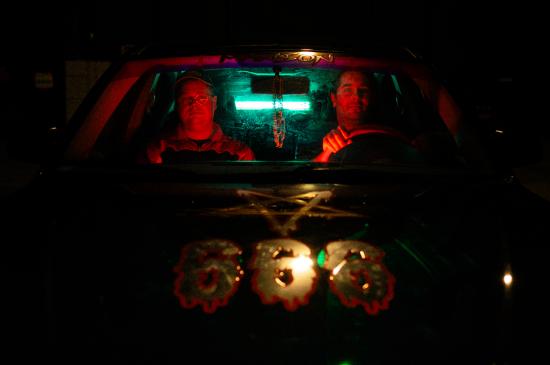
Martin doesn’t dream of a life full of riches. His greatest wish is a 1994 Honda Civic and a driver’s license. He joined his foster family at five months old. At nine, he received a diagnosis of autism, ADHD, and so-called attachment disorder. Then he met Casper, and the two formed a bond born out of their shared love for cars, Trabant jokes, and an understanding of each other’s struggles, shaped by their disabilities and early days spent in an orphanage that affected their self-esteem. Lensed by his brother, director Emil Langballe, with honesty and care, the film follows Martin as he is caught in a spiral of drug addiction and troubles. All the while, he and Casper continue patching up their Honda Civic. A film about ruptures and repairs, of cars and relationships, support systems, and the tenderness of friendship.
Sevara Pan
Contains depictions of drug-use, mental health conditions
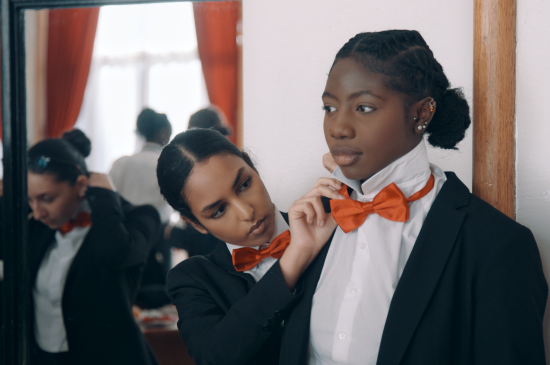
At a vocational college for the hotel industry, Alma, Moussa, Chaïli, Sarah and their classmates swap their everyday clothes, smartphones and chewing gum for uniforms and serving trays. At the college restaurant and in the classroom, they learn the rules and precisely processes linked to French restaurant service: a field in which tradition, discipline and perfection are a priority. Strict, yet fair, the teachers convey the value of a profession that demands patience and putting one’s needs to the side above all else. Between teaching sessions and the different components of service, the portrait of a generation confronted with the expectations of the labour market comes into focus: they need to learn a profession and conform while simultaneously looking for recognition and their own path. The film observes these young people in their training routines with sympathy and attentiveness and explores the contrasts between the idealised image of gastronomy and the harsh reality. For them, this training isn’t always a decision based on conviction, but merely one of the few possible paths into professional life. A lively, unadorned look at becoming an adult and looking for one’s place in a future that offers little and demands many compromises.
Lina Dinkla
International Leipzig Festival for Documentary and Animated Film
26 October to 1 November 2026
Leipziger Dok-Filmwochen GmbH
Katharinenstraße 17
04109 Leipzig
Germany
info [at] dok-leipzig [dot] de (info[at]dok-leipzig[dot]de)
+49 (0)341 30864-0