Films A–Z

Programme & Tickets

A-Z
Filters
Filter by
View by

Retrospective

The struggle for liberation of the people in Latin America in the 1960s/70s was a recurring theme of politically engaged film festivals on both sides of the Wall. The resulting connection between Leipzig, East Berlin and West Berlin is evidenced by the analogue film material of militant cinema from countries like Argentina, Chile or Cuba that is held in the archive of Arsenal Filminstitut and the German Federal Archives today.

Read more about the Retrospective.

Retrospective
Filmstill Chile lebt
Chile lebt
Juan Forch, Michael Börner
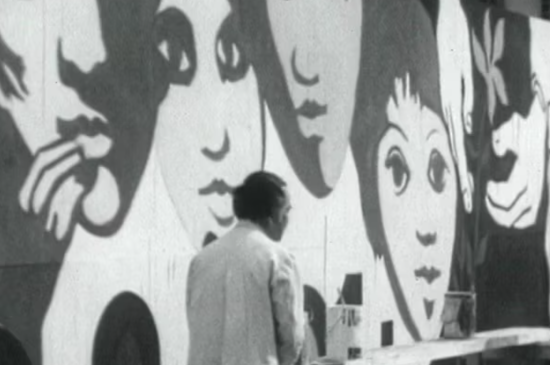
Artists in exile make visible the solidarity with Chile in the wake of 11 September 1973: a celebration of colours and shapes in opposition to the dictatorship. All in just one minute.

1976
Filmstill Chile lebt

Chile lebt

Chile lebt
Juan Forch, Michael Börner
Retrospective
Animated Film
GDR
1976
1 minute
without dialogue
Subtitles: 
None
No Premiere

The Europe-wide protests against Chile’s military dictatorship were expressed not only by political activism, but by a host of artistic actions. The colourful aesthetics of the Unidad Popular’s street art, popularised by the Ramona Parra Brigades, became a visual trademark. Based on this model, the Brigada Pablo Neruda, for example, whose members included well-known Chilean artists exiled in Paris like José Balmes, Gracia Barrios and Guillermo Núñez, realised a 60-metre-long mural on the fringes of documenta 6 in Kassel in 1977. Its creation was documented in Franz Lehmkuhl’s film “Chilenische Wandmalerei” (1977–80), screened in Leipzig in 1980. In his agitation film “Chile lebt”, co-produced with Michael Börner, the Chilean journalist and filmmaker Juan Forch uses pictures of the Brigada Pablo Neruda to express what keeps hope in his homeland alive: international solidarity. In 1979, Forch returned to Chile from exile in the GDR.

Florian Wüst

Screenings & Tickets DOK Leipzig Logo

01.11.
#733
CineStar 5
Teil der Kompilation
During Checkout you can apply discounts, your accreditation or season passes
01.11.2026
CineStar 5
#733
Teil der Kompilation
During Checkout you can apply discounts, your accreditation or season passes
Calendar

Credits DOK Leipzig Logo

Director
Juan Forch, Michael Börner
Cinematographer
Michael Börner
Editor
Juan Forch, Michael Börner
Producer
DEFA-Studio für Trickfilme
Sound
Heinz Kaiser
Animation Technique
Cutout, Collage

Contact DOK Leipzig Logo

Main Contact
Retrospective
Filmstill Eine chilenische Hochzeit
Eine chilenische Hochzeit
Rainer Ackermann, Valentin Milanow
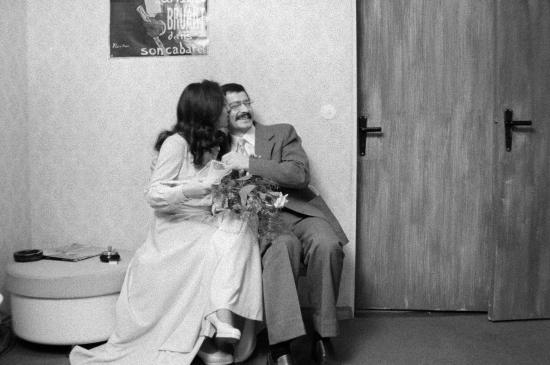
A young Chilean couple gets married in exile in East Germany. There is joyful celebration, but sadness lingers on the guests’ faces: memories of imprisonment and torture.
Filmstill Eine chilenische Hochzeit

Eine chilenische Hochzeit

Eine chilenische Hochzeit
Rainer Ackermann, Valentin Milanow
Retrospective
Documentary Film
GDR
1977
8 minutes
German
Subtitles: 
English
No Premiere

In 1977, Valentin Milanow, a Bulgarian student at the GDR Academy of Film and Television, sat in at the DEFA Studio for Documentary Films. Director Rainer Ackermann was assigned as his mentor. Milanow came up with the idea of portraying the reality of life of exiled Chileans in the GDR. He was friends with a young couple, Alejandra Holzapfel and José Fuica, who lived in the same prefabricated housing estate in Potsdam-Babelsberg. She studied veterinary medicine, he was training to be a teacher of Marxism-Leninism. Milanow was allowed to film their wedding. On the fringes of the seemingly happy celebration, conversations turn to memories of interrogations and torture by the military junta and worries about relatives who were left behind. What the bride herself did not reveal at the time: As a leftist underground fighter she had been exposed to the worst abuse in the “Venda Sexy” prisoners’ camp and others. Today, this place is the memorial site Asociación de Memoria y Derechos Humanos Irán 3030. It is run by Alejandra Holzapfel.

Florian Wüst

Screenings & Tickets DOK Leipzig Logo

01.11.
#733
CineStar 5
Teil der Kompilation
During Checkout you can apply discounts, your accreditation or season passes
01.11.2026
CineStar 5
#733
Teil der Kompilation
During Checkout you can apply discounts, your accreditation or season passes
Calendar

Credits DOK Leipzig Logo

Director
Rainer Ackermann, Valentin Milanow
Cinematographer
Karl Faber, Eberhard Geick
Editor
Werner Wendt
Producer
DEFA-Studio für Dokumentarfilme

Contact DOK Leipzig Logo

Main Contact
Retrospective
Filmstill El tigre saltó y mató, pero morirá... morirá...
El tigre saltó y mató, pero morirá... morirá...
Santiago Álvarez
Five days after the coup, Chile’s most famous singer-songwriter Víctor Jara is brutally murdered by Pinochet’s junta. A tribute to his life and work, recounted through four songs.
Filmstill El tigre saltó y mató, pero morirá... morirá...

El tigre saltó y mató, pero morirá... morirá...

El tigre saltó y mató, pero morirá... morirá...
Santiago Álvarez
Retrospective
Documentary Film
Cuba
1973
16 minutes
Spanish
Subtitles: 
English
No Premiere

Five days after the coup, Chile’s most famous singer-songwriter, Víctor Jara, was brutally murdered. In recognition of his oeuvre, his political stance and also of the “victims of the fascist sadism perpetrated by the military and the CIA in Chile after 11 September 1973”, Santiago Álvarez immediately created a cinematic “report in four songs”. The musical and rhythmic structure and the simultaneous reportage style arising from found news footage and recordings of Jara reflect the agitprop language that is so typical of Álvarez. The title of the film is taken from the poem “Nuestra América” (1891) by Cuban poet José Martí. The end, too, alludes to the continuity of the anti-colonial struggle: A collage of international examples of state repression against insurgents from Puerto Rico to Vietnam and Indonesia is followed by depictions of legendary battles of liberation in 19th century South America.

Florian Wüst

Contains depictions of physical violence

Screenings & Tickets DOK Leipzig Logo

01.11.
#733
CineStar 5
Teil der Kompilation
During Checkout you can apply discounts, your accreditation or season passes
01.11.2026
CineStar 5
#733
Teil der Kompilation
During Checkout you can apply discounts, your accreditation or season passes
Calendar

Credits DOK Leipzig Logo

Director
Santiago Álvarez
Editor
Gloria Argüelles
Producer
ICAIC – Instituto Cubano del Arte e Industria Cinematográficos
Animation
Adalberto Hernández, Santiago Peñate

Contact DOK Leipzig Logo

Main Contact
Arsenal – Institut für Film und Videokunst
Retrospective
Filmstill Herminda de la Victoria
Herminda de la Victoria
Douglas Hübner
The police clear land on the outskirts of Santiago that is occupied by homeless families. A girl dies. The settlement stays. It bears her name to this day: Herminda de la Victoria.
Filmstill Herminda de la Victoria

Herminda de la Victoria

Herminda de la Victoria
Douglas Hübner
Retrospective
Documentary Film
Chile
1969
16 minutes
Spanish
Subtitles: 
English
No Premiere

In a large-scale operation, a group of homeless families occupy some wasteland on the outskirts of Santiago in March 1967. When the police attempt to evict them, a little girl, Herminda, dies in her mother’s arms. The eviction is called off, the people are allowed to stay and, without any existing infrastructure, build the settlement that exists to this day: Herminda de la Victoria. “Full of errors and mistakes, [the film] is my first approach to cinema, albeit to a ‘new cinema’, a Latin American cinema marked by underdevelopment. Nonetheless, the cinematic process, editing and sound represent a fully valid experience to me. ‘Herminda de la Victoria’ champions the interests of the homeless in Chile, suffers with them, is both testimony and a ‘document’ that forces you to take sides.” (Douglas Hübner)

Florian Wüst

Screenings & Tickets DOK Leipzig Logo

29.10.
#434
CineStar 5
Teil der Kompilation
During Checkout you can apply discounts, your accreditation or season passes
29.10.2026
CineStar 5
#434
Teil der Kompilation
During Checkout you can apply discounts, your accreditation or season passes
Calendar

Credits DOK Leipzig Logo

Director
Douglas Hübner
Cinematographer
Héctor Ríos
Editor
Antonio Puchi
Producer
Cine Experimental de la Universidad de Chile
Score
Sergio Ortega

Contact DOK Leipzig Logo

Main Contact
Bundesarchiv
Retrospective
Filmstill Illapu – Lied von Freiheit und Liebe
Illapu – Lied von Freiheit und Liebe
Carlos Puccio
The Chilean folk band Illapu arrives in East Berlin. Between gigs, they face a difficult question: Should they return home individually if the opportunity arises, or remain in exile together?
Filmstill Illapu – Lied von Freiheit und Liebe

Illapu – Lied von Freiheit und Liebe

Illapu – Lied von Freiheit und Liebe
Carlos Puccio
Retrospective
Documentary Film
GDR
1984
23 minutes
Spanish,
German
Subtitles: 
English
No Premiere

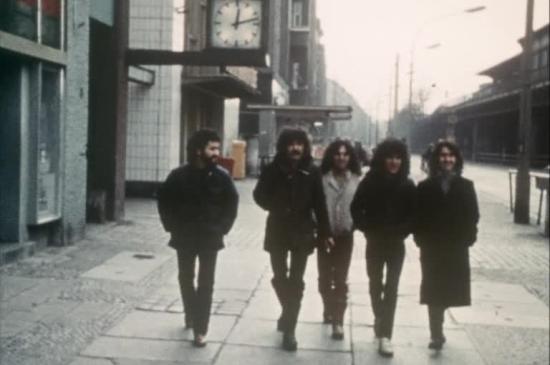
The Chilean folk group Illapu only really became famous under the military dictatorship. The five musicians were allowed to work, but had to “keep a low profile”. When they gradually joined the cultural resistance against the Pinochet regime, they were expelled in 1981. From their French exile, they toured Europe, including East Berlin. This is where Carlos Puccio’s film begins: The Chilean directing student observed Illapu’s rehearsals and concerts for his diploma film project at the Film and Television Academy of the GDR. They talk about their enduring bond with Chile and about what would happen if individual members of the band were given entry permits and Illapu would consequently break up. In 1986, they moved to Mexico together and returned to Chile two years later because of the changing political climate.

Florian Wüst

Screenings & Tickets DOK Leipzig Logo

01.11.
#733
CineStar 5
Teil der Kompilation
During Checkout you can apply discounts, your accreditation or season passes
01.11.2026
CineStar 5
#733
Teil der Kompilation
During Checkout you can apply discounts, your accreditation or season passes
Calendar

Credits DOK Leipzig Logo

Director
Carlos Puccio
Script
Maria Teresa Guerra
Cinematographer
Peter Ziesche
Editor
Karin Geiß
Producer
Hochschule für Film und Fernsehen der DDR im Auftrag des Fernsehens der DDR
Sound
Jochen-Peter Ihle, Volker Werner

Contact DOK Leipzig Logo

Main Contact
Retrospective
Filmstill La hora de los hornos. Neocolonialismo y violencia
La hora de los hornos. Neocolonialismo y violencia
Fernando E. Solanas
A film like an incendiary device, a radical pamphlet. Like few other films, this call for the liberation of Argentina from oppression and violence moved the 1968 generation across the world.
Filmstill La hora de los hornos. Neocolonialismo y violencia

La hora de los hornos. Neocolonialismo y violencia

La hora de los hornos. Neocolonialismo y violencia
Fernando E. Solanas
Retrospective
Documentary Film
Argentina
1968
88 minutes
Spanish
Subtitles: 
English
No Premiere

A call for radical political change, an agitation pamphlet for the national liberation of Argentina: Like few other films, “La hora de los hornos” stirred the generation of 1968 all over the world. The more than four-hour-long film essay was banned for many years, not just in Argentina. Taking the form of a multilayered documentary collage, it is a masterful exploration of the possibilities of image-sound-editing which unfolds a panorama of the prevailing social and political conditions. “Neocolonialismo y violencia” analyses the colonisation of Latin America, its economic and cultural dependence on the industrialised states of the so-called First World, especially the USA, as well as the omnipresence of violence. The second part, “Acto para la liberación”, delivers a chronicle of Peronism and the resistance after Perón’s fall in 1955. “Violencia y liberación”, the shorter third part, openly advocates armed struggle. After two years of clandestine work by a small team around Fernando E. Solanas and Octavio Gentino, “La hora de los hornos” had its world premiere on 2 June 1968 at the Mostra Internazionale del Cinema Nuovo in Pesaro. The Friends of the German Cinematheque (today: Arsenal Filminstitut) screened the three-part film only a few weeks later on the occasion of the Berlinale. After the opening of the Arsenal cinema in January 1970 on Welserstraße in Berlin-Schöneberg, countless screenings of the distribution prints of the film followed at their own venue and elsewhere.
Florian Wüst

Contains depictions of physical violence, racism

Screenings & Tickets DOK Leipzig Logo

27.10.
#233
CineStar 5
Teil der Kompilation
During Checkout you can apply discounts, your accreditation or season passes
27.10.2026
CineStar 5
#233
Teil der Kompilation
During Checkout you can apply discounts, your accreditation or season passes
Calendar

Credits DOK Leipzig Logo

Director
Fernando E. Solanas
Script
Octavio Getino, Fernando E. Solanas
Cinematographer
Juan Carlos Desanzo
Editor
Juan Carlos Macías, Antonio Ripoll, Norma Torrado
Producer
Grupo Cine Liberación

Contact DOK Leipzig Logo

Main Contact
Victoria Solanas
Retrospective
Filmstill Lavra Dor
Lavra Dor
Paulo Rufino, Ana Carolina
Lavrador = peasant, lavra = work, dor = pain. This experimental collage about the situation of Brazilian farmworkers is testament to the equally poetic and political power of cinema.
Filmstill Lavra Dor

Lavra Dor

Lavra Dor
Paulo Rufino, Ana Carolina
Retrospective
Documentary Film
Brazil
1968
11 minutes
Portuguese (Brazil)
Subtitles: 
English
No Premiere

After the military coup in Brazil in March 1964, the new rulers stopped the fairer distribution of land that had already begun. The agrarian reforms implemented instead favoured big land owners and the agribusiness sector; unions were suppressed. Against this backdrop, Paulo Rufino and Ana Carolina address the struggles and hardships of agricultural labourers. In a free and poetical style, they assemble photographs, film sequences, quotes in words and images into an experimental collage that probes the limits of the documentary. In particular, they play with the instrument of repetition – in a kind of non-linear interpretation of “Lavra Dor” (1962) and other poems by Mário Chamie. The film was screened in the “Week of New Cinema: Latin America” section of the 1970 Berlinale which was compiled by Peter B. Schumann. Four years earlier, Schumann had already shown a cross section of the Brazilian “Cinema Novo” in West Berlin as part of the festival’s retrospective.

Florian Wüst

Screenings & Tickets DOK Leipzig Logo

28.10.
#334
CineStar 5
Teil der Kompilation
During Checkout you can apply discounts, your accreditation or season passes
28.10.2026
CineStar 5
#334
Teil der Kompilation
During Checkout you can apply discounts, your accreditation or season passes
Calendar

Credits DOK Leipzig Logo

Director
Paulo Rufino, Ana Carolina
Script
Paulo Rufino, Ana Carolina
Cinematographer
Carlos Alberto Ebert
Editor
Franklin Pereira
Producer
Paulo Rufino, Ana Carolina

Contact DOK Leipzig Logo

Main Contact
Arsenal – Institut für Film und Videokunst
Retrospective
Filmstill Líber Arce, liberarse
Líber Arce, liberarse
Mario Handler, Mario Jacob, Marcos Banchero
Líber Arce, the name of a student shot dead by the police at a protest, becomes a call for action: Liberarse, to liberate oneself. A silent cry against violence and oppression.
Filmstill Líber Arce, liberarse

Líber Arce, liberarse

Líber Arce, liberarse
Mario Handler, Mario Jacob, Marcos Banchero
Retrospective
Documentary Film
Uruguay
1969
11 minutes
Spanish captions
Subtitles: 
English
No Premiere

Líber Arce was the name of a communist student who was shot dead by the police at a protest on the university campus of Montevideo. The film documents the events before and after his burial, its title transforming the name of the victim into a call for action: liberarse, to liberate oneself. The fact that the film is silent and the indictment of the social and economic conditions as well as US imperialism is spelled out in intertitles turns the lack of resources for a soundtrack into an aesthetic quality. We look more closely because there is nothing to hear. Mario Handler is a cofounder of the “Cinemateca Tercer del Mundo” (1969-1974) film collective, which sought to build its own cinema of counter-information and published a magazine. Above all, however, it screened the militant films from the other Latin American countries and popularised them far beyond the circles of bourgeois culture in Uruguay.

Florian Wüst

Contains depictions of physical violence

Screenings & Tickets DOK Leipzig Logo

28.10.
#334
CineStar 5
Teil der Kompilation
During Checkout you can apply discounts, your accreditation or season passes
28.10.2026
CineStar 5
#334
Teil der Kompilation
During Checkout you can apply discounts, your accreditation or season passes
Calendar

Credits DOK Leipzig Logo

Director
Mario Handler, Mario Jacob, Marcos Banchero
Cinematographer
Mario Handler, Ferruccio Musitelli, Alberto Monteagudo
Producer
Cinemateca del Tercer Mundo

Contact DOK Leipzig Logo

Main Contact
Arsenal – Institut für Film und Videokunst
Retrospective
Filmstill Now!
Now!
Santiago Álvarez
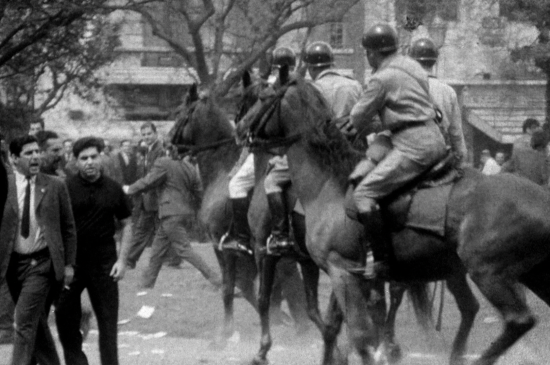
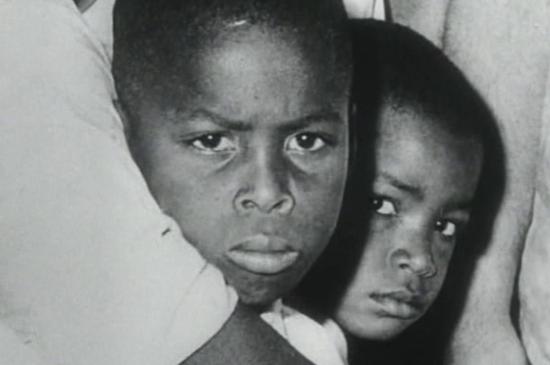
„Now!“ hits the screen like a burst of machine gun fire. A radical outcry against racism and police violence in the USA: loud, furious, uncompromising and urgent, even today.
Filmstill Now!

Now!

Now!
Santiago Álvarez
Retrospective
Documentary Film
Cuba
1965
6 minutes
without dialogue
No Premiere

“Still I believe / We are created, free and equal / Now / Now / Now …” US-American singer Lena Horne interpreted the Hebrew song “Hava Nagila” with different lyrics: “Now!” (1963) became an anthem of the civil rights movement in the USA, while Santiago Álvarez’s film of the same name rose to become an agitprop classic. He edited photographs and a few short moving image sequences of racial discrimination, police violence and white terror to the rhythm of Horne’s song. The International Leipzig Documentary and Short Film Week alone screened “Now!” five times in two decades after it had won the Golden Dove in 1965. The presence of Cuban documentary film in Leipzig amounted to a long success story, not least thanks to Álvarez, its best-known exponent. In addition to screenings of his films, he served several times as a member of the International Jury. Even after the controversy surrounding his stance on the Prague Spring 1968, Álvarez continued to be a regular guest.

Florian Wüst

Contains depictions of racism, physical violence

Screenings & Tickets DOK Leipzig Logo

27.10.
#233
CineStar 5
Teil der Kompilation
During Checkout you can apply discounts, your accreditation or season passes
27.10.2026
CineStar 5
#233
Teil der Kompilation
During Checkout you can apply discounts, your accreditation or season passes
Calendar

Credits DOK Leipzig Logo

Director
Santiago Álvarez
Cinematographer
Pepín Rodríguez, Adalberto Hernández
Editor
Norma Torrado, Idalberto Gálvez
Producer
ICAIC – Instituto Cubano del Arte e Industria Cinematográficos

Contact DOK Leipzig Logo

Main Contact
Arsenal – Institut für Film und Videokunst
Retrospective
Filmstill Nuestra voz de tierra, memoria y futuro
Nuestra voz de tierra, memoria y futuro
Marta Rodríguez, Jorge Silva
An indigenous community’s struggle for land and cultural self-determination in southwestern Colombia in the 1970s: Magic and myths strengthen the process of political organisation.
Filmstill Nuestra voz de tierra, memoria y futuro

Nuestra voz de tierra, memoria y futuro

Nuestra voz de tierra, memoria y futuro
Marta Rodríguez, Jorge Silva
Retrospective
Documentary Film
Colombia
1981
107 minutes
Spanish
Subtitles: 
English
No Premiere

Marta Rodríguez and Jorge Silva made their first appearance in Leipzig in 1972, with “Planas, testimonio de un etnocidio” (1971) in the retrospective “Film in the People’s Struggle for Freedom: Latin America” as well as in the television competition and in the cinema competition with “Chircales” (1972). Both films were awarded Golden Doves, Rodríguez and Silva became instant stars of the festival. In 1975, “Campesinos” brought them back to Leipzig. This film marks the beginning of their exploration of the centuries-old oppression of indigenous communities in the Cauca region in southwestern Colombia and their equally long resistance against colonial exploitation and dispossession. Years later, the theme culminated in “Nuestra voz de tierra, memoria y futuro”, in which they used some shots from “Campesinos”. Rodríguez and Silva document the process of political organisation in the Coconuco community during the land reform movement of the 1970s, with extensive critical collaboration by their protagonists. At the same time, it was an attempt to leave the naturalism of the documentary format behind and approach the subconscious mind of the indigenous culture, “to depict its magical world in all its complexity and beauty”, as Silva put it in a conversation with Peter B. Schumann in the information leaflet of the 1982 Berlinale Forum. The film re-celebrated its world premiere in its restored digital version at the 2019 Forum.

Florian Wüst

Screenings & Tickets DOK Leipzig Logo

30.10.
#533
CineStar 5
Teil der Kompilation
During Checkout you can apply discounts, your accreditation or season passes
30.10.2026
CineStar 5
#533
Teil der Kompilation
During Checkout you can apply discounts, your accreditation or season passes
Calendar

Credits DOK Leipzig Logo

Director
Marta Rodríguez, Jorge Silva
Cinematographer
Jorge Silva
Editor
Marta Rodríguez, Jorge Silva, Caíta Villalón
Producer
Fundación de Cine Documental in collaboration with the Instituto Cubano del Arte e Industria Cinematográficos
Sound
Ignacio Jiménez, Eduardo Burgos, Nora Drufovka
Score
Jorge López

Contact DOK Leipzig Logo

Main Contact
Arsenal – Institut für Film und Videokunst
Retrospective
Filmstill Pintando con el pueblo
Pintando con el pueblo
Leonardo Céspedes
Brushes, paint buckets, canvas: A huge painting is taking shape in front of the Presidential Palace in Santiago. Salvador Allende proclaims: “Culture is not just for the select few.”
Filmstill Pintando con el pueblo

Pintando con el pueblo

Pintando con el pueblo
Leonardo Céspedes
Retrospective
Documentary Film
Chile
1971
8 minutes
Spanish
Subtitles: 
English
No Premiere

During the Unidad Popular election campaign in 1970, the Ramona Parra Brigades mobilised young activists across the country. They painted political messages on facades and walls using brushes and buckets of paint. In “Brigada Ramona Parra” (1970), Álvaro Ramírez – who continued to work as a filmmaker in exile in the GDR – documents the sometimes daring work of one of these groups. Leonardo Céspedes’ “Pintando con el pueblo” in turn shows the new direction of Chilean cultural politics under Salvador Allende. Artists and art students create a huge mural in front of the presidential palace, La Moneda, in Santiago, under the eyes of passers-by. The site becomes a stage for a rally organized by the Unidad Popular.The film ends with a speech by Allende about art as “an art for all the people”. The 16mm distribution print held by the Arsenal archive is probably the only surviving copy of “Pintando con el pueblo”. It was digitised for this retrospective.

Florian Wüst

Screenings & Tickets DOK Leipzig Logo

01.11.
#733
CineStar 5
Teil der Kompilation
During Checkout you can apply discounts, your accreditation or season passes
01.11.2026
CineStar 5
#733
Teil der Kompilation
During Checkout you can apply discounts, your accreditation or season passes
Calendar

Credits DOK Leipzig Logo

Director
Leonardo Céspedes
Cinematographer
Toño Ríos, Carlos González
Producer
Cine Experimental de la Universidad de Chile

Contact DOK Leipzig Logo

Main Contact
Arsenal – Institut für Film und Videokunst
Retrospective
Filmstill Somos +
Somos +
Pedro Chaskel, Pablo Salas
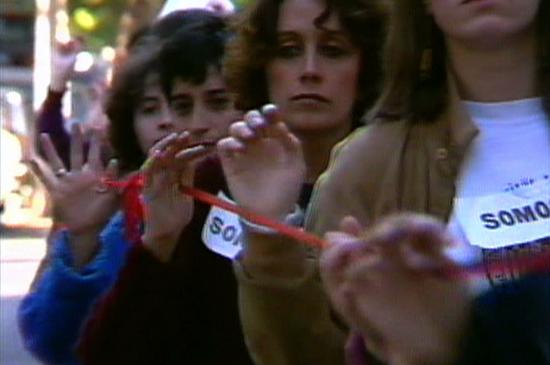
"We are more" is written on the placards of ‘Mujeres por la vida’. In 1985, Chilean women brave tear gas and water cannons. Their resistance to the military dictatorship remains unbroken.
Filmstill Somos +

Somos +

Somos +
Pedro Chaskel, Pablo Salas
Retrospective
Documentary Film
Chile
1985
16 minutes
Spanish
Subtitles: 
English
No Premiere

Encouraged by the UN Resolution of 6 November 1974, which condemned the human rights violations of the Chilean military dictatorship, relatives of imprisoned and disappeared persons first began to join forces. Whether in this or other initiatives fighting for a return of democracy to Chile, the resistance was always primarily driven by women. It became more and more visible in the 1980s, not least due to the creativity of their forms of action. One example: On 30 October 1985, the “Mujeres por la vida” organised a protest in the Providencia district of Santiago under the slogan “Somos+” (We are more). The women formed three rows moving towards each other, each holding a ribbon in one of Chile’s national colours. The video documentation of the protest and its violent breakup by the police won multiple awards at the 1986 West German Short Film Festival in Oberhausen.

Florian Wüst

Contains depictions of physical violence

Screenings & Tickets DOK Leipzig Logo

01.11.
#733
CineStar 5
Teil der Kompilation
During Checkout you can apply discounts, your accreditation or season passes
01.11.2026
CineStar 5
#733
Teil der Kompilation
During Checkout you can apply discounts, your accreditation or season passes
Calendar

Credits DOK Leipzig Logo

Director
Pedro Chaskel, Pablo Salas
Cinematographer
Pablo Salas, Leopoldo Correa
Editor
Pedro Chaskel, Pablo Salas
Producer
Antu Producciones

Contact DOK Leipzig Logo

Main Contact
Carsten Spicher
spicher@kurzfilmtage.de