Films A–Z

Programme & Tickets

A-Z
Filters
Filter by
View by

Glossary AZ - Content » fullInternationalTitle

Retrospective

The struggle for liberation of the people in Latin America in the 1960s/70s was a recurring theme of politically engaged film festivals on both sides of the Wall. The resulting connection between Leipzig, East Berlin and West Berlin is evidenced by the analogue film material of militant cinema from countries like Argentina, Chile or Cuba that is held in the archive of Arsenal Filminstitut and the German Federal Archives today.

Read more about the Retrospective.

Retrospective
Filmstill Líber Arce, liberarse
Líber Arce, liberarse
Mario Handler, Mario Jacob, Marcos Banchero
Líber Arce, the name of a student shot dead by the police at a protest, becomes a call for action: Liberarse, to liberate oneself. A silent cry against violence and oppression.

Filmstill Líber Arce, liberarse

Líber Arce, liberarse

Líber Arce, liberarse
Mario Handler, Mario Jacob, Marcos Banchero
Retrospective
Documentary Film
Uruguay
1969
11 minutes
Spanish captions
Subtitles: 
English
No Premiere

Líber Arce was the name of a communist student who was shot dead by the police at a protest on the university campus of Montevideo. The film documents the events before and after his burial, its title transforming the name of the victim into a call for action: liberarse, to liberate oneself. The fact that the film is silent and the indictment of the social and economic conditions as well as US imperialism is spelled out in intertitles turns the lack of resources for a soundtrack into an aesthetic quality. We look more closely because there is nothing to hear. Mario Handler is a cofounder of the “Cinemateca Tercer del Mundo” (1969-1974) film collective, which sought to build its own cinema of counter-information and published a magazine. Above all, however, it screened the militant films from the other Latin American countries and popularised them far beyond the circles of bourgeois culture in Uruguay.

Florian Wüst

Contains depictions of physical violence

Screenings & Tickets DOK Leipzig Logo

28.10.
#334
CineStar 5
Teil der Kompilation
During Checkout you can apply discounts, your accreditation or season passes
28.10.2026
CineStar 5
#334
Teil der Kompilation
During Checkout you can apply discounts, your accreditation or season passes
Calendar

Credits DOK Leipzig Logo

Director
Mario Handler, Mario Jacob, Marcos Banchero
Cinematographer
Mario Handler, Ferruccio Musitelli, Alberto Monteagudo
Producer
Cinemateca del Tercer Mundo

Contact DOK Leipzig Logo

Main Contact
Arsenal – Institut für Film und Videokunst
Retrospective
Filmstill Now!
Now!
Santiago Álvarez
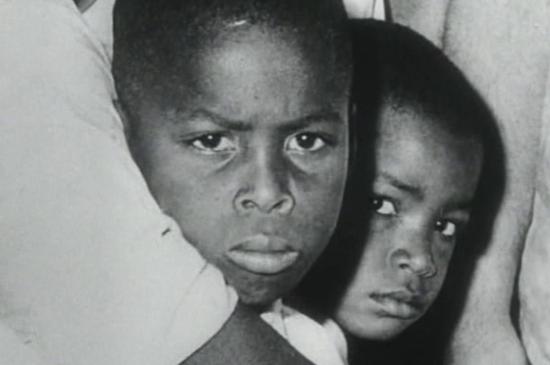
„Now!“ hits the screen like a burst of machine gun fire. A radical outcry against racism and police violence in the USA: loud, furious, uncompromising and urgent, even today.
Filmstill Now!

Now!

Now!
Santiago Álvarez
Retrospective
Documentary Film
Cuba
1965
6 minutes
without dialogue
No Premiere

“Still I believe / We are created, free and equal / Now / Now / Now …” US-American singer Lena Horne interpreted the Hebrew song “Hava Nagila” with different lyrics: “Now!” (1963) became an anthem of the civil rights movement in the USA, while Santiago Álvarez’s film of the same name rose to become an agitprop classic. He edited photographs and a few short moving image sequences of racial discrimination, police violence and white terror to the rhythm of Horne’s song. The International Leipzig Documentary and Short Film Week alone screened “Now!” five times in two decades after it had won the Golden Dove in 1965. The presence of Cuban documentary film in Leipzig amounted to a long success story, not least thanks to Álvarez, its best-known exponent. In addition to screenings of his films, he served several times as a member of the International Jury. Even after the controversy surrounding his stance on the Prague Spring 1968, Álvarez continued to be a regular guest.

Florian Wüst

Contains depictions of racism, physical violence

Screenings & Tickets DOK Leipzig Logo

27.10.
#233
CineStar 5
Teil der Kompilation
During Checkout you can apply discounts, your accreditation or season passes
27.10.2026
CineStar 5
#233
Teil der Kompilation
During Checkout you can apply discounts, your accreditation or season passes
Calendar

Credits DOK Leipzig Logo

Director
Santiago Álvarez
Cinematographer
Pepín Rodríguez, Adalberto Hernández
Editor
Norma Torrado, Idalberto Gálvez
Producer
ICAIC – Instituto Cubano del Arte e Industria Cinematográficos

Contact DOK Leipzig Logo

Main Contact
Arsenal – Institut für Film und Videokunst
Retrospective
Filmstill Nuestra voz de tierra, memoria y futuro
Nuestra voz de tierra, memoria y futuro
Marta Rodríguez, Jorge Silva
An indigenous community’s struggle for land and cultural self-determination in southwestern Colombia in the 1970s: Magic and myths strengthen the process of political organisation.
Filmstill Nuestra voz de tierra, memoria y futuro

Nuestra voz de tierra, memoria y futuro

Nuestra voz de tierra, memoria y futuro
Marta Rodríguez, Jorge Silva
Retrospective
Documentary Film
Colombia
1981
107 minutes
Spanish
Subtitles: 
English
No Premiere

Marta Rodríguez and Jorge Silva made their first appearance in Leipzig in 1972, with “Planas, testimonio de un etnocidio” (1971) in the retrospective “Film in the People’s Struggle for Freedom: Latin America” as well as in the television competition and in the cinema competition with “Chircales” (1972). Both films were awarded Golden Doves, Rodríguez and Silva became instant stars of the festival. In 1975, “Campesinos” brought them back to Leipzig. This film marks the beginning of their exploration of the centuries-old oppression of indigenous communities in the Cauca region in southwestern Colombia and their equally long resistance against colonial exploitation and dispossession. Years later, the theme culminated in “Nuestra voz de tierra, memoria y futuro”, in which they used some shots from “Campesinos”. Rodríguez and Silva document the process of political organisation in the Coconuco community during the land reform movement of the 1970s, with extensive critical collaboration by their protagonists. At the same time, it was an attempt to leave the naturalism of the documentary format behind and approach the subconscious mind of the indigenous culture, “to depict its magical world in all its complexity and beauty”, as Silva put it in a conversation with Peter B. Schumann in the information leaflet of the 1982 Berlinale Forum. The film re-celebrated its world premiere in its restored digital version at the 2019 Forum.

Florian Wüst

Screenings & Tickets DOK Leipzig Logo

30.10.
#533
CineStar 5
Teil der Kompilation
During Checkout you can apply discounts, your accreditation or season passes
30.10.2026
CineStar 5
#533
Teil der Kompilation
During Checkout you can apply discounts, your accreditation or season passes
Calendar

Credits DOK Leipzig Logo

Director
Marta Rodríguez, Jorge Silva
Cinematographer
Jorge Silva
Editor
Marta Rodríguez, Jorge Silva, Caíta Villalón
Producer
Fundación de Cine Documental in collaboration with the Instituto Cubano del Arte e Industria Cinematográficos
Sound
Ignacio Jiménez, Eduardo Burgos, Nora Drufovka
Score
Jorge López

Contact DOK Leipzig Logo

Main Contact
Arsenal – Institut für Film und Videokunst
Retrospective
Filmstill Ollas populares
Ollas populares
Gerardo Vallejo
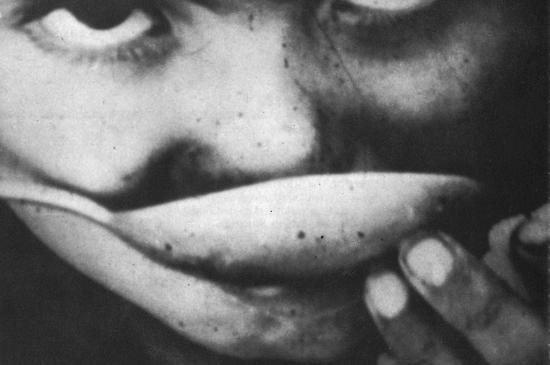
Scenes of a public soup kitchen; thin broth is spooned up apathetically. The Argentine national anthem is playing. “Hear the sound of broken chains” – cynicism or revolutionary call?
Filmstill Ollas populares

Ollas populares

Ollas populares
Gerardo Vallejo
Retrospective
Documentary Film
Argentina
1968
5 minutes
Spanish
Subtitles: 
English
No Premiere

Countless families in the Tucumán province, one of the poorest regions in Argentina, become unemployed after the annual sugar cane harvest. The state installs so-called popular kitchens to combat hunger. Children and old people spoon the thin broth almost apathetically. “These images are stark and elementary. Without commentary, the camera confronts us with conditions of destitution that even the most eloquent pleas are unable to describe”, Peter Kress notes in the report of the 1970 West German Short Film Festival. As a counterpoint to the images, “Ollas populares” is set to the Argentinian national anthem. Can its lyrics only be understood as an expression of cynicism? Maybe it can be interpreted quite differently – as a revolutionary call to arms: “Hear the noise of broken chains. / See noble equality enthroned.” Gerardo Vallejo’s film was made in the constant fear of exposure of its authorship, which is why it is listed anonymously in the Oberhausen programme.

Florian Wüst

Screenings & Tickets DOK Leipzig Logo

31.10.
#633
CineStar 5
Teil der Kompilation
During Checkout you can apply discounts, your accreditation or season passes
31.10.2026
CineStar 5
#633
Teil der Kompilation
During Checkout you can apply discounts, your accreditation or season passes
Calendar

Credits DOK Leipzig Logo

Director
Gerardo Vallejo
Cinematographer
Gerardo Vallejo
Editor
Gerardo Vallejo
Producer
Grupo Cine Liberación

Contact DOK Leipzig Logo

Main Contact
Camila Vallejo
Retrospective
Filmstill Pintando con el pueblo
Pintando con el pueblo
Leonardo Céspedes
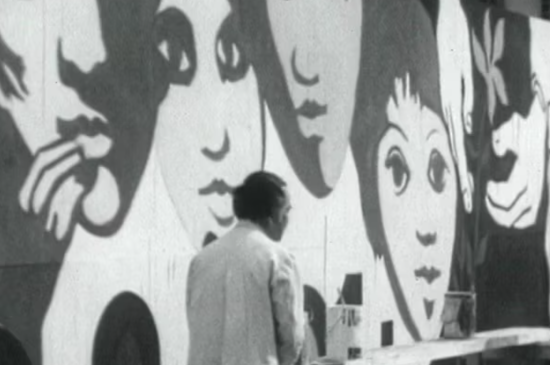
Brushes, paint buckets, canvas: A huge painting is taking shape in front of the Presidential Palace in Santiago. Salvador Allende proclaims: “Culture is not just for the select few.”
Filmstill Pintando con el pueblo

Pintando con el pueblo

Pintando con el pueblo
Leonardo Céspedes
Retrospective
Documentary Film
Chile
1971
8 minutes
Spanish
Subtitles: 
English
No Premiere

During the Unidad Popular election campaign in 1970, the Ramona Parra Brigades mobilised young activists across the country. They painted political messages on facades and walls using brushes and buckets of paint. In “Brigada Ramona Parra” (1970), Álvaro Ramírez – who continued to work as a filmmaker in exile in the GDR – documents the sometimes daring work of one of these groups. Leonardo Céspedes’ “Pintando con el pueblo” in turn shows the new direction of Chilean cultural politics under Salvador Allende. Artists and art students create a huge mural in front of the presidential palace, La Moneda, in Santiago, under the eyes of passers-by. The site becomes a stage for a rally organized by the Unidad Popular.The film ends with a speech by Allende about art as “an art for all the people”. The 16mm distribution print held by the Arsenal archive is probably the only surviving copy of “Pintando con el pueblo”. It was digitised for this retrospective.

Florian Wüst

Screenings & Tickets DOK Leipzig Logo

01.11.
#733
CineStar 5
Teil der Kompilation
During Checkout you can apply discounts, your accreditation or season passes
01.11.2026
CineStar 5
#733
Teil der Kompilation
During Checkout you can apply discounts, your accreditation or season passes
Calendar

Credits DOK Leipzig Logo

Director
Leonardo Céspedes
Cinematographer
Toño Ríos, Carlos González
Producer
Cine Experimental de la Universidad de Chile

Contact DOK Leipzig Logo

Main Contact
Arsenal – Institut für Film und Videokunst
Retrospective
Filmstill Somos +
Somos +
Pedro Chaskel, Pablo Salas
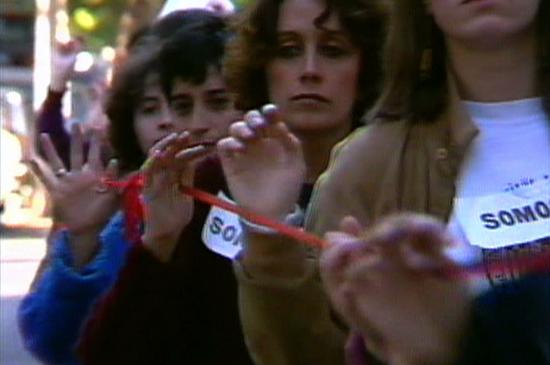
"We are more" is written on the placards of ‘Mujeres por la vida’. In 1985, Chilean women brave tear gas and water cannons. Their resistance to the military dictatorship remains unbroken.
Filmstill Somos +

Somos +

Somos +
Pedro Chaskel, Pablo Salas
Retrospective
Documentary Film
Chile
1985
16 minutes
Spanish
Subtitles: 
English
No Premiere

Encouraged by the UN Resolution of 6 November 1974, which condemned the human rights violations of the Chilean military dictatorship, relatives of imprisoned and disappeared persons first began to join forces. Whether in this or other initiatives fighting for a return of democracy to Chile, the resistance was always primarily driven by women. It became more and more visible in the 1980s, not least due to the creativity of their forms of action. One example: On 30 October 1985, the “Mujeres por la vida” organised a protest in the Providencia district of Santiago under the slogan “Somos+” (We are more). The women formed three rows moving towards each other, each holding a ribbon in one of Chile’s national colours. The video documentation of the protest and its violent breakup by the police won multiple awards at the 1986 West German Short Film Festival in Oberhausen.

Florian Wüst

Contains depictions of physical violence

Screenings & Tickets DOK Leipzig Logo

01.11.
#733
CineStar 5
Teil der Kompilation
During Checkout you can apply discounts, your accreditation or season passes
01.11.2026
CineStar 5
#733
Teil der Kompilation
During Checkout you can apply discounts, your accreditation or season passes
Calendar

Credits DOK Leipzig Logo

Director
Pedro Chaskel, Pablo Salas
Cinematographer
Pablo Salas, Leopoldo Correa
Editor
Pedro Chaskel, Pablo Salas
Producer
Antu Producciones

Contact DOK Leipzig Logo

Main Contact
Carsten Spicher
spicher@kurzfilmtage.de
Retrospective
Filmstill Tire dié
Tire dié
Fernando Birri
A daring endeavour for a few coins. Barefoot children run along the moving train to Buenos Aires, stretching out their hands to the passengers. “Tire dié, tire dié!”
Filmstill Tire dié

Tire dié

Tire dié
Fernando Birri
Retrospective
Documentary Film
Argentina
1958
33 minutes
Spanish
Subtitles: 
English
No Premiere

“Tire dié” begins with aerial shots of Santa Fe, Fernando Birri’s hometown. We hear a litany of statistical data that gradually and parodically turn into more and more trivial facts about the city. The camera approaches the town’s outskirts with their informal settlements, drops from its airy heights down to the eye-level of those who talk about their daily struggle for survival. Often it is the children who bring the necessary coins home. Every afternoon, they go begging along the nearby two-kilometre railway bridge. Running barefoot along the train that connects Santa Fe with Buenos Aires, they hold their hands up to the travellers at the windows, incessantly calling “tire dié” (throw a dime). The last third of the film, which marks the birth of the new Latin American cinema, is an equally breathtaking and harrowing montage of this daring endeavour.

Florian Wüst

Screenings & Tickets DOK Leipzig Logo

28.10.
#334
CineStar 5
Teil der Kompilation
During Checkout you can apply discounts, your accreditation or season passes
28.10.2026
CineStar 5
#334
Teil der Kompilation
During Checkout you can apply discounts, your accreditation or season passes
Calendar

Credits DOK Leipzig Logo

Director
Fernando Birri
Cinematographer
Oscar Kopp, Enrique Urteaga
Editor
Antonio Ripoll
Producer
Instituto de Cinematografía de la Universidad Nacional del Litoral

Contact DOK Leipzig Logo

Main Contact
Maria Emilia Cortes
Retrospective
Filmstill Un día yo pregunté
Un día yo pregunté
Julia de Álvarez
Inside, priests preach, the faithful intercede; outside, misery reigns. A polemic collage about the double standards of the Catholic Church in 1970s Colombia.
Filmstill Un día yo pregunté

Un día yo pregunté

Un día yo pregunté
Julia de Álvarez
Retrospective
Documentary Film
Colombia
1970
8 minutes
Spanish
Subtitles: 
English
No Premiere

“A polemical short film lasting only a few minutes which lines up images of the institution from which the underprivileged expect miracles and liberation from their daily misery: the Catholic Church, which is particularly reactionary in Colombia”, Peter B. Schumann writes about “Un día yo pregunté”. Julia de Álvarez and Carlos Álvarez frequently met with hostility for their political work and, along with other filmmakers, were imprisoned, even tortured, in July 1972. Their release from prison in February 1974 may well have been due, to a not inconsiderable extent, to the joint diplomatic efforts of the Friends of the German Cinematheque (today: Arsenal Filminstitut), the West German Short Film Festival in Oberhausen and others. For Leipzig, too, the couple represented an important voice – and an example of how close the German-German connections were regarding safeguarding, copying and distributing the analogue film material of the revolutionary Latin American cinema.

Florian Wüst

Screenings & Tickets DOK Leipzig Logo

28.10.
#334
CineStar 5
Teil der Kompilation
During Checkout you can apply discounts, your accreditation or season passes
28.10.2026
CineStar 5
#334
Teil der Kompilation
During Checkout you can apply discounts, your accreditation or season passes
Calendar

Credits DOK Leipzig Logo

Director
Julia de Álvarez
Cinematographer
Carlos Álvarez
Editor
Carlos Álvarez

Contact DOK Leipzig Logo

Main Contact
Retrospective
Filmstill Yawar Mallku
Yawar Mallku
Jorge Sanjinés
A crime narrated in flashbacks: US development aid workers secretly sterilise indigenous women. A declaration of war against “Yankee imperialism” and Bolivia’s class society.
Filmstill Yawar Mallku

Yawar Mallku

Yawar Mallku
Jorge Sanjinés
Retrospective
Fictional Film
Bolivia
1969
70 minutes
Quechua,
Spanish
Subtitles: 
English
No Premiere

Jorge Sanjinés’ short film “Revolución” (1963) was one of the first Latin American films, beside the Cuban films, to be screened in Leipzig in 1964. With his documentary feature “Yawar Mallku” (Sangre de Condor), Sanjinés took a step towards a cinema that makes history. Told in flashbacks, the film is based on real events: US American development aid workers secretly sterilise indigenous women. The chief of a Quechua community discovers the crime; the village community takes revenge. He is finally shot down by the police and survives, badly injured. He is taken to town, but the rescue attempt fails: There is no money for a blood transfusion. The film challenges both “Yankee Imperialism” and the Bolivian class society. As a consequence of the initially banned public screening, the so-called Peace Corps had to leave the country. “Yawar Mallku” had its premiere in West Berlin as part of the 1970 Berlinale’s “Week of New Cinema: Latin America”. Thereafter the Friends of the German Cinematheque (today: Arsenal Filminstitut) showned Sanjinés’ film multiple times at the Arsenal Cinema over the years, including under the heading “Birth Control as Genocide” in the context of the First International Women’s Film Seminar in November 1973. It enjoyed the same esteem in the East: One of only three Latin American films found in the “Film-Blätter: Kurzmonographien zu klassischen Filmen" (Film Sheets: Brief Monographs on Classical films) of the GDR’s State Film Archive, “Das Blut des Condors” (The Blood of the Condor) is listed under No. 183.

Florian Wüst

Screenings & Tickets DOK Leipzig Logo

31.10.
#633
CineStar 5
Teil der Kompilation
During Checkout you can apply discounts, your accreditation or season passes
31.10.2026
CineStar 5
#633
Teil der Kompilation
During Checkout you can apply discounts, your accreditation or season passes
Calendar

Credits DOK Leipzig Logo

Director
Jorge Sanjinés
Script
Jorge Sanjinés, Óscar Soria
Cinematographer
Antonio Eguino
Editor
Jorge Sanjinés
Producer
Ukamau Ltd.
Score
Alfredo Domínguez, Ignacio Quispe, Alberto Villalpando

Contact DOK Leipzig Logo

Main Contact
Pedro Lijerón Vargas
pedro@ukamau.org