Topic
- Activism
- Animated Documentary
- Archival Footage
- Arts/Culture
- Coming of Age
- Digital Culture
- Eastern German
- Environment
- Experimental
- Family
- Gender
- History
- Human Rights
- Humour
- Labour/Economy
- LGBTQIA2S+
- Music
- Politics/Current Affairs
- Portrait/Biography
- Psyche/Mind
- Religion/Spirituality
- Science/Technology
- Social Issues
- Sports
- Underrepresented Communities
- War/Conflict
- Youth
Filmtype
Accessibility
Custom type
Topic
- Activism
- Animated Documentary
- Archival Footage
- Arts/Culture
- Coming of Age
- Digital Culture
- Eastern German
- Environment
- Experimental
- Family
- Gender
- History
- Human Rights
- Humour
- Labour/Economy
- LGBTQIA2S+
- Music
- Politics/Current Affairs
- Portrait/Biography
- Psyche/Mind
- Religion/Spirituality
- Science/Technology
- Social Issues
- Sports
- Underrepresented Communities
- War/Conflict
- Youth
Accessibility
Black Rain
Created using still and moving images sourced from NASA’s STEREO satellite solar observation mission, “Black Rain” turns unprocessed scientific data into a raw and glitched-out perspective on nearby interplanetary space. Embracing the artefacts, the film gives us an unmanicured and almost voyeuristic view of space, distant from the glamour of sci-fi or the carefully colourised images normally released by NASA to the press, as we track solar winds, coronal mass ejections and passing comets, sometimes recognisable only as blurs of lines and pixels, across a monochrome background of stars and the milky way.
Ben Sassen
Photosensitivity warning: Contains flashes of light that may trigger seizures for people with visual sensitivities.
Screenings & Tickets
Credits
Contact
Broken Glass
Franka Sachse
Screenings & Tickets
Credits
Contact
kate.voznytsia@gmail.com
Cosmonauts
Everyone who longs for tenderness is welcome aboard the Pompelmo Express, a huge pink rocket ship. Together with a number of diverse passengers who shimmer in all the colours of the rainbow, Delfino, Rita and Zenf journey through the cosmos of possibilities. While a party rages on in the spaceship, Zenf discovers a fiery comet through his huge telescope. At an atmospheric tea party, Delfino falls head over heels in love with Carlos, and Rita begins to quarrel with her body. The infinite expanse and warm darkness of space envelop the friends benignly and offer a space to live out the most varied needs. “Say goodbye to your lonely days.”
Franka Sachse
Contains depictions of nudity
Screenings & Tickets
Credits
Contact
Decay
André Eckardt
Contains mentions of mental health conditions, murder
Photosensitivity warning: Contains flashes of light that may trigger seizures for people with visual sensitivities.
Screenings & Tickets
Credits
Contact
j.gonzalezj@uniandes.edu.co
Heralds of the Monsoon
Marie Ketzscher
Screenings & Tickets
Credits
Contact
k.meera28@gmail.com
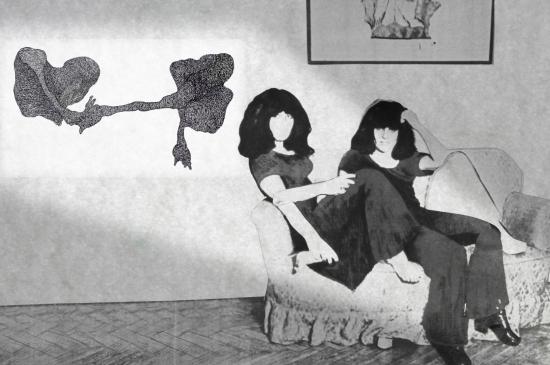
I’m Painting a Self-Portrait, but All I See Is My Sister’s Face
Carolin Weidner
Trailer
Screenings & Tickets
Free entry
Credits
Contact
hela.stanczyk@gmail.com
Is Heaven Blue? #2
The collaborative artistic work of Menno de Noojer (son), Paul de Noojer (father) and Françoise de Noojer (mother), which oscillated between photography and experimental film, spanned almost fifty years. Rather than allowing posterity to label, categorise and, as the case may be, mothball their work, the three realised a final film together just before Paul de Noojer died, when he was already seriously ill. A last joint film as an exuberant self-homage, in which they combine experimental-documentary storytelling, performance, pixilation and stop motion, funny and sad moments, pathos and trash, a joy of putting on costumes and vulnerable nudity. With “Heaven is Blue? #2”, the Noojers celebrate life as a total work of art in which all processes of becoming human and all symptoms of decline have their place and death is a natural part of the whole.
Marie Ketzscher
Screenings & Tickets
Credits
Contact
claus@trollfilm.no
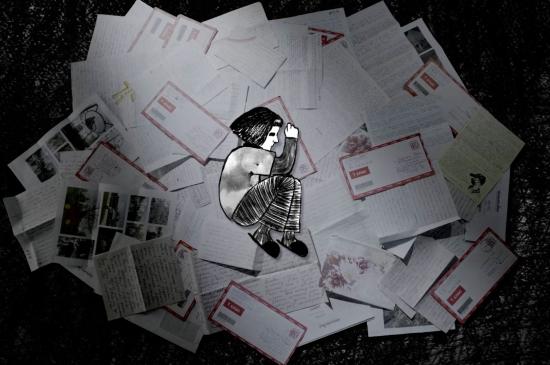
Letters from the Silenced Country
Carolin Weidner
Contains mentions of death
Contains depictions of physical violence
Trailer
Screenings & Tickets
Credits
Contact
mirek@studioeverest.pl
Light
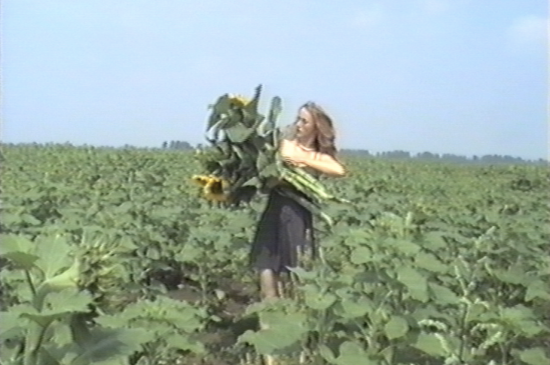
1995. It is the sixth summer since the fall of the Berlin Wall. Artists live, love and work on a farm in East Germany. They film each other with a video camera. They have seen the world, have wondered and learned, became homesick and returned. To where there was space. Fruit hangs from the trees, sparrows chirp, sculptures in the garden. Time and again the camera captures a young woman, her open gaze, her focus. The material which has become fragile today vibrates, gets stuck, freezes. Unperturbed, the narrative evokes the paean of summer, which will not be followed by a seventh for one of them. A white light shines into the present.
Jan Künemund
Contains mentions of death
Screenings & Tickets
Credits
Contact
juliane.ebner@gmx.de
Mum’s Hair
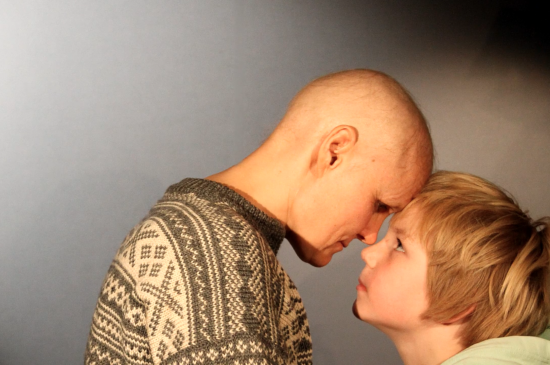
Losing your hair through chemotherapy is a painful experience for many people, not least because a bald head displays one’s new vulnerability so blatantly. But Maja Arnekleiv, the daughter of Norwegian animation director Anita Killi, turns the steps of the transformation – the original mum’s hair, the near-baldness, the new growth which is so different from the pre-chemo hair – into a tribute to resilience, love and family solidarity even in difficult times of illness. In a pixilation documentary produced over a period of two years, she captures in 755 single frames (selected from more than 3,000) how she and her siblings comb, blow-dry, style, braid and spray Anita Killi’s hair, while Killi always has her eyes firmly on the viewers. Sometimes laughing, sometimes serious, always loving. In 2017, Marja Arnekleiv won the Golden Dove for this tender, very touching film which celebrates the mother of four, whatever she looks like.
Marie Ketzscher
Screenings & Tickets
Credits
Contact
claus@trollfilm.no
Nonna Lucia
Marie Ketzscher
Contains mentions of death
Trailer
Screenings & Tickets
Credits
Contact
marcelbarelli@bluewin.ch
Silicon Saxony
Cranes on flat country. A Taiwanese chip giant is building Europe’s biggest semiconductor factory north of Dresden. The “building blocks of modern economy” play a central role against China, the USA, the rest of the world … Yet it is precisely in this place, where the new is grandly heralded, that a “forgotten future” lies buried. This was the centre of GDR semiconductor research, which strove to realise a social utopia by means of microelectronics. Some see the chip as a “weapon” in the fight for economic dominance and profit, others saw it as a political programme on the path to the “new human”. Jonas Meschede mixes neon-coloured images of a futuristic setting from the cleanrooms of the present with GDR science fiction and archive footage, unearthing what was buried. Once more, the promises of a golden future appear at the end. And the certainty that in the ground on which its gleaming factories are built what was declared dead only lies dormant.
Grit Lemke
Trailer
Screenings & Tickets
Credits
Contact
meschedeleon@gmail.com