Topic
- Activism
- Animated Documentary
- Archival Footage
- Arts/Culture
- Coming of Age
- Digital Culture
- Eastern German
- Environment
- Experimental
- Family
- Gender
- History
- Human Rights
- Humour
- Labour/Economy
- LGBTQIA2S+
- Music
- Politics/Current Affairs
- Portrait/Biography
- Psyche/Mind
- Religion/Spirituality
- Science/Technology
- Social Issues
- Sports
- Underrepresented Communities
- War/Conflict
- Youth
Filmtype
Accessibility
Custom type
Topic
- Activism
- Animated Documentary
- Archival Footage
- Arts/Culture
- Coming of Age
- Digital Culture
- Eastern German
- Environment
- Experimental
- Family
- Gender
- History
- Human Rights
- Humour
- Labour/Economy
- LGBTQIA2S+
- Music
- Politics/Current Affairs
- Portrait/Biography
- Psyche/Mind
- Religion/Spirituality
- Science/Technology
- Social Issues
- Sports
- Underrepresented Communities
- War/Conflict
- Youth
Accessibility
A Guy from Kleinmachnow
A queer auto-narrative about longing in three acts that addresses seemingly chaotic but systemically functioning cycles of attraction and revulsion, fear and desire, consumption and withdrawal, ecstasy and regret. While the film creates a timeless immediacy, the first-person narrator's commentary, in contrast, sounds like overthinking rather than an unquestioned moment of just-being-there. Whether at the club, by the lake or in the student cafeteria – one’s own judgement is always quicker than the question of how one is actually doing at that moment. But gradually something begins to change: An initially barely perceptible frequency shift sets in. The fragmented staccato of the first comments gradually gives way to a tale that gently settles in the interstices between dune, dream and reality.
Luc-Carolin Ziemann
Contains mentions of addiction, drug-use, mental health conditions, explicit sex scenes
Screenings & Tickets
Free entry
Credits
Contact
leonardjvolkmer@gmx.de
Broken Glass
Franka Sachse
Screenings & Tickets
Credits
Contact
kate.voznytsia@gmail.com
Child’s Mother
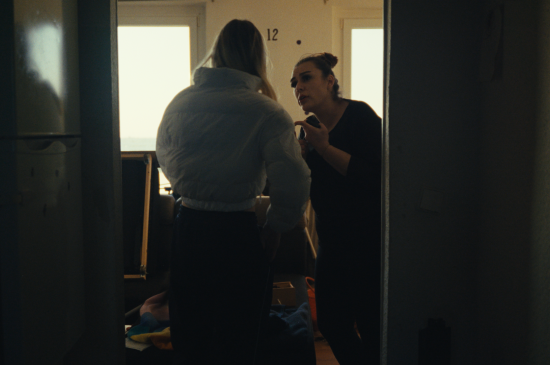
Anne (36) lives in Halle (Saale) and her life is in chaos. An apartment full of moving boxes, a yapping dog. She tells her mother on the phone that the electricity is about to be cut off again. Sometimes her daughter Leonie (14) drops by. Like her mother, she is at risk of slipping into drug addiction. Anne has already lost custody of her two younger children, too. The camera stays purely observational, captures loose scenes from the life of a woman who wants to take responsibility again. The film does not look for psychological explanations but shows Anne as she is. On her drives through the prefabricated housing estate, she seems isolated from her surroundings. Mother and daughter grow closer over an ice cream in a public square. Anne’s visit to her mother provides support but creates pressure, too. We grow ever closer to Anne, sharing her wish that she can become a role model for her daughter.
Anke Leweke
Contains mentions of addiction, death, drug-use
Screenings & Tickets
Credits
Contact
friedemann@inselfilm.de
Cold River: I Am in Leipzig
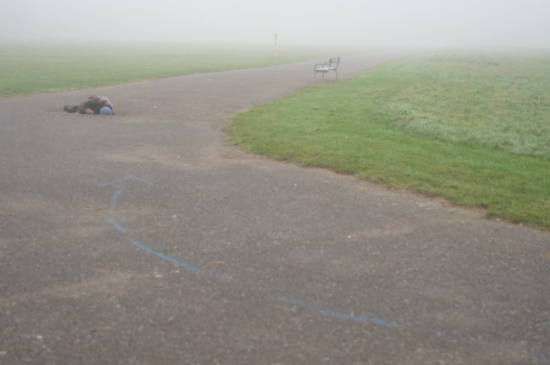
Haiguang dreams. Of his dead grandmother, his birthplace Lěng Shuǐ Jiāng in China, his performances and art projects and his job at a wholesale warehouse in Leipzig. But Haiguang not only dreams, he also films. Himself and his surroundings. Persistent, stoical, sometimes with a handheld camera, sometimes using a tripod – knowing that there is another layer under one’s everyday life that can only be perceived if one dares to search for meaning beyond the visible. If you dare to lie down on a crossing in the park and wait for what happens. If you dare to address the pressure to perform in Chinese society through a performance dragging a car tyre through Beijing. If you dare acknowledge your own fears and doubts and reveal them. Stylistically confident and constantly shifting between places and levels of meaning, Haiguang interlaces his life and dream in eight vignettes in which emotions condense and take on a form that goes beyond the personal. He interweaves the elements of his everyday life between the art academy and his parents’ coal shop in Changsha with equally precise and poetic descriptions. Thus, a puddle by the roadside can become the very place that connects him with his granny across space and time.
Luc-Carolin Ziemann
Trailer
Screenings & Tickets
Credits
Contact
lihaiguang02@gmail.com
Decay
André Eckardt
Contains mentions of mental health conditions, murder
Photosensitivity warning: Contains flashes of light that may trigger seizures for people with visual sensitivities.
Screenings & Tickets
Credits
Contact
j.gonzalezj@uniandes.edu.co
Eine chilenische Hochzeit
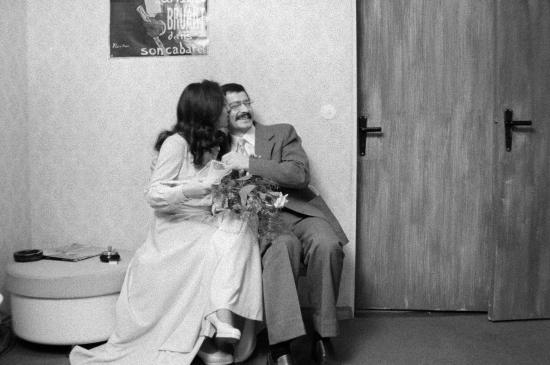
In 1977, Valentin Milanow, a Bulgarian student at the GDR Academy of Film and Television, sat in at the DEFA Studio for Documentary Films. Director Rainer Ackermann was assigned as his mentor. Milanow came up with the idea of portraying the reality of life of exiled Chileans in the GDR. He was friends with a young couple, Alejandra Holzapfel and José Fuica, who lived in the same prefabricated housing estate in Potsdam-Babelsberg. She studied veterinary medicine, he was training to be a teacher of Marxism-Leninism. Milanow was allowed to film their wedding. On the fringes of the seemingly happy celebration, conversations turn to memories of interrogations and torture by the military junta and worries about relatives who were left behind. What the bride herself did not reveal at the time: As a leftist underground fighter she had been exposed to the worst abuse in the “Venda Sexy” prisoners’ camp and others. Today, this place is the memorial site Asociación de Memoria y Derechos Humanos Irán 3030. It is run by Alejandra Holzapfel.
Florian Wüst
Screenings & Tickets
Credits
Contact
defa-filmverleih@deutsche-kinemathek.de
Garden of Hope
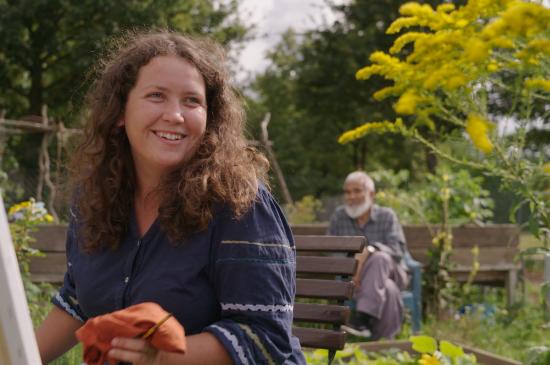
“We don’t fit together”, one of them says of the “motley crew” tending a garden plot in a pre-fab estate in Schwerin. At first, everyone “muddles through” alone: Omar from Syria, who struggles with being voiceless in a foreign land. Manfred, a widower who thinks of his wife every day and looks after everyone. Kateryna from Ukraine, who tries to paint over the war with colourful pictures. Fawze, who lost his homeland three times. Ronny, Wiebke and Max, who are trying to make a fresh start after a life of drugs and violence. Sabine, whose laughter and mischief flare up briefly and vanish again. Petra, who cannot afford to go to a concert after a lifetime of hard work. Richard, who hangs up mirrors not to be alone. Abdul from Afghanistan, master of okra. They communicate with their hands, feet and “russki jasyk”, swap tips on the right way to plant garlic and on tools, soon sit together under the chestnut tree, singing, fighting for the project … And from her balcony Mrs. Müller recites Goethe, following it up with a peace poem. DEFA veteran Dieter Schumann and his cinematographer Michael Kockot achieve what was once the origin and virtue of documentary film: giving the unheard a voice through precise observation, a voice based on closeness, trust and respect. The neighbourhood garden is a site of “small miracles”. One of them is this film.
Grit Lemke
Screenings & Tickets
Credits
Contact
mueller@neuevisionen.de
Good Evening, Beautiful
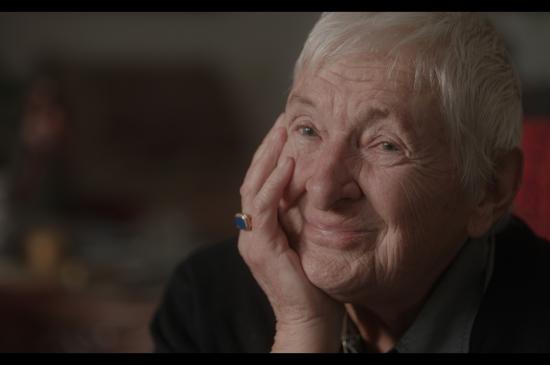
„A little flame that lit up and inspired people to tell different stories about the GDR.” This is how a protagonist describes the 1977 book “Guten Morgen, du Schöne” (Good morning, beautiful) by the writer Maxie Wander, a collection of records in which a wide variety of women talk about themselves. One of the most successful books in the GDR and one of the most influential in German literary history: It affected generations of women (and men!) and encouraged them to question their own lives – ample reason for the director to let a few of the women look back on the book and their lives today. It is about equal rights and emancipation, life plans and rebellion, dreams and failure, love and sexuality, mothers and fathers, men and women, happiness and loneliness, death and, above all, the hunger for life. With respect and great tenderness, Susanne Schüle films faces and bodies on which time has left its mark. Age and beauty, fragility and strength. On the visual level, the stories are subtly commented on by amateur footage: bodies marching in step to the ideologies, Hitler salutes and mass rallies. Again and again contrasted with naked bodies, the wild and non-conformist life beyond the dictatorships. War, peeling potatoes, kisses, children. This is how it was. This is how it is. In the end, the monologues of the past lead up to a contemporary dialogue between the sexes and generations. A flame.
Grit Lemke
Screenings & Tickets
Free entry
Free entry
Credits
Contact
info@shootfromthehip.de
Growing Wild
“How long have you known each other?” – “Six funerals.” Having grown old as a gay man is a privilege in the wake of the Aids crisis. At “Lebensort Vielfalt”, a Berlin housing project for lesbian, gay, bisexual, trans and intersexual persons, lived experiences are exchanged among three generations. They used to be pigeonholed, today children might just be allowed to learn to speak before they define themselves. A wild kind of growing up and ageing. All residents share the desire to be safe, even from having-to-explain-themselves. The camera roams the house, crosses the corridor, moves from one balcony to another, looks out of the window onto the street, develops new perspectives. Social backsliding is registered; sometimes new happiness is found. On deceased persons’ birthdays, the raspberry cake is cut. Falling asleep, the sound of riot rises again.
Jan Künemund
Contains mentions of discrimination against LGBTQIA2S+ persons
Screenings & Tickets
Free entry
Credits
Contact
mail@robcrosse.com
Haken
Meike Weimann
Screenings & Tickets
Credits
Contact
Heralds of the Monsoon
Marie Ketzscher
Screenings & Tickets
Credits
Contact
k.meera28@gmail.com
I’m Painting a Self-Portrait, but All I See Is My Sister’s Face
Carolin Weidner
Trailer
Screenings & Tickets
Free entry
Free entry
Credits
Contact
hela.stanczyk@gmail.com