Topic
- Activism
- Animated Documentary
- Archival Footage
- Arts/Culture
- Coming of Age
- Digital Culture
- Eastern German
- Environment
- Experimental
- Family
- Gender
- History
- Human Rights
- Humour
- Labour/Economy
- LGBTQIA2S+
- Music
- Politics/Current Affairs
- Portrait/Biography
- Psyche/Mind
- Religion/Spirituality
- Science/Technology
- Social Issues
- Sports
- Underrepresented Communities
- War/Conflict
- Youth
Filmtype
Accessibility
Custom type
Topic
- Activism
- Animated Documentary
- Archival Footage
- Arts/Culture
- Coming of Age
- Digital Culture
- Eastern German
- Environment
- Experimental
- Family
- Gender
- History
- Human Rights
- Humour
- Labour/Economy
- LGBTQIA2S+
- Music
- Politics/Current Affairs
- Portrait/Biography
- Psyche/Mind
- Religion/Spirituality
- Science/Technology
- Social Issues
- Sports
- Underrepresented Communities
- War/Conflict
- Youth
Accessibility
A Fire There
Felix Mende
Trailer
Screenings & Tickets
Free entry
Credits
Contact
michaela@filmotor.com
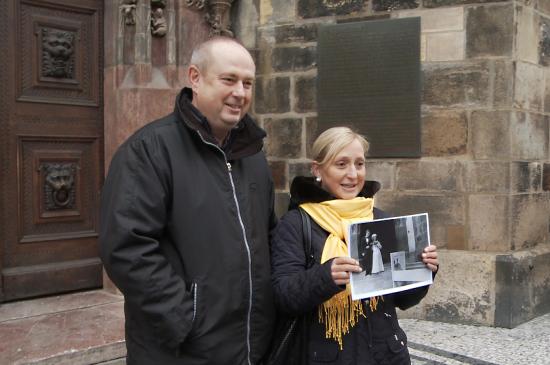
A Marriage Story
Carolin Weidner, DOK Leipzig Catalogue 2017
Screenings & Tickets
Credits
Contact
Afterlives
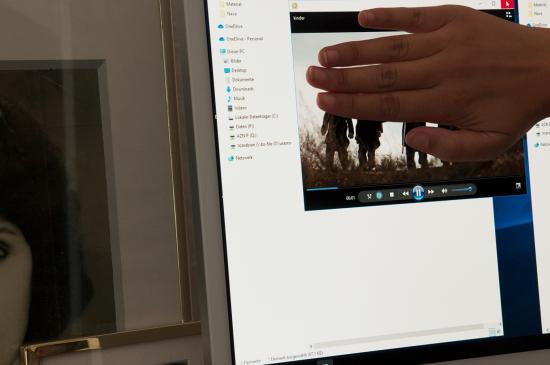
Through numerous video essays in film and media theory, Kevin B. Lee has played a key role in developing the form of the so-called desktop film. The elegant meta-staging reflects the fact that his digital desktop is research tool, media archive and distribution channel at the same time. Lee’s first feature-length film in this style dissects a historical work of propaganda: In 2014, the “Islamic State” terror militia, then at the height of its territorial power, published an elaborately produced film entitled “Flames of War”, which many media outlets compared to the aesthetics of Hollywood blockbusters. Lee manages to abstract and defamiliarize the extreme violence of those images, but comes to the realisation that their ideological power cannot be decoded by the tools of film analysis alone. “Afterlives” broadens the perspective and looks for alternative models in dialogue with experts from the arts, political education and terrorism studies: They reconstruct destroyed cultural assets, develop strategies against extremist radicalisation and study what motivates people to leave terrorist groups. In all this, Lee’s intelligent essay never loses sight of the colonialist western image of the Middle East.
Jan-Philipp Kohlmann
Contains mentions of torture
Contains depictions of war scenes, torture
Trailer
Screenings & Tickets
Credits
Contact
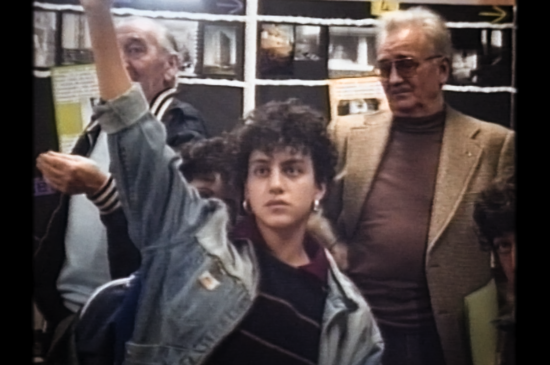
Auber 89
Anca Păunescu
Screenings & Tickets
Credits
Contact
raluca@lightdox.com
Bára – Diary of a Rockstar
Carolin Weidner
Screenings & Tickets
Credits
Contact
barbora.lochmanova@gmail.com
Between Summers
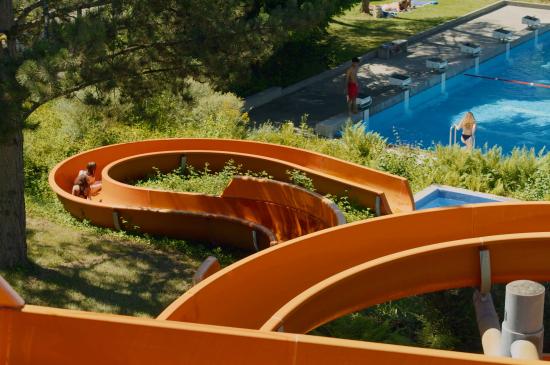
A public swimming pool complex in the middle of a forest which is soon to be renovated: between water slides, French fries, TikTok and sun cream, six teenagers spend the long summer days in the “Badi”, as outdoor pools are called in Swiss German. It is a place to discuss, laugh, try things out and simply hang out together. Whether on the grass, in the water or between the different pools, their conversations revolve around everything that currently moves them. This sun-kissed film accompanies these adolescents at a moment of transition. They talk about the past, think about the future and try to find out who they are and how they will find their place in a changing world. The film stays close to their glances, conversations and encounters, taking an unvarnished look into the inner world of these adolescents – their curiosities, their humour, their contradictions and their insecurities. For one summer long, the Badi becomes a place where childhood and future can exist alongside each other. And while the orange slide is dismantled, the question of what will remain of this summer bubbles up through the water.
Lina Dinkla
Trailer
Screenings & Tickets
Free entry
Credits
Contact
cd@doklab.com
Black Box
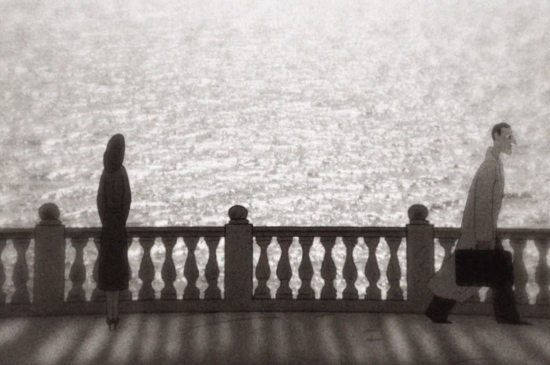
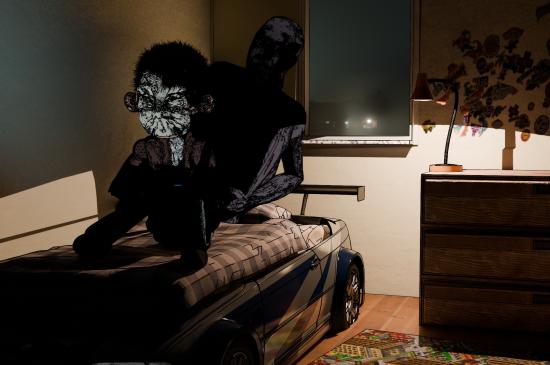
What is left when everything fades away? An old photographer tries to reconstruct people and events by means of old photographs, but they keep slipping away from him, vanishing in the dark, washed away by the waves. In his 2D animated film, rendered in black and white, Anton Dyakov not only shows how memories are lost, but also how they sometimes haunt and overwhelm us – for example in the shape of a disturbing archive fragment of blurred war photos. “Black Box” deals with loss and grief from a personal, yet universal perspective, while referencing the culture of remembrance in the digital age which is increasingly managing – or seeking to manage – without the haptic assurance of a printed photo.
Marie Ketzscher
Screenings & Tickets
Credits
Contact
claus@trollfilm.no
Camille & Chameleon
Camille, a very small girl, and the Chameleon who is afraid of heights are inseparable and love to play hide-and-seek in the forest. Camille loves to literally call the tune with her whistling. But one day she becomes too cocky and gives Chameleon an idea that will upset everything. Now they are lost in the green thicket. Can they get over their pride and find each other again?
Lina Dinkla
Screenings & Tickets
Credits
Contact
info@lucie-nichelmann.com
Child’s Mother
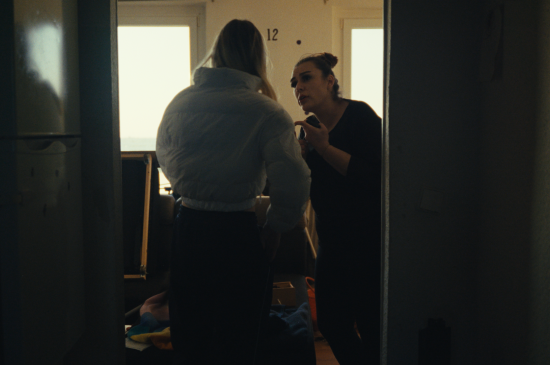
Anne (36) lives in Halle (Saale) and her life is in chaos. An apartment full of moving boxes, a yapping dog. She tells her mother on the phone that the electricity is about to be cut off again. Sometimes her daughter Leonie (14) drops by. Like her mother, she is at risk of slipping into drug addiction. Anne has already lost custody of her two younger children, too. The camera stays purely observational, captures loose scenes from the life of a woman who wants to take responsibility again. The film does not look for psychological explanations but shows Anne as she is. On her drives through the prefabricated housing estate, she seems isolated from her surroundings. Mother and daughter grow closer over an ice cream in a public square. Anne’s visit to her mother provides support but creates pressure, too. We grow ever closer to Anne, sharing her wish that she can become a role model for her daughter.
Anke Leweke
Contains mentions of addiction, death, drug-use
Screenings & Tickets
Credits
Contact
friedemann@inselfilm.de
Free Zone
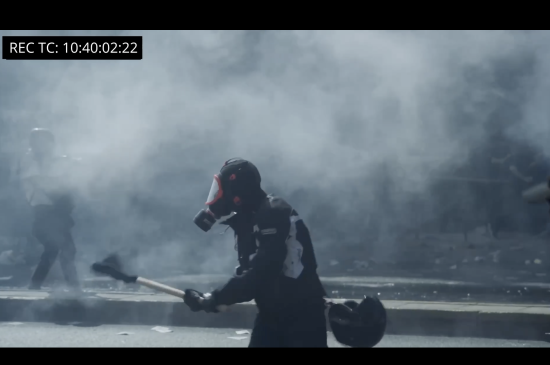
Abtin, a young anarchist from Iran, now lives in Greece after fleeing his own country. Back home he managed an underground library of banned books and was reportedly arrested, detained and tortured because he took part in protests. He continues his political struggle in Athen’s Exarchia district – a place of left-wing utopias and a fiercely contested site of gentrification: He joins the movement for refugees, squats in houses, protests against illegal pushbacks and fights for alternative ways of living, though his own situation is highly precarious, because every contact with the state can jeopardise his residence status. Director Jasmine Alakari follows Abtin over the course of a year, experiences his rage, hope and powerlessness, but also euphoria and solidarity. Time and again, the film returns to the question of how much political activism should be allowed to shape one’s life and what role violence plays in this. Meanwhile, the conflict with the police comes to a head in the street and Abtin finds himself in the crosshairs of the state. Alakari keeps filming but realises that she must also examine her own role. What does it mean to be an observer? How far can a film visualise the fears and hopes of a person who does not have the freedom to escape this situation? “Free Zone” has no easy answer to this question but passes it on. To us – the audience.
Luc-Carolin Ziemann
Contains depictions of physical violence
Screenings & Tickets
Credits
Contact
jasmine.alakari@gmail.com
Glaube Sitte Heimat
André Eckardt
Contains depictions of drug-use, nudity, physical violence
Screenings & Tickets
Credits
Contact
fidelsievering@gmail.com
Growing Up
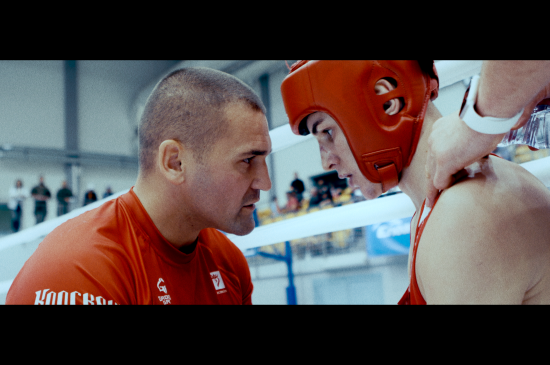
Łukasz dreams of becoming a professional boxer. His mother Monika supports him as much as she can. But the fact that this means he has to move to a sport boarding school over 500 kilometres away is something she can’t fathom. For who will do his washing there and make sure that he turns up to training on time? For Łukasz, the move is a step towards independence, but also a test of his abilities among like-minded people. Between hard training, new friendships and first love, the boarding school doesn’t just become a springboard for his sporting career, but also the place where he comes of age. Over five years, Adam Roszkowski accompanies his taciturn protagonist on his way to the Polish junior championships. In a blend of observation and discreet staging, everyday training routines, family moments and a first date come together to form a narrative that is so close to its characters that the documentary format almost melts into the background. Entirely indebted to the principle of show, don’t tell, “Growing Up” also gives an account of the dedication needed for competitive sport and the price it carries as well as of the silent battles needed to go one’s own way.
Tina Jany
Trailer
Screenings & Tickets
Credits
Contact
jhan@wajdaschool.pl