Topic
- Activism
- Animated Documentary
- Archival Footage
- Arts/Culture
- Coming of Age
- Digital Culture
- Eastern German
- Environment
- Experimental
- Family
- Gender
- History
- Human Rights
- Humour
- Labour/Economy
- LGBTQIA2S+
- Music
- Politics/Current Affairs
- Portrait/Biography
- Psyche/Mind
- Religion/Spirituality
- Science/Technology
- Social Issues
- Sports
- Underrepresented Communities
- War/Conflict
- Youth
Filmtype
Accessibility
Custom type
Topic
- Activism
- Animated Documentary
- Archival Footage
- Arts/Culture
- Coming of Age
- Digital Culture
- Eastern German
- Environment
- Experimental
- Family
- Gender
- History
- Human Rights
- Humour
- Labour/Economy
- LGBTQIA2S+
- Music
- Politics/Current Affairs
- Portrait/Biography
- Psyche/Mind
- Religion/Spirituality
- Science/Technology
- Social Issues
- Sports
- Underrepresented Communities
- War/Conflict
- Youth
Accessibility
A Guy from Kleinmachnow
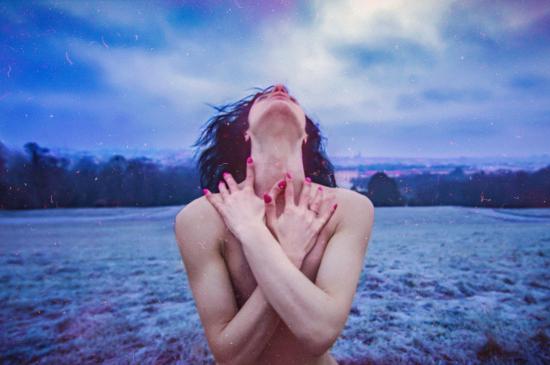
A queer auto-narrative about longing in three acts that addresses seemingly chaotic but systemically functioning cycles of attraction and revulsion, fear and desire, consumption and withdrawal, ecstasy and regret. While the film creates a timeless immediacy, the first-person narrator's commentary, in contrast, sounds like overthinking rather than an unquestioned moment of just-being-there. Whether at the club, by the lake or in the student cafeteria – one’s own judgement is always quicker than the question of how one is actually doing at that moment. But gradually something begins to change: An initially barely perceptible frequency shift sets in. The fragmented staccato of the first comments gradually gives way to a tale that gently settles in the interstices between dune, dream and reality.
Luc-Carolin Ziemann
Contains mentions of addiction, drug-use, mental health conditions, explicit sex scenes
Screenings & Tickets
Credits
Contact
leonardjvolkmer@gmx.de
A Marriage Story
Carolin Weidner, DOK Leipzig Catalogue 2017
Screenings & Tickets
Credits
Contact
A Song Without Home
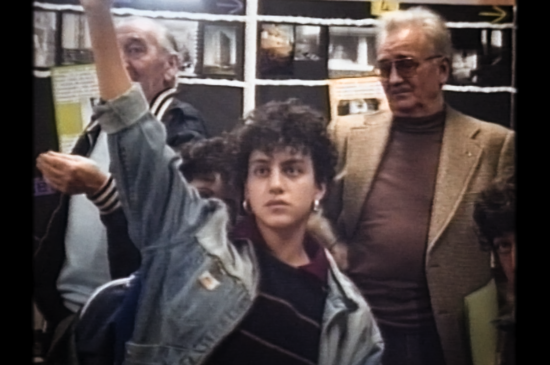
„My life is a prison“, Adelina says. The young woman is smoking and looking into the camera, her parents sitting on the sofa to her right and left. In black and white and the narrow 4:3 ratio, this family scene feels oppressive: Adeline spent eleven years under house arrest here, with a father who refuses to accept her identity and a mother who seems loving but powerless. In Georgia, there is neither freedom nor security for trans persons like Adelina. Anti-queer attacks happen in broad daylight; the legal situation of the LGBTQ community has recently deteriorated further. When the protagonist at last leaves her parents’ village to go to Vienna, the style of Rati Tsiteladze’s debut film also changes. The lipstick glows red, the lights of the big city neon yellow. A different, freer life seems possible. But the freedom brings new challenges: financial and health problems, communicating in a foreign language – and loneliness. “A Song Without Home” is the intimate, impressionistic long-term portrait of a person who wants to define herself and clings to an unshakeable conviction: “No law can erase who we are.”
Jan-Philipp Kohlmann
Contains mentions of discrimination against LGBTQIA2S+ persons
Contains depictions of discrimination against LGBTQIA2S+ persons
Screenings & Tickets
Free entry
Credits
Contact
olyaslusareva@gmail.com
Afterlives
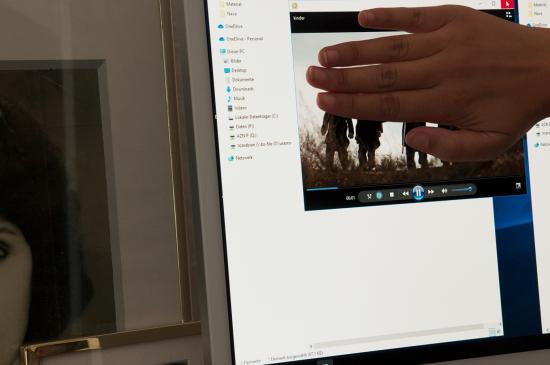
Through numerous video essays in film and media theory, Kevin B. Lee has played a key role in developing the form of the so-called desktop film. The elegant meta-staging reflects the fact that his digital desktop is research tool, media archive and distribution channel at the same time. Lee’s first feature-length film in this style dissects a historical work of propaganda: In 2014, the “Islamic State” terror militia, then at the height of its territorial power, published an elaborately produced film entitled “Flames of War”, which many media outlets compared to the aesthetics of Hollywood blockbusters. Lee manages to abstract and defamiliarize the extreme violence of those images, but comes to the realisation that their ideological power cannot be decoded by the tools of film analysis alone. “Afterlives” broadens the perspective and looks for alternative models in dialogue with experts from the arts, political education and terrorism studies: They reconstruct destroyed cultural assets, develop strategies against extremist radicalisation and study what motivates people to leave terrorist groups. In all this, Lee’s intelligent essay never loses sight of the colonialist western image of the Middle East.
Jan-Philipp Kohlmann
Contains mentions of torture
Contains depictions of war scenes, torture
Trailer
Screenings & Tickets
Credits
Contact
Auber 89
Anca Păunescu
Screenings & Tickets
Credits
Contact
raluca@lightdox.com
B*tch
Anca Păunescu
Screenings & Tickets
Credits
Contact
Baby Jackfruit Baby Guava
Seggen Mikael
Contains mentions of mental health conditions
Screenings & Tickets
Credits
Contact
tommaso@luminaliafilm.com
Bára – Diary of a Rockstar
Carolin Weidner
Screenings & Tickets
Credits
Contact
barbora.lochmanova@gmail.com
Black Box
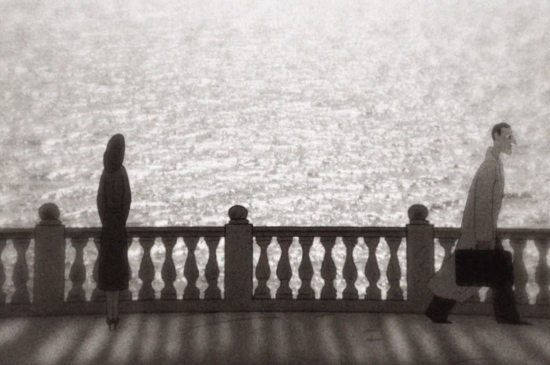
What is left when everything fades away? An old photographer tries to reconstruct people and events by means of old photographs, but they keep slipping away from him, vanishing in the dark, washed away by the waves. In his 2D animated film, rendered in black and white, Anton Dyakov not only shows how memories are lost, but also how they sometimes haunt and overwhelm us – for example in the shape of a disturbing archive fragment of blurred war photos. “Black Box” deals with loss and grief from a personal, yet universal perspective, while referencing the culture of remembrance in the digital age which is increasingly managing – or seeking to manage – without the haptic assurance of a printed photo.
Marie Ketzscher
Screenings & Tickets
Credits
Contact
claus@trollfilm.no
Division
What does a person’s library say about them? James Paul Dallas doesn’t just create a portrait of a life, but also shows a present in which possession, memory and identity are all becoming shaky. In early 2025, the anonymous protagonist guides the director via mobile phone through his empty apartment in Brooklyn. What can stay and what can go in what was his home for 20 years? The kitchen crockery is first up, then the books. Giacometti and Basquiat can stay in New York. But please pack up everything between Lequeu and Brick. A course is thus tracked through an intimate microcosm. It’s not just one individual’s paths to wisdom that are being measured out here, but also his desires, preferences and guilty pleasures. The footage gives fragmentary glimpses into a private world, piquing the curiosity and sparking the imagination of all those watching: what were all the things that happened in this apartment? What sort of person lived here? And why does he have to give up all these things, and maybe even a part of himself?
Borjana Gaković
Screenings & Tickets
Credits
Contact
jamespauldallas@gmail.com
Growing Wild
“How long have you known each other?” – “Six funerals.” Having grown old as a gay man is a privilege in the wake of the Aids crisis. At “Lebensort Vielfalt”, a Berlin housing project for lesbian, gay, bisexual, trans and intersexual persons, lived experiences are exchanged among three generations. They used to be pigeonholed, today children might just be allowed to learn to speak before they define themselves. A wild kind of growing up and ageing. All residents share the desire to be safe, even from having-to-explain-themselves. The camera roams the house, crosses the corridor, moves from one balcony to another, looks out of the window onto the street, develops new perspectives. Social backsliding is registered; sometimes new happiness is found. On deceased persons’ birthdays, the raspberry cake is cut. Falling asleep, the sound of riot rises again.
Jan Künemund
Contains mentions of discrimination against LGBTQIA2S+ persons
Screenings & Tickets
Credits
Contact
mail@robcrosse.com
Hi Mom :O
The mother’s film archive raises questions. What did she see in the many doll’s faces staring at us through her camera? Why so many shots of flowers? When she herself is in the picture, she is always moving. Was she trying to get away from something? The narrator wants to find their own motifs. But where? It is easy for the mother to say: Film your own reality! Sounds great, but how, when you feel that you are different? As the material is questioned, more and more own images find their way into the film. Integrating themselves. Perhaps they ask the same questions of the world.
Jan Künemund
Trailer
Screenings & Tickets
Credits
Contact
peer.langenheim@zhdk.ch