Topic
- Activism
- Animated Documentary
- Archival Footage
- Arts/Culture
- Coming of Age
- Digital Culture
- Eastern German
- Environment
- Experimental
- Family
- Gender
- History
- Human Rights
- Humour
- Labour/Economy
- LGBTQIA2S+
- Music
- Politics/Current Affairs
- Portrait/Biography
- Psyche/Mind
- Religion/Spirituality
- Science/Technology
- Social Issues
- Sports
- Underrepresented Communities
- War/Conflict
- Youth
Filmtype
Accessibility
Custom type
Topic
- Activism
- Animated Documentary
- Archival Footage
- Arts/Culture
- Coming of Age
- Digital Culture
- Eastern German
- Environment
- Experimental
- Family
- Gender
- History
- Human Rights
- Humour
- Labour/Economy
- LGBTQIA2S+
- Music
- Politics/Current Affairs
- Portrait/Biography
- Psyche/Mind
- Religion/Spirituality
- Science/Technology
- Social Issues
- Sports
- Underrepresented Communities
- War/Conflict
- Youth
Accessibility
Between Summers
A public swimming pool complex in the middle of a forest which is soon to be renovated: between water slides, French fries, TikTok and sun cream, six teenagers spend the long summer days in the “Badi”, as outdoor pools are called in Swiss German. It is a place to discuss, laugh, try things out and simply hang out together. Whether on the grass, in the water or between the different pools, their conversations revolve around everything that currently moves them. This sun-kissed film accompanies these adolescents at a moment of transition. They talk about the past, think about the future and try to find out who they are and how they will find their place in a changing world. The film stays close to their glances, conversations and encounters, taking an unvarnished look into the inner world of these adolescents – their curiosities, their humour, their contradictions and their insecurities. For one summer long, the Badi becomes a place where childhood and future can exist alongside each other. And while the orange slide is dismantled, the question of what will remain of this summer bubbles up through the water.
Lina Dinkla
Trailer
Screenings & Tickets
Free entry
Credits
Contact
cd@doklab.com
Broken Glass
Franka Sachse
Screenings & Tickets
Credits
Contact
kate.voznytsia@gmail.com
Chile lebt
The Europe-wide protests against Chile’s military dictatorship were expressed not only by political activism, but by a host of artistic actions. The colourful aesthetics of the Unidad Popular’s street art, popularised by the Ramona Parra Brigades, became a visual trademark. Based on this model, the Brigada Pablo Neruda, for example, whose members included well-known Chilean artists exiled in Paris like José Balmes, Gracia Barrios and Guillermo Núñez, realised a 60-metre-long mural on the fringes of documenta 6 in Kassel in 1977. Its creation was documented in Franz Lehmkuhl’s film “Chilenische Wandmalerei” (1977–80), screened in Leipzig in 1980. In his agitation film “Chile lebt”, co-produced with Michael Börner, the Chilean journalist and filmmaker Juan Forch uses pictures of the Brigada Pablo Neruda to express what keeps hope in his homeland alive: international solidarity. In 1979, Forch returned to Chile from exile in the GDR.
Florian Wüst
Screenings & Tickets
Credits
Contact
defa-filmverleih@deutsche-kinemathek.de
Far Far Away
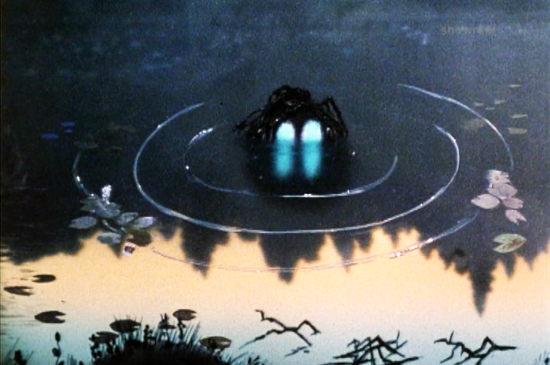
Romantic, mystical, folkloristic: Theodor Kittelsen's (1857–1914) oeuvre as a painter is not just dedicated to nature but also to legends and trolls – and has influenced artists to the present day. Natasha Nikitina for example, whose film takes up Kittelsen's twelve-part series of pictures "Soria Moria Palace" and his eponymous book: The young hero Askeladden sees the golden palace of Soria Moria in the distance and sets out to reach it; an allegory of the golden future that can be earned with a lot of hard work and dedication. In her film, however, Nikitina focuses more on the atmospheric element, letting a troll in a rock wake up and fall asleep again, letting geese and other birds take flight, letting fog and dusk turn into night and back into a glowing morning. A tribute to the artist, but also to the myth-enshrouded Norwegian landscape in general.
Marie Ketzscher
Screenings & Tickets
Credits
Contact
claus@trollfilm.no
Glaube Sitte Heimat
André Eckardt
Contains depictions of drug-use, nudity, physical violence
Screenings & Tickets
Credits
Contact
fidelsievering@gmail.com
Good Evening, Beautiful
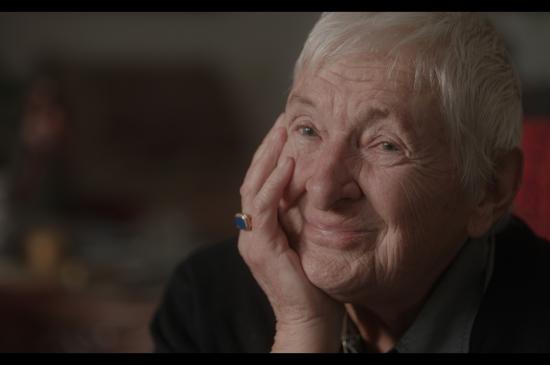
„A little flame that lit up and inspired people to tell different stories about the GDR.” This is how a protagonist describes the 1977 book “Guten Morgen, du Schöne” (Good morning, beautiful) by the writer Maxie Wander, a collection of records in which a wide variety of women talk about themselves. One of the most successful books in the GDR and one of the most influential in German literary history: It affected generations of women (and men!) and encouraged them to question their own lives – ample reason for the director to let a few of the women look back on the book and their lives today. It is about equal rights and emancipation, life plans and rebellion, dreams and failure, love and sexuality, mothers and fathers, men and women, happiness and loneliness, death and, above all, the hunger for life. With respect and great tenderness, Susanne Schüle films faces and bodies on which time has left its mark. Age and beauty, fragility and strength. On the visual level, the stories are subtly commented on by amateur footage: bodies marching in step to the ideologies, Hitler salutes and mass rallies. Again and again contrasted with naked bodies, the wild and non-conformist life beyond the dictatorships. War, peeling potatoes, kisses, children. This is how it was. This is how it is. In the end, the monologues of the past lead up to a contemporary dialogue between the sexes and generations. A flame.
Grit Lemke
Screenings & Tickets
Free entry
Credits
Contact
info@shootfromthehip.de
Growing Wild
“How long have you known each other?” – “Six funerals.” Having grown old as a gay man is a privilege in the wake of the Aids crisis. At “Lebensort Vielfalt”, a Berlin housing project for lesbian, gay, bisexual, trans and intersexual persons, lived experiences are exchanged among three generations. They used to be pigeonholed, today children might just be allowed to learn to speak before they define themselves. A wild kind of growing up and ageing. All residents share the desire to be safe, even from having-to-explain-themselves. The camera roams the house, crosses the corridor, moves from one balcony to another, looks out of the window onto the street, develops new perspectives. Social backsliding is registered; sometimes new happiness is found. On deceased persons’ birthdays, the raspberry cake is cut. Falling asleep, the sound of riot rises again.
Jan Künemund
Contains mentions of discrimination against LGBTQIA2S+ persons
Screenings & Tickets
Credits
Contact
mail@robcrosse.com
How to Catch a Butterfly
Carolin Weidner
Contains mentions of murder, racism
Contains depictions of racism
Screenings & Tickets
Credits
Contact
purplerayfilm@gmail.com
I’m Painting a Self-Portrait, but All I See Is My Sister’s Face
Carolin Weidner
Trailer
Screenings & Tickets
Free entry
Credits
Contact
hela.stanczyk@gmail.com
Illapu – Lied von Freiheit und Liebe
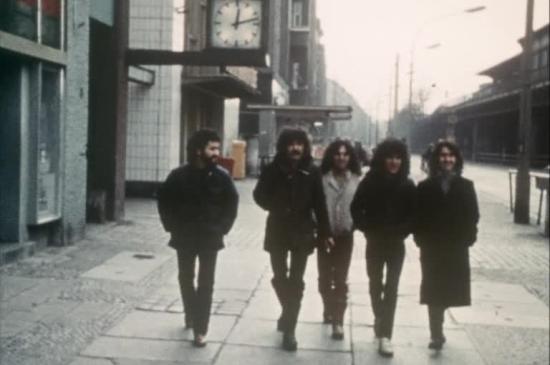
The Chilean folk group Illapu only really became famous under the military dictatorship. The five musicians were allowed to work, but had to “keep a low profile”. When they gradually joined the cultural resistance against the Pinochet regime, they were expelled in 1981. From their French exile, they toured Europe, including East Berlin. This is where Carlos Puccio’s film begins: The Chilean directing student observed Illapu’s rehearsals and concerts for his diploma film project at the Film and Television Academy of the GDR. They talk about their enduring bond with Chile and about what would happen if individual members of the band were given entry permits and Illapu would consequently break up. In 1986, they moved to Mexico together and returned to Chile two years later because of the changing political climate.
Florian Wüst
Screenings & Tickets
Credits
Contact
cristina.marx@filmuniversitaet.de
in memory of
Carolin Weidner
Screenings & Tickets
Credits
Contact
ciucioflorinda@gmail.com
kiss kiss bang bang
Carolin Weidner
Contains mentions of mental health conditions
Contains depictions of nudity
Trailer
Screenings & Tickets
Free entry
Credits
Contact
purplerayfilm@gmail.com