Topic
- Activism
- Animated Documentary
- Archival Footage
- Arts/Culture
- Coming of Age
- Digital Culture
- Eastern German
- Environment
- Experimental
- Family
- Gender
- History
- Human Rights
- Humour
- Labour/Economy
- LGBTQIA2S+
- Music
- Politics/Current Affairs
- Portrait/Biography
- Psyche/Mind
- Religion/Spirituality
- Science/Technology
- Social Issues
- Sports
- Underrepresented Communities
- War/Conflict
- Youth
Filmtype
Accessibility
Custom type
Topic
- Activism
- Animated Documentary
- Archival Footage
- Arts/Culture
- Coming of Age
- Digital Culture
- Eastern German
- Environment
- Experimental
- Family
- Gender
- History
- Human Rights
- Humour
- Labour/Economy
- LGBTQIA2S+
- Music
- Politics/Current Affairs
- Portrait/Biography
- Psyche/Mind
- Religion/Spirituality
- Science/Technology
- Social Issues
- Sports
- Underrepresented Communities
- War/Conflict
- Youth
Accessibility
>1,5°C Pyropolitics and the New World
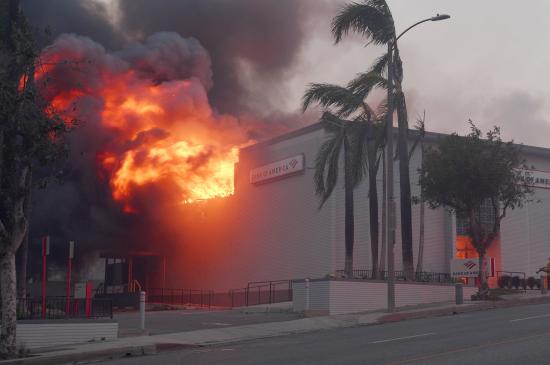
First we hear a crackling sound, then a diffuse orange light glows in the darkness. A siren growing louder and the sound of a helicopter instantly mark the scene as a place of danger. There is a fire. First in the distance, a moment later everywhere. Trees and palms go up in flames. The fire’s power is immense. The firefighters and everyone else who is fighting the wildfires around Los Angeles act with remarkable calm. Nobody is running, the communication chain is working smoothly, TV reporters are broadcasting live, helpers are setting up emergency shelters, taking care of injured animals, cutting fire lines in front of neighbours’ homes. A tried-and-tested routine, efficiency and a great willingness to help. The crisis seems to bring out the best in the people. This uncommented observation is also a tribute to their commitment. But the longer it goes on, the more the question arises why solidarity and sustainable action seem to work in emergencies, while it seems impossible to tackle the crisis before it becomes an inferno. The film’s cinematic meditation on pyropolitics takes a look at our age of multiple crises. The permanent global fire management makes it easy to forget that behind those fires lie geopolitical causes that must be dealt with – not with water, but with political decisions.

Luc-Carolin Ziemann
Trailer
Screenings & Tickets
Credits
Contact
lukasmarxt@gmail.com
A Guy from Kleinmachnow
A queer auto-narrative about longing in three acts that addresses seemingly chaotic but systemically functioning cycles of attraction and revulsion, fear and desire, consumption and withdrawal, ecstasy and regret. While the film creates a timeless immediacy, the first-person narrator's commentary, in contrast, sounds like overthinking rather than an unquestioned moment of just-being-there. Whether at the club, by the lake or in the student cafeteria – one’s own judgement is always quicker than the question of how one is actually doing at that moment. But gradually something begins to change: An initially barely perceptible frequency shift sets in. The fragmented staccato of the first comments gradually gives way to a tale that gently settles in the interstices between dune, dream and reality.
Luc-Carolin Ziemann
Contains mentions of addiction, drug-use, mental health conditions, explicit sex scenes
Screenings & Tickets
Free entry
Credits
Contact
leonardjvolkmer@gmx.de
A Wish
André Eckardt
Screenings & Tickets
Credits
Contact
franz.impler@gmail.com
Abastecimiento
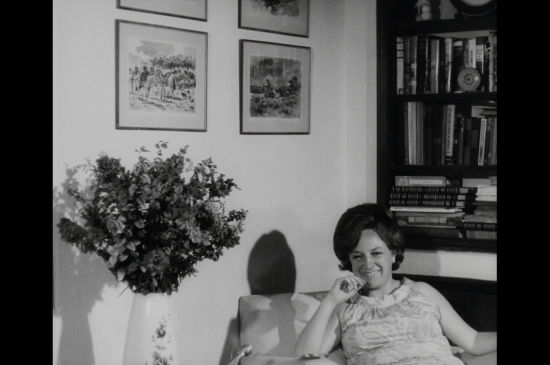
Raúl Ruiz was part of the militant cinema movement that put itself in the service of the Chilean Popular Front, but remained an outsider. He employed experiment and irony to dissect social contradictions. In “Abastecimiento”, Ruiz addresses the supply problems under the Unidad Popular government, confronting the views of a woman from a bourgeois background with those of the socialist Minister for Economic Affairs. He follows this with a depiction of the activities of the Juntas de Abastecimiento y Precios (JAP), locally organised committees for the control and just distribution of food and everyday goods. The provocative juxtaposition paints a picture of an impossible dialogue. The film was banned at the time and was believed lost for ages. It was only recently rediscovered. Leipzig was not the place for the feature film director who emigrated to Paris after the military coup, but Ruiz was a frequent guest at the Berlinale Forum.
Florian Wüst
Screenings & Tickets
Credits
Contact
marcelo.morales@patrimoniocultural.gob.cl
Afterlives
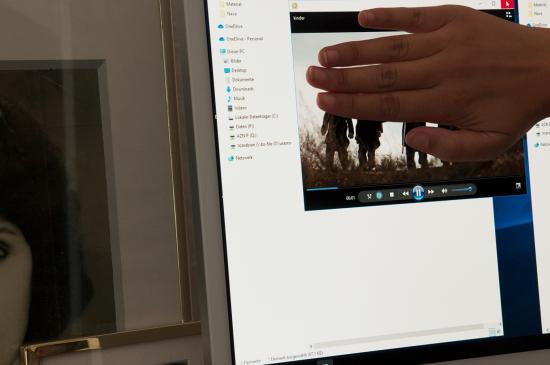
Through numerous video essays in film and media theory, Kevin B. Lee has played a key role in developing the form of the so-called desktop film. The elegant meta-staging reflects the fact that his digital desktop is research tool, media archive and distribution channel at the same time. Lee’s first feature-length film in this style dissects a historical work of propaganda: In 2014, the “Islamic State” terror militia, then at the height of its territorial power, published an elaborately produced film entitled “Flames of War”, which many media outlets compared to the aesthetics of Hollywood blockbusters. Lee manages to abstract and defamiliarize the extreme violence of those images, but comes to the realisation that their ideological power cannot be decoded by the tools of film analysis alone. “Afterlives” broadens the perspective and looks for alternative models in dialogue with experts from the arts, political education and terrorism studies: They reconstruct destroyed cultural assets, develop strategies against extremist radicalisation and study what motivates people to leave terrorist groups. In all this, Lee’s intelligent essay never loses sight of the colonialist western image of the Middle East.
Jan-Philipp Kohlmann
Contains mentions of torture
Contains depictions of war scenes, torture
Trailer
Screenings & Tickets
Credits
Contact
Apocalypse Yesterday, Today, Tomorrow, and the Day After Tomorrow
Marie Ketzscher
Contains mentions of war scenes
Trailer
Screenings & Tickets
Credits
Contact
anastasiabonadyga@gmail.com
Awaken, My Children
Marie Ketzscher
Screenings & Tickets
Credits
Contact
lyza.jarvis@artun.ee
Black Box
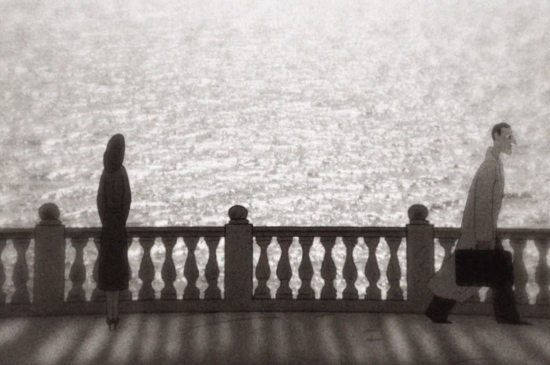
What is left when everything fades away? An old photographer tries to reconstruct people and events by means of old photographs, but they keep slipping away from him, vanishing in the dark, washed away by the waves. In his 2D animated film, rendered in black and white, Anton Dyakov not only shows how memories are lost, but also how they sometimes haunt and overwhelm us – for example in the shape of a disturbing archive fragment of blurred war photos. “Black Box” deals with loss and grief from a personal, yet universal perspective, while referencing the culture of remembrance in the digital age which is increasingly managing – or seeking to manage – without the haptic assurance of a printed photo.
Marie Ketzscher
Screenings & Tickets
Credits
Contact
claus@trollfilm.no
Black Rain
Created using still and moving images sourced from NASA’s STEREO satellite solar observation mission, “Black Rain” turns unprocessed scientific data into a raw and glitched-out perspective on nearby interplanetary space. Embracing the artefacts, the film gives us an unmanicured and almost voyeuristic view of space, distant from the glamour of sci-fi or the carefully colourised images normally released by NASA to the press, as we track solar winds, coronal mass ejections and passing comets, sometimes recognisable only as blurs of lines and pixels, across a monochrome background of stars and the milky way.
Ben Sassen
Photosensitivity warning: Contains flashes of light that may trigger seizures for people with visual sensitivities.
Screenings & Tickets
Credits
Contact
Breaking the Law
André Eckardt
Screenings & Tickets
Credits
Contact
franz.impler@gmail.com
Caracas: dos o tres cosas
Ugo Ulive left his native Uruguay in 1967 to move to the Venezuelan capital of Caracas, where two years later he realised three short films at the newly founded Centro de Cine Documental de la Universidad de los Andes: “Caracas: dos o tres cosas”, “Diamantes” and “Basta!”. The latter was part of the Leipzig retrospective “Film in the People’s Struggle for Liberation: Latin America” in 1972. Inspired by Antonin Artaud’s concept of the “Theatre of Cruelty”, it stands out for disturbing images of an autopsy that reveal the degree of dehumanisation under the influence of imperialism. In “Caracas: dos o tres cosas”, also in the form of an experimental collage, Ulive, roaming the streets of Caracas with his camera, contrasts the public face of a divided society with audio fragments from radio, advertising and pop music.
Florian Wüst
Screenings & Tickets
Credits
Contact
Changeover
André Eckardt
Screenings & Tickets
Credits
Contact
franz.impler@gmail.com