Topic
- Activism
- Animated Documentary
- Archival Footage
- Arts/Culture
- Coming of Age
- Digital Culture
- Eastern German
- Environment
- Experimental
- Family
- Gender
- History
- Human Rights
- Humour
- Labour/Economy
- LGBTQIA2S+
- Music
- Politics/Current Affairs
- Portrait/Biography
- Psyche/Mind
- Religion/Spirituality
- Science/Technology
- Social Issues
- Sports
- Underrepresented Communities
- War/Conflict
- Youth
Filmtype
Accessibility
Custom type
Topic
- Activism
- Animated Documentary
- Archival Footage
- Arts/Culture
- Coming of Age
- Digital Culture
- Eastern German
- Environment
- Experimental
- Family
- Gender
- History
- Human Rights
- Humour
- Labour/Economy
- LGBTQIA2S+
- Music
- Politics/Current Affairs
- Portrait/Biography
- Psyche/Mind
- Religion/Spirituality
- Science/Technology
- Social Issues
- Sports
- Underrepresented Communities
- War/Conflict
- Youth
Accessibility
Between Summers
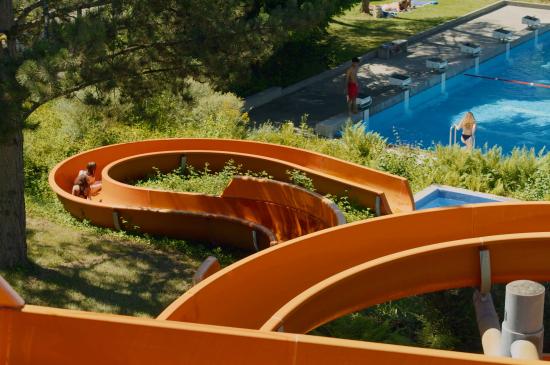
A public swimming pool complex in the middle of a forest which is soon to be renovated: between water slides, French fries, TikTok and sun cream, six teenagers spend the long summer days in the “Badi”, as outdoor pools are called in Swiss German. It is a place to discuss, laugh, try things out and simply hang out together. Whether on the grass, in the water or between the different pools, their conversations revolve around everything that currently moves them. This sun-kissed film accompanies these adolescents at a moment of transition. They talk about the past, think about the future and try to find out who they are and how they will find their place in a changing world. The film stays close to their glances, conversations and encounters, taking an unvarnished look into the inner world of these adolescents – their curiosities, their humour, their contradictions and their insecurities. For one summer long, the Badi becomes a place where childhood and future can exist alongside each other. And while the orange slide is dismantled, the question of what will remain of this summer bubbles up through the water.
Lina Dinkla
Trailer
Screenings & Tickets
Free entry
Credits
Contact
cd@doklab.com
Broken Glass
Franka Sachse
Screenings & Tickets
Credits
Contact
kate.voznytsia@gmail.com
Cold River: I Am in Leipzig
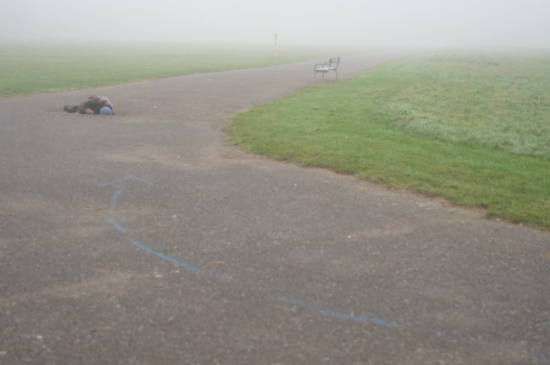
Haiguang dreams. Of his dead grandmother, his birthplace Lěng Shuǐ Jiāng in China, his performances and art projects and his job at a wholesale warehouse in Leipzig. But Haiguang not only dreams, he also films. Himself and his surroundings. Persistent, stoical, sometimes with a handheld camera, sometimes using a tripod – knowing that there is another layer under one’s everyday life that can only be perceived if one dares to search for meaning beyond the visible. If you dare to lie down on a crossing in the park and wait for what happens. If you dare to address the pressure to perform in Chinese society through a performance dragging a car tyre through Beijing. If you dare acknowledge your own fears and doubts and reveal them. Stylistically confident and constantly shifting between places and levels of meaning, Haiguang interlaces his life and dream in eight vignettes in which emotions condense and take on a form that goes beyond the personal. He interweaves the elements of his everyday life between the art academy and his parents’ coal shop in Changsha with equally precise and poetic descriptions. Thus, a puddle by the roadside can become the very place that connects him with his granny across space and time.
Luc-Carolin Ziemann
Trailer
Screenings & Tickets
Credits
Contact
lihaiguang02@gmail.com
Concrete Land
James Lattimer
Contains mentions of physical violence, racism, death, war scenes
Photosensitivity warning: Contains flashes of light that may trigger seizures for people with visual sensitivities.
Screenings & Tickets
Credits
Contact
bk.asmahan@gmail.com
Daughter of the Sun
The stories, myths and reality of the Sámi people are always closely linked to reindeer: travelling with them, keeping them as livestock. Where does this close tie come from? Anita Killi takes up – or imagines – a creation myth: Alits, who roams the land and enjoys his idleness, is gifted the close tie to the reindeers in the shape of Joik (yodelling) by the daughter of the sun when she has to leave him again. The singing magically attracts the animals. Killi captures the yearning in these sounds with poetic imagery and in Sámi language: In the embraces of Alits and the daughter of the sun, but also in the moments when they roam the meadows. Everything is interconnected in this sensual and haptic concept of nature.
Marie Ketzscher
Screenings & Tickets
Credits
Contact
claus@trollfilm.no
Good Evening, Beautiful
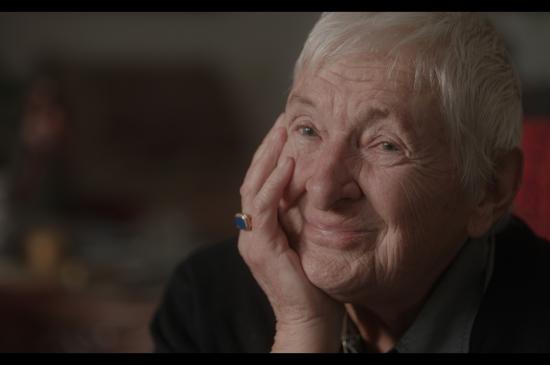
„A little flame that lit up and inspired people to tell different stories about the GDR.” This is how a protagonist describes the 1977 book “Guten Morgen, du Schöne” (Good morning, beautiful) by the writer Maxie Wander, a collection of records in which a wide variety of women talk about themselves. One of the most successful books in the GDR and one of the most influential in German literary history: It affected generations of women (and men!) and encouraged them to question their own lives – ample reason for the director to let a few of the women look back on the book and their lives today. It is about equal rights and emancipation, life plans and rebellion, dreams and failure, love and sexuality, mothers and fathers, men and women, happiness and loneliness, death and, above all, the hunger for life. With respect and great tenderness, Susanne Schüle films faces and bodies on which time has left its mark. Age and beauty, fragility and strength. On the visual level, the stories are subtly commented on by amateur footage: bodies marching in step to the ideologies, Hitler salutes and mass rallies. Again and again contrasted with naked bodies, the wild and non-conformist life beyond the dictatorships. War, peeling potatoes, kisses, children. This is how it was. This is how it is. In the end, the monologues of the past lead up to a contemporary dialogue between the sexes and generations. A flame.
Grit Lemke
Screenings & Tickets
Free entry
Credits
Contact
info@shootfromthehip.de
Growing Wild
“How long have you known each other?” – “Six funerals.” Having grown old as a gay man is a privilege in the wake of the Aids crisis. At “Lebensort Vielfalt”, a Berlin housing project for lesbian, gay, bisexual, trans and intersexual persons, lived experiences are exchanged among three generations. They used to be pigeonholed, today children might just be allowed to learn to speak before they define themselves. A wild kind of growing up and ageing. All residents share the desire to be safe, even from having-to-explain-themselves. The camera roams the house, crosses the corridor, moves from one balcony to another, looks out of the window onto the street, develops new perspectives. Social backsliding is registered; sometimes new happiness is found. On deceased persons’ birthdays, the raspberry cake is cut. Falling asleep, the sound of riot rises again.
Jan Künemund
Contains mentions of discrimination against LGBTQIA2S+ persons
Screenings & Tickets
Credits
Contact
mail@robcrosse.com
Heralds of the Monsoon
Marie Ketzscher
Screenings & Tickets
Credits
Contact
k.meera28@gmail.com
Herminda de la Victoria
In a large-scale operation, a group of homeless families occupy some wasteland on the outskirts of Santiago in March 1967. When the police attempt to evict them, a little girl, Herminda, dies in her mother’s arms. The eviction is called off, the people are allowed to stay and, without any existing infrastructure, build the settlement that exists to this day: Herminda de la Victoria. “Full of errors and mistakes, [the film] is my first approach to cinema, albeit to a ‘new cinema’, a Latin American cinema marked by underdevelopment. Nonetheless, the cinematic process, editing and sound represent a fully valid experience to me. ‘Herminda de la Victoria’ champions the interests of the homeless in Chile, suffers with them, is both testimony and a ‘document’ that forces you to take sides.” (Douglas Hübner)
Florian Wüst
Screenings & Tickets
Credits
Contact
How to Catch a Butterfly
Carolin Weidner
Contains mentions of murder, racism
Contains depictions of racism
Screenings & Tickets
Credits
Contact
purplerayfilm@gmail.com
I’d Love to See You
Documentary films for children rarely venture to this place: prison. Four kids in Belgium take us there. They show us the way from the entrance to the visiting area, where they visit their mother or father, usually twice a week. Prisons are definitely not designed for children and yet there are many who regularly enter them. In Belgium alone, more than 16,000 children have a parent behind bars. This film gives a voice to children of prison inmates who tell us how they cope with a situation they did not choose.
Lina Dinkla
Screenings & Tickets
Credits
Contact
sebastien@dokma.be
Inside – Outside
Philip Zengel