Topic
- Activism
- Animated Documentary
- Archival Footage
- Arts/Culture
- Coming of Age
- Digital Culture
- Eastern German
- Environment
- Experimental
- Family
- Gender
- History
- Human Rights
- Humour
- Labour/Economy
- LGBTQIA2S+
- Music
- Politics/Current Affairs
- Portrait/Biography
- Psyche/Mind
- Religion/Spirituality
- Science/Technology
- Social Issues
- Sports
- Underrepresented Communities
- War/Conflict
- Youth
Filmtype
Accessibility
Custom type
Topic
- Activism
- Animated Documentary
- Archival Footage
- Arts/Culture
- Coming of Age
- Digital Culture
- Eastern German
- Environment
- Experimental
- Family
- Gender
- History
- Human Rights
- Humour
- Labour/Economy
- LGBTQIA2S+
- Music
- Politics/Current Affairs
- Portrait/Biography
- Psyche/Mind
- Religion/Spirituality
- Science/Technology
- Social Issues
- Sports
- Underrepresented Communities
- War/Conflict
- Youth
Accessibility
Baby Jackfruit Baby Guava
Seggen Mikael
Contains mentions of mental health conditions
Screenings & Tickets
Credits
Contact
tommaso@luminaliafilm.com
Detention
Carolin Weidner
Screenings & Tickets
Credits
Contact
samy@andanafilms.com
Heat
Carolin Weidner
Trailer
Screenings & Tickets
Credits
Contact
sales@taskovskifilms.com
Hello Debus
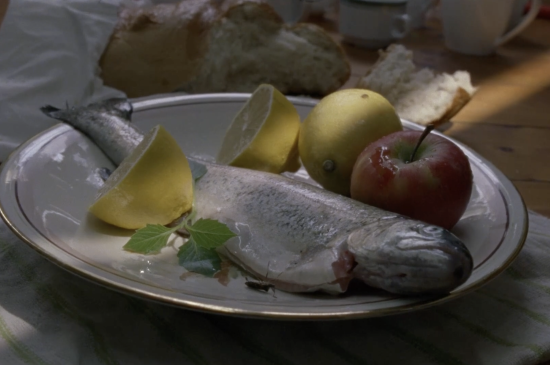
A bizarre still life. Everyday objects lie carefully lined-up around a bed: scissors, keys, audio cassettes. A dead fish on a plate is surrounded by lemons and tomatoes. A young man lies listlessly on the bed – he does not stir even when the telephone rings and the answering machine clicks on. A rigorously choreographed scenery meets the real voice of a father. He seems needy, absurdly asking for anchovies. Suddenly, the son’s body is wrapped in a bubbling bag, only the feet sticking out, a tube supplying water. The father fancies some Roquefort cheese, but the real thing. Personal overload and powerlessness take on an original shape here – and that is far from all.
Anke Leweke
Contains mentions of mental health conditions
Screenings & Tickets
Credits
Contact
rosa.gocht@filmuniversitaet.de
Hotel Utopia
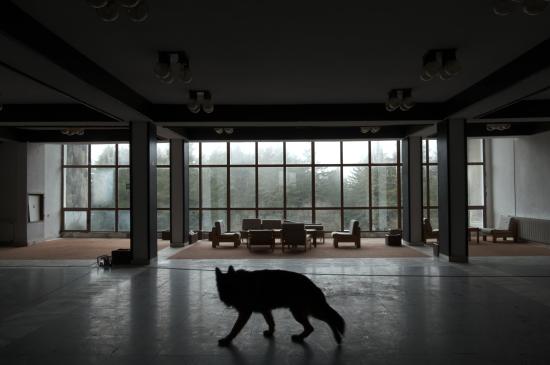
They develop software, work as lifestyle coaches, own marketing agencies or an Amazon shop, travel around the world without paying for accommodation: digital nomads for whom a laptop on a suitcase is sometimes enough of a workplace. Some of their aspirations fall by the wayside in the process and become the project of an enterprising Munich-based developer: Mathias is courting rootless individualists and clever investors to become backers of a project that is to turn a deserted former luxury hotel in the Bulgarian mountains into a hip coworking space. He promises a sense of community, intense human connections and few taxes, an outdoor pool and a campfire idyll. While the nomads who dream of home are waiting for the utopia to become reality, the residents of the surrounding villages sense a new “Wind of Change” with some scepticism. A brilliant structural analysis of a business model that capitalises on modern longings and knows how to carve out the necessary space.
Jan Künemund
Screenings & Tickets
Credits
Contact
hannahbuhr@outlook.de
Kitzel
Franka Sachse
Screenings & Tickets
Credits
Contact
mkeil.animation@gmail.com
Lederwarenfertiger – Ein Beruf für Dich [excerpt]
Meike Weimann
Screenings & Tickets
Credits
Contact
Mother Didn’t Know
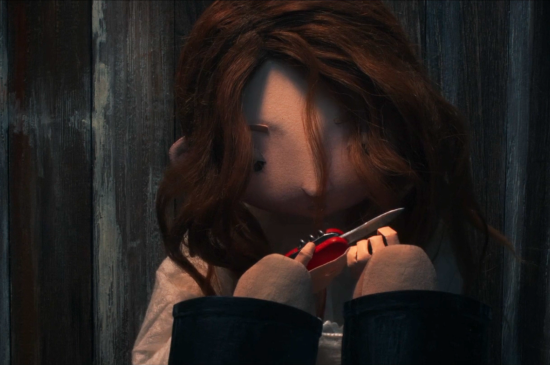
A girl is crying, carving scratches into the wood with a Swiss army knife – exactly as if they were flesh wounds. On top of that, she cuts off her hair. But she is not alone with her sadness: A tender “Nisse” (a household spirit) watches her. When she seems to vanish in the thicket of her dark thoughts, he drops a small injured bird in her way so that both can learn to fly. “Mother Didn’t Know” is a magical and dark tale of childhood depression and of the importance to recognise it and react without delay. The girl’s emotions are given ample space; the camera is close to her and her demons. All around, delicate dust motes float in the air like fairy dust. Killi’s film, though, could also be a tale about the burden of growing up, a burden that becomes unrelatable in retrospect. In any case, there are windows, exits, light – if you only look closely enough.
Marie Ketzscher
Contains depictions of mental health conditions
Screenings & Tickets
Credits
Contact
claus@trollfilm.no
My Brilliant Father
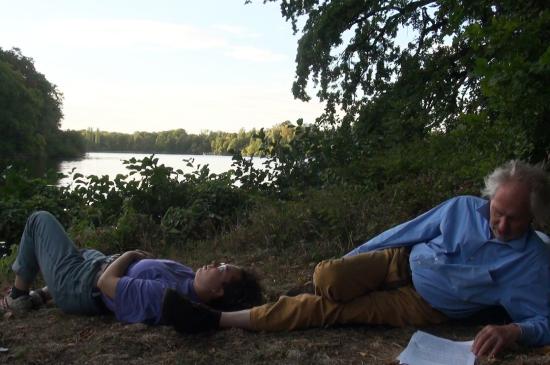
When the writer Jan Christ talks about himself and his work, the words take on a life of their own. “The asshole in which I exist”, he says, referring to his progressive dementia, which causes not only the loss of memory, but also of language and authority. He is working on his last great oeuvre, a “Buch vom Grunde” (Book from the Depth). He struggles for lofty words. As an artist, he supports the artistic work of his daughter, who accompanies him with her camera during his final eight years. He directs himself or allows himself to be directed, while the filmmaker insists and does care work at the same time. In between, we see a vixen roaming the nocturnal streets of Berlin. Tete Hoffmann’s portrait of her father is at once a tribute, a confrontation, a crafty game and a helpless observation of the disintegration of a beloved person. Who has the right here to get attention, and when? Is it still permissible to continue exploring when the father and the writer have drifted apart? Clinging to language is contrasted with the letting go of images. “You are a vixen”, the brilliant father tells his brilliant daughter.
Jan Künemund
Contains depictions of mental health conditions
Trailer
Screenings & Tickets
Credits
Contact
tetehoffmann@web.de
Ollas populares
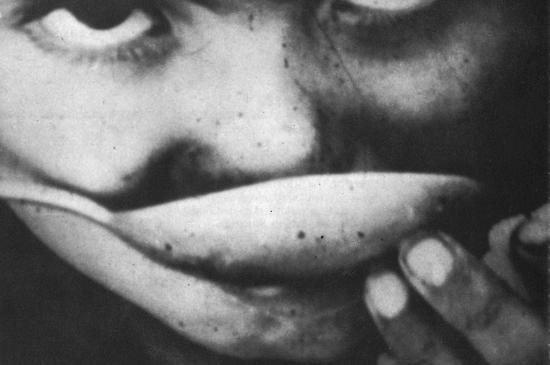
Countless families in the Tucumán province, one of the poorest regions in Argentina, become unemployed after the annual sugar cane harvest. The state installs so-called popular kitchens to combat hunger. Children and old people spoon the thin broth almost apathetically. “These images are stark and elementary. Without commentary, the camera confronts us with conditions of destitution that even the most eloquent pleas are unable to describe”, Peter Kress notes in the report of the 1970 West German Short Film Festival. As a counterpoint to the images, “Ollas populares” is set to the Argentinian national anthem. Can its lyrics only be understood as an expression of cynicism? Maybe it can be interpreted quite differently – as a revolutionary call to arms: “Hear the noise of broken chains. / See noble equality enthroned.” Gerardo Vallejo’s film was made in the constant fear of exposure of its authorship, which is why it is listed anonymously in the Oberhausen programme.
Florian Wüst
Screenings & Tickets
Credits
Contact
Petrolheads
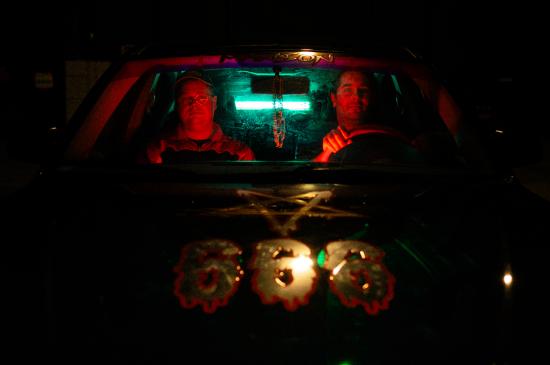
Martin doesn’t dream of a life full of riches. His greatest wish is a 1994 Honda Civic and a driver’s license. He joined his foster family at five months old. At nine, he received a diagnosis of autism, ADHD, and so-called attachment disorder. Then he met Casper, and the two formed a bond born out of their shared love for cars, Trabant jokes, and an understanding of each other’s struggles, shaped by their disabilities and early days spent in an orphanage that affected their self-esteem. Lensed by his brother, director Emil Langballe, with honesty and care, the film follows Martin as he is caught in a spiral of drug addiction and troubles. All the while, he and Casper continue patching up their Honda Civic. A film about ruptures and repairs, of cars and relationships, support systems, and the tenderness of friendship.
Sevara Pan
Contains depictions of drug-use, mental health conditions
Trailer
Screenings & Tickets
Credits
Contact
jasmina@verita-films.com
Prelude and Fugues – The Wood Thrush
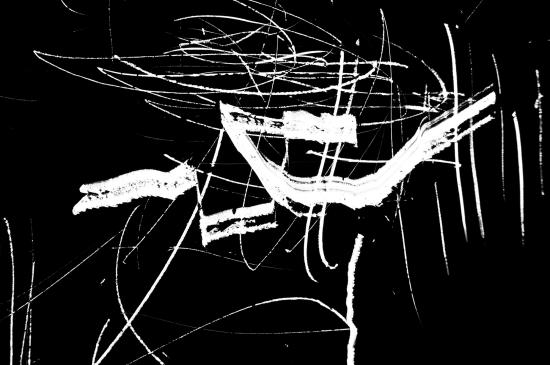
A distant wood thrush is singing against the pitch-black backdrop of the image. A fly acoustically approaches with a massive, bass-heavy hum, abruptly stopped in its flight by the sound of a crash. Sounds so familiar that we are usually not even aware of them provided the main sonic material for the renowned sound designer Claude Beaugrand. His long-standing artist friend, filmmaker Pierre Hébert, dedicated his five animated fugues to him. Field recordings like those of the bird and insect derive their vitality from their recognisability through repetition, as well as from their ephemeral nature, with its random inflections and variations. Hébert forms a sonic body through stretching, echo loops and granulated sounds. And he scratches directly onto the film material, working against the physical resistance of the emulsion. Each “brushstroke” created this way has an unpredictable, intuitive element. Each powerful or tender graphic gesture radiates vitality. Just as the thrush and the fly meet acoustically, abstract bundles of lines flutter nervously on the surface of the screen and into its depth, circling the pared-down silhouette of a human being in free fall. Intertitles lyrically describe a pain that must be expressed but for which there are no direct words. “Prelude and Fugues – The Wood Thrush” is an indescribable experience of choreographed sounds, an inner cinema born of the delicate essence of animation and the irresistible enticement to listen intently.
André Eckardt
Photosensitivity warning: Contains flashes of light that may trigger seizures for people with visual sensitivities.
Screenings & Tickets
Credits
Contact
distribution@videographe.org