Topic
- Activism
- Animated Documentary
- Archival Footage
- Arts/Culture
- Coming of Age
- Digital Culture
- Eastern German
- Environment
- Experimental
- Family
- Gender
- History
- Human Rights
- Humour
- Labour/Economy
- LGBTQIA2S+
- Music
- Politics/Current Affairs
- Portrait/Biography
- Psyche/Mind
- Religion/Spirituality
- Science/Technology
- Social Issues
- Sports
- Underrepresented Communities
- War/Conflict
- Youth
Filmtype
Accessibility
Section
- Audience Competition
- DEFA Matinee
- Doc Alliance
- DOK im Knast
- Fokus Ost
- German Competition Documentary Film
- Hommage: Helena Třeštíková
- Hommage: Trollfilm
- International Competition Animated Film
- International Competition Documentary Film
- Kids DOK
- Matinee Saxon State Archive
- MDR Special Screening
- Opening Film
- Positions
- Retrospective
- Young Eyes
Custom type
Topic
- Activism
- Animated Documentary
- Archival Footage
- Arts/Culture
- Coming of Age
- Digital Culture
- Eastern German
- Environment
- Experimental
- Family
- Gender
- History
- Human Rights
- Humour
- Labour/Economy
- LGBTQIA2S+
- Music
- Politics/Current Affairs
- Portrait/Biography
- Psyche/Mind
- Religion/Spirituality
- Science/Technology
- Social Issues
- Sports
- Underrepresented Communities
- War/Conflict
- Youth
Accessibility
Section
- Audience Competition
- DEFA Matinee
- Doc Alliance
- DOK im Knast
- Fokus Ost
- German Competition Documentary Film
- Hommage: Helena Třeštíková
- Hommage: Trollfilm
- International Competition Animated Film
- International Competition Documentary Film
- Kids DOK
- Matinee Saxon State Archive
- MDR Special Screening
- Opening Film
- Positions
- Retrospective
- Young Eyes
A Fire There
Felix Mende
Trailer
Screenings & Tickets
Free entry
Credits
Contact
michaela@filmotor.com
A Guy from Kleinmachnow
A queer auto-narrative about longing in three acts that addresses seemingly chaotic but systemically functioning cycles of attraction and revulsion, fear and desire, consumption and withdrawal, ecstasy and regret. While the film creates a timeless immediacy, the first-person narrator's commentary, in contrast, sounds like overthinking rather than an unquestioned moment of just-being-there. Whether at the club, by the lake or in the student cafeteria – one’s own judgement is always quicker than the question of how one is actually doing at that moment. But gradually something begins to change: An initially barely perceptible frequency shift sets in. The fragmented staccato of the first comments gradually gives way to a tale that gently settles in the interstices between dune, dream and reality.
Luc-Carolin Ziemann
Contains mentions of addiction, drug-use, mental health conditions, explicit sex scenes
Screenings & Tickets
Credits
Contact
leonardjvolkmer@gmx.de
A Song Without Home
„My life is a prison“, Adelina says. The young woman is smoking and looking into the camera, her parents sitting on the sofa to her right and left. In black and white and the narrow 4:3 ratio, this family scene feels oppressive: Adeline spent eleven years under house arrest here, with a father who refuses to accept her identity and a mother who seems loving but powerless. In Georgia, there is neither freedom nor security for trans persons like Adelina. Anti-queer attacks happen in broad daylight; the legal situation of the LGBTQ community has recently deteriorated further. When the protagonist at last leaves her parents’ village to go to Vienna, the style of Rati Tsiteladze’s debut film also changes. The lipstick glows red, the lights of the big city neon yellow. A different, freer life seems possible. But the freedom brings new challenges: financial and health problems, communicating in a foreign language – and loneliness. “A Song Without Home” is the intimate, impressionistic long-term portrait of a person who wants to define herself and clings to an unshakeable conviction: “No law can erase who we are.”
Jan-Philipp Kohlmann
Contains mentions of discrimination against LGBTQIA2S+ persons
Contains depictions of discrimination against LGBTQIA2S+ persons
Screenings & Tickets
Free entry
Credits
Contact
olyaslusareva@gmail.com
Abastecimiento
Raúl Ruiz was part of the militant cinema movement that put itself in the service of the Chilean Popular Front, but remained an outsider. He employed experiment and irony to dissect social contradictions. In “Abastecimiento”, Ruiz addresses the supply problems under the Unidad Popular government, confronting the views of a woman from a bourgeois background with those of the socialist Minister for Economic Affairs. He follows this with a depiction of the activities of the Juntas de Abastecimiento y Precios (JAP), locally organised committees for the control and just distribution of food and everyday goods. The provocative juxtaposition paints a picture of an impossible dialogue. The film was banned at the time and was believed lost for ages. It was only recently rediscovered. Leipzig was not the place for the feature film director who emigrated to Paris after the military coup, but Ruiz was a frequent guest at the Berlinale Forum.
Florian Wüst
Screenings & Tickets
Credits
Contact
marcelo.morales@patrimoniocultural.gob.cl
Angry Man
Boi tries to be quiet, but the glasses are shaking in his hand. You must not disturb Papa! Because when Papa is disturbed, the angry man in him wakes up and beats his beloved Mama. In “Angry Man”, there is no hiding from the violence that creeps into every fibre of daily life in the form of nervous anticipation or paralysing panic. Yet despite his fear, Boi does the only right thing: He goes to get help. But Killi’s film is not just the story of a brave boy who breaks the spiral of domestic violence: Her work radiates empathy in every direction, including even the father. Because he has a monster inside him – a drawn one that grows and creeps before it pushes its way out, where it erupts as a cut-out angry man. He needs help, too. “Angry Man”, the adaptation of a picture book by Gro Dahle and Svein Nyhus, conveys in a humanistic and credible manner that people can free themselves and change. All without a romanticising happy end.
Marie Ketzscher
Contains mentions of physical violence, mental health conditions
Screenings & Tickets
Credits
Contact
claus@trollfilm.no
Atlas of Disappearance
Seggen Mikael
Contains mentions of murder, death
Trailer
Screenings & Tickets
Credits
Contact
internacional@agenciafreak.com
Auber 89
Anca Păunescu
Screenings & Tickets
Credits
Contact
raluca@lightdox.com
Blossoming
Carolin Weidner
Contains mentions of physical violence, suicide
Contains depictions of mental health conditions, death, child abuse
Screenings & Tickets
Free entry
Credits
Contact
ada@lumisenta.com
Camille & Chameleon
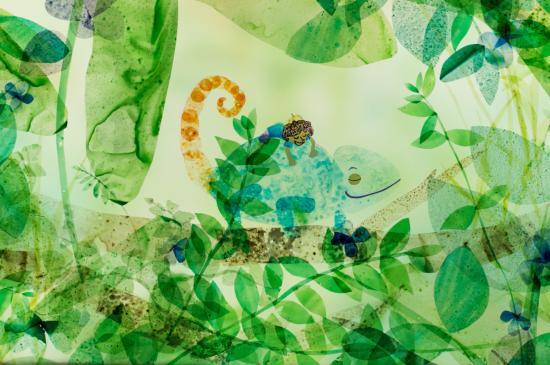
Camille, a very small girl, and the Chameleon who is afraid of heights are inseparable and love to play hide-and-seek in the forest. Camille loves to literally call the tune with her whistling. But one day she becomes too cocky and gives Chameleon an idea that will upset everything. Now they are lost in the green thicket. Can they get over their pride and find each other again?
Lina Dinkla
Screenings & Tickets
Credits
Contact
info@lucie-nichelmann.com
Child’s Mother
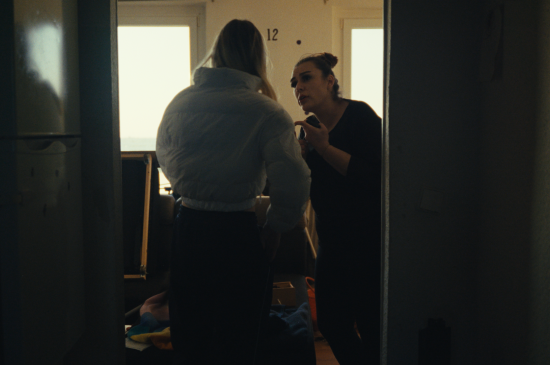
Anne (36) lives in Halle (Saale) and her life is in chaos. An apartment full of moving boxes, a yapping dog. She tells her mother on the phone that the electricity is about to be cut off again. Sometimes her daughter Leonie (14) drops by. Like her mother, she is at risk of slipping into drug addiction. Anne has already lost custody of her two younger children, too. The camera stays purely observational, captures loose scenes from the life of a woman who wants to take responsibility again. The film does not look for psychological explanations but shows Anne as she is. On her drives through the prefabricated housing estate, she seems isolated from her surroundings. Mother and daughter grow closer over an ice cream in a public square. Anne’s visit to her mother provides support but creates pressure, too. We grow ever closer to Anne, sharing her wish that she can become a role model for her daughter.
Anke Leweke
Contains mentions of addiction, death, drug-use
Screenings & Tickets
Credits
Contact
friedemann@inselfilm.de
Closure
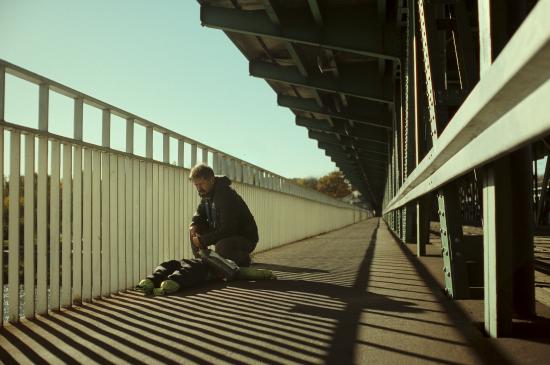
16-year-old Krzysztof was last seen on a bridge over Poland’s Vistula River in 2023. The CCTV camera briefly turned away, and by the time it returned, he had vanished. Following his disappearance, his father Daniel launches a relentless search in Poland’s largest river. As time piles up, the searches persist. Any tech that proves useful gets pulled into it, from drones to metal detectors, trackers, and even loaves of bread, sent floating down the current in the hope of locating the body. The camera matches these rhythms, dredging the river’s depths and combing its banks. The searches, showing the father’s restless energy and the sheer labour of this endeavour, mix with vérité scenes with his family, as well as news snippets about Krzysztof’s alleged sightings. Social media streams are scoured too, providing unsettling insights into the boy’s inner states. Director Michał Marczak – and by extension his camera – accompany Daniel, taking the audience along in a boat and into the heart of a family’s unresolved grief. As closure remains out of reach, Daniel starts assisting other searches, and sombre discoveries are made of other lives lost in the waters.
Sevara Pan
Contains mentions of violence against animals, mental health conditions, suicide
Contains depictions of death, mental health conditions, violence against animals
Photosensitivity warning: Contains flashes of light that may trigger seizures for people with visual sensitivities.
Trailer
Screenings & Tickets
Free entry
Credits
Contact
Cold River: I Am in Leipzig
Haiguang dreams. Of his dead grandmother, his birthplace Lěng Shuǐ Jiāng in China, his performances and art projects and his job at a wholesale warehouse in Leipzig. But Haiguang not only dreams, he also films. Himself and his surroundings. Persistent, stoical, sometimes with a handheld camera, sometimes using a tripod – knowing that there is another layer under one’s everyday life that can only be perceived if one dares to search for meaning beyond the visible. If you dare to lie down on a crossing in the park and wait for what happens. If you dare to address the pressure to perform in Chinese society through a performance dragging a car tyre through Beijing. If you dare acknowledge your own fears and doubts and reveal them. Stylistically confident and constantly shifting between places and levels of meaning, Haiguang interlaces his life and dream in eight vignettes in which emotions condense and take on a form that goes beyond the personal. He interweaves the elements of his everyday life between the art academy and his parents’ coal shop in Changsha with equally precise and poetic descriptions. Thus, a puddle by the roadside can become the very place that connects him with his granny across space and time.

Luc-Carolin Ziemann
Trailer
Screenings & Tickets
Credits
Contact
lihaiguang02@gmail.com