Topic
- Activism
- Animated Documentary
- Archival Footage
- Arts/Culture
- Coming of Age
- Digital Culture
- Eastern German
- Environment
- Experimental
- Family
- Gender
- History
- Human Rights
- Humour
- Labour/Economy
- LGBTQIA2S+
- Music
- Politics/Current Affairs
- Portrait/Biography
- Psyche/Mind
- Religion/Spirituality
- Science/Technology
- Social Issues
- Sports
- Underrepresented Communities
- War/Conflict
- Youth
Filmtype
Accessibility
Custom type
Topic
- Activism
- Animated Documentary
- Archival Footage
- Arts/Culture
- Coming of Age
- Digital Culture
- Eastern German
- Environment
- Experimental
- Family
- Gender
- History
- Human Rights
- Humour
- Labour/Economy
- LGBTQIA2S+
- Music
- Politics/Current Affairs
- Portrait/Biography
- Psyche/Mind
- Religion/Spirituality
- Science/Technology
- Social Issues
- Sports
- Underrepresented Communities
- War/Conflict
- Youth
Accessibility
>1,5°C Pyropolitics and the New World
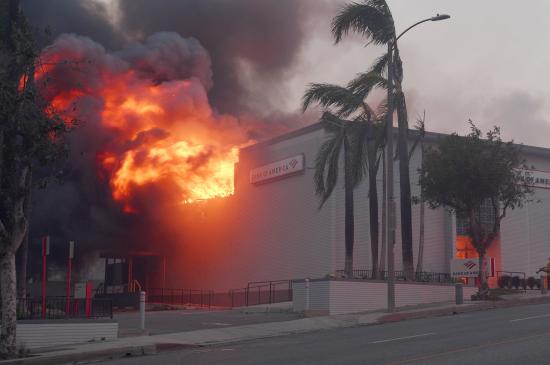
First we hear a crackling sound, then a diffuse orange light glows in the darkness. A siren growing louder and the sound of a helicopter instantly mark the scene as a place of danger. There is a fire. First in the distance, a moment later everywhere. Trees and palms go up in flames. The fire’s power is immense. The firefighters and everyone else who is fighting the wildfires around Los Angeles act with remarkable calm. Nobody is running, the communication chain is working smoothly, TV reporters are broadcasting live, helpers are setting up emergency shelters, taking care of injured animals, cutting fire lines in front of neighbours’ homes. A tried-and-tested routine, efficiency and a great willingness to help. The crisis seems to bring out the best in the people. This uncommented observation is also a tribute to their commitment. But the longer it goes on, the more the question arises why solidarity and sustainable action seem to work in emergencies, while it seems impossible to tackle the crisis before it becomes an inferno. The film’s cinematic meditation on pyropolitics takes a look at our age of multiple crises. The permanent global fire management makes it easy to forget that behind those fires lie geopolitical causes that must be dealt with – not with water, but with political decisions.
Luc-Carolin Ziemann
Trailer
Screenings & Tickets
Credits
Contact
lukasmarxt@gmail.com
Atlas of Disappearance
Seggen Mikael
Contains mentions of murder, death
Trailer
Screenings & Tickets
Credits
Contact
internacional@agenciafreak.com
Auber 89
Anca Păunescu
Screenings & Tickets
Credits
Contact
raluca@lightdox.com
Bats & Bugs
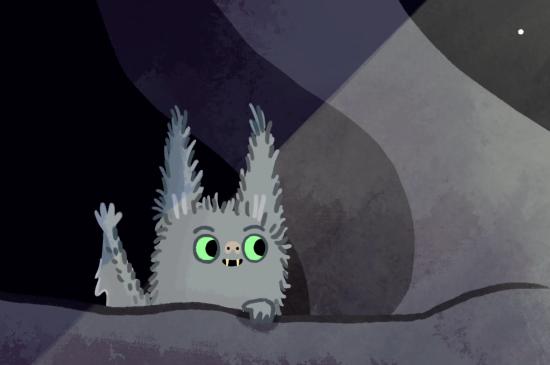
It looks like business as usual deep in the jungle – until one night a lantern lights up and magically attracts countless insects. They fall into a strange trance; even the bat family wake up. While the adults use the bright commotion to hunt, the young bat saves a glowworm, a fly and a moth. The next night, the dangerous light returns. The small bat is determined to try to save her new friends from its spell. A small adventure about friendship and mutual help.
Lina Dinkla
Trailer
Screenings & Tickets
Credits
Contact
mail@lenalena.org
Circle
Pesticides wipe out the insects, the oil spills into the ocean, the forests burn: In 1994, director Laila Rakvåg let a bird fly over and through the ecological, human-made hotspots that plague us even today to a far worse extent. Sometimes the bird is able to land in beautiful natural surroundings, but the rest is never permanent, paradise is always on the brink of the next hellish transformation. The further the bird flies, the more human its features become: It becomes a baby that is then actually born – and carries the memories of the bird in its newly opened eyes. We are inseparably linked to nature; what we do to it, we do to ourselves: Rakvåg’s film is an activist plea for more empathy with our planet and a change of thinking, told from the perspective of an expectant mother.
Marie Ketzscher
Screenings & Tickets
Credits
Contact
claus@trollfilm.no
Cloud Fish
A tiny fish swims through a huge underwater world. It is loud and hectic at times. He would love nothing better than to hide behind the other fish. Is he too small to see the world as the big ones see it? Drawn in enchanting blue and green watercolours, this animation shows that there is no such thing as too big or too small. And wouldn’t it be lovely if we could all fly up to heaven in a big bubble in the end?
Lina Dinkla
Trailer
Screenings & Tickets
Credits
Contact
miguel.wasia@gmail.com
Daughter of the Sun
The stories, myths and reality of the Sámi people are always closely linked to reindeer: travelling with them, keeping them as livestock. Where does this close tie come from? Anita Killi takes up – or imagines – a creation myth: Alits, who roams the land and enjoys his idleness, is gifted the close tie to the reindeers in the shape of Joik (yodelling) by the daughter of the sun when she has to leave him again. The singing magically attracts the animals. Killi captures the yearning in these sounds with poetic imagery and in Sámi language: In the embraces of Alits and the daughter of the sun, but also in the moments when they roam the meadows. Everything is interconnected in this sensual and haptic concept of nature.
Marie Ketzscher
Screenings & Tickets
Credits
Contact
claus@trollfilm.no
Dog and Tree
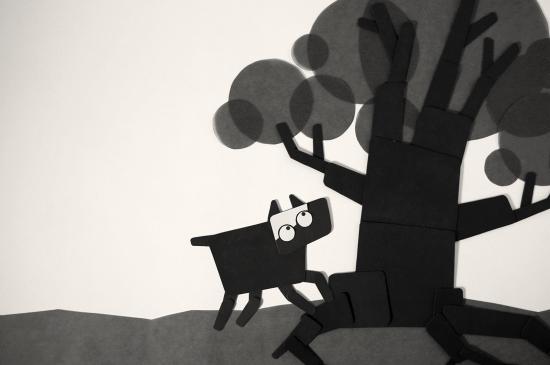
An animated film made entirely out of black and white paper – and told backwards, too! A white she-dog lives in the root cavity of a mighty tree. But what connects the two? Step by step, the film takes us back to their first encounter, when the dog was still a puppy. An equally unusual and strong friendship that withstands even a massive storm.
Lina Dinkla
Trailer
Screenings & Tickets
Credits
Contact
hello@paperplaneanimation.com
El primer año
“El primer año” documents the first year of the Unidad Popular: the rude awakening of the ruling classes of Chile as they are faced with the democratically elected socialist government. From the immediate economic sabotage of the right wing through celebrating workers, the situation of the Mapuche, the agrarian reform, the nationalisation of coal and copper mining and Fidel Castro’s visit, up to the “March of the Pots” by bourgeois women crying for bread, of which they have plenty, the cycle of achievements and difficulties is complete. Besides their journalistic interest, Patricio Guzmán and his collaborators sought to capture the atmospheric aspect of the departure towards a fairer society under Salvador Allende, which is what makes “El primer año” such a moving document of its time. Chris Marker offered to produce a French version with the help of the SLON film collective, which is preceded by photographs by Raymond Depardon, accompanied by a foreword on the history of Chile. Guzmán continued his work on the chronicle of events until he was forced to leave the country after the military coup of 11 September 1973. It was only in Cuban exile that he was able to successively finish his masterpiece “La Batalla de Chile” (1975-79) together with Pedro Chaskel. Each of its three parts was acclaimed at the International Leipzig Documentary and Short Film Week and the Berlinale Forum.
Florian Wüst
Screenings & Tickets
Credits
Contact
alexandra@bfdistribution.cl
Elegy of Time
André Eckardt
Photosensitivity warning: Contains flashes of light that may trigger seizures for people with visual sensitivities.
Screenings & Tickets
Credits
Contact
antoncla.contact@gmail.com
Errabonda
Marie Ketzscher
Trailer
Screenings & Tickets
Credits
Contact
emma92harris@gmail.com
Extinction Story
André Eckardt