Topic
- Activism
- Animated Documentary
- Archival Footage
- Arts/Culture
- Coming of Age
- Digital Culture
- Eastern German
- Environment
- Experimental
- Family
- Gender
- History
- Human Rights
- Humour
- Labour/Economy
- LGBTQIA2S+
- Music
- Politics/Current Affairs
- Portrait/Biography
- Psyche/Mind
- Religion/Spirituality
- Science/Technology
- Social Issues
- Sports
- Underrepresented Communities
- War/Conflict
- Youth
Filmtype
Accessibility
Custom type
Topic
- Activism
- Animated Documentary
- Archival Footage
- Arts/Culture
- Coming of Age
- Digital Culture
- Eastern German
- Environment
- Experimental
- Family
- Gender
- History
- Human Rights
- Humour
- Labour/Economy
- LGBTQIA2S+
- Music
- Politics/Current Affairs
- Portrait/Biography
- Psyche/Mind
- Religion/Spirituality
- Science/Technology
- Social Issues
- Sports
- Underrepresented Communities
- War/Conflict
- Youth
Accessibility
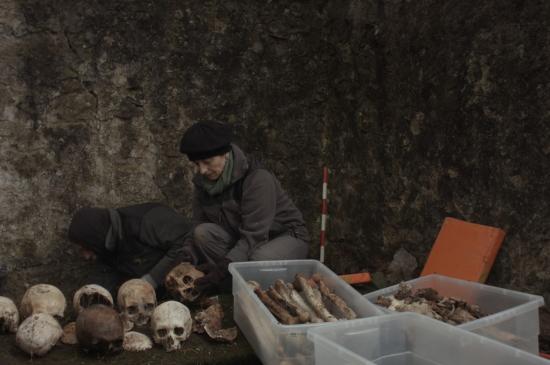
Atlas of Disappearance
Seggen Mikael
Contains mentions of murder, death
Trailer
Screenings & Tickets
Credits
Contact
internacional@agenciafreak.com
Auber 89
Anca Păunescu
Screenings & Tickets
Credits
Contact
raluca@lightdox.com
Baby Jackfruit Baby Guava
Seggen Mikael
Contains mentions of mental health conditions
Screenings & Tickets
Credits
Contact
tommaso@luminaliafilm.com
El primer año
“El primer año” documents the first year of the Unidad Popular: the rude awakening of the ruling classes of Chile as they are faced with the democratically elected socialist government. From the immediate economic sabotage of the right wing through celebrating workers, the situation of the Mapuche, the agrarian reform, the nationalisation of coal and copper mining and Fidel Castro’s visit, up to the “March of the Pots” by bourgeois women crying for bread, of which they have plenty, the cycle of achievements and difficulties is complete. Besides their journalistic interest, Patricio Guzmán and his collaborators sought to capture the atmospheric aspect of the departure towards a fairer society under Salvador Allende, which is what makes “El primer año” such a moving document of its time. Chris Marker offered to produce a French version with the help of the SLON film collective, which is preceded by photographs by Raymond Depardon, accompanied by a foreword on the history of Chile. Guzmán continued his work on the chronicle of events until he was forced to leave the country after the military coup of 11 September 1973. It was only in Cuban exile that he was able to successively finish his masterpiece “La Batalla de Chile” (1975-79) together with Pedro Chaskel. Each of its three parts was acclaimed at the International Leipzig Documentary and Short Film Week and the Berlinale Forum.
Florian Wüst
Screenings & Tickets
Credits
Contact
alexandra@bfdistribution.cl
Extinction Story
André Eckardt
Screenings & Tickets
Credits
Contact
Far Far Away
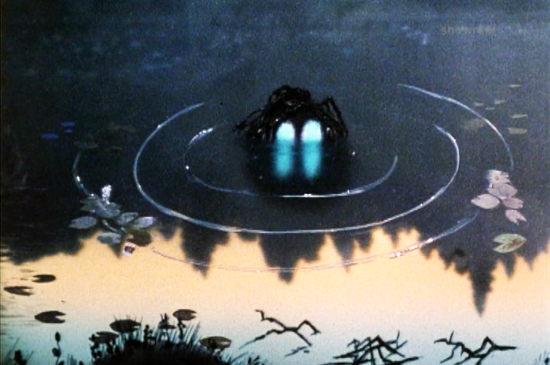
Romantic, mystical, folkloristic: Theodor Kittelsen's (1857–1914) oeuvre as a painter is not just dedicated to nature but also to legends and trolls – and has influenced artists to the present day. Natasha Nikitina for example, whose film takes up Kittelsen's twelve-part series of pictures "Soria Moria Palace" and his eponymous book: The young hero Askeladden sees the golden palace of Soria Moria in the distance and sets out to reach it; an allegory of the golden future that can be earned with a lot of hard work and dedication. In her film, however, Nikitina focuses more on the atmospheric element, letting a troll in a rock wake up and fall asleep again, letting geese and other birds take flight, letting fog and dusk turn into night and back into a glowing morning. A tribute to the artist, but also to the myth-enshrouded Norwegian landscape in general.
Marie Ketzscher
Screenings & Tickets
Credits
Contact
claus@trollfilm.no
Hello Debus
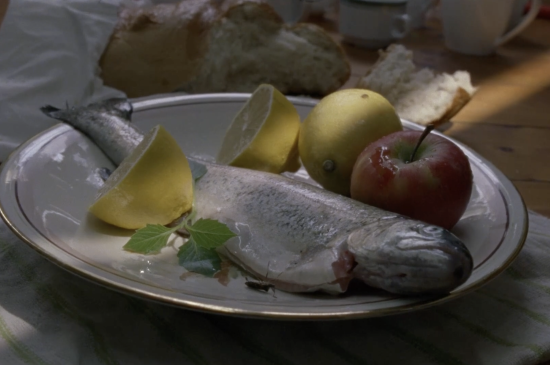
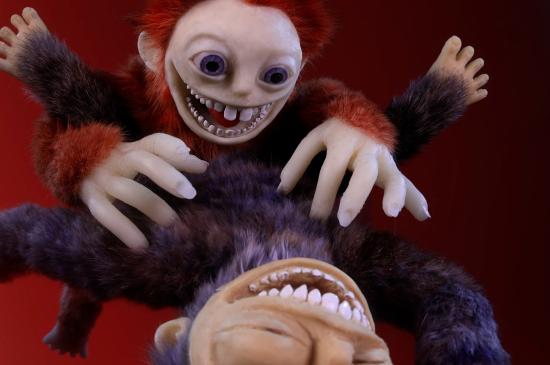
A bizarre still life. Everyday objects lie carefully lined-up around a bed: scissors, keys, audio cassettes. A dead fish on a plate is surrounded by lemons and tomatoes. A young man lies listlessly on the bed – he does not stir even when the telephone rings and the answering machine clicks on. A rigorously choreographed scenery meets the real voice of a father. He seems needy, absurdly asking for anchovies. Suddenly, the son’s body is wrapped in a bubbling bag, only the feet sticking out, a tube supplying water. The father fancies some Roquefort cheese, but the real thing. Personal overload and powerlessness take on an original shape here – and that is far from all.
Anke Leweke
Contains mentions of mental health conditions
Screenings & Tickets
Credits
Contact
rosa.gocht@filmuniversitaet.de
Inside – Outside
Philip Zengel
Screenings & Tickets
Credits
Contact
Kitzel
Franka Sachse
Screenings & Tickets
Credits
Contact
mkeil.animation@gmail.com
Mother Didn’t Know
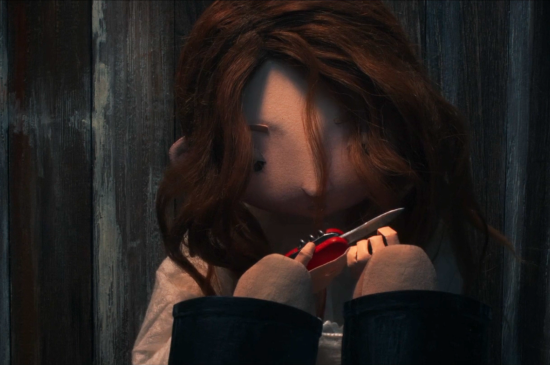
A girl is crying, carving scratches into the wood with a Swiss army knife – exactly as if they were flesh wounds. On top of that, she cuts off her hair. But she is not alone with her sadness: A tender “Nisse” (a household spirit) watches her. When she seems to vanish in the thicket of her dark thoughts, he drops a small injured bird in her way so that both can learn to fly. “Mother Didn’t Know” is a magical and dark tale of childhood depression and of the importance to recognise it and react without delay. The girl’s emotions are given ample space; the camera is close to her and her demons. All around, delicate dust motes float in the air like fairy dust. Killi’s film, though, could also be a tale about the burden of growing up, a burden that becomes unrelatable in retrospect. In any case, there are windows, exits, light – if you only look closely enough.
Marie Ketzscher
Contains depictions of mental health conditions
Screenings & Tickets
Credits
Contact
claus@trollfilm.no
My Brilliant Father
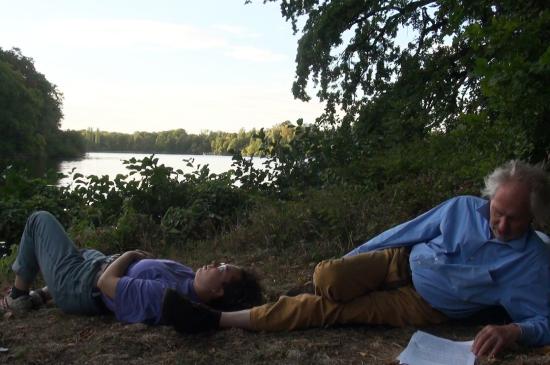
When the writer Jan Christ talks about himself and his work, the words take on a life of their own. “The asshole in which I exist”, he says, referring to his progressive dementia, which causes not only the loss of memory, but also of language and authority. He is working on his last great oeuvre, a “Buch vom Grunde” (Book from the Depth). He struggles for lofty words. As an artist, he supports the artistic work of his daughter, who accompanies him with her camera during his final eight years. He directs himself or allows himself to be directed, while the filmmaker insists and does care work at the same time. In between, we see a vixen roaming the nocturnal streets of Berlin. Tete Hoffmann’s portrait of her father is at once a tribute, a confrontation, a crafty game and a helpless observation of the disintegration of a beloved person. Who has the right here to get attention, and when? Is it still permissible to continue exploring when the father and the writer have drifted apart? Clinging to language is contrasted with the letting go of images. “You are a vixen”, the brilliant father tells his brilliant daughter.
Jan Künemund
Contains depictions of mental health conditions
Trailer
Screenings & Tickets
Credits
Contact
tetehoffmann@web.de
Petrolheads
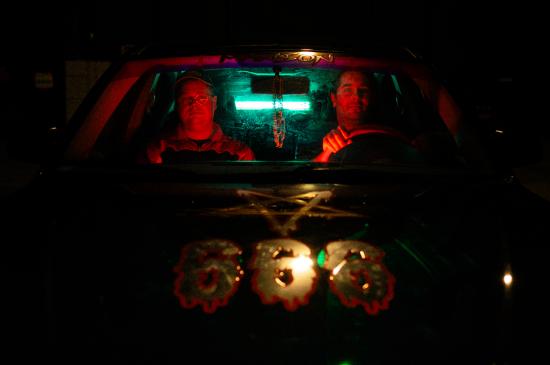
Martin doesn’t dream of a life full of riches. His greatest wish is a 1994 Honda Civic and a driver’s license. He joined his foster family at five months old. At nine, he received a diagnosis of autism, ADHD, and so-called attachment disorder. Then he met Casper, and the two formed a bond born out of their shared love for cars, Trabant jokes, and an understanding of each other’s struggles, shaped by their disabilities and early days spent in an orphanage that affected their self-esteem. Lensed by his brother, director Emil Langballe, with honesty and care, the film follows Martin as he is caught in a spiral of drug addiction and troubles. All the while, he and Casper continue patching up their Honda Civic. A film about ruptures and repairs, of cars and relationships, support systems, and the tenderness of friendship.
Sevara Pan
Contains depictions of drug-use, mental health conditions
Trailer
Screenings & Tickets
Credits
Contact
jasmina@verita-films.com