Topic
- Activism
- Animated Documentary
- Archival Footage
- Arts/Culture
- Coming of Age
- Digital Culture
- Eastern German
- Environment
- Experimental
- Family
- Gender
- History
- Human Rights
- Humour
- Labour/Economy
- LGBTQIA2S+
- Music
- Politics/Current Affairs
- Portrait/Biography
- Psyche/Mind
- Religion/Spirituality
- Science/Technology
- Social Issues
- Sports
- Underrepresented Communities
- War/Conflict
- Youth
Filmtype
Accessibility
Custom type
Topic
- Activism
- Animated Documentary
- Archival Footage
- Arts/Culture
- Coming of Age
- Digital Culture
- Eastern German
- Environment
- Experimental
- Family
- Gender
- History
- Human Rights
- Humour
- Labour/Economy
- LGBTQIA2S+
- Music
- Politics/Current Affairs
- Portrait/Biography
- Psyche/Mind
- Religion/Spirituality
- Science/Technology
- Social Issues
- Sports
- Underrepresented Communities
- War/Conflict
- Youth
Accessibility
Neighborhood Autobahn
A cinematic observation of a landscape shaped and still marked by borders. Even 35 years after reunification, borders are still present in Marienborn. There is the memorial recalling the violence of the SED regime. Just a stone’s throw away, new borders have been added. Refugees now live in the former NVA barracks, which have been converted into a collective accommodation centre. To get here, they, too, had to cross borders, often clandestinely and at the risk of their lives. Now another border separates them from the outside world: a combination of wall and fence that inevitably brings to mind the former border security facilities of the GDR. In long tracking shots whose wide-angle view makes them seem almost otherworldly, the film observes this coexistence of opening and delineation. While the images make continuities visible, the sound brings out the subtle differences between the various locations.
Luc-Carolin Ziemann
Contains mentions of racism
Trailer
Screenings & Tickets
Credits
Contact
luci.schwingen@gmail.com
Nicole Nicole
Alberte and Nicole are mother and daughter, three decades apart. At 55 and 87, they still live together in a villa by Lake Geneva, having settled into a codependent dynamic: Nicole is reluctant to leave her mother, while Alberte struggles to let her go, fearing living alone. In a house filled with memorabilia, cats, and too many clocks, the familiar feels safe for the mother‑daughter duo who often doze off like synchronised swimmers. However, as time passes, the family grows concerned about Nicole’s autonomy. Nicole is considered neuroatypical, “ambivalent” regarding the perceived condition, and few facilities are equipped to provide adequate support. Nicole’s sister, Danielle, then decides to assist her in a search for a flat and a job. These scenes unfold alongside the family’s daily life and the intimate conversations in front of the camera. Nicole also embarks on a playful creative exercise with her filmmaker niece Lauren, imagining life’s many scenarios.
Sevara Pan
Contains depictions of mental health conditions
Trailer
Screenings & Tickets
Free entry
Credits
Contact
Petrolheads
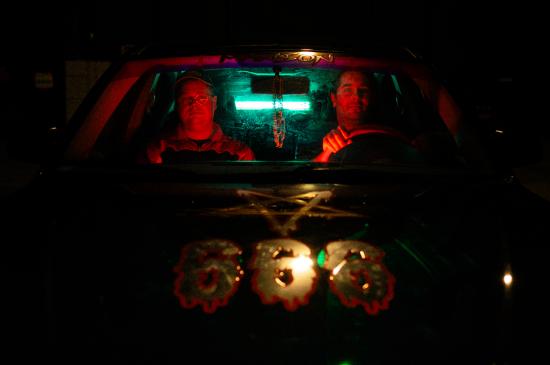
Martin doesn’t dream of a life full of riches. His greatest wish is a 1994 Honda Civic and a driver’s license. He joined his foster family at five months old. At nine, he received a diagnosis of autism, ADHD, and so-called attachment disorder. Then he met Casper, and the two formed a bond born out of their shared love for cars, Trabant jokes, and an understanding of each other’s struggles, shaped by their disabilities and early days spent in an orphanage that affected their self-esteem. Lensed by his brother, director Emil Langballe, with honesty and care, the film follows Martin as he is caught in a spiral of drug addiction and troubles. All the while, he and Casper continue patching up their Honda Civic. A film about ruptures and repairs, of cars and relationships, support systems, and the tenderness of friendship.
Sevara Pan
Contains depictions of drug-use, mental health conditions
Trailer
Screenings & Tickets
Credits
Contact
jasmina@verita-films.com
Staßfurt – Windhoek
Philip Zengel
Screenings & Tickets
Credits
Contact
defa-filmverleih@deutsche-kinemathek.de
The Autoharp Crushing on Hot Guys
Franka Sachse
Contains mentions of mental health conditions
Screenings & Tickets
Free entry
Credits
Contact
festivals@famu.cz
The Nights
James Lattimer
Contains depictions of nudity, explicit sex scenes
Screenings & Tickets
Credits
Contact
Tire dié
“Tire dié” begins with aerial shots of Santa Fe, Fernando Birri’s hometown. We hear a litany of statistical data that gradually and parodically turn into more and more trivial facts about the city. The camera approaches the town’s outskirts with their informal settlements, drops from its airy heights down to the eye-level of those who talk about their daily struggle for survival. Often it is the children who bring the necessary coins home. Every afternoon, they go begging along the nearby two-kilometre railway bridge. Running barefoot along the train that connects Santa Fe with Buenos Aires, they hold their hands up to the travellers at the windows, incessantly calling “tire dié” (throw a dime). The last third of the film, which marks the birth of the new Latin American cinema, is an equally breathtaking and harrowing montage of this daring endeavour.
Florian Wüst
Screenings & Tickets
Credits
Contact
Uncle Thuận
He is „always sad“, says Uncle Thuận. Connected via mobile phone with his family who are scattered across the world he sings sentimental songs about spring in Hanoi. Meanwhile, his wife Thúy tirelessly looks after the restaurant that the two have been managing in North Rhine-Westphalia for twenty years. They came to the GDR as contract workers at the age of 19. In conversations with their daughters, life stories unfold in which they were rarely expected to decide anything but always to work hard and to function. A role they accept without complaint and justify even today. But the protective shell accumulated over decades increasingly begins to show cracks. And somewhere in the endless routines and tasks of a restaurant kitchen which also structure the film, a question quietly emerges: the question of happiness. In Minh Anh Nguyễn, a post-migrant generation speaks up who regard contract work and racism in the GDR not as a closed chapter but as part of their history. Casual and very close to her protagonists, she tells of colonial legacies that have inscribed themselves into biographies and across generations. At the same time, she shows how this cycle can be broken: By the daughters asking questions which – even outside the Vietnamese community and above all in the East – are long overdue.
Grit Lemke
Trailer
Screenings & Tickets
Credits
Contact
nguyen.minh-anh@web.de
Yawar Mallku
Jorge Sanjinés’ short film “Revolución” (1963) was one of the first Latin American films, beside the Cuban films, to be screened in Leipzig in 1964. With his documentary feature “Yawar Mallku” (Sangre de Condor), Sanjinés took a step towards a cinema that makes history. Told in flashbacks, the film is based on real events: US American development aid workers secretly sterilise indigenous women. The chief of a Quechua community discovers the crime; the village community takes revenge. He is finally shot down by the police and survives, badly injured. He is taken to town, but the rescue attempt fails: There is no money for a blood transfusion. The film challenges both “Yankee Imperialism” and the Bolivian class society. As a consequence of the initially banned public screening, the so-called Peace Corps had to leave the country. “Yawar Mallku” had its premiere in West Berlin as part of the 1970 Berlinale’s “Week of New Cinema: Latin America”. Thereafter the Friends of the German Cinematheque (today: Arsenal Filminstitut) showned Sanjinés’ film multiple times at the Arsenal Cinema over the years, including under the heading “Birth Control as Genocide” in the context of the First International Women’s Film Seminar in November 1973. It enjoyed the same esteem in the East: One of only three Latin American films found in the “Film-Blätter: Kurzmonographien zu klassischen Filmen" (Film Sheets: Brief Monographs on Classical films) of the GDR’s State Film Archive, “Das Blut des Condors” (The Blood of the Condor) is listed under No. 183.
Florian Wüst
Screenings & Tickets
Credits
Contact
pedro@ukamau.org
You Should Dream of Flying
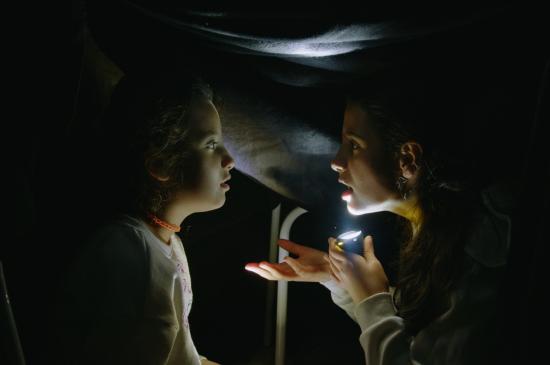
Playing hide and seek, reading out a school essay, taking a driving lesson. These scenes seem casual at first glance, but they turn out to be snapshots of life in exceptional circumstances. Only when the camera pulls back for a long shot does it reveal the refugee homes. The man behind the wheel drives briskly, explaining to the instructor that he obtained his driving license back home long ago. Two girls under a blanket tell each other stories of the time before they fled. What keeps this luminous round of scenes together is the hope of a return to normality.
Anke Leweke
Trailer
Screenings & Tickets
Credits
Contact
laura.staab@gmx.de