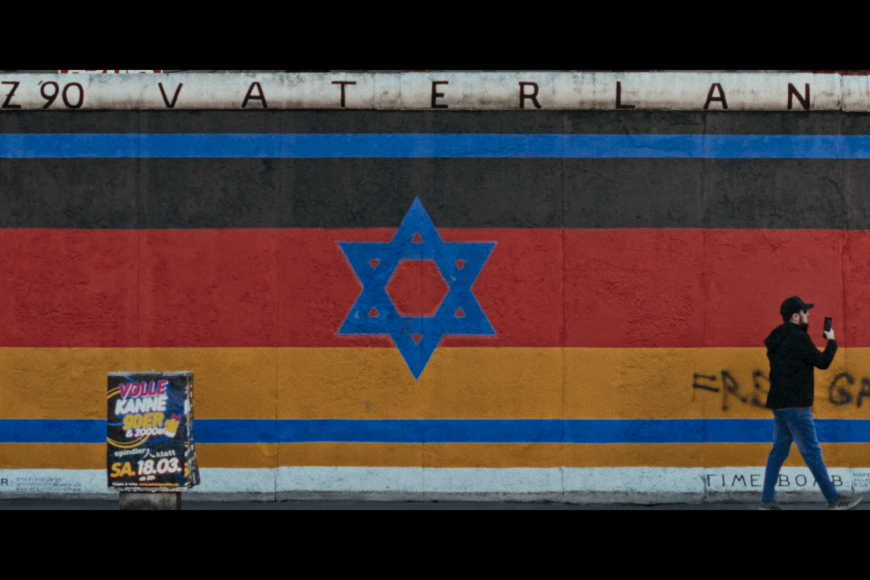
A Jewish Problem
Ron Rothschild
Key events of the Middle East conflict have left their traces in this filmmaker’s family history. When he arrives in Berlin, he learns to distrust his own perceptions.


In the opening image, there is a grid between the camera and the world, conveying the field of vision of an Israeli soldier deployed as a cameraman in the Israeli-occupied territories between 2007 and 2010. The filmmaker’s self-critical comments today ask what he could and could not see then. Leaving the country and arriving in Germany triggered a learning process that he traces here in a multi-layered and very personal research: “I learned I can’t trust myself to do the right thing.”
Complex camera pans show current German street scenes that bundle up signs of a precarious coexistence, while family and friends drift apart over the so-called Middle East Conflict. Ron Rothschild now lives in a country that his grandmother had to flee at the age of seven to escape from the Nazis. Even in old age, she could still recite Schiller’s “Song of the Bell” from memory. Once arrived in Haifa, she became a soldier and part of the establishment of the state of Israel and the expulsion of the Palestinians. The yearning to belong creates ambivalences and open questions in the family’s history, which the grandson confronts without resolving the ever-new distances emerging between the camera eye and the world.


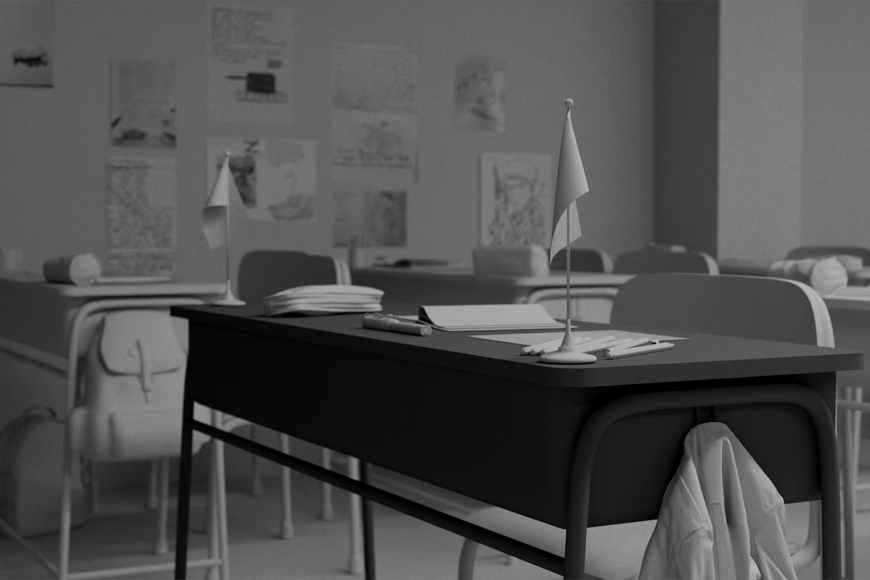
In her documentary experiment, Yulia Lokshina addresses the issue of how the institution of school is used by the Russian state to justify its aggressive expansionist actions, either by exterior military violence or by interior ideological violence and persecution of dissidents. The story revolves around a young Russian teacher who speaks out against the war in class shortly after the invasion of Ukraine. A pupil secretly records her statement and denounces her. Soon afterwards, the young woman finds herself the focus of official investigations. She flees to Germany and begins to work as a teacher again. Together with her Berlin class, she reconstructs her own case to understand why this betrayal happened and what consequences censorship and persecution have for the individual, but also for communities.
What is the connection between school and politics, what should it be? How does political oppression feel, and what forms of resistance are possible? These are the questions the children in Berlin-Moabit grapple with. In addition to observations of the class, the film uses archive material, found footage, documentary scenes, and 3D animations to make the situation in Russia, characterised by fear and surveillance, tangible and comprehensible here as well.
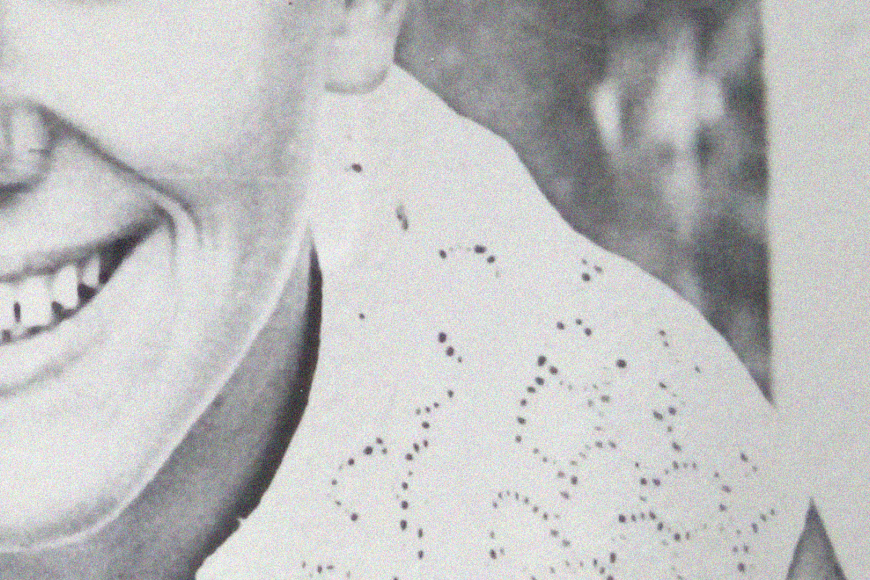
This both raw and tender work of memory ploughs through reflections, feelings, anecdotes, photos, and drawings, an attempt in cinematic images to capture the grief over a beloved grandfather who fell victim to cancer, make it manageable. Sonia Leliukh takes the liberty of speaking from a deliberately subjective perspective, refusing to tone down her statements with seemingly valid rules of language or etiquette. With her desktop documentary, which seems playful only at first glance, she confronts radical grief with equally radical honesty. By putting the old computer games her grandfather used to distract himself from his pain on screen, she does not only put herself in the role of the terminally ill, but also the audience. When my finger twitches to move the Solitaire cards to the right spot or click on another box at Minesweeper, I am already in the midst of things and must ask myself how I deal with grief, love, or rejection. In the present, but also and especially when the people who inspire these emotions have gone. Sonia Leliukh’s work is a cinematic refusal to allow these feelings to become objects in the sediment of the past.