Film Archive

Filmstill La Jetée, the Fifth Shot

La Jetée, the Fifth Shot

Le cinquième plan de La Jetée
Dominique Cabrera
International Competition Documentary Film 2024
Documentary Film
France
2024
104 minutes
French
Subtitles: 
English

Many people probably know Chris Marker’s story of a time trip from a dystopian future back to the present, in which the hero experiences a traumatic event again, only through Terry Gilliam’s extroverted remake “12 Monkeys”. The original, Marker’s experimental science fiction classic “La Jetée”, however, was groundbreaking rather because of its minimalist narrative form: The 28-minute black and white photo novel with a single moving shot has made film history.
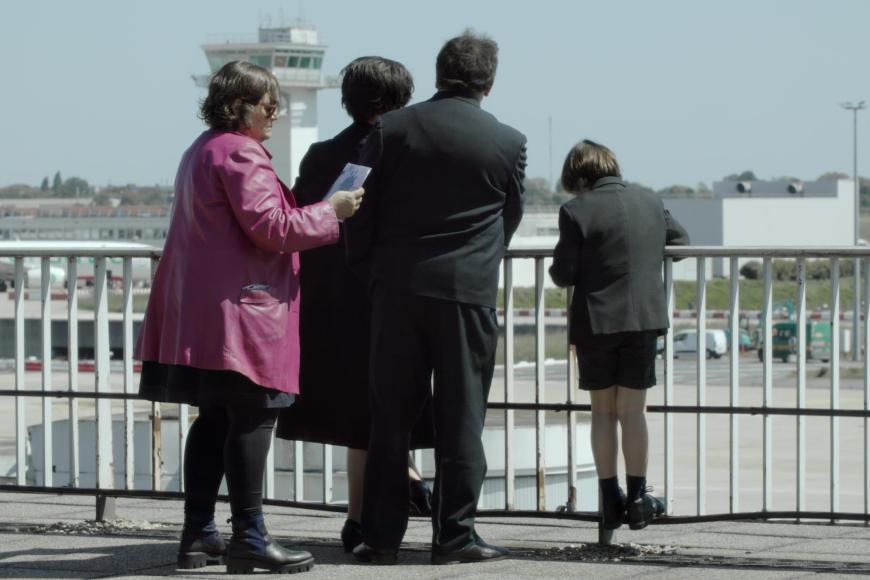
Dominique Cabrera now takes a very personal approach to putting the influential work in a historical context: The year of its creation, 1962, was also the year when Algeria gained independence from French colonial rule and hundreds of thousands of French people with roots in Algeria, the so-called Pieds-noirs, left their homeland to enter exile via Orly airport. In France, a new, uncertain existence awaited them – including Cabrera’s family. Six decades later, her cousin, who happened to be present on the pier of Paris-Orly when Marker took photos for his film, is convinced that he recognises himself in the fifth shot of “La Jetée”. This is the prelude to one of the most thrilling and at the same time loving time trips one can imagine – and the beginning of a detective and cinephile research with ever more astonishing twists.

Christoph Terhechte

Credits DOK Leipzig Logo

Director
Dominique Cabrera
Cinematographer
Karine Aulnette
Editor
Sophie Brunet, Dominique Barbier
Producer
Edmée Doroszlaï
Sound
François Waledisch, Nathalie Vidal, Elias Boughedir
Score
Béatrice Thiriet, Oscar Turbant, Élise Bertrand
Nominated for: Prize of the Interreligious Jury, FIPRESCI Prize
Winner of: Golden Dove (International Competition)
International Competition Documentary Film 2024
Filmstill Things of a Lifetime, Intimate Archeological Exercises
Things of a Lifetime, Intimate Archeological Exercises
Céline Ségalini
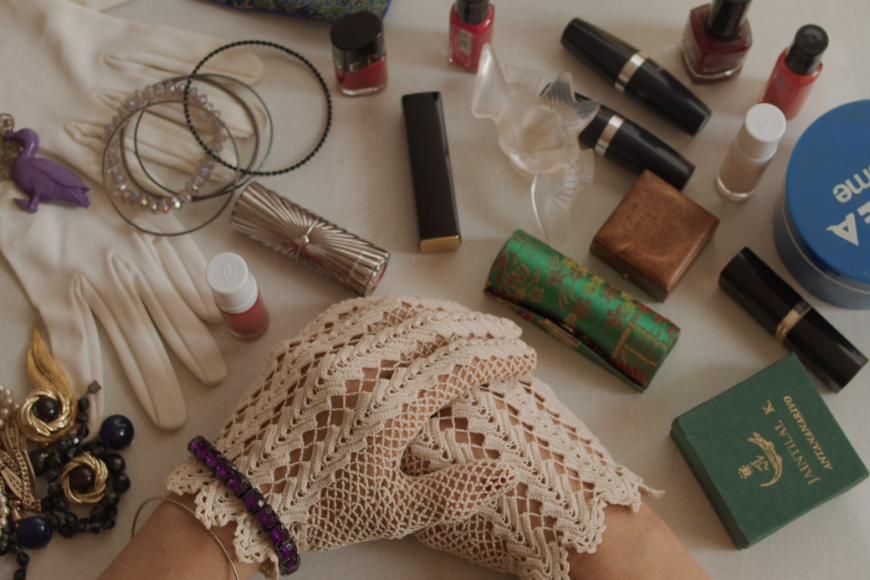
Céline arranges objects in the house of her deceased grandmother. It is an attempt to understand her better – her relationship to her own identity and France’s colonial history.
Filmstill Things of a Lifetime, Intimate Archeological Exercises

Things of a Lifetime, Intimate Archeological Exercises

Les choses d’une vie, exercices d’archéologie intime
Céline Ségalini
International Competition Documentary Film 2024
Documentary Film
France
2024
50 minutes
French
Subtitles: 
English

The filmmaker’s grandmother moved into this house in 1971. When Rolande Ségalini died, everything remained as it was during her lifetime. But what to do with all the accumulated things? As her granddaughter Céline begins to film this material legacy, she realises that her grandmother has remained an enigma to her to this day. Room by room, she inventories, classes, counts, sorts the possessions retrieved from wardrobes, drawers, cabinets and boxes and arranges the objects into new still lives. It is an attempt to understand the deceased woman better and find out more about her. Step by step, the heiress discovers various connections to France’s colonial history.
The film unfurls the facets of a discreet relationship with one’s origin – searching, questioning, interpreting, at the same time investigating the construction and external perception of identity, the practice of passing. The things of a life, displayed like the findings of an archaeological dig, are laid out ready to be analysed. They express a desire: to be recognised as a white Frenchwoman.

Seggen Mikael

Credits DOK Leipzig Logo

Director
Céline Ségalini
Cinematographer
Pierre Nativel, Christophe Leroy, Céline Ségalini
Editor
Anne-Laure Viaud
Producer
Marc Faye, Magali Hériat
Sound
Christophe Leroy
Sound Design
Loïc Villiot
Nominated for: Silver Dove, Prize of the Interreligious Jury, FIPRESCI Prize
Filmstill Twice into Oblivion

Twice into Oblivion

L’oubli tue deux fois
Pierre Michel Jean
International Competition Documentary Film 2024
Documentary Film
France,
Haiti,
Dominican Republic
2023
100 minutes
French,
Haitian Creole,
Spanish,
English
Subtitles: 
English

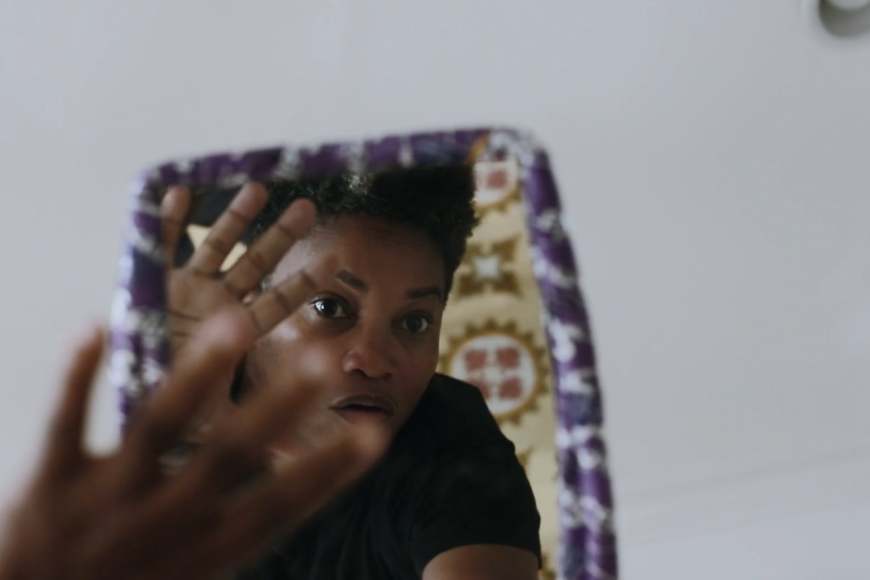
In 1937, Dominican dictator Rafael Leónidas Trujillo ordered the murder of the Haitian population of the Dominican Republic. Tens of thousands were brutally killed. A language test made the difference between life and death: The Creole-speaking Haitians who could not pronounce the Spanish word “perejil” had to die, which is why this genocide went down in history under the innocuous name of “Parsley Massacre.” Until today, the region is marked by deep traumatisation, racism and classism, which are linked to the colonialist past of this two-state island.
Haitian filmmaker Pierre Michel Jean approaches this rarely examined subject with great delicacy and succeeds in creating a history lesson that combines different historiographies – from factual research to problematic narrative constructions through to the haunting testimonies of the last survivors – in a kind of montage of knowledge. At the same time, his documentary addresses the complexity of collective guilt and the important question of who can and should say “mea culpa” today, more than eighty years later. A performance workshop organised by theatre director Daphné Ménard, which brings together artists from both states, and the memories of the elderly Henry Noncent form the heart of this filmic monument whose empathy makes it compelling.

Borjana Gaković

Credits DOK Leipzig Logo

Director
Pierre Michel Jean
Cinematographer
Pierre Michel Jean, Louvenson Saint Just, Réginald Louissaint Jr
Editor
Marie Bottois
Producer
Maud Martin, Lysa Heurtier Manzanares
Sound
Jeannis Bazelais, Macaisse Bellegarde
Sound Design
Brice Kartmann, Marie Moulin
Nominated for: Prize of the Interreligious Jury, FIPRESCI Prize, Leipziger Ring, Silver Dove
Winner of: Prize of the Interreligious Jury, Silver Dove Feature-Length Film (International Competition Documentary Film)
Filmstill What We Ask of a Statue Is That It Doesn’t Move

What We Ask of a Statue Is That It Doesn’t Move

Afto pou zitame apo ena agalma ine na min kinite
Daphné Hérétakis
International Competition Documentary Film 2024
Documentary Film
Greece,
France
2023
31 minutes
Greek
Subtitles: 
English

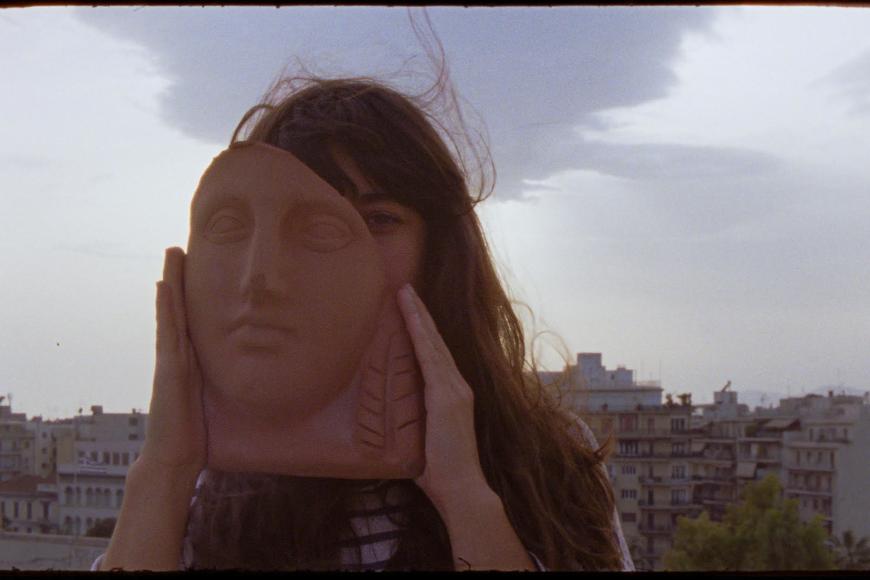
An Athenian filmmaker is struggling with insomnia and seeks help from a tarot reader. She says that when she does manage to sleep, her dreams are strange, she dreams of her childhood apartment, where everyone has turned to stone. Yet such surreal thoughts hardly sound outlandish given the current state of Greece: petrified monuments to past glories as far as the eye can see, even as any sort of movement in the present has slowed to a standstill. She sets out to understand this curious paradox, dipping into literature, fiction and documentary to do so, disparate elements given unity by playfulness, political sensibility and shimmering celluloid.
Conversations with locals on the streets of the Greek capital about the nature of statues; the 1944 manifesto by poet Yorgos Makris that proposed blowing up the Parthenon and the groupuscule that now seeks to complete his work; the story of the political prisoners forced to rebuild the same monument in miniature; a rogue Caryatid now discovering love. Such times are hard to make sense of, whether in Greece or beyond, and perhaps there is only one way to proceed, to move forward, to live: everything bit by bit. “When will we gather the world together piece by piece?”

James Lattimer

Credits DOK Leipzig Logo

Director
Daphné Hérétakis
Script
Daphné Hérétakis
Cinematographer
Robin Fresson, Daphné Hérétakis
Editor
Daphné Hérétakis, Konstantinos Samaras, Jean Costa
Producer
Jasmina Sijerčić, Daphné Hérétakis, Ethan Selcer, Konstantinos Samaras
Sound
Nicole Assimossi, Dimitra Xeroutsikou
Sound Design
Alexandre Hecker, Simon Apostolou
Score
Kornilios Selamsis