Coexistence, My Ass!
Amber Fares
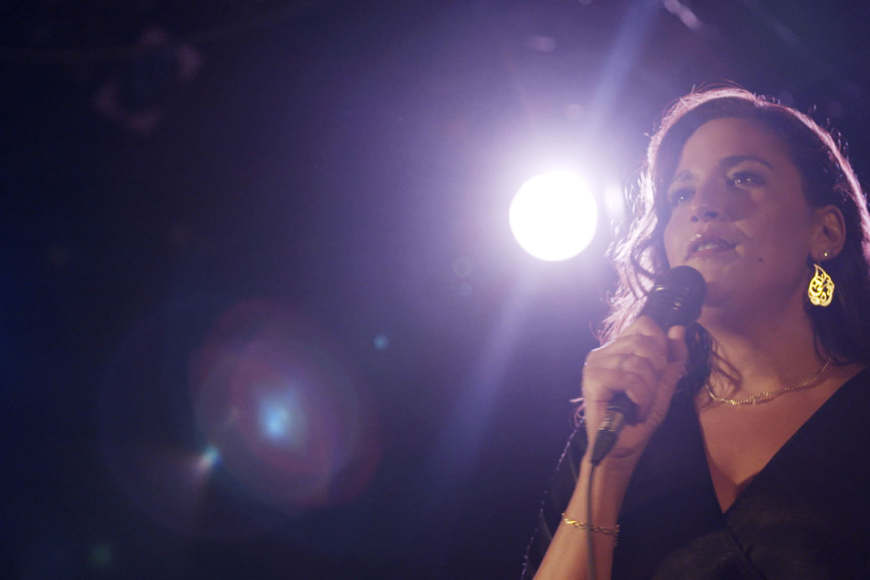
Noam Shuster-Eliassi grew up in a Jewish-Arab peace village in Israel, worked for the UN and is doing stand-up comedy on the Middle East conflict in English, Hebrew and Arabic.


The name of her village stands for a utopia that has shaped Noam Shuster Eliassi from childhood: Newe Shalom (Hebrew) or Wahat al-Salām (Arabic) roughly translates as “Oasis of Peace.” This small community of 300 people from Jewish and Arab families which was founded in 1969, located in Israel at the border with the West Bank, is a test of solidarity in practice. Thus, Noam, who is Jewish, and her Palestinian friend Ranin become ambassadors of mutual understanding even as children, for example when Hillary Clinton or Jane Fonda come to visit. They seem predestined for a career in the United Nations.
In her comedy show “Coexistence, My Ass!”, which director Amber Fares uses as a leitmotif, Shuster Eliassi strikes a harsher tone. Her career shift from diplomacy to political comedy – in English, Hebrew or Arabic, depending on the audience – shows her as a critic of the Netanyahu government, both before and after the Hamas terrorist attack on 7 October 2023. Her example also reflects the division in parts of the Israeli left: Shuster Eliassi’s deep pain of having lost loved ones herself is followed by anger about the Gaza war. What is humour able, what is it allowed to do in this situation? Perhaps help us mourn the suffering of two nations and, despite everything, not give up the utopia of peace.


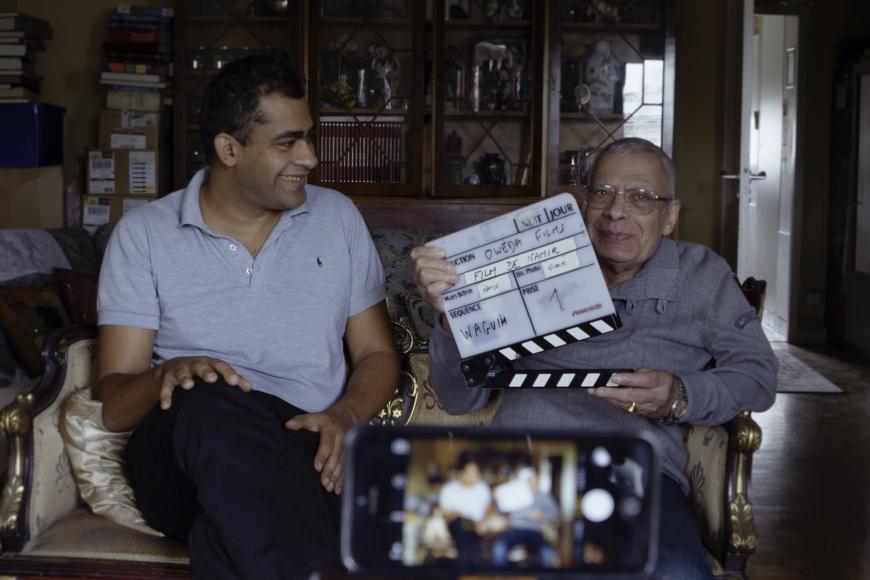
For Namir, the realisation that his beloved mother is not immortal is painful. He had actually intended to make a film with Siham. Now he is mourning in the church with his father Waguih and his children, who seem too young to understand death – and allowing himself to be filmed. “As always, I’m counting on cinema to help me.” He is convinced that cinema can turn tragedy into comedy – and preserve memories that would otherwise fade away.
Namir Abdel Messeeh has already worked through his family’s biography between Egypt and France, their Christian faith and love of cinema in “The Virgin, the Copts and Me” (2011). But it was Siham’s wish that her son finally realise a film with acting stars rather than his own relatives. Instead, Namir Abdel Messeeh recounts his mother’s love, her longing, and her mysteries using the power of cinema. A montage of home videos, family memories and Egyptian film classics by Youssef Chahine makes Siham appear almost “larger than life”.
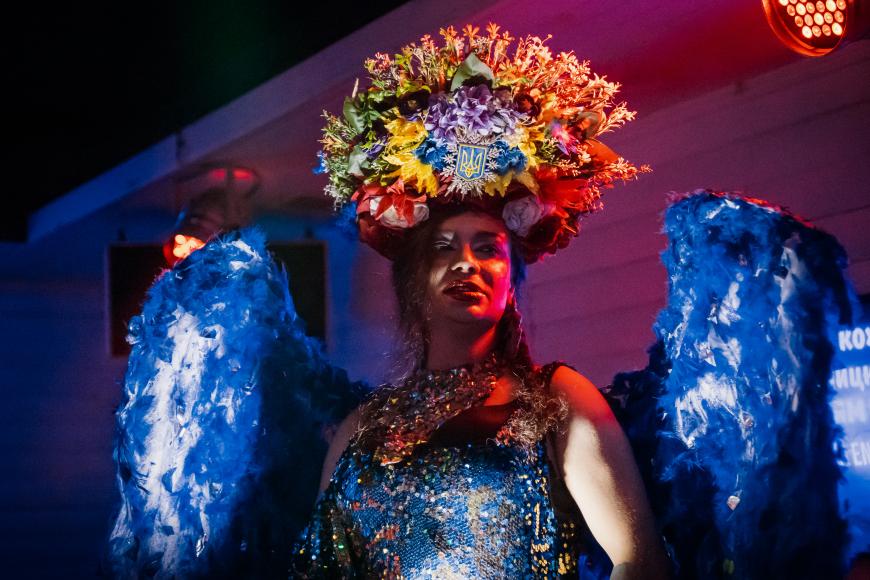
“Today, we’re raising funds for the 206th Territorial Defence Brigade”, Diva Monroe announces at a drag show in a Kyiv basement club. Whether on the front line or by civilian actions: A lot of people from the Ukrainian LGBTQ+ community are fighting against the Russian attacks – many of them even before the 2022 invasion. It would be understandable to flee from war and discrimination. For a long time, there was next to no social acceptance for queers in the Ukraine. But since Kremlin propaganda no longer reaches Kyiv, things have improved. That is what Olga Gibelinda’s film narrates via the example of three drag queens: Monroe, who remembers the empowerment of the Maidan protests and has worked for television and as an influencer since. Aura, at that time still siding with the pro-Russian government, today serving in the army under Commander-in-Chief Zelensky. And Marlen, who suffered abuse as a trans woman in the past and spreads joy on stage today.
The film establishes a poignant contrast between the show world and the private lives of the drag queens, while leaving space for their political demands. These include the call for the recognition of queer partnerships at this time to give relatives of those killed or wounded in action equal legal claims.
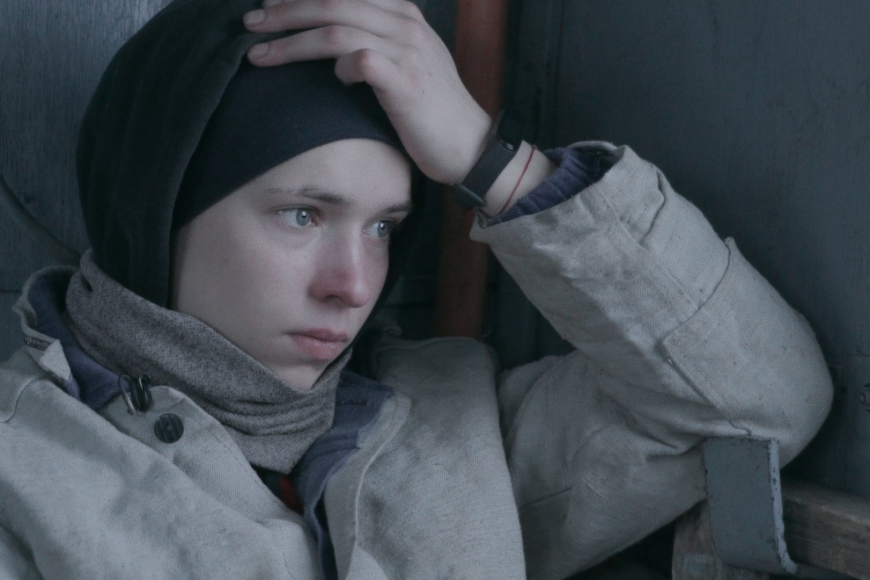
Katya lights the candles on her 22nd birthday cake alone, nobody is there yet to celebrate with her. She has recently moved in with her mother. Mama drinks and has just had a new baby: Amina. Abandoned as a child, Katya grew up without her mother, who lost custody because of her alcohol addiction. Now Katya frequently takes care of her little sister while her mother is nowhere to be found. She always returns with professions of guilt and promises to do better. Katya finds support in her friend Tanya, with whom she shares a similar biography. And she finds recognition in her job as a welder, for which she has a particular talent.
In “Welded Together”, Anastasiya Miroshnichenko portrays a young woman who clings for a long time to the idea of a family that can be put back together, even though there is a lot of evidence to the contrary. Miroshnichenko mainly captures her protagonist through her facial expressions – Katya’s usually shifts between emptiness and sadness; it is like a mirror that reveals the complexity and tragedy of the situation. Meanwhile, the social services department is responsible for protecting Katya and Amina. The office becomes an ambivalent place to go in the midst of this equally dark and fateful winter.