A Want in Her
Myrid Carten
Coping with one’s alcoholic mother as an exorcism, a declaration of love and an admission of powerlessness. An equally disturbing and funny family drama that develops an enormous pull.


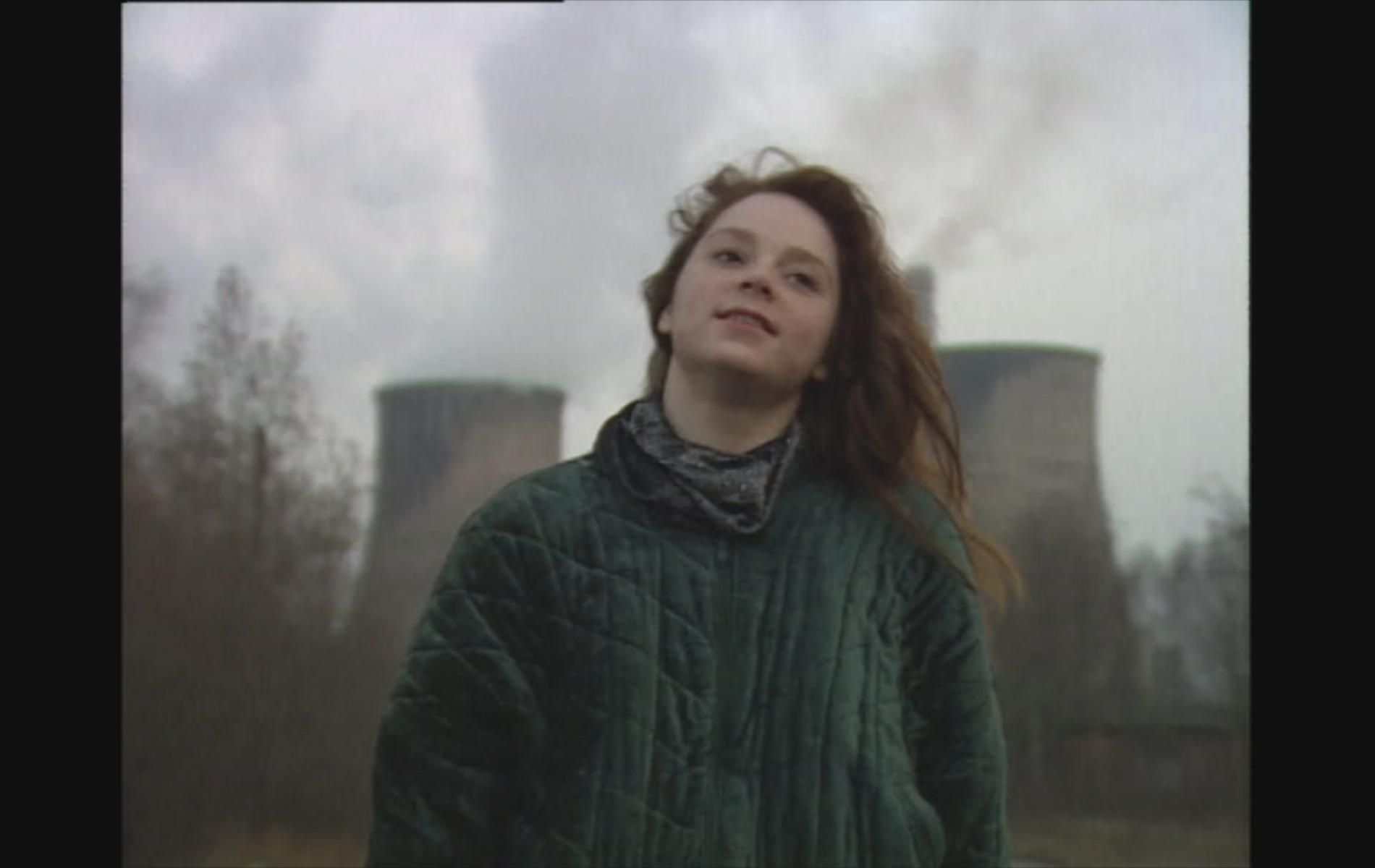
Once, Myrid Carten’s alcoholic mother Nuala disappears for two weeks. The daughter recognises her, curled-up in the middle of the Belfast pedestrian zone, by her shoes: the only street-drinker in high heels. She does not know what to do, keeps the camera rolling for a few minutes and leaves. How do you behave towards a mother who needs mothering herself? Carten tackles the question by making a film about it – as an intervention, exorcism, declaration of love, manifest of powerlessness.
Nuala is the centre of a complex, fragile family dynamic that revolves around the run-down family home where the camera obsessively crawls upside down along the walls again and again. The material is haunted in myriad other ways: scattered traces of past art projects, nerve-racking phone recordings and faded television images stand next to childhood memories on MiniDV cassettes that diffuse almost seamlessly into the present. At one point the mother’s voice even seems to take complete control of her daughter. Carten’s creative exuberance is enormously compelling, kept together by a fluid montage that lays bare the deeply sincere emotional core of the film.

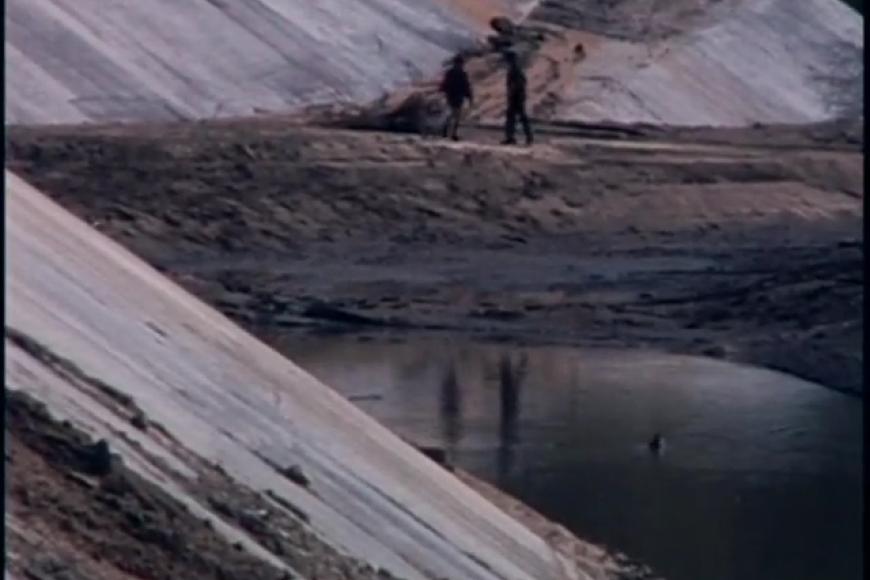
In this early short, Lee Anne Schmitt and Lee Lynch craft an ambling, quietly profound portrait of a place quite literally close to home: the so-called Wash, a strip of wasteland by the Santa Clara River that backs on to Newhall, California, where the two directors lived at the time. As the duo take turns explaining in voice-over, this in-between space is used by and home to a diverse group of local residents, a balance that is quickly upset once the adjacent hills are turned into an upmarket housing estate. As the natural and the urban blur together, the mood turns pensive. Nostalgia can be felt for even the most unremarkable of settings.
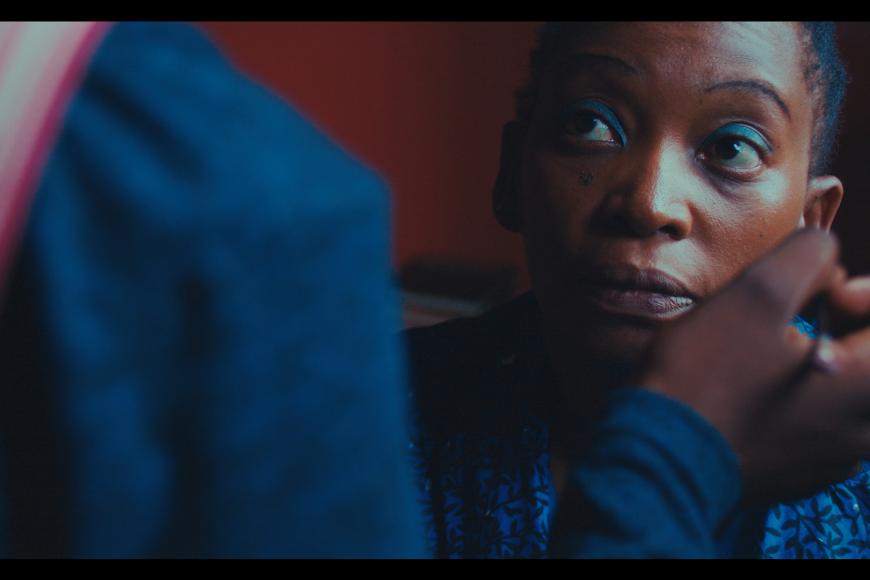
When Stella Nyanzi enters a room, action is guaranteed. The Ugandan feminist, gender researcher, anthropologist and poet does not mince her words in her fight against state oppression. She went to prison in 2017 for a vulgar poem in which she ridiculed head of state Yoweri Museveni, who has been in office for almost 40 years. After she was released, Nyanzi ran for Parliament without the necessary funds for a campaign, printing and distributing posters and flyers in the slums of Kampala with her children. Her daughter did her mother’s make-up and hair for public appearances. Sometimes her almost adult children longed for more time for themselves. The family repeatedly faced police violence and finally emigrated to Germany.
Using a mobile handheld camera, the film absorbs its protagonist’s power, its rhythm matching her angry lyrics. The result is the portrait of a woman who has made radicalism and provocation her way of life. We get to know an activist who permanently pushes herself and the people around her to the limits. Still, it is hard not to get infected by Stella Nyanzi’s energy.

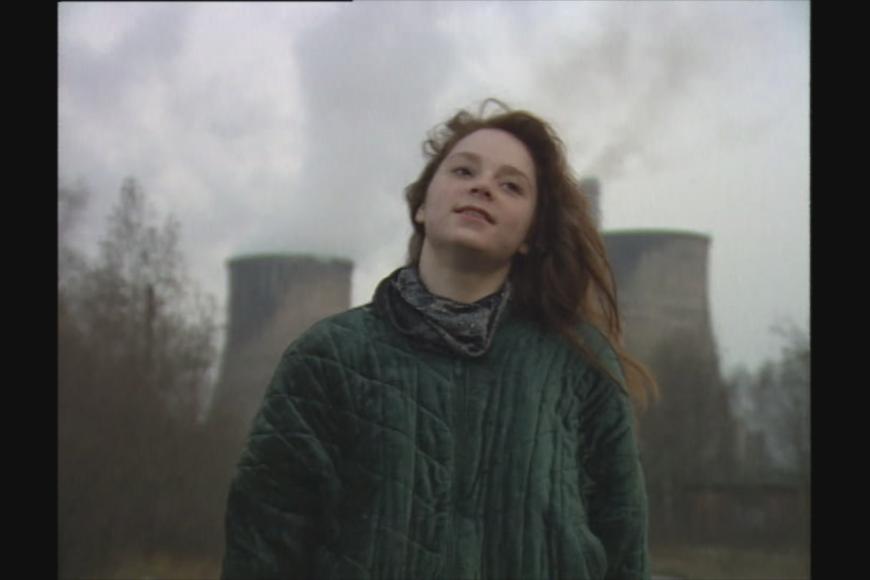
The old shots smell like phenol and brown coal dust. In the spring of 1991, two documentary filmmakers travelled through the former energy triangle of the GDR, centred around the towns of Spremberg, Hoyerswerda and Schwarze Pumpe. In the midst of despair and resignation, they demanded analyses. Those who faced layoffs answered: “When there’s no work, there’s no work.” Or more simply: “Bang, out, gone, that’s it.” Thirty years later, Martin Gressmann and the documentarists from 1991 are not done yet with the fractures and open wounds of the industry liquidations right after reunification.
The comparison between the history – full of murky air and people who hide from the camera – and the apparently appeased present does not lend itself to make-overs; the landscapes that followed brown coal mining are not pretty yet, the river Spree is only halfway cleaned-up, the power plant is still one of the main CO2 emitters in Europe. You often have to look twice to understand that an important leap in time was made in the images. The dirt and the energy of the past keep coming back, and Lusatia continues to “serve and work” in the “subconscious of the distant capital”. Idiosyncratic texts and bold documentary manoeuvres generate an ambivalent mix of surfaces and deep strata, erosion and repair of an industrial landscape.
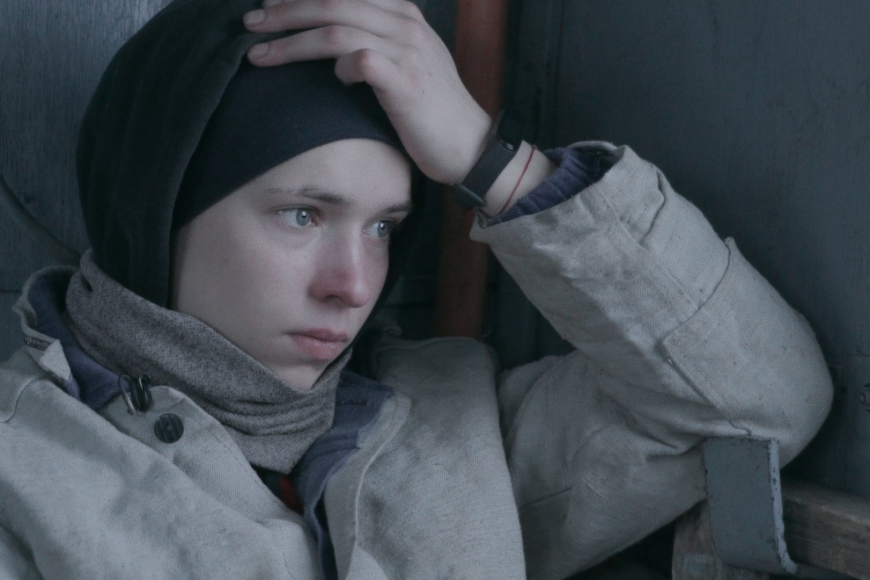
Katya lights the candles on her 22nd birthday cake alone, nobody is there yet to celebrate with her. She has recently moved in with her mother. Mama drinks and has just had a new baby: Amina. Abandoned as a child, Katya grew up without her mother, who lost custody because of her alcohol addiction. Now Katya frequently takes care of her little sister while her mother is nowhere to be found. She always returns with professions of guilt and promises to do better. Katya finds support in her friend Tanya, with whom she shares a similar biography. And she finds recognition in her job as a welder, for which she has a particular talent.
In “Welded Together”, Anastasiya Miroshnichenko portrays a young woman who clings for a long time to the idea of a family that can be put back together, even though there is a lot of evidence to the contrary. Miroshnichenko mainly captures her protagonist through her facial expressions – Katya’s usually shifts between emptiness and sadness; it is like a mirror that reveals the complexity and tragedy of the situation. Meanwhile, the social services department is responsible for protecting Katya and Amina. The office becomes an ambivalent place to go in the midst of this equally dark and fateful winter.
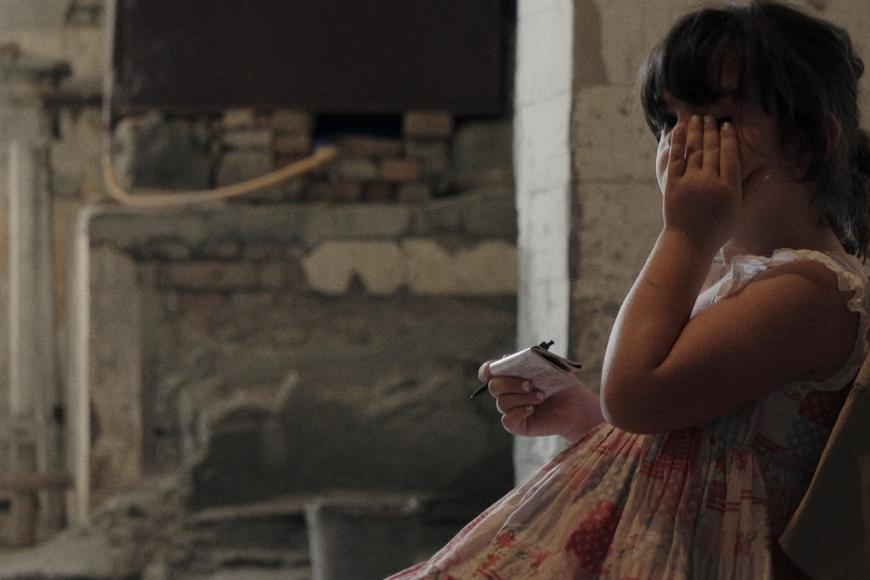
A mud volcano in Akhtala, Georgia, constantly produces material for the local spa industry: Heated and spread on large linen cloths, the shimmering grey goo is believed to heal the sick. But not only the guests roam the bathhouse, but also five-year-old Tako in her summer dress, who is afraid of the so-called Mud Man. The place and its volcano are shrouded in legends – how much truth is behind them? Tako discusses this and other things with her grandmother, whose job it is to wash the used linen cloths and hang them up to dry in the sun. Together they animate this unadorned post-Soviet era building filled with constant spluttering and dripping, while a blubbering sound seems to be coming from the mud pit. Is the mud really whispering?
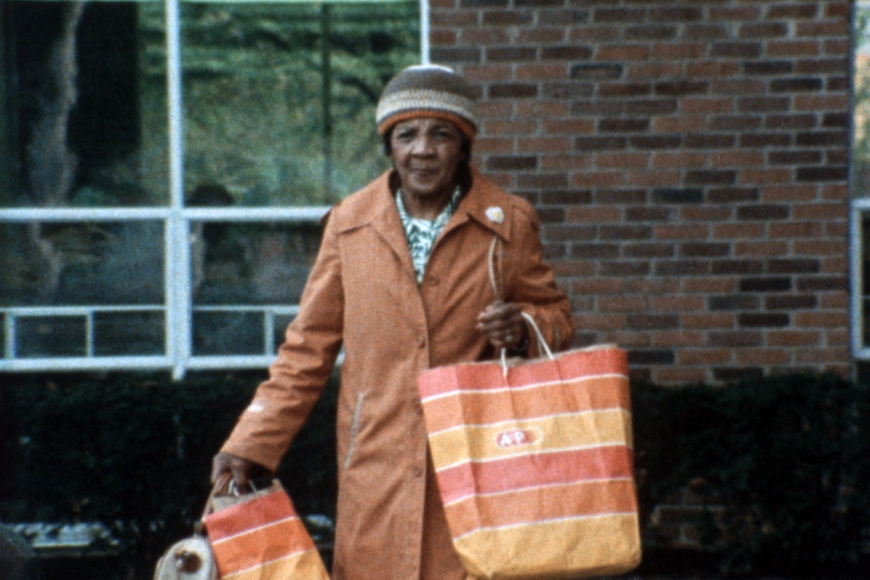
Despite many hardships and misfortunes, Joan Williams radiates an infectious zest for life. The seventy-year-old works as a cleaner in the washrooms of a high-class Chicago night club. When it closes at the end of the 1970s, her professional biography also ends – involuntarily, because Joan liked her job. After all, it brought her into contact with the showbiz and glamour of the city. Set against the glittering backdrop of downtown Chicago, “Where Did You Get That Woman?” uses an individual’s story to explore class antagonisms, race relations and the difficulties of relationships and getting older. Last but not least, the film also discovers in Williams’ story the long history of African-American migration from the segregated South to the supposedly more liberal North of the United States.
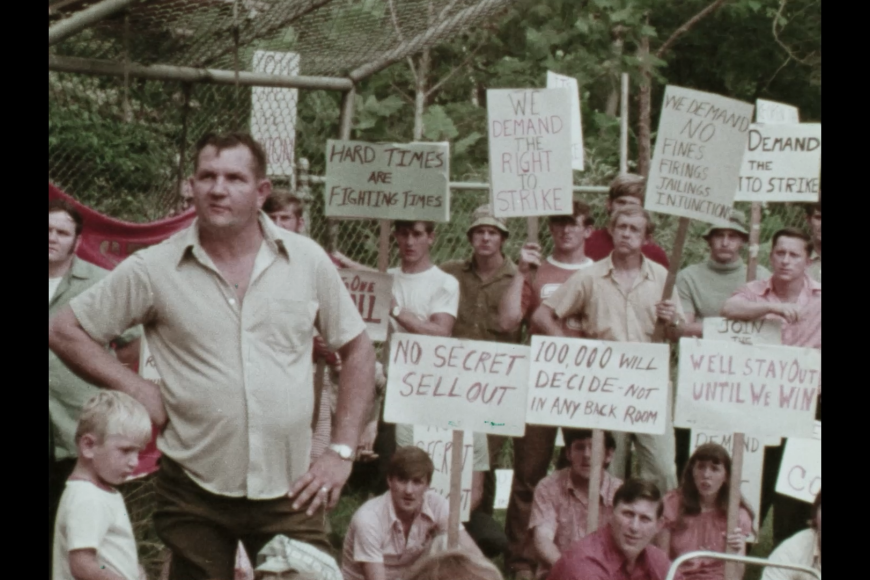
In August 1975, 80,000 coal miners in the Appalachians laid down tools for several weeks in a so-called wildcat strike, that is, a labour dispute organised without unions. They went on strike for the right to strike in the first place, which until then had been de facto taken from them by dubious contracts. The film team is in the thick of the dynamic events, filming spontaneous and prepared speeches, interviewing strikers, recording strike songs by left-wing folk musicians who perform in the crowd. A film about speech and speechlessness, solidarity and social injustice.
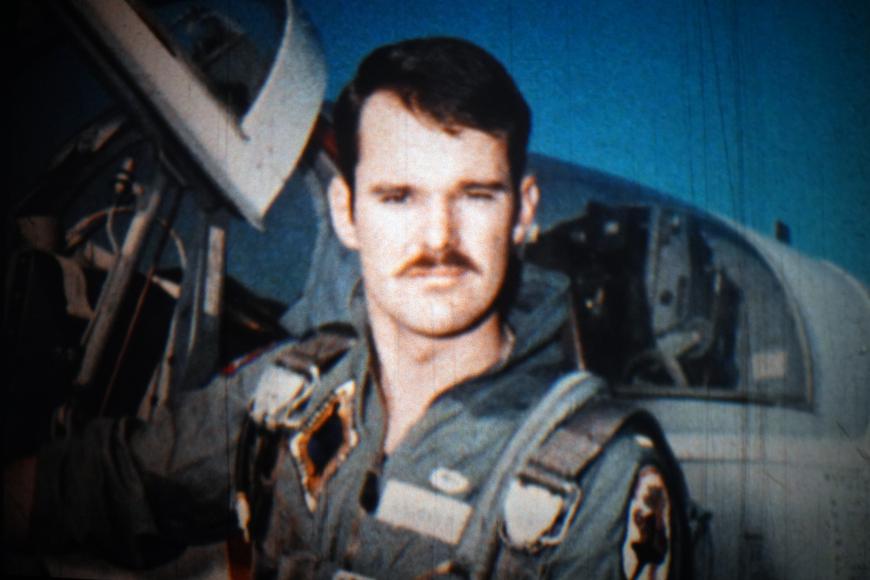
Based on the book “Witness to War: An American Doctor in El Salvador”, the film, which won awards both at the Oscars and in Leipzig, tells the story of the deeply religious Vietnam veteran Charlie Clements. The son of a military family, he first embarked on a career as a high-ranking soldier and flew numerous supply missions in the Vietnam War, only to finally make a radical turn. In 1970, he refused to serve, was discharged from the Air Force and studied medicine. In the early 1980s, he ended up on the side of the guerrilla in El Salvador, one of the “new Vietnams” of interventionist US foreign policy, as contemporary critics put it. The film is about how both wars reverberated back in the United States.
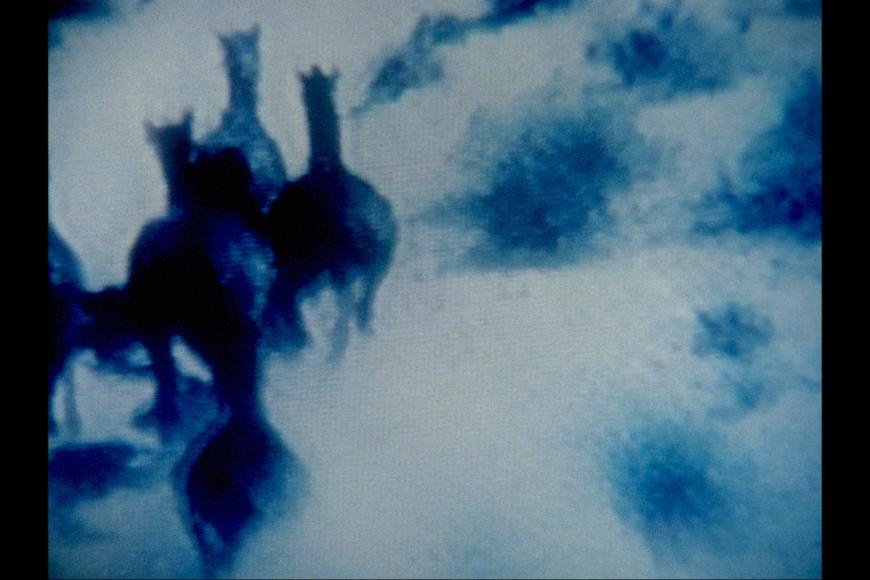
A woman drives home by night and feels another woman watching her, a brief story at once opaque and ominous told first via intertitles before being partially repeated in voice-over. 16mm shots of a city by night, shop fronts, highways, street lights passing in a blur, muted traffic noise, snatches of music, the sound of crickets. Lee Anne Schmitt’s mysterious miniature draws a line between two women and a trauma they seemingly share. Undefined yet no less deeply felt, it remains as hard to fully parse as the horses riding over a prairie in grainy black and white or the figure in a dress lying on the side of a road, stretched out in the sunshine and leaves.
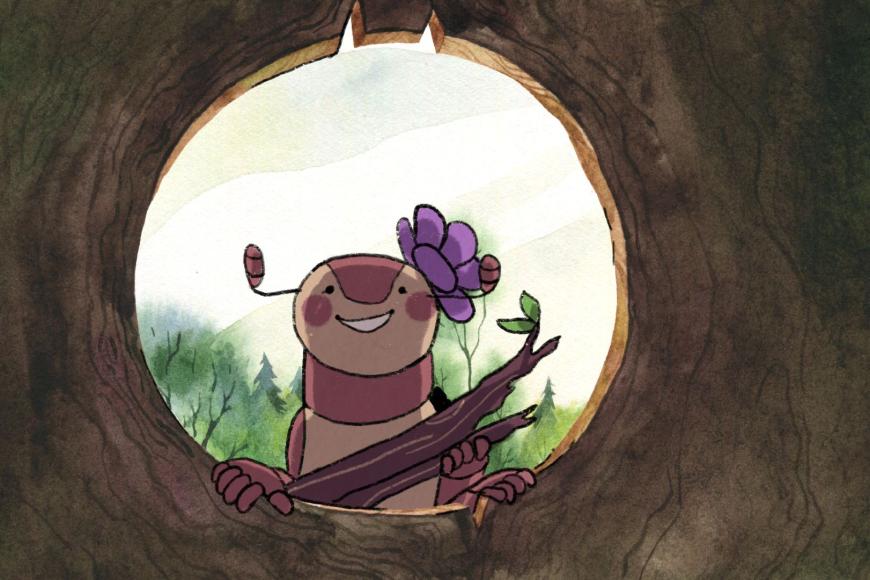
Behind the bark of a tree, a clever little bark beetle girl lives with her colony. But people put the forest idyll at risk. After a major fire, she finds refuge in a school. Scared at first, she slowly learns to communicate with humans and finds her way back home with the help of new friends. A short ode to learning.
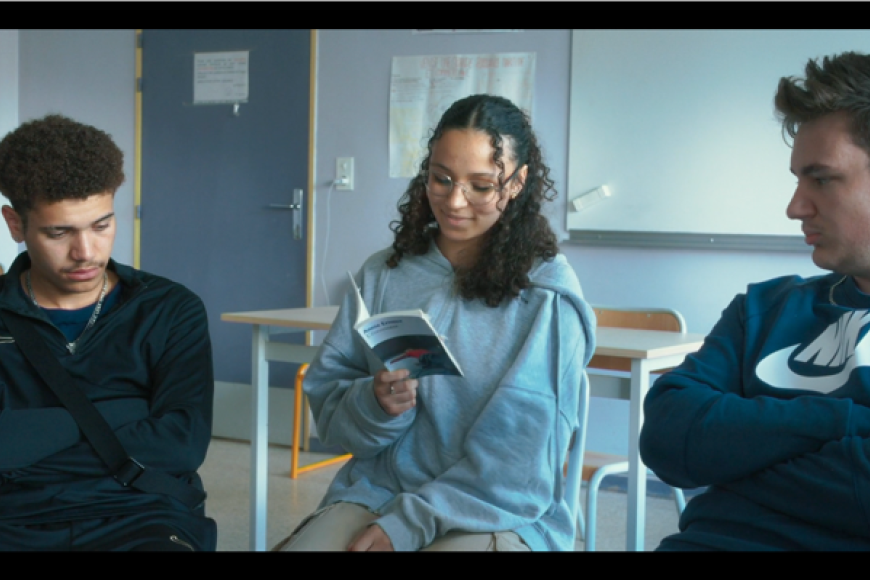
Like her previous film, “Elementary”, Claire Simon’s latest work pays homage to the educational process, once again opening the doors of school classrooms. This time, texts by Annie Ernaux – a French feminist, writer and Nobel Prize winner – are on the curriculum. Ernaux describes her concept of autosociobiography as “writing life, not mine, nor theirs, nor even one in particular. Life with situations that we all go through, but that we, as individuals, experience differently. Body image, education, the sense of belonging, sexual condition, social trajectory, the existence of others, disease, grief. […] I did not try to write about myself, to write a book about my life. I made use of my life, of the general, ordinary events of my life, of the situations and feelings I have experienced. As if it were material I needed to explore to grasp and uncover some kind of perceptible truth.”
The teachers create smart frameworks for discussions filled with freedom and dynamics, where the young people reveal themselves in all their beauty and vulnerability, extrapolating the author’s experiences to their own lives. And this is when Claire Simon’s “writing life camera” documents charming moments of how Ernaux’s texts empower and inspire them, as they passionately delve into her words.