Better Go Mad in the Wild
Miro Remo
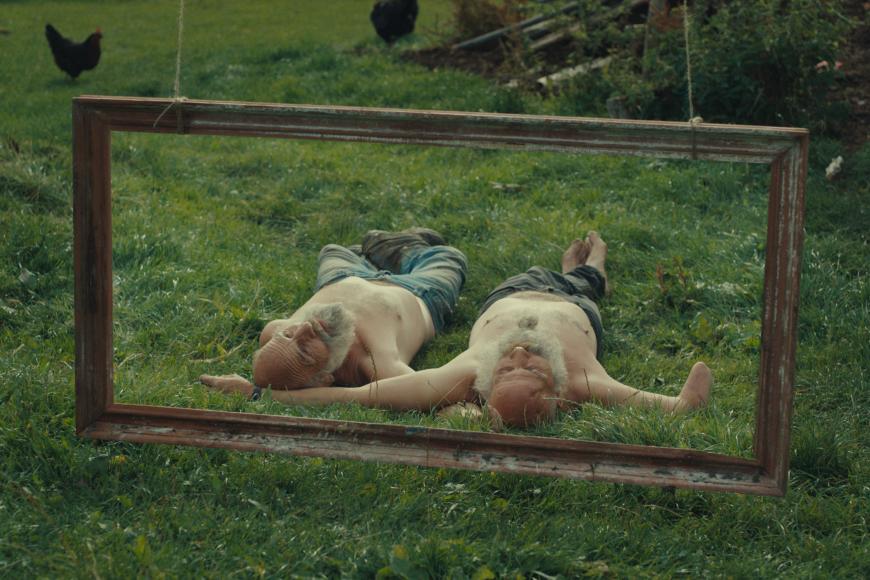
Brothers in the Bohemian Forest: Franta and Ondra, twins with impressive full beards, in their early 60s, live in quarrelsome harmony on a remote farm in a rugged landscape.


Two quarrelsome brothers with impressively full beards live on a remote farm in the Bohemian Forest, surrounded by a rugged landscape: At one point, Franta and Ondra themselves become aware that this setting has an almost Old Testament feel to it, but cannot agree on who might be Cain and who Abel in this scenario. They rarely agree in any case: Daily squabbles are the big constant in the life of the identical but otherwise dissimilar twins. When Franta embarks on another breakneck adventure, Ondra wants nothing more than to smoke in peace. Nonetheless, they occasionally exchange hugs and nose kisses. In their early 60s, Franta and Ondra spend their time working in the fields, playing jokes with the animals, or competing in left-hand arm-wrestling duels. The facts that Franta lost his lower right arm in an accident or that the twins took part in the 1989 revolution in Czechoslovakia belong to an apparently distant past. With a domestic cow as narrator, the leitmotif of a huge mirror, and a classical soundtrack, Miro Remo finds a wonderful form for the portrait of these idiosyncratic people.


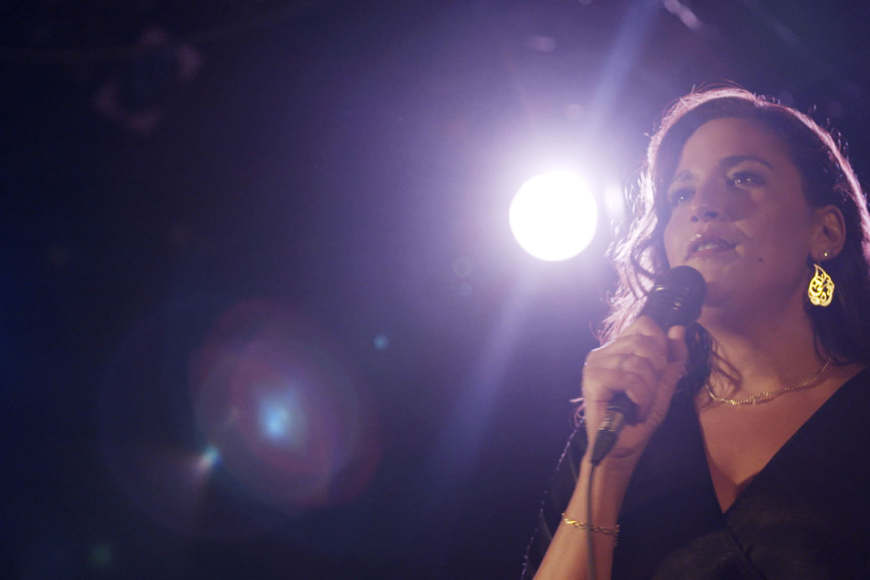
The name of her village stands for a utopia that has shaped Noam Shuster Eliassi from childhood: Newe Shalom (Hebrew) or Wahat al-Salām (Arabic) roughly translates as “Oasis of Peace.” This small community of 300 people from Jewish and Arab families which was founded in 1969, located in Israel at the border with the West Bank, is a test of solidarity in practice. Thus, Noam, who is Jewish, and her Palestinian friend Ranin become ambassadors of mutual understanding even as children, for example when Hillary Clinton or Jane Fonda come to visit. They seem predestined for a career in the United Nations.
In her comedy show “Coexistence, My Ass!”, which director Amber Fares uses as a leitmotif, Shuster Eliassi strikes a harsher tone. Her career shift from diplomacy to political comedy – in English, Hebrew or Arabic, depending on the audience – shows her as a critic of the Netanyahu government, both before and after the Hamas terrorist attack on 7 October 2023. Her example also reflects the division in parts of the Israeli left: Shuster Eliassi’s deep pain of having lost loved ones herself is followed by anger about the Gaza war. What is humour able, what is it allowed to do in this situation? Perhaps help us mourn the suffering of two nations and, despite everything, not give up the utopia of peace.
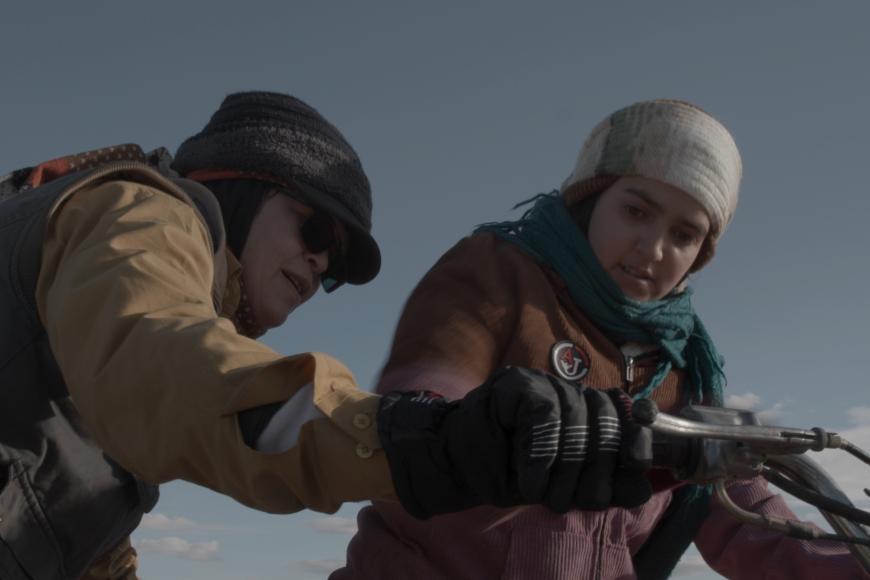
The “Woman, Life, Freedom” protests in Tehran and other major cities seem far away from the place where Sara lives. But in her rural community in northwestern Iran, the protagonist of this film advocates the same feminist values in a practical, everyday way. Again and again, we are reminded by the images that her father once taught her to ride a motorbike – to the disapproval of the whole village. A small favour with big consequences: For Sara, it paved a way outside patriarchal marriage. Mobile on two wheels, she works as a midwife and has delivered many girls for whom she now wants to fight: At the start of the film and in middle age, Sara decides to be the first woman in the history of her community to run for the local council. A step which earns her enthusiastic support on the one hand; on the other, she must endure open hostilities and an interrogation by the moral enforcers of the Islamic Republic. In “Cutting Through Rocks”, Sara Khaki and Mohammadreza Eyni capture these power structures and their individual impact as precisely as the gestures of solidarity and self-determination.
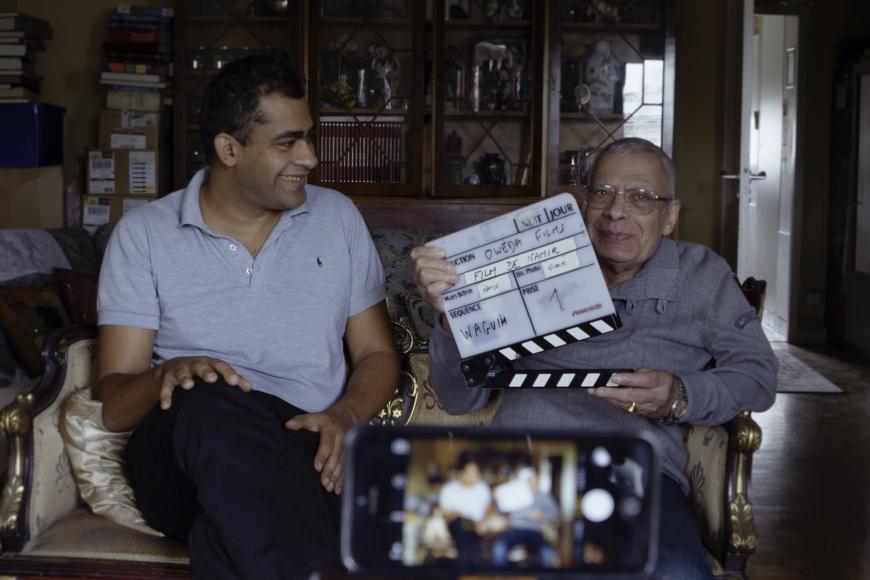
For Namir, the realisation that his beloved mother is not immortal is painful. He had actually intended to make a film with Siham. Now he is mourning in the church with his father Waguih and his children, who seem too young to understand death – and allowing himself to be filmed. “As always, I’m counting on cinema to help me.” He is convinced that cinema can turn tragedy into comedy – and preserve memories that would otherwise fade away.
Namir Abdel Messeeh has already worked through his family’s biography between Egypt and France, their Christian faith and love of cinema in “The Virgin, the Copts and Me” (2011). But it was Siham’s wish that her son finally realise a film with acting stars rather than his own relatives. Instead, Namir Abdel Messeeh recounts his mother’s love, her longing, and her mysteries using the power of cinema. A montage of home videos, family memories and Egyptian film classics by Youssef Chahine makes Siham appear almost “larger than life”.
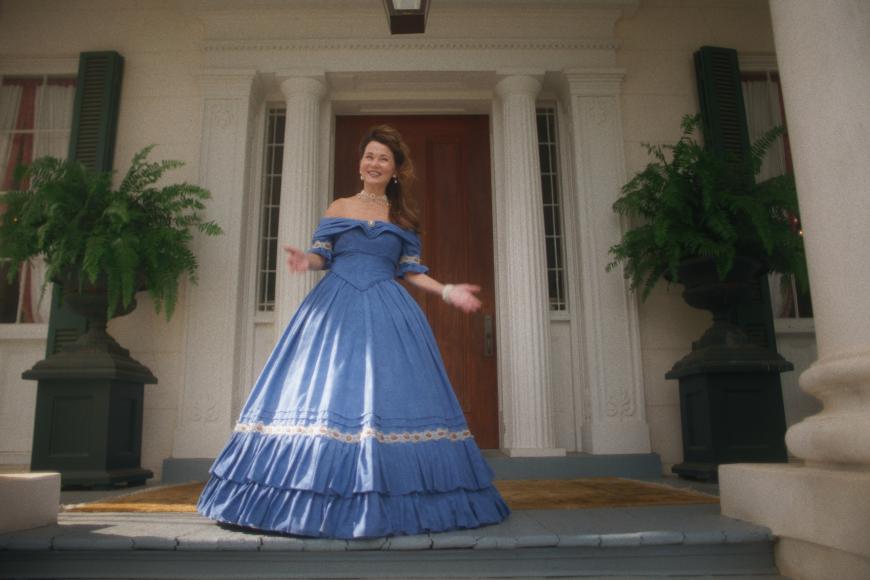
Once upon a time there was a town on the banks of the Mississippi. The streets are still lined with neo-classicist Antebellum houses. Horse-drawn carriages full of tourists move through the streets, a travelling organist performs on a truck bed. Time seems to stand still in Natchez. But while the descendants of the European colonists, dressed up as “Southern Belles” in historical hoop skirts, welcome their guests and feed them Southern nostalgia, the façades are beginning to crumble. Built on the shoulders of children, women, and men in chains, the epicentre of cotton capitalism and the second-largest slave market in the US, with 750,000 Black exploited persons, emerged here in the mid-19th century.
This part of the former “Cotton Kingdom” is practically absent from the whitewashed version of history. On the contrary, it is dripping with romanticisation and racist clichés. But people like the Black pastor and tour guide Rev are breaking with this tradition and shattering the nostalgically glorified illusion of an ideal world. Suzannah Herbert directs the clash of different perspectives and characters with an unerring eye for direct and indirect contradictions. At the same time, she exposes a rift in society that extends far beyond the Natchez microcosm.
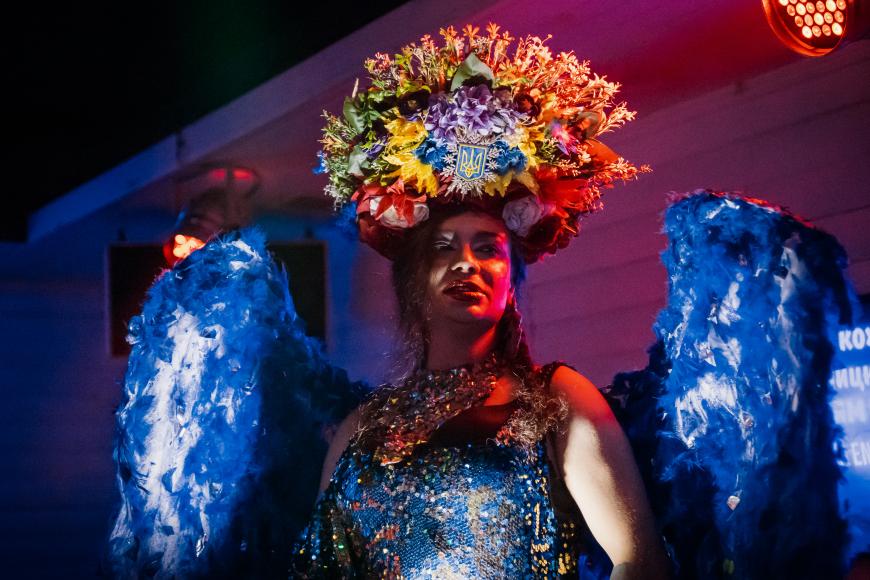
“Today, we’re raising funds for the 206th Territorial Defence Brigade”, Diva Monroe announces at a drag show in a Kyiv basement club. Whether on the front line or by civilian actions: A lot of people from the Ukrainian LGBTQ+ community are fighting against the Russian attacks – many of them even before the 2022 invasion. It would be understandable to flee from war and discrimination. For a long time, there was next to no social acceptance for queers in the Ukraine. But since Kremlin propaganda no longer reaches Kyiv, things have improved. That is what Olga Gibelinda’s film narrates via the example of three drag queens: Monroe, who remembers the empowerment of the Maidan protests and has worked for television and as an influencer since. Aura, at that time still siding with the pro-Russian government, today serving in the army under Commander-in-Chief Zelensky. And Marlen, who suffered abuse as a trans woman in the past and spreads joy on stage today.
The film establishes a poignant contrast between the show world and the private lives of the drag queens, while leaving space for their political demands. These include the call for the recognition of queer partnerships at this time to give relatives of those killed or wounded in action equal legal claims.

What starts as a harmless production commission evolves into one of the biggest media art debates of recent years: Danish conceptual artist Jens Haaning is asked to reconstruct two of his earlier works for the Museum Kunsten in Aalborg – frames filled with banknotes symbolising the average annual salary in Denmark and Austria. The banknotes, worth half a million kroner or 74,000 euros, are provided by the museum. But, not for the first time, Haaning is annoyed at the working conditions of his profession. He keeps the borrowed money and delivers empty canvases and a title: “Take the Money and Run”.
Ole Juncker’s film accompanies the artist in the period following this action – between international media hype, a civil lawsuit by the defrauded institution and personal crises. Haaning, who suffers from bipolar disorder, takes impulsive decisions, invests in real estate and finds himself in financial straits which he seeks to offset by ad hoc sales of his work. The pressure on the protagonist is mirrored in a rapid montage of disparate images: car rides, surreal animations, action cam footage of a parkour runner and TV reports condense into a portrait of the artist as a rogue who is determined to explore whether art, at least, can get away with crime.
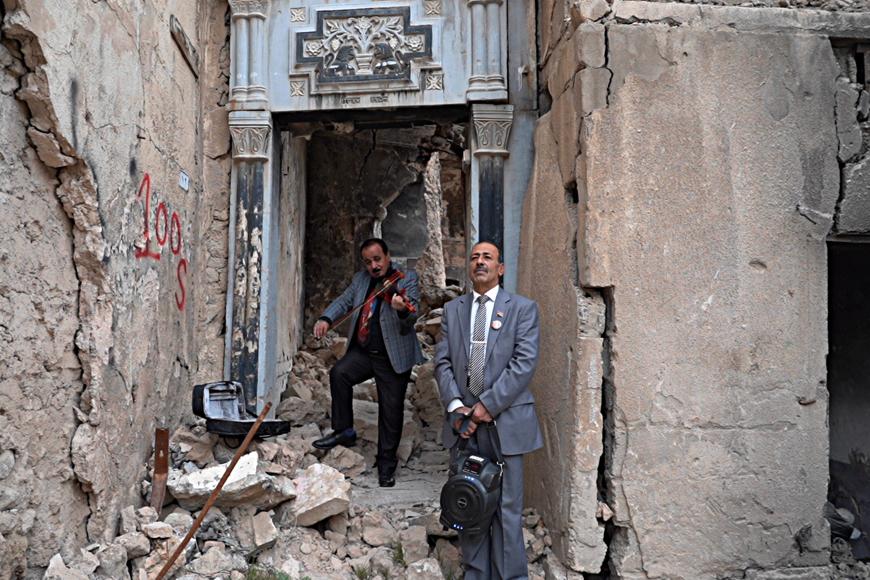
“It’s nice here, let’s play,” says Fakhri, holding a small loudspeaker for Fadil, the violinist. But there is no audience. The two men are standing in the ruins of Mosul. Three years of occupation by the Islamic State terrorist militia have left the old town almost completely destroyed. Along with the buildings, the 8,000-year history and culture of the second-largest Iraqi city seemed to have been wiped out forever. Life returns slowly. Art treasures are being restored, there are theatres, music again, and Fakhri’s small private museum where he collects anything he can lay his hands on: wooden doors, bronze figures, soap from1910, a ventilator. He has already amassed 7,000 exhibits and is especially fond of an ancient portal with two lions. Damaged, but perhaps still salvageable, it sits enthroned in the ruins of Bashar’s parents’ house like a peace time relic. Bashar visits it almost daily, hoping that reconstruction is possible. But Fakhri turns out to drive a hard bargain – he wants this portal at all costs …
With a steady hand, Kurdish-Norwegian director Zaradasht Ahmed tells a deeply human story, intertwining the darkest and lightest side of the species: the mania of destruction and the strength to go on.
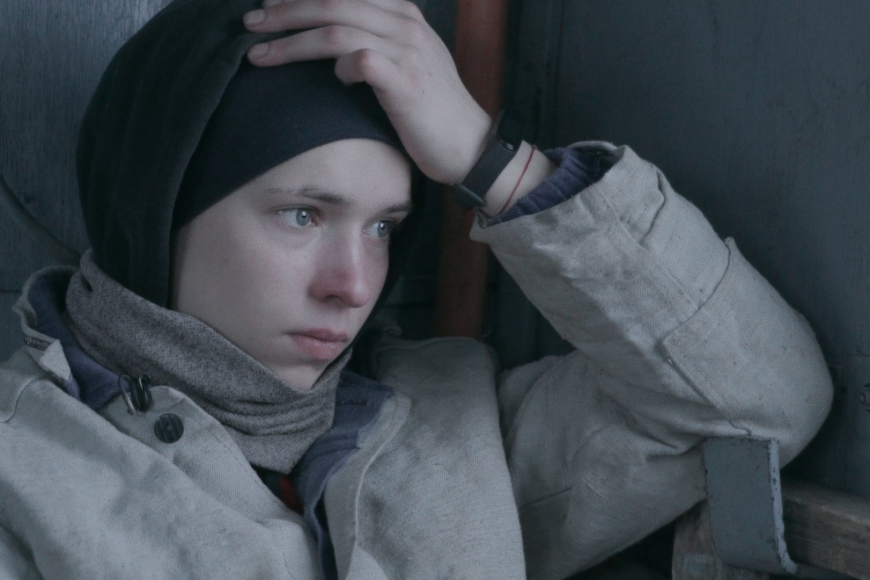
Katya lights the candles on her 22nd birthday cake alone, nobody is there yet to celebrate with her. She has recently moved in with her mother. Mama drinks and has just had a new baby: Amina. Abandoned as a child, Katya grew up without her mother, who lost custody because of her alcohol addiction. Now Katya frequently takes care of her little sister while her mother is nowhere to be found. She always returns with professions of guilt and promises to do better. Katya finds support in her friend Tanya, with whom she shares a similar biography. And she finds recognition in her job as a welder, for which she has a particular talent.
In “Welded Together”, Anastasiya Miroshnichenko portrays a young woman who clings for a long time to the idea of a family that can be put back together, even though there is a lot of evidence to the contrary. Miroshnichenko mainly captures her protagonist through her facial expressions – Katya’s usually shifts between emptiness and sadness; it is like a mirror that reveals the complexity and tragedy of the situation. Meanwhile, the social services department is responsible for protecting Katya and Amina. The office becomes an ambivalent place to go in the midst of this equally dark and fateful winter.
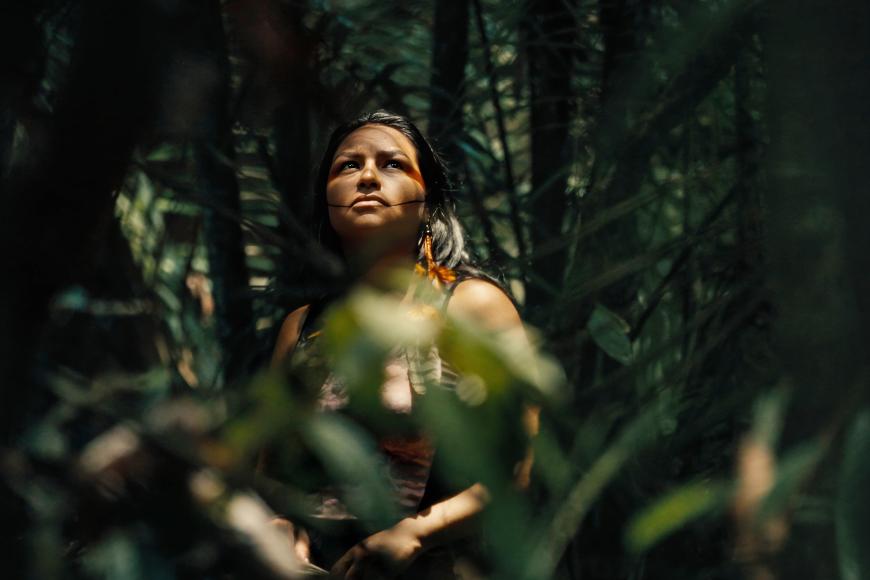
The activist in her awakened at an early age. Even as an adolescent, Juma Xipaia felt that she would dedicate herself to her Indigenous people’s fight for the right to exist in the Brazilian Amazon region. For the Amazon is their mother, the knowledge, and the cure. More than ten years later, Juma knows what it really means to be an activist. As the first female chief of the Middle Xingu region, she has survived assassination attempts, experienced state violence against protesters, must discover illegal prospectors who are clearing the forests and poisoning the soil and the rivers. But the 34-year-old also sees hope emerge for the Indigenous people of Brazil, because the 2023 change of government gave them their own Ministry for the first time. Juma becomes an undersecretary of state and has her second child: Yanuni.
The Austrian Richard Ladkani portrays Juma Xipaia and her husband Hugo, a special investigator working for the environmental authorities, after they let him accompany their daily life for several years. Ladkani mixes fascinating landscape shots with the explosive power of “embedded journalism”, using the full potential of the big screen in one moment and intensifying intimate moment in the next. The result is private and personal, poetic and political. Above all, the film transports Juma Xipaia’s message that despite every disappointment, responsibility for one’s life should not be placed in the hands of others but kept close to home.