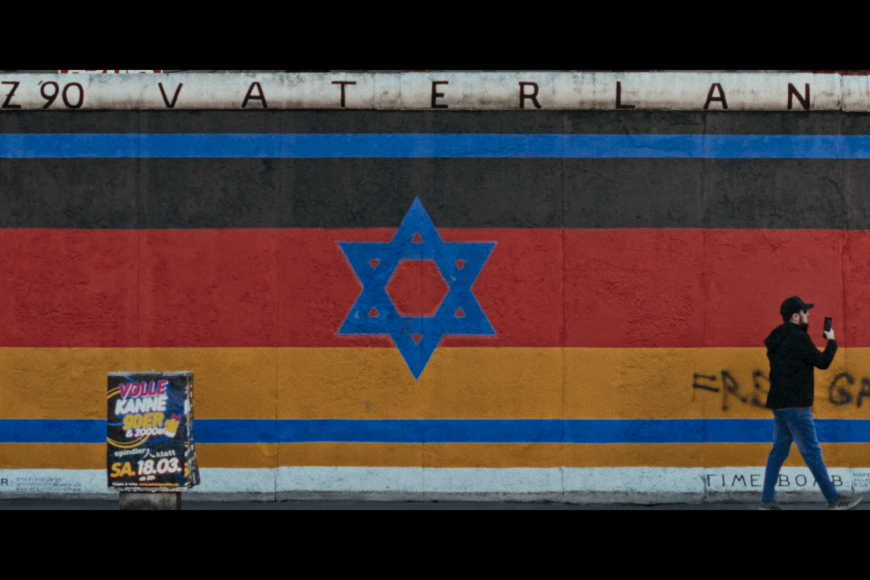
A Jewish Problem
Ron Rothschild
Key events of the Middle East conflict have left their traces in this filmmaker’s family history. When he arrives in Berlin, he learns to distrust his own perceptions.


In the opening image, there is a grid between the camera and the world, conveying the field of vision of an Israeli soldier deployed as a cameraman in the Israeli-occupied territories between 2007 and 2010. The filmmaker’s self-critical comments today ask what he could and could not see then. Leaving the country and arriving in Germany triggered a learning process that he traces here in a multi-layered and very personal research: “I learned I can’t trust myself to do the right thing.”
Complex camera pans show current German street scenes that bundle up signs of a precarious coexistence, while family and friends drift apart over the so-called Middle East Conflict. Ron Rothschild now lives in a country that his grandmother had to flee at the age of seven to escape from the Nazis. Even in old age, she could still recite Schiller’s “Song of the Bell” from memory. Once arrived in Haifa, she became a soldier and part of the establishment of the state of Israel and the expulsion of the Palestinians. The yearning to belong creates ambivalences and open questions in the family’s history, which the grandson confronts without resolving the ever-new distances emerging between the camera eye and the world.


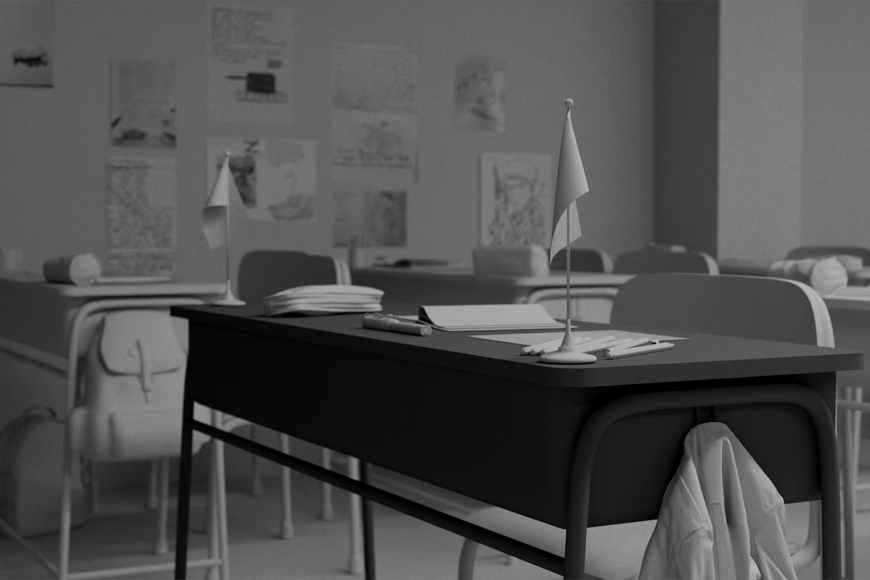
In her documentary experiment, Yulia Lokshina addresses the issue of how the institution of school is used by the Russian state to justify its aggressive expansionist actions, either by exterior military violence or by interior ideological violence and persecution of dissidents. The story revolves around a young Russian teacher who speaks out against the war in class shortly after the invasion of Ukraine. A pupil secretly records her statement and denounces her. Soon afterwards, the young woman finds herself the focus of official investigations. She flees to Germany and begins to work as a teacher again. Together with her Berlin class, she reconstructs her own case to understand why this betrayal happened and what consequences censorship and persecution have for the individual, but also for communities.
What is the connection between school and politics, what should it be? How does political oppression feel, and what forms of resistance are possible? These are the questions the children in Berlin-Moabit grapple with. In addition to observations of the class, the film uses archive material, found footage, documentary scenes, and 3D animations to make the situation in Russia, characterised by fear and surveillance, tangible and comprehensible here as well.
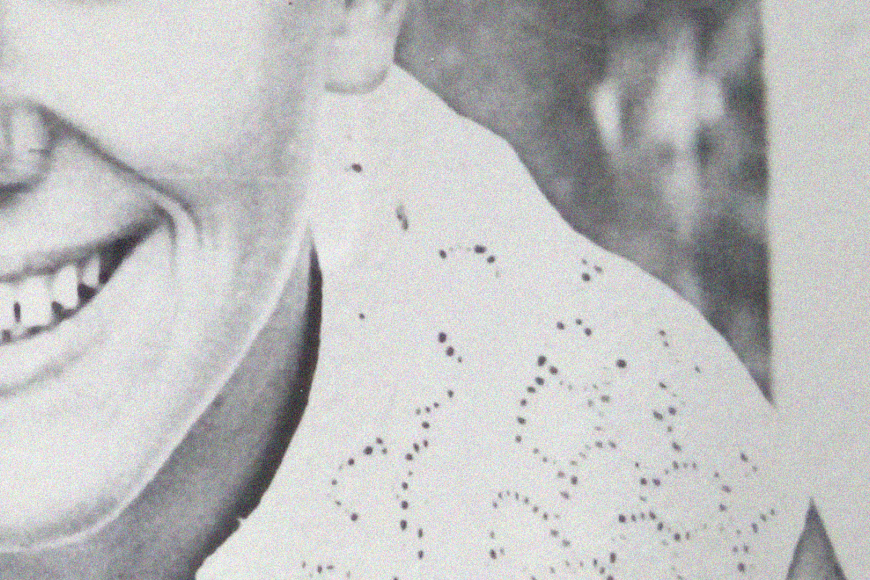
This both raw and tender work of memory ploughs through reflections, feelings, anecdotes, photos, and drawings, an attempt in cinematic images to capture the grief over a beloved grandfather who fell victim to cancer, make it manageable. Sonia Leliukh takes the liberty of speaking from a deliberately subjective perspective, refusing to tone down her statements with seemingly valid rules of language or etiquette. With her desktop documentary, which seems playful only at first glance, she confronts radical grief with equally radical honesty. By putting the old computer games her grandfather used to distract himself from his pain on screen, she does not only put herself in the role of the terminally ill, but also the audience. When my finger twitches to move the Solitaire cards to the right spot or click on another box at Minesweeper, I am already in the midst of things and must ask myself how I deal with grief, love, or rejection. In the present, but also and especially when the people who inspire these emotions have gone. Sonia Leliukh’s work is a cinematic refusal to allow these feelings to become objects in the sediment of the past.
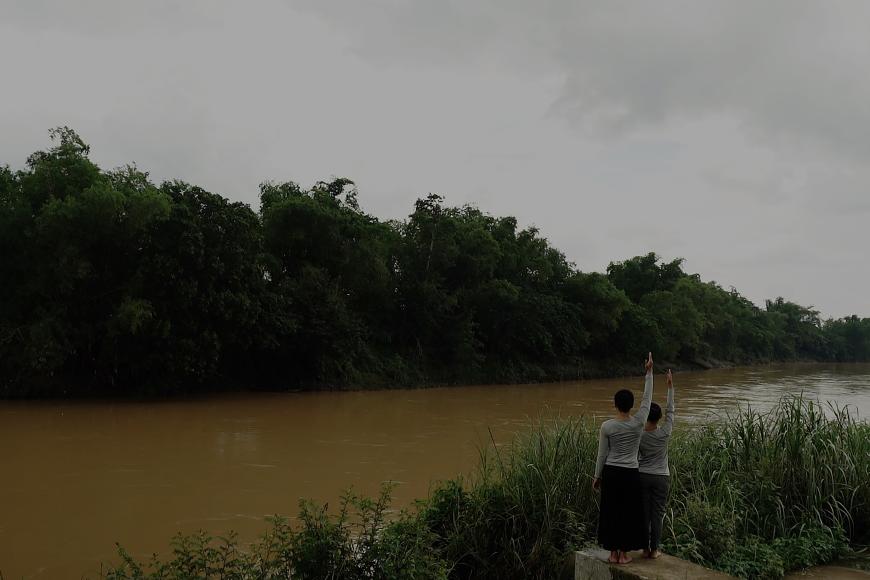
The Indonesian word “bendungan” can have various meanings. It is a term for very different structures that can contain, hold back, or block water, a dam for example, an embankment or shoreline stabilisations on rivers and oceans. For this experimental work, Jee Chan, a representative of an artistic practice between (dance) performance and expanded choreography, has talked to three persons who live near water in Indonesia and the Netherlands. Both countries are linked by the European colonisation of Southeast Asia and the ensuing crimes. Each of the incidents shared in this film reflects a different perspective on this period and its consequences, tells another story without seeking explicitly to “write history”.
Jee Chan addresses the question of how memory and knowledge become manifest not only in our memory but also in our socio-spatial environment, in waterscapes and the human body. Using choreographed gestures in tranquil long takes, oral history, and interventions in space, they make memory tangible as a multi-layered activity tied to its environment.
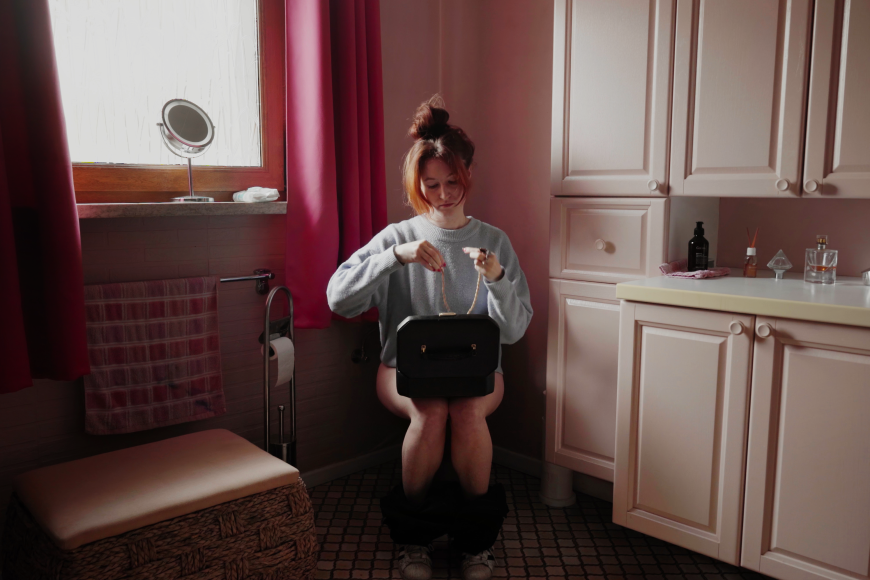
There are framed wedding photos on the wall, open albums of holiday memories on the table. This is a household of gestures rehearsed for decades. The filmmaker meets life as lived in her grandparents’ Luxembourg home. She tries on her grandfather’s coat and her grandmother’s rings. Out of boredom? Or is it an appropriation of history? Time seems to stand still and yet moves inexorably forward. He takes a nap in a sleeping mask that has open eyes printed on it, she sits at the kitchen table and talks about the onset of her dementia. She enjoys a cigarette by the window to the fullest, letting her granddaughter paint her nails pink. Perhaps to look good on camera, while the grandfather swings his hips to the music from the radio. The couple wrest touching moments from the sense of transience, while a pas de deux tells of love and attachment.

A creative person suffering from writer’s block is sitting in an artists’ residence. Outside, construction workers are busy, inside, nothing happens – until the landline rings. A supposed Microsoft employee wants to access her allegedly broken computer. She begins to talk – about heartbreak, emptiness, procrastination. The scammer listens and – without realising it – is ensnared by a scam baiter.
“Cold Call” is the tale of an unexpectedly real, almost comforting conversation between these two strangers – and of how easy it is to become part of the structures one believes to be questioning: digital vigilantism, racism, global inequality. Stefanie Schroeder explores a phenomenon that reveals its multiple layers only at second glance. One of these layers is scamming, an attempted fraud based on deception and manipulation that is often committed not out of free will but by slave-like “employees” of small businesses scattered across the globe. Scam baiting turns out to be similarly ambivalent, a counter movement on the internet pretending to be a protective power that seeks to stop fraudulent activities by personal exposure and humiliation, quite often through racist stereotypes. Schroeder approaches this melange with minimalism and humour, masterfully unfolding the complexity of this subject in the process.
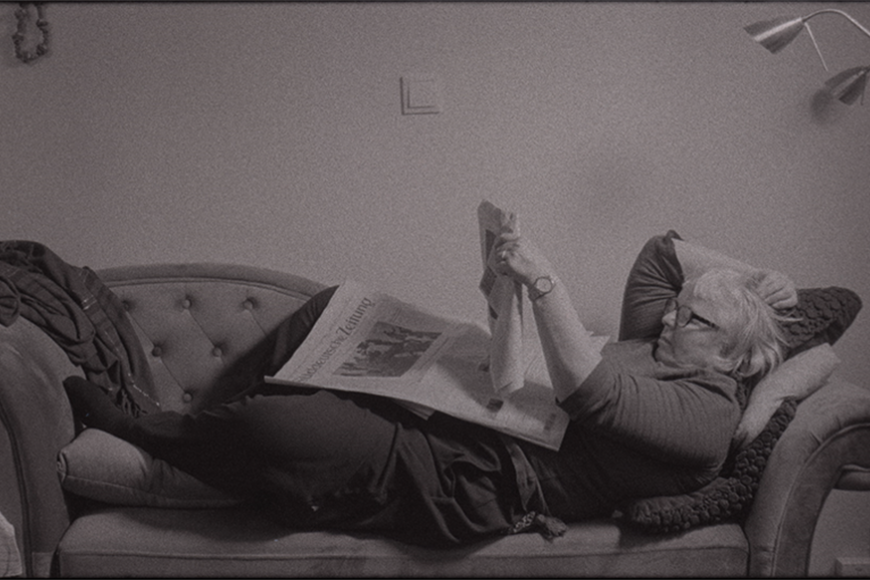
“There was this great doctor who stitched me up with such gentle accuracy.” Catholicism and mental distress are entwined in the mother’s life. The grainy 16mm material shows scratches, other, physical scars are mentioned in voice-over. In this resistant miniature, respect for decisiveness triumphs over criticism of moral judgement. A few images, a giggle and a song sung together suffice to achieve this. References remain open, the ambivalence arising between the black-and-white images of interiors, medicinal and devotional arrangements, between on and off, is allowed to stand. Even in the bible there are people who have lost the strength to live. At the end, lotion has softened the skin, and images, text and singing are gently stitched together.
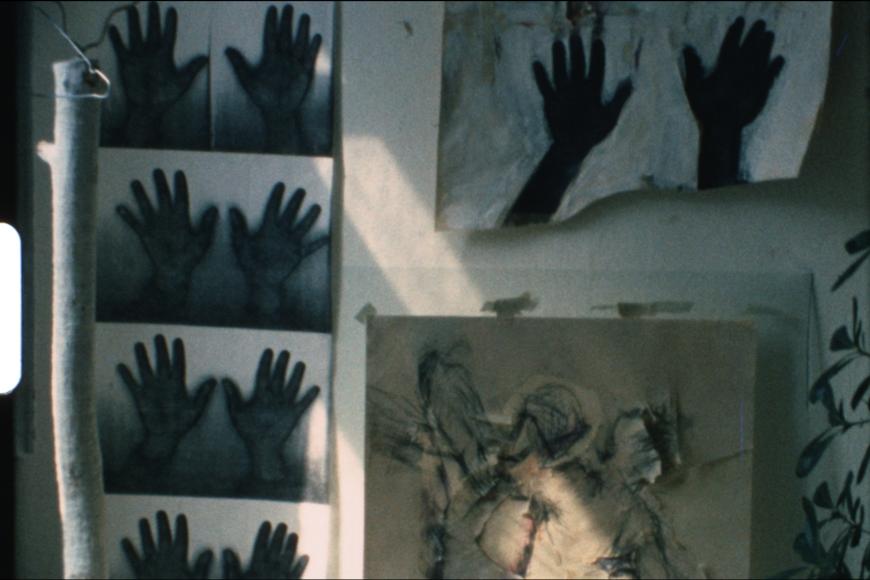
The Super8 material that has been stored in a private archive since 1982 is a conundrum, showing art, demolished buildings, and squatted houses in early 1980s West Berlin. A so-called Artificial Intelligence is consulted to explore the connections between the images. Interestingly, it comes up with references to the ancient capital of the Median Empire and later royal residence of the Achaemenids. We also learn surprising things about the significance of red turtleneck jumpers for gay emancipation and discover the functions of broom and hose. Accompanied by a confusing sound collage, the graffiti on the walls of a much-described city point to an exciting subcultural tradition. A young man looks into the camera. It is the artist Gerhard Faulhaber.
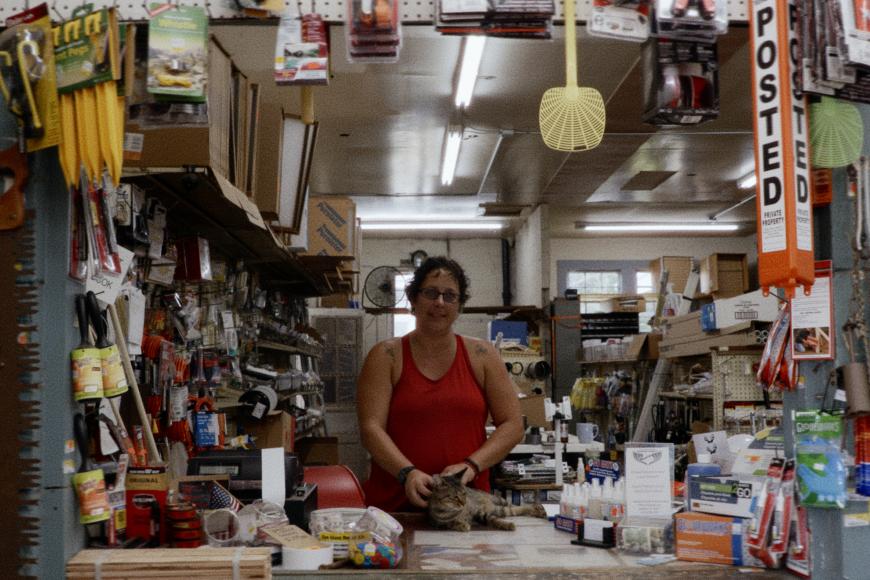
Anyone who enters the hardware store in the 900-soul community of Lumpkin in rural southwestern Georgia will find, in addition to tools, animal feed and seeds, a number of unexpected things. Kellie’s small, privately run hardware store is more than a store, it is a lifeline for the region: supply depot, gossip station, refuge. Kellie has a kind word for everyone, employs bored teenagers from the neighbourhood, cheers up lonely seniors, and adopts stray dogs. She meets everyone with warmth, patience, and dry wit. She comments only briefly – and after closing time, of course – on the fact that as a queer woman in a traditionally Republican corner of the USA she does not always have it easy, especially not in a job where dealing with DIY mansplainers is her daily bread.
Kathrin Seward and Ole Elfenkaemper observe this woman of conviction’s everyday life and have great fun immersing themselves in the details of these spaces and the absurd and entertaining intricacies of the social interactions. This very special universe almost makes us forget that next to the atmosphere in the store, open in every respect, there is also quite a different America that is not about friendliness and helpfulness, but about selfishness, aggression, and discrimination.
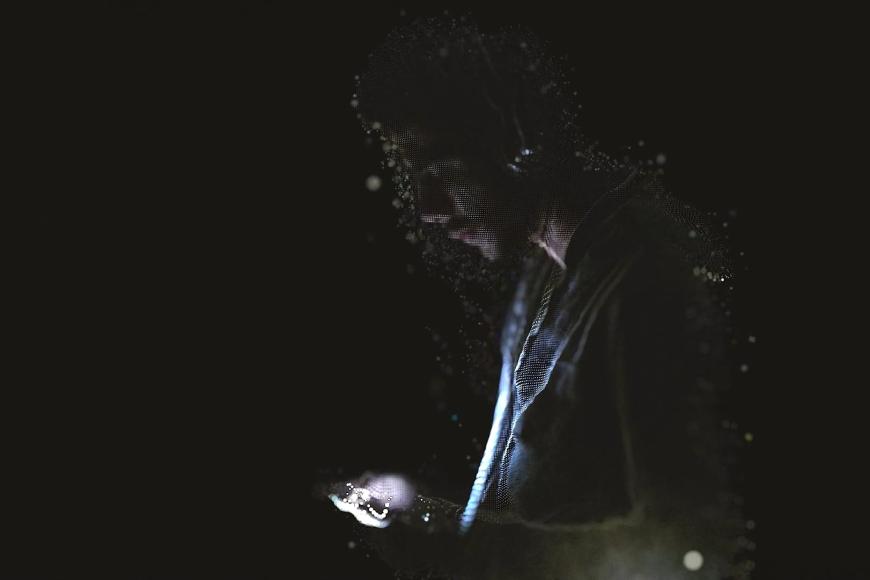
The work of Berlin-based filmmaker and artist Jack Wolf is based primarily on investigative research into conflict and environmental issues as well as migration. He also operates in political and social epicentres using state-of-the-art technology and innovative hardware. In this short film he ties all these strands together succinctly and precisely. “I Don’t Think I’m Alone in This” was shot with a time-of-flight camera, which is used in 3D technology and designed to give machines, in the broadest sense, human perception. So visually everything is about data flow, numbers, and transformation. In terms of content, the fate of a young man who fled from Damascus to Beirut as a child ten years ago becomes palpable.
Speaking from the offscreen of a cramped room that is both safe haven and cage, Amjad Bahloul talks about the past. About how wonderful it was to meet all the people in the street, play football, interact with the real world, a blessing. A blessing in the cursed loneliness of a foreign country, as it turned out for Amjad, were Facebook, YouTube, and the like – his only means of social contact. “This lightens the burden,” he says. And now they could help him and other refugees find their way home, because the Syrian regime has fallen. He learned about it from a post …
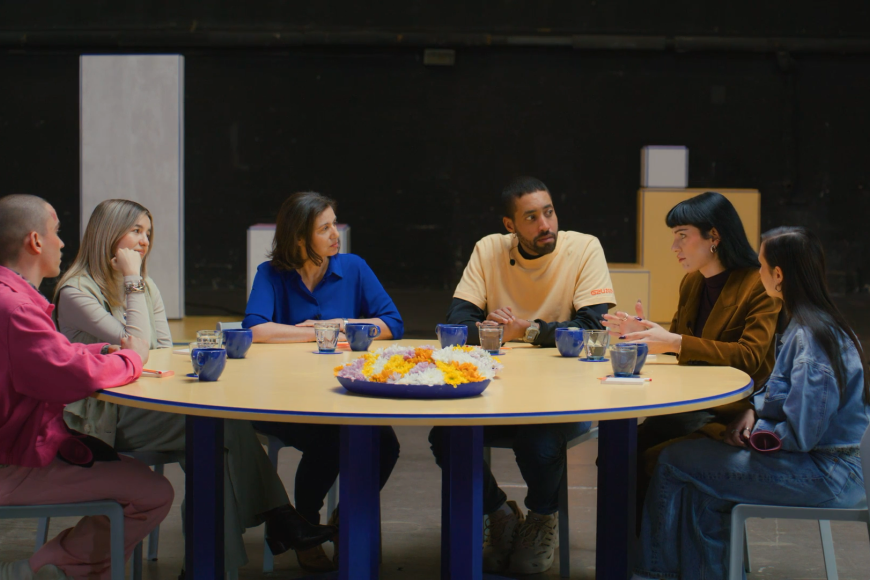
The “Intersection – It’s Political” project asks how structures of discrimination can be made tangible – especially for those who have not (yet) experienced discrimination themselves. That is precisely the purpose of an interactive smartphone game distinguished by two qualities: It is competitive – and it is unfair. Some players start with privileges, others with handicaps, depending on which character they are assigned. In the film, this game serves as a starting point, visualisation, and reality check for a group of six people who are actively committed to fighting to identify social injustice and discrimination and publicly opposing them.
The exchange between those six around the table makes it clear how ubiquitous racism, sexism, ableism, queerphobia, and transphobia are. And that, at a time when right-wing parties are growing stronger across the globe and marginalised groups are denied rights, it is all the more important to work against inequality not only in one’s own bubble, derided as “woke”, but also to influence the equally often quoted “middle of society”. Questions of how to reach this important, but often sluggish mass, of language and identity in the discourse about discrimination are just as much part of the discussion as strategies to protect themselves from frustration and burnout.
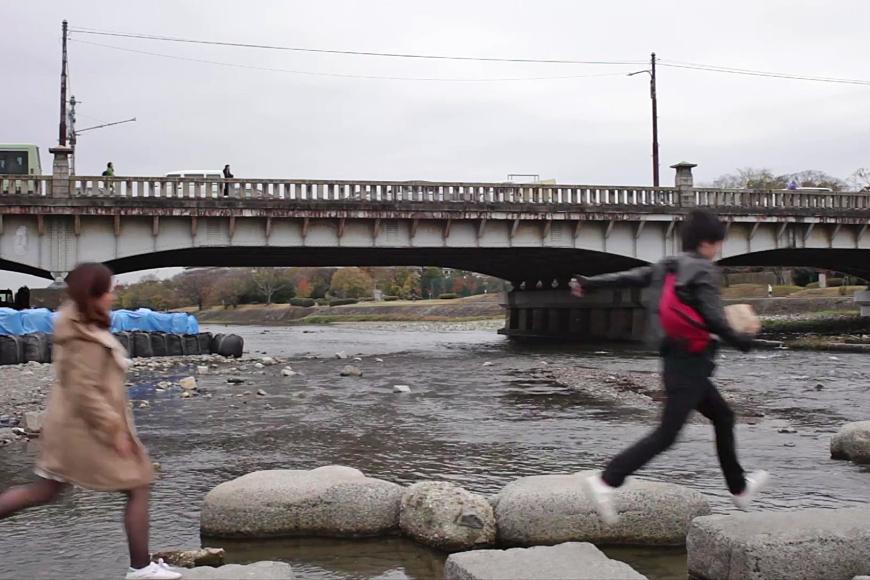
A train rattles in the distance, a heron stalks through the water, children practice gymnastics on the promenade. A couple is on its way to the opposite bank, hopping from stone to stone. One of the stones is shaped like a turtle, symbolising wisdom. An elderly man sings beneath a concrete bridge, his voice echoing. Moving snapshots of the Kamogawa, the wild duck river in Kyoto, develop a captivating rhythm that is easy to get lost in. The men, women and children seem absorbed in their activities and themselves. Like the fisherman who is downright surprised by the fat fish on his line. Sometimes the camera also peeks into the houses behind the embankment. An elderly couple make fabrics with fancy patterns in a workshop, the regular clacking of their loom has a soothing quality. The images are full of cheerful serenity.
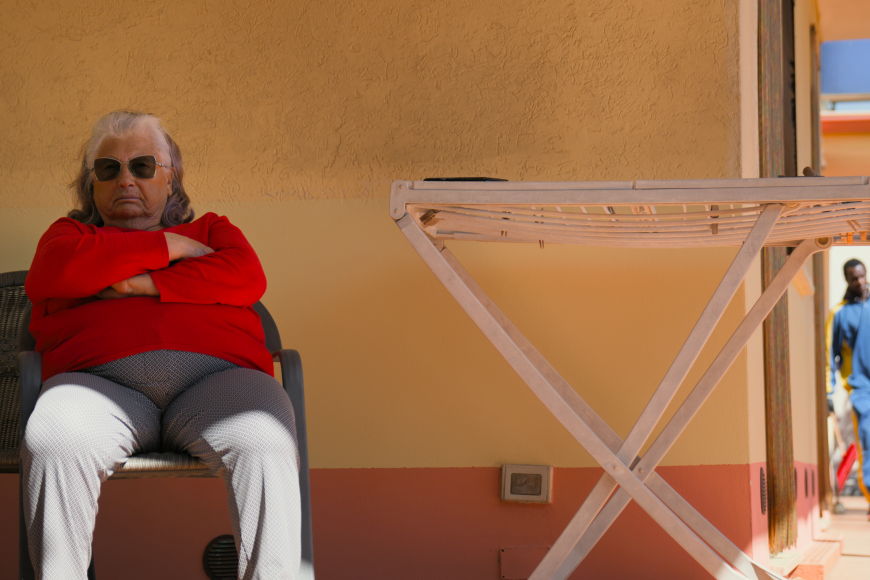
Rosa lived and worked in Germany for more than three decades and used her hard-earned money to build a house at home, in southern Italy. It was originally intended as security for the whole family, but they stayed in Germany when Rosa moved there in the late 1990s. Ever since her husband died, she has been running a two-floor bed and breakfast there on her own which has seen better days. Her daily routines are marked by hardship and disappointment: The drudgery is not getting easier with age, cleaners are hard to find, the region is in decline. Rosa is in a bad mood, complains silently, and argues loudly with her brother who lives next door. The family are far away and connections are often poor. Only her regular trips to the nearby sea, which is beautiful even in winter, make her happy. What to do with a legacy that nobody wants?
“Nonna” is a tribute to his grandmother by her filmmaker grandson that captures people, places and times with precision and subtle humour, portraying a life journey between two homelands that did not work out as imagined.
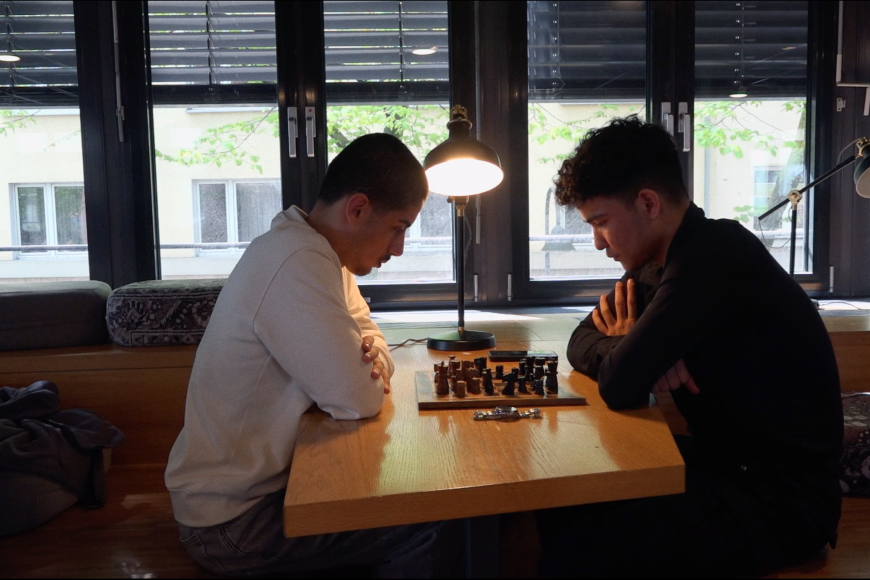
The art of the documentary portrait is to introduce an individual to the audience within a short period of time while going beyond a collection of biographical facts and capturing what actually defines this person. “Open Game” succeeds by showing its young protagonist Amir as someone who seems permanently on the move. First, he mastered the unsafe route from Afghanistan to Germany, now he constantly moves between school, job, and chessboard. He finds rest only when he moves his pieces on the 64 squares of the board, when he delves into a world where every move must be considered and where strategy, not luck, determine the outcome. In chess, Amir knows all the rules and can determine the course of the game – from the cleverly chosen opening move to the end, planned move by move.
“Open Game” structures its material along the phases of a chess match and portrays Amir as a person whose life was exposed to chance. Those who have to hope for luck too often appreciate a controlled environment.
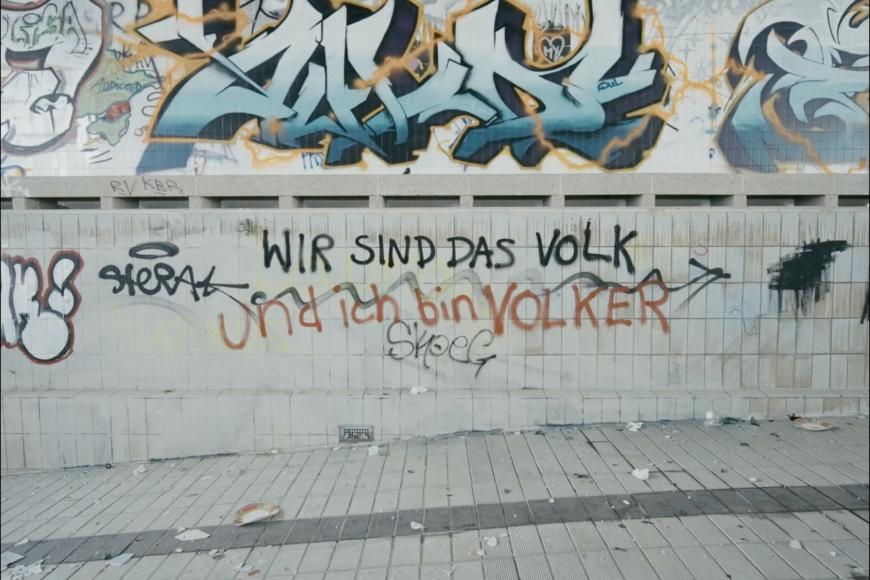
Scene by scene, a biography is delicately peeled back layer by layer, and German history along with it: National Socialism, GDR, the post-Reunification era. A granddaughter visits her grandfather. The elderly gentleman exercises regularly, has a gym in the house. She explains her project to him – and her film will remain a project in character. It is a permanent probing of how deep, how far she can go with her questions.
He keeps family photos from the Nazi era in a shabby metal box that has obviously not been opened in a long time, including a picture of his older brother in the uniform of the Nazi’s Reich Labour Service. It was not until a few months after the end of the war that great-grandmother took it off the wall, fearing it could be seen by Red Army soldiers. Grandfather revered his brother, who fell on the east front in 1944, admiring his strength and athleticism. He continued this cult of the body in the sports-obsessed GDR. The talks frequently revolve around personal responsibility and moral grey zones, around forgetting and repression. The granddaughter seems to be wondering who she is actually sitting opposite.
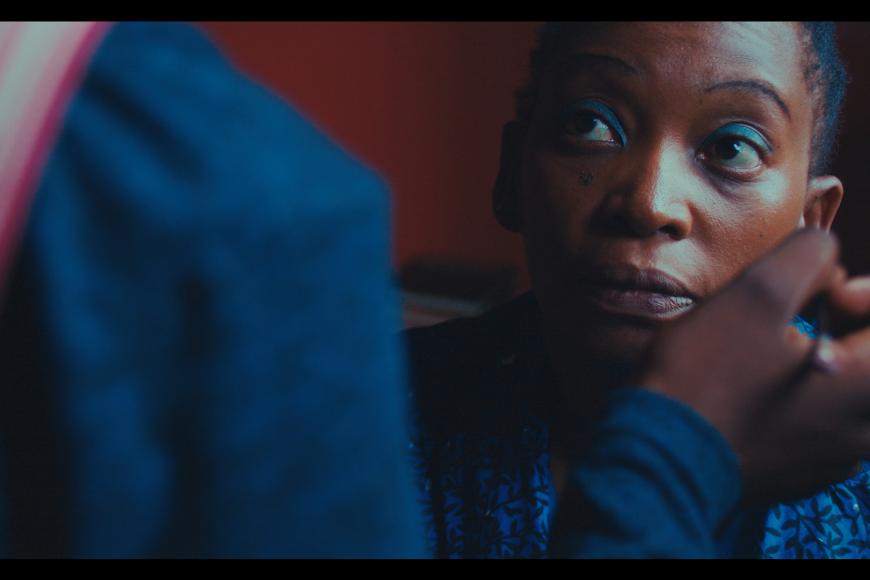
When Stella Nyanzi enters a room, action is guaranteed. The Ugandan feminist, gender researcher, anthropologist and poet does not mince her words in her fight against state oppression. She went to prison in 2017 for a vulgar poem in which she ridiculed head of state Yoweri Museveni, who has been in office for almost 40 years. After she was released, Nyanzi ran for Parliament without the necessary funds for a campaign, printing and distributing posters and flyers in the slums of Kampala with her children. Her daughter did her mother’s make-up and hair for public appearances. Sometimes her almost adult children longed for more time for themselves. The family repeatedly faced police violence and finally emigrated to Germany.
Using a mobile handheld camera, the film absorbs its protagonist’s power, its rhythm matching her angry lyrics. The result is the portrait of a woman who has made radicalism and provocation her way of life. We get to know an activist who permanently pushes herself and the people around her to the limits. Still, it is hard not to get infected by Stella Nyanzi’s energy.