A Scary Movie
Sergio Oksman
At once a meta horror film, a deliberately meandering essay and a family drama – a deliciously uncategorisable blend of fiction and documentary.


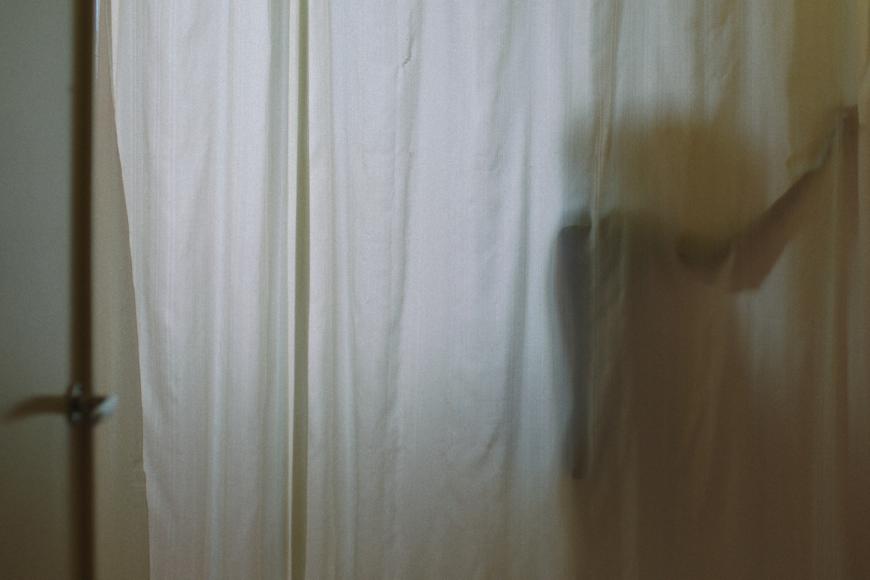
Nuno has turned twelve and started to become interested in tales of terror. When his father Sergio, the director, suggests they leave Madrid for the summer to stay in a recently shuttered hotel in Lisbon, he jumps at the chance. Devoid of any guests and gradually falling into disrepair, it feels like the perfectly spooky setting for his budding imagination, a new iteration of The Overlook Hotel from “The Shining”.
As Nuno roams the dark corridors, hides behind the fluttering curtains and watches creepy clips on his mobile phone, Sergio reflects in voice-over on what fear means and his own experiences with it: the documentary about a Portuguese serial killer he started making but never finished, the ghosts of cinema past that haunt film archives, the scary historical attempts to categorise criminals according to the shape of their skulls, that one startling encounter on the streets of São Paulo with his estranged dad back when he was a child. Wandering in winningly droll fashion between a meta-horror film, a deliberately meandering essay and a poignant drama of fathers and sons, “A Scary Movie” is a deliciously uncategorisable blend of fiction and documentary which asserts that dread is always part of the everyday. Is there anything scarier than family?


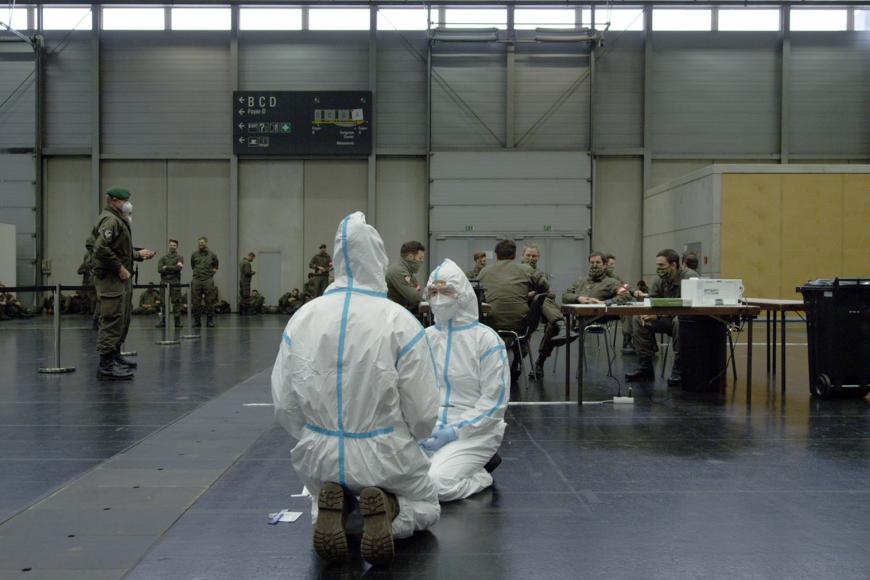
The film opens with the image of an elderly individual in a hospital, hooked to a machine: assistance is needed to slowly breathe in and out. This existential moment of physical precariousness is followed by Nikolaus Geyrhalter’s typical long shots, though in this case they do not document work processes but look like a prequel to his fantastic science fiction documentary “Homo Sapiens” (2016): deserted airports, swimming pools, playgrounds.
The filmmaker sets out with his identifiable aesthetic tools to tackle the documentation of the first three waves of the Covid-19 pandemic, from March 2020 to December 2021. In Vienna, a major city with a relatively well-functioning health system, he looks at institutions that are in a “flexible learning mode”: intensive care units, emergency shelters, schools, cinemas. Time and again he visits a flower shop that is not system-relevant but, by its own definition, sells food. Lockdown followed by eased restrictions followed by lockdown. The camera registers how paralysis in the face of a natural disaster is superseded in some people by anger at the restrictions. Meanwhile, cases of Long Covid are being treated in the hospitals. Topical, only a little later, these images cut across the repression of what has been experienced.
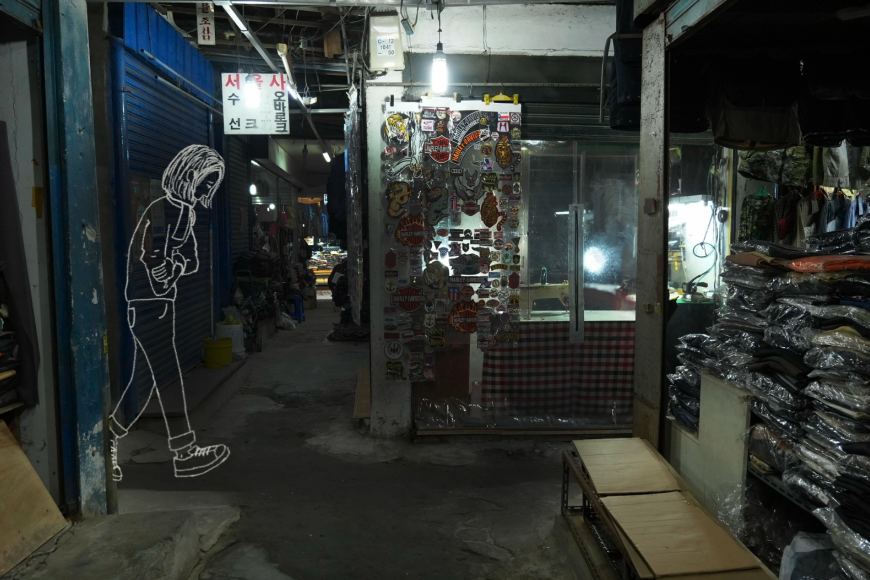
A student in Incheon leads a solitary existence, sending off essays late at night, leaving her cramped apartment to smoke out on the street, scrolling through old ads on the internet. When she clicks on an MPEG file that happens to be on her USB stick, a conversation with her grandparents blares forth, recounting their life in the same neighbourhood where she now lives. Once released, their voices won’t stay quiet, creeping into her daily routine and her dreams. As they talk of prejudice against North Korean refugees, taking cardboard from the US military base to build a makeshift house overnight or making malt taffy to earn a living, their endeavours come to life in stop-motion sequences that appear, like them, to belong to a different era. But this is just one of many different visual ideas and animation techniques on display, including hand-drawn sequences of various kinds, scanned-in images that recreate the neighbourhood in cannily imperfect 3D, real photographs and live-action scenes that even show the people behind the voices at one point. History never stays silent; here we see all its overlapping layers.
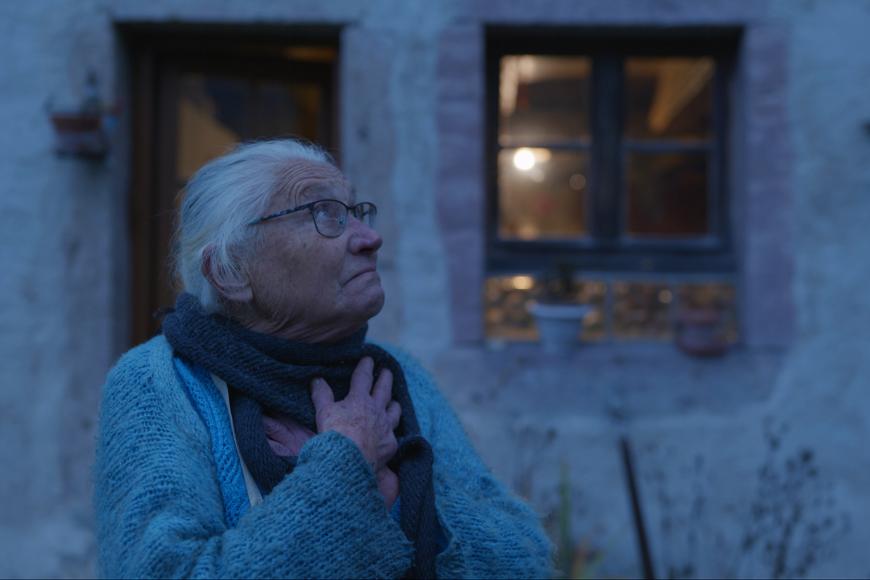
For a year, over all four seasons, Stéphane Manchematin and Serge Steyer keep returning to the Vosges where Suzanne lives. By now she looks back on more than nine decades of life, an old lady who stoically clings to the self-sufficiency of the house where she was born. The place lacks all comfort, neither electricity nor water supply help with cooking or heating. Nonetheless, Suzanne wants for nothing: When the indoor temperature drops to single digits in winter, she simply takes a hot-water bottle to bed and adds another layer of blankets. In the bathroom, water reliably flows from a groove, and if the light hits the surrounding glass carafes, it soon dances through the room.
Manchematin and Steyer know how to stage everyday procedures and conditions alertly and sensitively – their film’s meanderings are as casual as they are focused. And Suzanne, too, becomes more and more approachable. After a very short time, one develops a sense of her habits, registers with amusement her eternal twirling of the telephone cord, or discovers a quite assertive person behind the wheel. All this happens without romanticisation or kitsch. Instead, the observation is characterised by abundant laconic wisdom.