Film Archive

Filmstill Blueberry Dreams

Blueberry Dreams

Lurji motsvi
Elene Mikaberidze
Audience Competition 2024
Documentary Film
Georgia,
France,
Belgium,
Qatar
2024
76 minutes
Georgian,
Russian
Subtitles: 
English

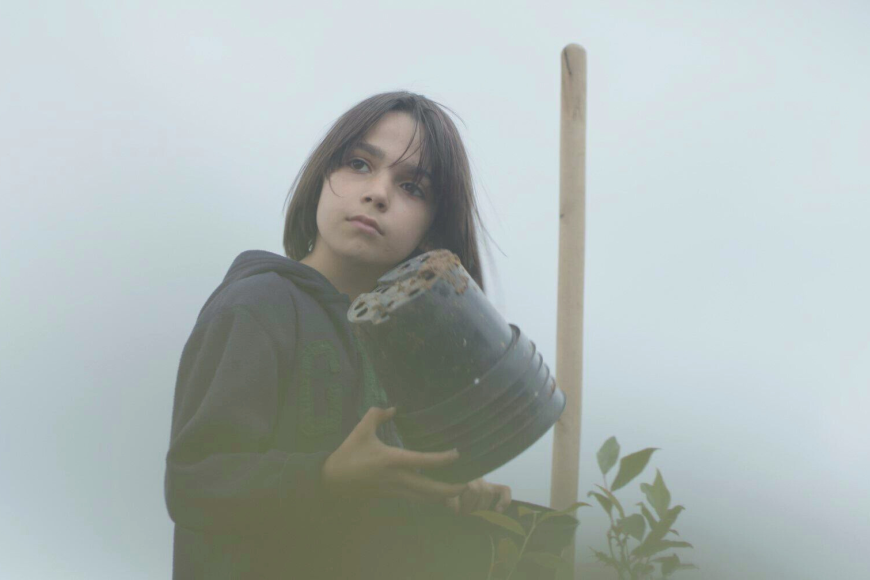
In the north of Georgia, twelve kilometres from the Russian-influenced region of Abkhazia, a family are realising their dream. Under the optimistic motto “Plant the Future,” the Georgian government has launched a funding programme that enabled the people in this state which has been shaken by wars and crises for years to make a fresh start on their own farmland. With this support Soso, a retired engineer, took the big step in 2021 with his wife and two young sons and began growing blueberries.
Director Elene Mikaberidze and a dynamic camera follow the bold endeavour of the greenhorn farmers as they settle into their unfamiliar new life month by month. In the evenings, they pass the time with games and conversations, while the television is on in the background: images of a Ukraine under attack, news of the escalation in the Middle East remind the adults of the Russo-Georgian War sixteen years ago. Soso, the head of the family, contemplates his homeland in the midst of an escalating global situation. What dreams will still find a place there? Mother Nino is worried about her children’s future. She wants them to have the freedom to go their own way, to travel abroad and leave Georgia behind. Whether these ideas correspond with Soso’s remains to be seen.

Em Johrden

Credits DOK Leipzig Logo

Director
Elene Mikaberidze
Script
Elene Mikaberidze
Cinematographer
Patrick Wendt
Editor
Yannick Leroy, Phillipe Boucq
Producer
Elene Margvelashvili
Co-Producer
Baptiste Brunner, Isabelle Truc
Sound
Elene Mikaberidze
Sound Design
Marco Pascal
Broadcaster
Al Jazeera Documentary, Tënk, RTBF, Georgian Public Broadcaster
Nominated for: MDR Film Prize
Filmstill Bye Bye Tiberias

Bye Bye Tiberias

Bye Bye Tibériade
Lina Soualem
Audience Competition 2023
Documentary Film
France,
Palestine,
Belgium,
Qatar
2023
82 minutes
French,
Arabic
Subtitles: 
English

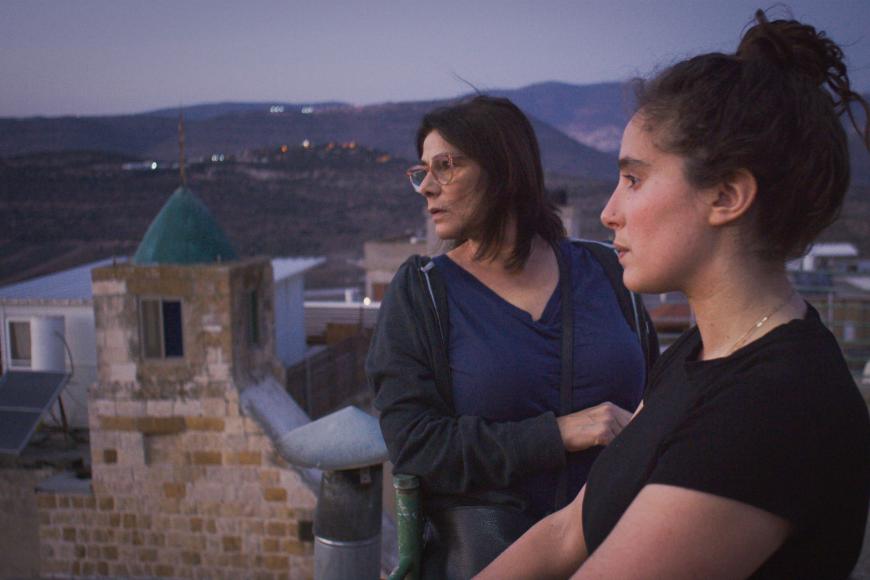
The actor Hiam Abbass, who lives in France, is one of the greatest movie stars from the Middle East. She played leading roles in the award-winning films of Israeli director Eran Riklis, acted in Steven Spielberg’s “Munich” and recently in the U.S. hit series “Succession.” She served on the juries of the big Festivals in Cannes and Berlin, presented her own directing debut in Venice. But she is also a mother, daughter and sister in a large Palestinian family full of resourceful women. In this real role she steps in front of the camera in her daughter Lina Soualem’s work and travels back to her hometown of Deir Hanna in northern Israel – an Arab village in the Jewish state.

“Don’t open the gate to past sorrows,” the director quotes a kind of family dogma. It refers, among other things, to the family’s traumatic expulsion from Tiberias, the city on the Sea of Galilee, in the 1948 Palestine War. But with her confrontation of the family history, Soualem also opens gates to past joys and allegedly discarded identities. Between home videos, historical archive footage, photos and letters, Abbass is a touching and approachable screen presence as she returns to her roots. The long shadow of her origins also falls on a woman of the world.

Jan-Philipp Kohlmann

Credits DOK Leipzig Logo

Director
Lina Soualem
Script
Lina Soualem, Nadine Naous, Gladys Joujou
Cinematographer
Frida Marzouk
Editor
Gladys Joujou
Producer
Jean-Marie Nizan
Co-Producer
Guillaume Malandrin, Ossama Bawardi
Sound
Ludovic Escallier, Lina Soualem
Sound Design
Julie Tribout, Benoit Biral, Rémi Durel
Score
Amine Bouhafa
World Sales
Anna Berthollet
Commissioning Editor
Rasha Salti
Audience Competition 2025
Filmstill Coexistence, My Ass!
Coexistence, My Ass!
Amber Fares
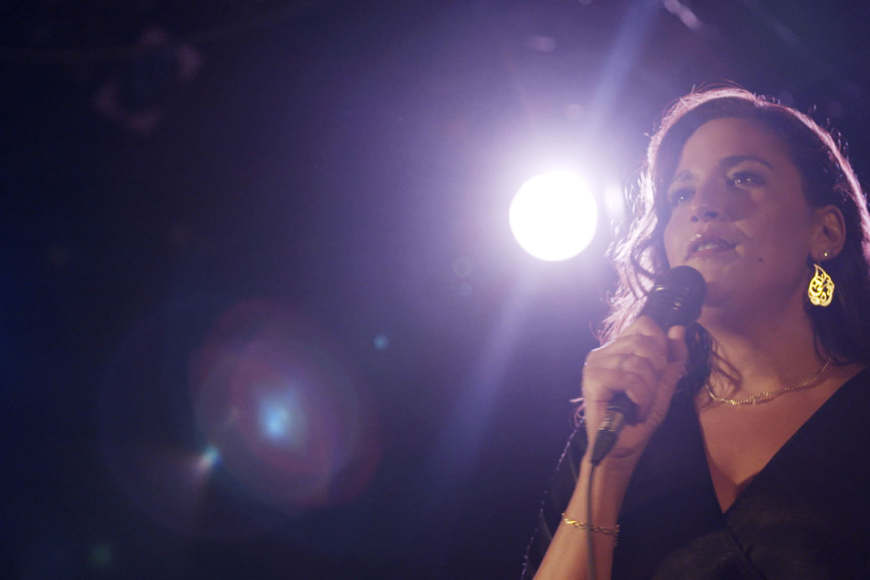
Noam Shuster-Eliassi grew up in a Jewish-Arab peace village in Israel, worked for the UN and is doing stand-up comedy on the Middle East conflict in English, Hebrew and Arabic.  
Filmstill Coexistence, My Ass!

Coexistence, My Ass!

Coexistence, My Ass!
Amber Fares
Audience Competition 2025
Documentary Film
USA,
France
2025
93 minutes
English,
Hebrew,
Arabic
Subtitles: 
English

The name of her village stands for a utopia that has shaped Noam Shuster Eliassi from childhood: Newe Shalom (Hebrew) or Wahat al-Salām (Arabic) roughly translates as “Oasis of Peace.” This small community of 300 people from Jewish and Arab families which was founded in 1969, located in Israel at the border with the West Bank, is a test of solidarity in practice. Thus, Noam, who is Jewish, and her Palestinian friend Ranin become ambassadors of mutual understanding even as children, for example when Hillary Clinton or Jane Fonda come to visit. They seem predestined for a career in the United Nations.
In her comedy show “Coexistence, My Ass!”, which director Amber Fares uses as a leitmotif, Shuster Eliassi strikes a harsher tone. Her career shift from diplomacy to political comedy – in English, Hebrew or Arabic, depending on the audience – shows her as a critic of the Netanyahu government, both before and after the Hamas terrorist attack on 7 October 2023. Her example also reflects the division in parts of the Israeli left: Shuster Eliassi’s deep pain of having lost loved ones herself is followed by anger about the Gaza war. What is humour able, what is it allowed to do in this situation? Perhaps help us mourn the suffering of two nations and, despite everything, not give up the utopia of peace.

Jan-Philipp Kohlmann

Credits DOK Leipzig Logo

Director
Amber Fares
Cinematographer
Amber Fares, Philippe Bellaiche, Amit Chachamov
Editor
Rabab Haj Yahya
Producer
Amber Fares, Rachel Leah Jones, Valérie Montmartin
Sound
Rachel Leah Jones, Ibrahim Zaher, Sharon Luzon
World Sales
Stephanie Fuchs
Nominated for: Leipziger Ring
Audience Competition 2024
Filmstill Elementary
Elementary
Claire Simon
A primary school on the outskirts of Paris. With persistence and dedication, the children are encouraged to be responsible and empathetic. Successful pedagogy at eye level.
Filmstill Elementary

Elementary

Apprendre
Claire Simon
Audience Competition 2024
Documentary Film
France
2024
105 minutes
French
Subtitles: 
English

Claire Simon’s filmic observation focuses on the institution of school. But instead of a systematic analysis of the objectives and workings of this place of education, her emphasis is on the daily interactions between children and teachers. How are disputes resolved? How do you teach consideration, forbearance, empathy? The film explores these questions calmly and with an unobtrusive camera, using as example the Anton Makarenko primary school in Ivry-sur-Seine, just outside the south-eastern outskirts of Paris.
Parents arrive with their children. The teacher shakes hands with a newcomer – a gesture of encouragement. In class, the instructors seldom raise their voices, authoritarian shouting is out of place here. The staff rely on dialogue instead, which in turn depends on trust and mutual respect. Claire Simon immerses herself in the life of this school and lets the captured moments between children and adults speak for themselves. A sensitive mosaic unfolds: moments of deeply felt learning and teaching bliss, boat trips on the Seine, turmoil in the schoolyard. All these details feed into the vibrant image of a pedagogical mission carried by small and big shoulders.

Em Johrden

Credits DOK Leipzig Logo

Director
Claire Simon
Cinematographer
Claire Simon
Editor
Luc Forveille
Producer
Michel Klein
Sound
Nathalie Vidal, Pierre Bompy, Jules Jasko, Elias Boughedir
World Sales
Rūta Švedkauskaitė
Performer
Sophie Axus
Audience Competition 2024
Filmstill I Shall Not Hate
I Shall Not Hate
Tal Barda
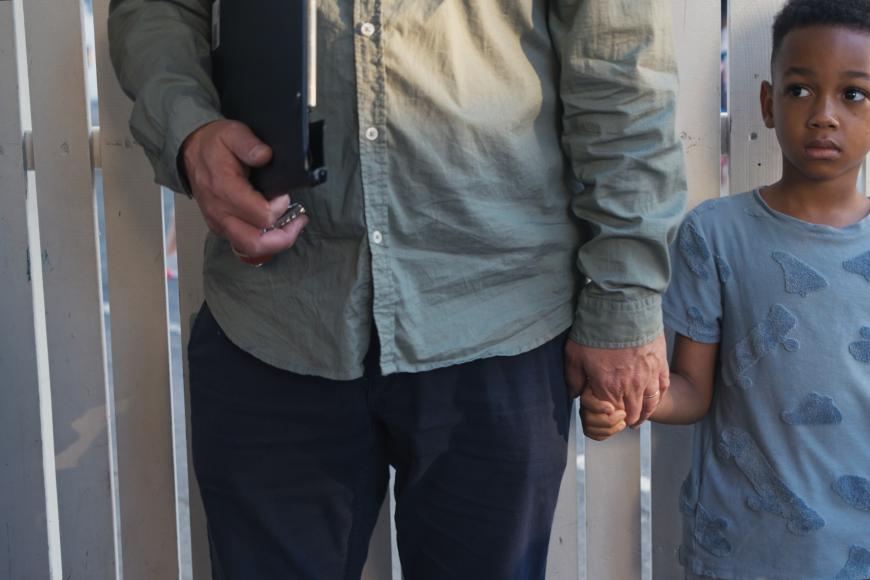
Izzeldin Abuelaish, a Palestinian doctor in Israel, loses three of his daughters in an attack. With unbelievable strength he remains convinced that only mutual understanding can bring peace.
Filmstill I Shall Not Hate

I Shall Not Hate

I Shall Not Hate
Tal Barda
Audience Competition 2024
Documentary Film
Canada,
France
2024
92 minutes
Hebrew,
Arabic,
English
Subtitles: 
English

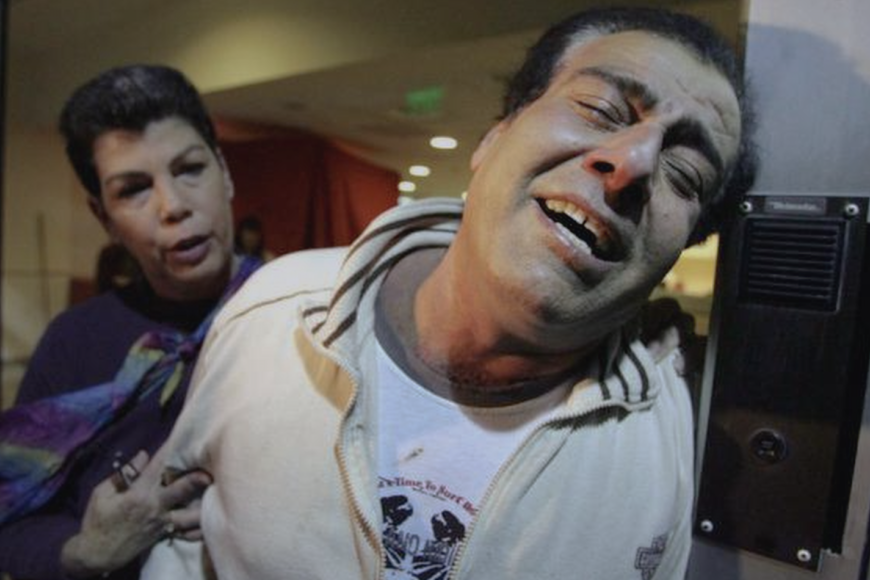
Dr. Izzeldin Abuelaish has been nominated for the Nobel Peace Prize several times. As a Palestinian gynaecologist practising in an Israeli hospital he was able to pass the strictly guarded checkpoints to Gaza without a hitch. His humanist perspective is expressed in words like these: “Do we need to be sick in order to understand that we are equal?” When the Israeli army attacked Abuelaish’s home in Gaza in January 2009 and three of his daughters died, he picked up the phone. On the other end of the line was Shlomi Eldar, a Channel 10 reporter who decided to broadcast his friend’s despair live to the Israeli audience. A historic television moment; the shelling of Gaza was terminated soon afterwards.
Director Tal Barda has given her portrait the same title as Izzeldin Abuelaish’s book, which was published in 2011. More than ten years after the publication of this memoir, the doctor as well as his now grown-up children speak out in her film, talk about traumas, their new beginning in Toronto and the struggle to obtain an official apology from Israel. “I Shall Not Hate” addresses the complicated ties between the fates of Palestine and Israel. Izzeldin Abuelaish’s conviction that peaceful coexistence is the only chance of survival remains unbroken.

Carolin Weidner

Credits DOK Leipzig Logo

Director
Tal Barda
Script
Geoff Klein, Tal Barda, Saskia De Boer
Cinematographer
Hanna Abu Saada
Editor
Geoff Klein
Producer
Maryse Rouillard, Paul Cadieux, Tal Barda, Isabelle Gripon
Sound
Gordon Neil Allen
Score
Robert Marcel Lepage
Animation
Jean-Christophe Lie
Nominated for: Leipziger Ring
Audience Competition 2025
Filmstill Life After Siham
Life After Siham
Namir Abdel Messeeh
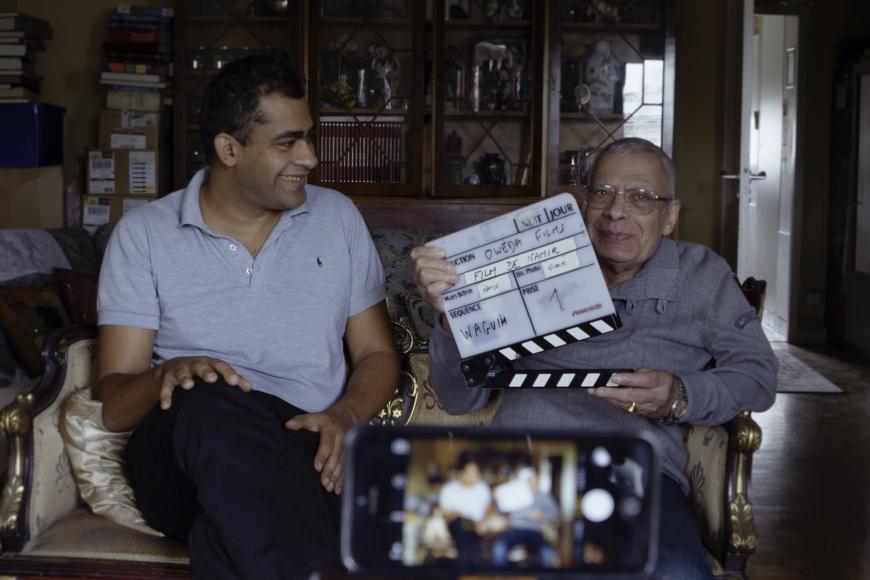
In a montage of home videos, family memories and scenes from Egyptian film classics, the director finds a visual language for mourning his deceased mother.
Filmstill Life After Siham

Life After Siham

La vie après Siham
Namir Abdel Messeeh
Audience Competition 2025
Documentary Film
France,
Egypt
2025
80 minutes
French,
Arabic
Subtitles: 
English

For Namir, the realisation that his beloved mother is not immortal is painful. He had actually intended to make a film with Siham. Now he is mourning in the church with his father Waguih and his children, who seem too young to understand death – and allowing himself to be filmed. “As always, I’m counting on cinema to help me.” He is convinced that cinema can turn tragedy into comedy – and preserve memories that would otherwise fade away.
Namir Abdel Messeeh has already worked through his family’s biography between Egypt and France, their Christian faith and love of cinema in “The Virgin, the Copts and Me” (2011). But it was Siham’s wish that her son finally realise a film with acting stars rather than his own relatives. Instead, Namir Abdel Messeeh recounts his mother’s love, her longing, and her mysteries using the power of cinema. A montage of home videos, family memories and Egyptian film classics by Youssef Chahine makes Siham appear almost “larger than life”.

Jan-Philipp Kohlmann

Credits DOK Leipzig Logo

Director
Namir Abdel Messeeh
Script
Namir Abdel Messeeh
Cinematographer
Nicolas Duchêne
Editor
Benoît Alavoine, Emmanuel Manzano
Producer
Camille Laemlé
Sound Design
Roman Dymny
Score
Clovis Schneider
World Sales
Marcella Jelić
Filmstill Queens of Joy

Queens of Joy

Korolevy radosti
Olga Gibelinda
Audience Competition 2025
Documentary Film
Ukraine,
France,
Czech Republic
2025
92 minutes
Ukrainian,
Russian
Subtitles: 
English

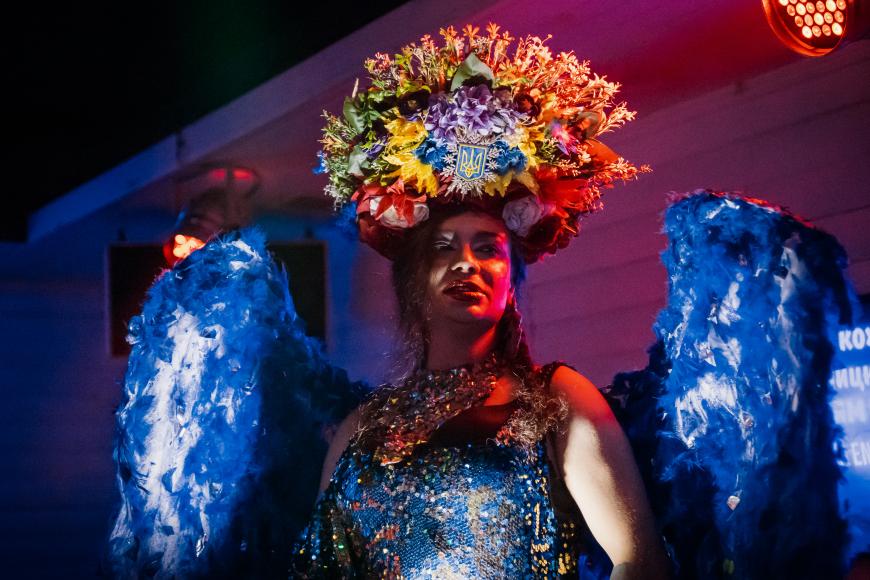
“Today, we’re raising funds for the 206th Territorial Defence Brigade”, Diva Monroe announces at a drag show in a Kyiv basement club. Whether on the front line or by civilian actions: A lot of people from the Ukrainian LGBTQ+ community are fighting against the Russian attacks – many of them even before the 2022 invasion. It would be understandable to flee from war and discrimination. For a long time, there was next to no social acceptance for queers in the Ukraine. But since Kremlin propaganda no longer reaches Kyiv, things have improved. That is what Olga Gibelinda’s film narrates via the example of three drag queens: Monroe, who remembers the empowerment of the Maidan protests and has worked for television and as an influencer since. Aura, at that time still siding with the pro-Russian government, today serving in the army under Commander-in-Chief Zelensky. And Marlen, who suffered abuse as a trans woman in the past and spreads joy on stage today.
The film establishes a poignant contrast between the show world and the private lives of the drag queens, while leaving space for their political demands. These include the call for the recognition of queer partnerships at this time to give relatives of those killed or wounded in action equal legal claims.

Jan-Philipp Kohlmann

Credits DOK Leipzig Logo

Director
Olga Gibelinda
Script
Olga Gibelinda, Ivanna Khitsinska
Cinematographer
Kyrylo Nikrashevich
Editor
Zuzana Walter
Producer
Ivanna Khitsinska
Co-Producer
Louis Beaudemont, Hana Blaha Šilarová
Sound
Mykhailo Zakutskyy
Score
Artem Baburin
Broadcaster
Serhii Nedzelskyy, Natasha Movshovych, Aloina Holiakova, Claudia Bucher, Béatrice Meier, Barbara Bouillon
Nominated for: MDR Film Prize
Filmstill Welded Together

Welded Together

Welded Together
Anastasiya Miroshnichenko
Audience Competition 2025
Documentary Film
France,
Netherlands,
Belgium
2025
96 minutes
Russian
Subtitles: 
English

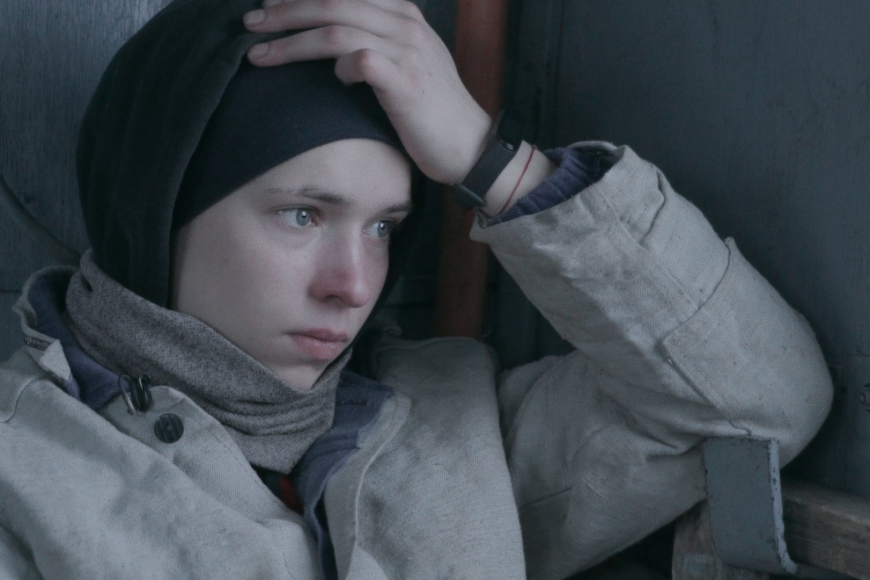
Katya lights the candles on her 22nd birthday cake alone, nobody is there yet to celebrate with her. She has recently moved in with her mother. Mama drinks and has just had a new baby: Amina. Abandoned as a child, Katya grew up without her mother, who lost custody because of her alcohol addiction. Now Katya frequently takes care of her little sister while her mother is nowhere to be found. She always returns with professions of guilt and promises to do better. Katya finds support in her friend Tanya, with whom she shares a similar biography. And she finds recognition in her job as a welder, for which she has a particular talent.
In “Welded Together”, Anastasiya Miroshnichenko portrays a young woman who clings for a long time to the idea of a family that can be put back together, even though there is a lot of evidence to the contrary. Miroshnichenko mainly captures her protagonist through her facial expressions – Katya’s usually shifts between emptiness and sadness; it is like a mirror that reveals the complexity and tragedy of the situation. Meanwhile, the social services department is responsible for protecting Katya and Amina. The office becomes an ambivalent place to go in the midst of this equally dark and fateful winter.

Carolin Weidner

Credits DOK Leipzig Logo

Director
Anastasiya Miroshnichenko
Cinematographer
Pavel Romanenya
Editor
Kasia Boniecka, Stanislav Kalilaska
Producer
Valérie Montmartin, Raphael Pelissou
Co-Producer
Iris Lammertsma, Babet Touw, Eva Kuperman
Sound Design
Lex Krutz
Score
Rui Reis Maia
World Sales
Anna Berthollet
Nominated for: MDR Film Prize
Winner of: MDR Film Prize