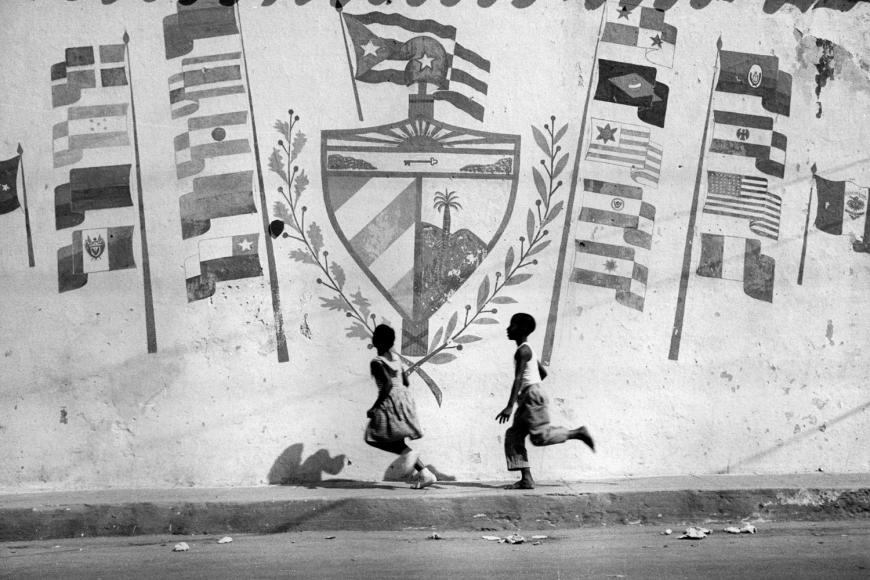
Hello Cubans
Agnès Varda
The grande dame of French Nouvelle Vague spent the turn of the year 1961/62 in Cuba. She came back to Europe with a photo film full of cha-cha-cha and cheerful socialism.


At the turn of 1961/62, Agnès Varda travelled to Cuba and saw a country that integrated Marx and Lenin into the everyday life of the Caribbean. Cha-cha-cha was part of it, but also cars à l’américaine. At her Parisian animation stand, Varda animated the black and white photos she had brought back home in an almost jaunty photo film. Chris Marker, her close friend from the Rive Gauche circle of the French Nouvelle Vague, had just paved the way for this cinematic form. They also shared an enthusiasm for the Cuban Revolution – and finally even a bit of Leipzig festival experience: In 1964, Varda’s moving photo montage won the Silver Dove. Despite or because of the subtle irony with which she looks at this somewhat improvised socialism?

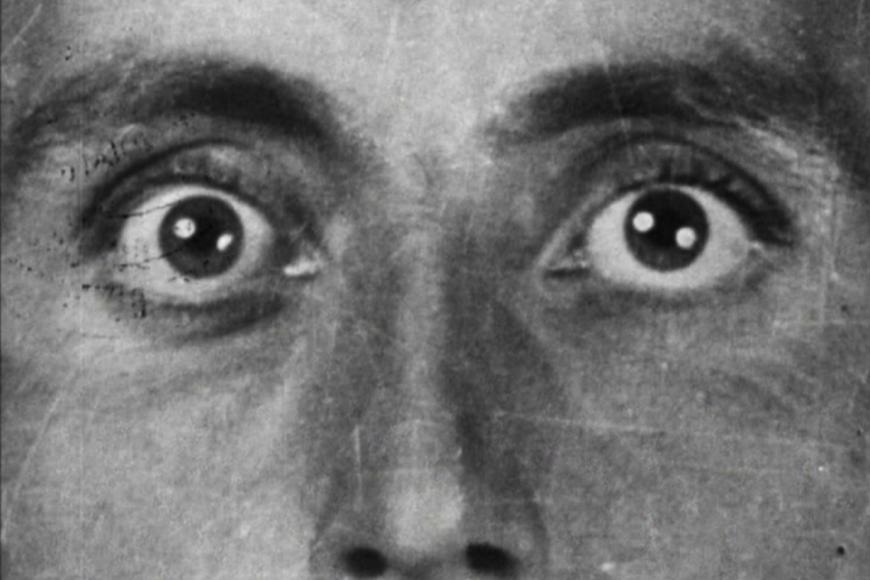
“Le sang a caillé, les bouches se sont tues,” Jean Cayrol writes. Paul Celan translates: “The blood has congealed, the mouths have fallen silent.” Alain Resnais’ archive film about the National Socialist concentration camps set new standards for the essayistic form. The score by Hanns Eisler had nothing to fear from changes to another language version. But the words of Jean Cayrol, more elegy than commentary? Paul Celan, creator of the “Death Fugue” and already associated with Cayrol as his translator, was asked to translate it into German. His lyrical rhythm, his tense switches deviating from the original text have shaped the West German reception history of Resnais’ film.
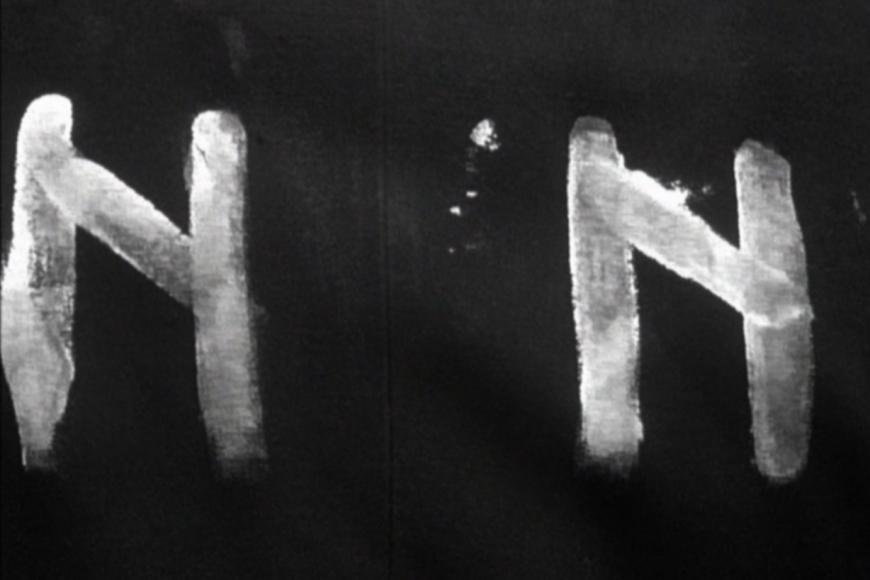
“Le sang a caillé, les bouches se sont tues,” Jean Cayrol writes. Henryk Keisch translates: “The blood has dried, the mouths have fallen silent.” When Resnais’ film was to be licensed for theatrical release in the GDR, it seemed obvious to resort to the West German dubbed version. But Celan’s translation failed to meet the approval of DEFA. They found fault with elisions that, for example, omitted the deportees from the Soviet Union. The official correspondence ended on an apodictic note: The acquisition was considered “irresponsible”. The writer and translator Henryk Keisch, loyal to the party line, was commissioned to write a new version – and of course made up for Celan’s omissions.
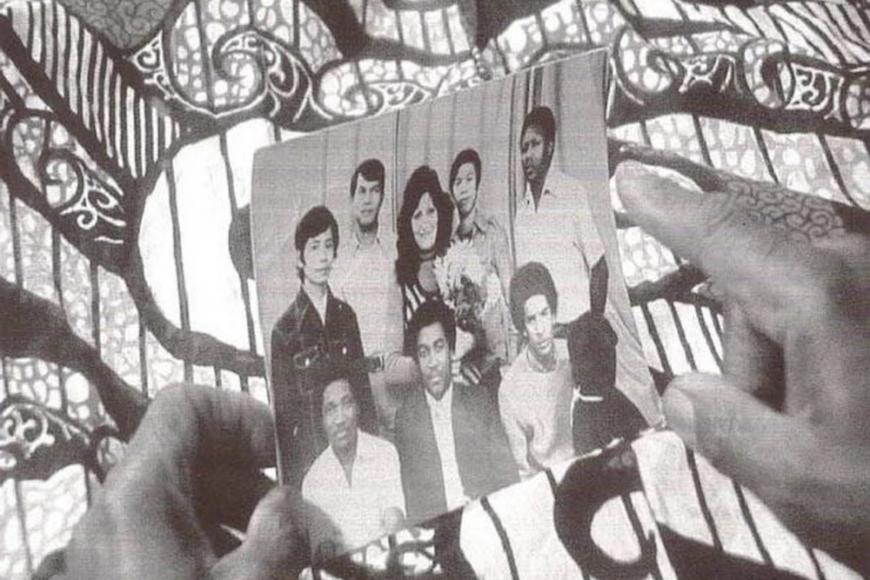
On a train to Rostov-on-Don in 1980, Malian-Mauritanian bursary holder Abderrahmane Sissako met the Angolan Afonso Baribanga, who had also been sent to the USSR. Both are supposed to learn Russian. Sissako studied film directing at the WGIK in Moscow, while Baribanga pursued a different career and eventually returned to Angola, where a post-colonial civil war was raging. Years later, Sissako sets off in search of his vanished friend, travelling to his own and Baribanga’s African homelands, where the old and new world powers have left devastating traces. In 1997, in a side section, DOK Leipzig presented the feature-length version of Sissako’s travelogue, which is steeped in contemporary and colonial history. The 2024 Retrospective presents an abridged version.
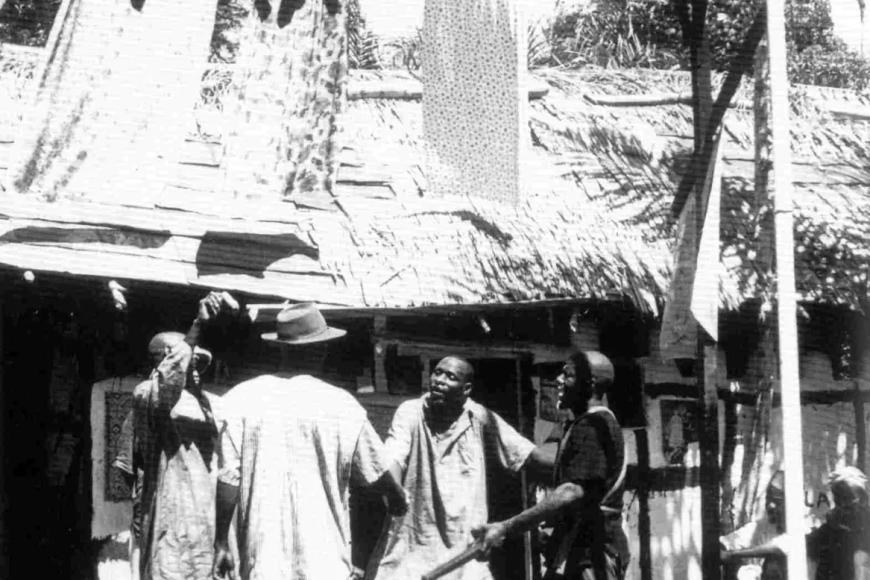
This still controversial ethnofiction is one of Jean Rouch’s most famous films. It stages followers of the Hauka cult in Ghana incorporating their colonial masters to marching music imported from Europe. The disturbing work was released at the same time as the first Leipzig festival year, but would have gone beyond the scope of the “Culture and Documentary Film Week”. This was because the festival did not adopt an international focus until 1960. Nevertheless, Rouch floats through Leipzig’s festival history as an inspiring genius: He is regarded as the founder of Cinéma-Vérité, a documentary concept that was pursued with great interest in Leipzig, and he irritated the colonial gaze by encouraging African filmmakers to determine the images of their continent themselves.