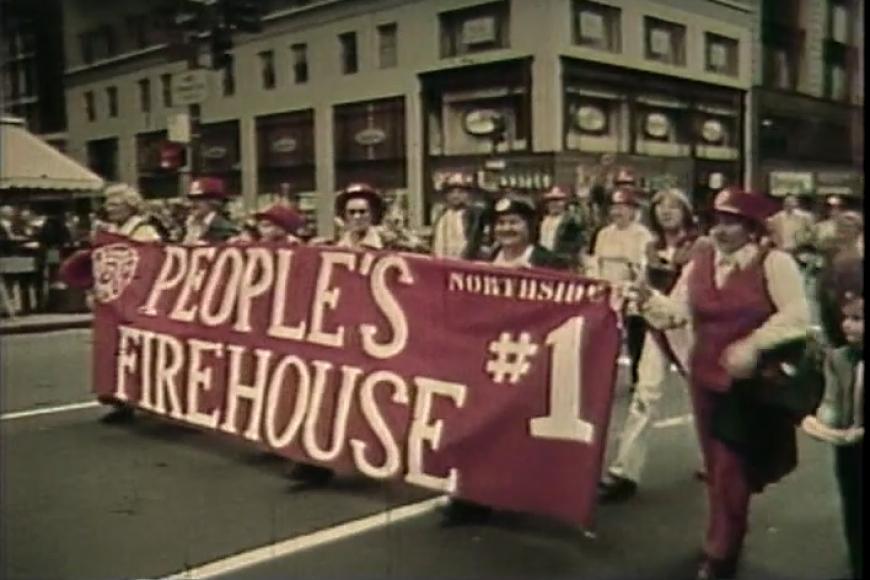
People’s Firehouse No. 1
Paul Schneider
The city closes an important fire station in Brooklyn’s North Side. After years of popular protests, accompanied by the camera, it is re-opened as the “People’s Firehouse.”


In the 1970s, whole streets went up in flames in New York. Nonetheless, the city decided to make massive cuts to the firehouse budget. No fewer than six stations were closed in Brooklyn’s Northside, a neighbourhood dominated by Polish immigrants. Protest forms in these poor neighbourhoods of warehouses and factory chimneys – precisely what made them lucrative for real estate speculation and profitable redevelopment. “Planned shrinkage” is what the locals call this practice that is intended to drive them to the periphery. Their resistance pays off: After two and a half years of protest, the Engine Company 212 reopens as the “People’s Firehouse”. The camera is present throughout, capturing tears, laughter, anger, and pride.

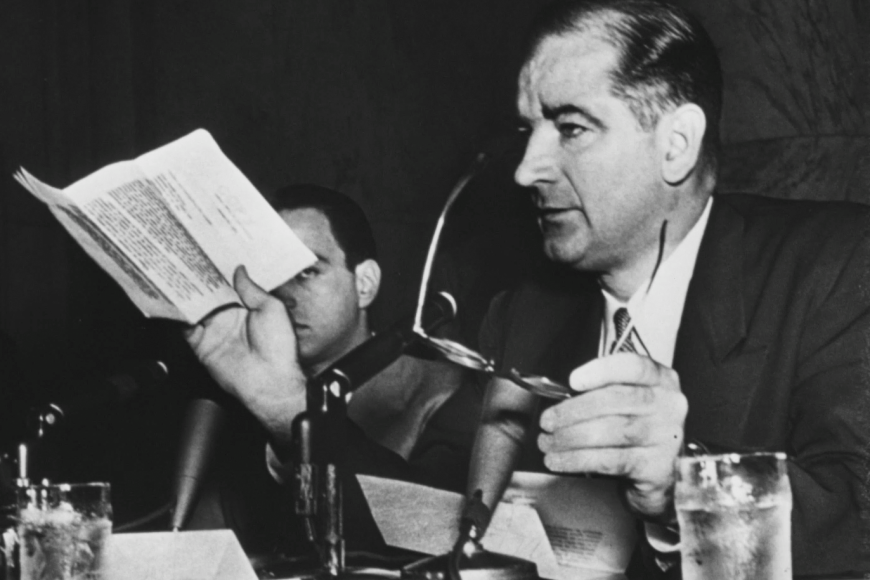
De Antonio was already forty when he became involved in filmmaking. He produced two early films of the New York Beat movement, “Pull My Daisy” (1959, Robert Frank, Alfred Leslie) and “Sunday” (1961, Dan Drasin), the latter also featuring in the 2025 Retrospective. He was also one of the founding members of the New American Cinema Group, along with Jonas Mekas, Shirley Clarke and others. “Point of Order!” became his directorial debut, the first cinema film compiled exclusively from television images. From 188 hours of material of the “Army–McCarthy hearings”, a tribunal broadcast live from the Senate in 1954 in which the notorious communist hunter Joseph McCarthy had to face an investigative committee, de Antonio distilled a farcical show trial at the end of which everyone involved looked like a convicted criminal.
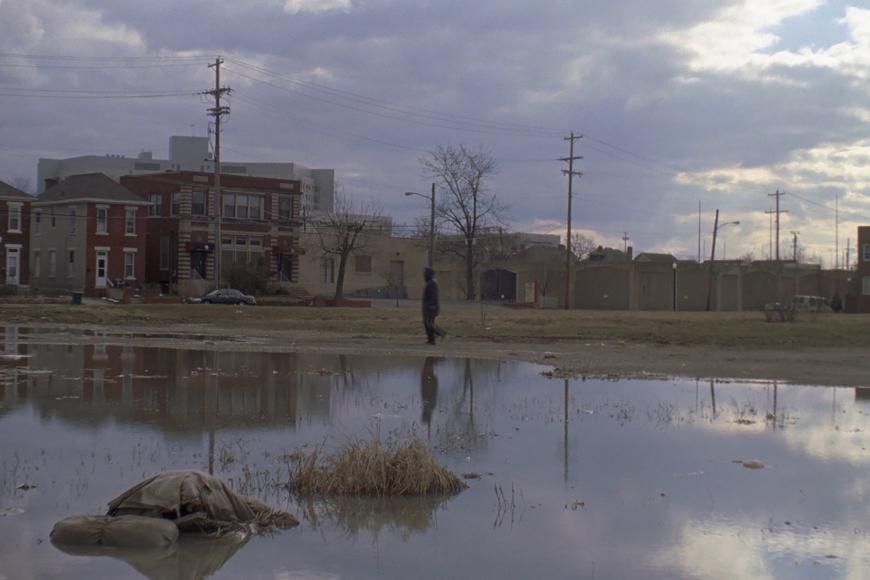
Rich in information, fiercely timely and as dense as it is accessible, Lee Anne Schmitt’s third feature is a biography of John Brown (1800–1859), albeit one that uses the life of the famed American abolitionist as a jumping off point to narrate myriad other stories of Black discrimination and resistance that chime with his legacy. As Schmitt criss-crosses the country visiting sites of protest and remembrance marked and unmarked and referencing Frederick Douglass, Sun Ra and Nat Turner, her own feelings are always present. For, as she states at the outset, “Purge This Land” was made for her son with partner Jeff Parker, whose enveloping soundtrack channels 1960s Black heritage in tying together the film’s thrillingly heterogenous elements.