Film Archive

Sections (Film Archive)

Retrospective 2023
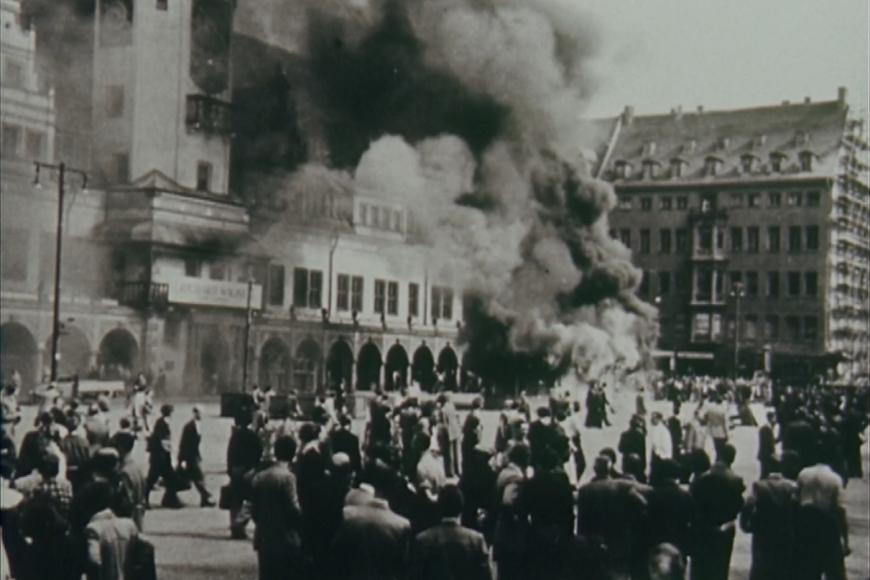
Filmstill Uprisings in the Soviet Sphere of Influence
Uprisings in the Soviet Sphere of Influence
Ralph Giordano, Hans-Ulrich Barth
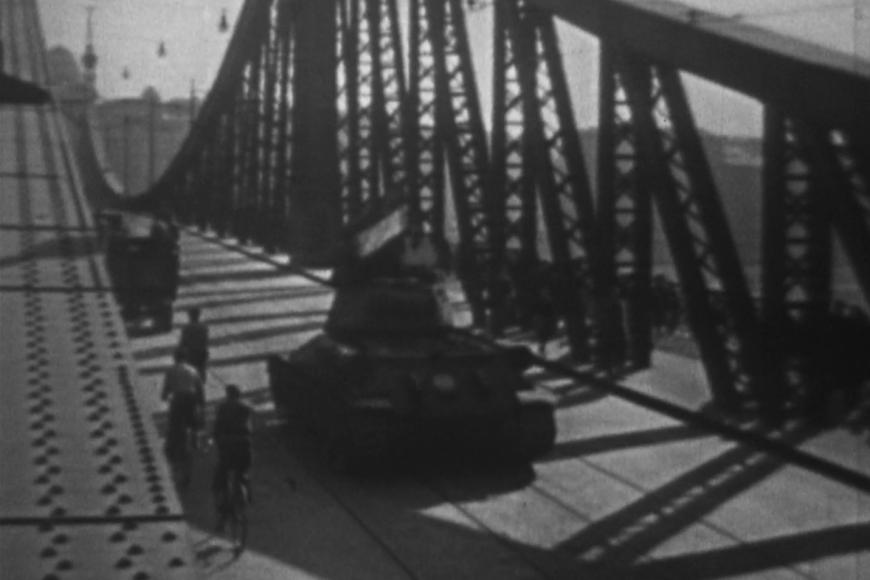
Communism as a history of crises: The authors examine the various uprisings in the Soviet sphere of influence and search for similarities and differences.
Filmstill Uprisings in the Soviet Sphere of Influence

Uprisings in the Soviet Sphere of Influence

Aufstände im sowjetischen Machtbereich
Ralph Giordano, Hans-Ulrich Barth
Retrospective 2023
Documentary Film
FRG
1961
24 minutes
German
Subtitles: 
None

The history of communism as the story of its crises: The two authors Ralph Giordano and Hans-Ulrich Barth take up various uprisings and protests to demonstrate the discrepancy between the claim to power and the reality in “socialist imperialism.” A more nuanced light is shed on individual uprisings, while at the same time feeding into stereotypical Cold War images of the enemy.

Katharina Franck, Andreas Kötzing

Credits DOK Leipzig Logo

Director
Ralph Giordano, Hans-Ulrich Barth
Producer
NDR Norddeutscher Rundfunk / German TV ARD Network
Retrospective 2021
Media Name: 102687fc-8c0a-405a-bfbc-eed0678dcd4f.jpg
Educational Attainment of West German Pupils in the 1950s
Jürgen Neven du Mont
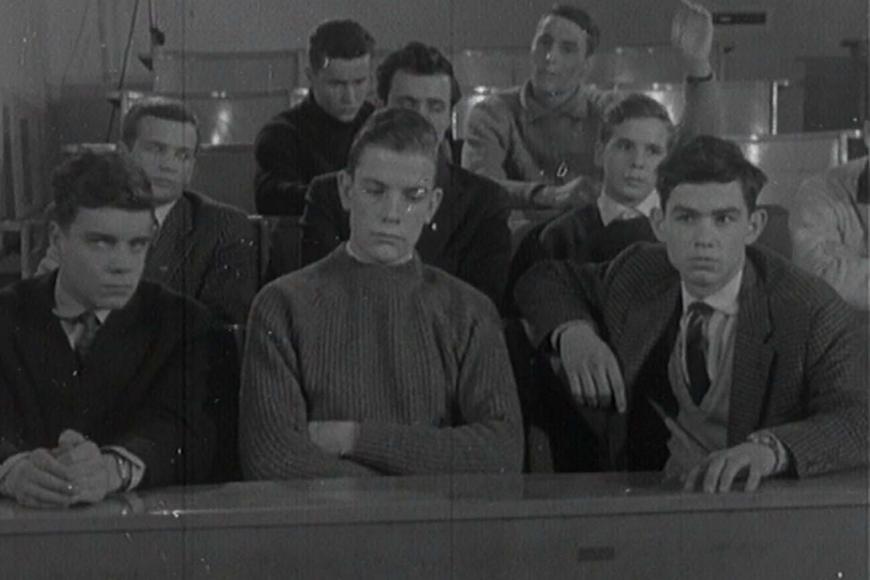
Hitler sold badges to come to power? And really six million murdered Jews? A knowledge test among FRG secondary school pupils where it’s actually the parents that fail.
Media Name: 102687fc-8c0a-405a-bfbc-eed0678dcd4f.jpg

Educational Attainment of West German Pupils in the 1950s

Bildungsstand westdeutscher Schüler in den 50er Jahren
Jürgen Neven du Mont
Retrospective 2021
Documentary Film
FRG
1959
44 minutes
German
Subtitles: 
None

On 29 April 1959, Hessian Broadcasting transmitted an alarming survey of the Federal German school system. The first of three parts of the report “Focus on Our Youth” investigates the question of what has stuck in the minds of higher form students about Hitler’s and Ulbricht’s Germanies. Hesse under Polish administration? Hitler sold badges to come to power? At least they are about right concerning the number of murdered Jews – that is, the third who could think of anything to say about this at all. One television critic rightly pointed out that this represented the sum total of all parental table talk. But were these parents watching television on 29 April 1959?

Sylvia Görke

Credits DOK Leipzig Logo

Director
Jürgen Neven du Mont
Cinematographer
Willy Sedler, Bernhard Weber, Günter Seuss
Editor
Hilde Grabow
Producer
HR Hessischer Rundfunk
Sound
Horst Eiteljörge
Retrospective 2023
Filmstill 17 June in Saarland
17 June in Saarland
Sven Trittelvitz
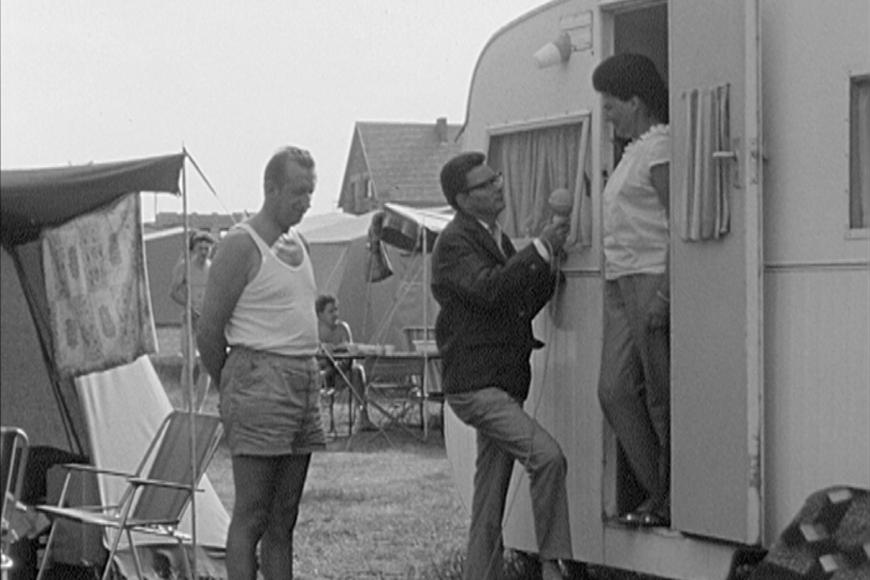
When exactly did the GDR uprising happen? And the building of the Wall? A television report about a “holiday” in the Saarland whose cause hardly anyone remembers.
Filmstill 17 June in Saarland

17 June in Saarland

Der 17. Juni im Saarland
Sven Trittelvitz
Retrospective 2023
Documentary Film
FRG
1964
9 minutes
German
Subtitles: 
None

One of many commemoration ceremonies, eleven years after the GDR uprising. The report combines a Saarland politician’s thoughtful speech with idyllic shots of a high-spirited population: at open air swimming pools, playing cards or on camping sites. “Do you know what we commemorate today?” the reporter asks. The answers are deeply irritating.

Katharina Franck, Andreas Kötzing

Credits DOK Leipzig Logo

Director
Sven Trittelvitz
Producer
Saarländischer Rundfunk
Retrospective 2021
Media Name: 4d723392-91a0-4cae-8a0c-32644664e2c6.jpg
The Jewish Lane
Peter Nestler
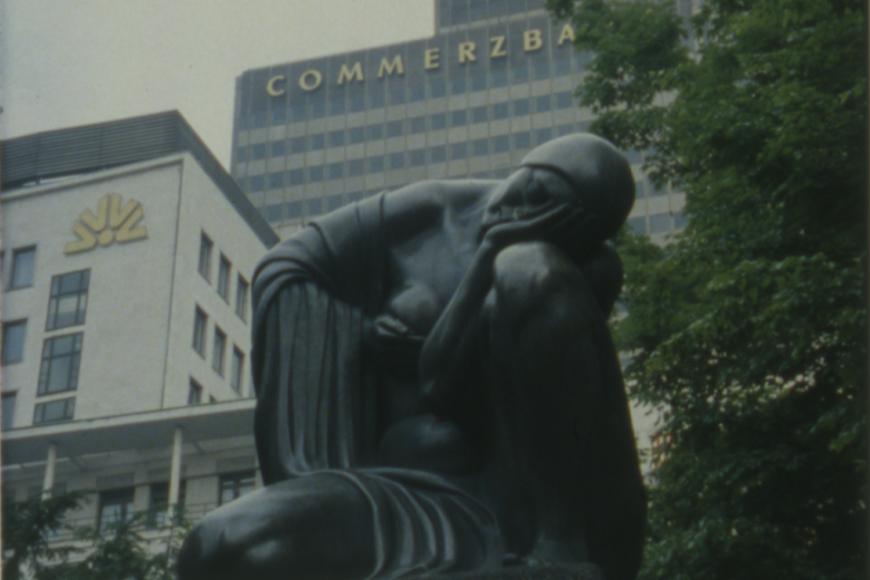
Remains of a medieval Jewish ghetto were discovered in Frankfurt am Main. Nationwide protests against “building over” them were the occasion of this preservation of the findings on film.
Media Name: 4d723392-91a0-4cae-8a0c-32644664e2c6.jpg

The Jewish Lane

Die Judengasse
Peter Nestler
Retrospective 2021
Documentary Film
FRG
1988
44 minutes
German
Subtitles: 
English

Archaeological evidence of medieval Jewish life had barely been discovered during excavation works in Frankfurt am Main when it was to be “built over” again. The civil protest in 1987 spread to the whole of the Federal Republic – and called Peter Nestler to the scene. His film undertakes what the Frankfurt authorities wanted to avoid: a thorough securing and contextualization of the findings. He not “only” places the discovered remains of the Jewish ghetto in the context of urban and German history, but also lays bare the contemporary Federal German insensitivity regarding cultural history and commemorative politics, displaying it as if in a museum cabinet.

Sylvia Görke

Credits DOK Leipzig Logo

Director
Peter Nestler
Script
Peter Nestler
Cinematographer
Rainer Komers
Editor
Peter Nestler
Producer
Südwestfunk (SWF)
Sound
Peter Nestler
Narrator
Peter Nestler
Retrospective 2023
Filmstill One Wednesday in June – 20 Years Ago: People’s Uprising, Workers’ Revolt or Secret Services Putsch?
One Wednesday in June – 20 Years Ago: People’s Uprising, Workers’ Revolt or Secret Services Putsch?
Lutz Lehmann
Workers’ revolt or popular uprising? Or an attempted Western coup after all? 20 years after 17 June 1953, a television report looks for answers. The interpretations remain open.
Filmstill One Wednesday in June – 20 Years Ago: People’s Uprising, Workers’ Revolt or Secret Services Putsch?

One Wednesday in June – 20 Years Ago: People’s Uprising, Workers’ Revolt or Secret Services Putsch?

Ein Mittwoch im Juni – Vor 20 Jahren: Volksaufstand, Arbeiterrevolte oder Agentenputsch?
Lutz Lehmann
Retrospective 2023
Documentary Film
FRG
1973
60 minutes
German
Subtitles: 
None

What happened in the GDR on 17 June 1953? Using a lot of original footage, Norddeutscher Rundfunk looks back on the events in a detailed report marking their 20th anniversary and shows different interpretations and explanations. Agent coup? Workers’ revolt? Popular uprising? The interpretations were controversial, even among contemporary witnesses and Western historians.

Katharina Franck, Andreas Kötzing

Credits DOK Leipzig Logo

Director
Lutz Lehmann
Cinematographer
Hans Jacob
Editor
Elke Düring
Producer
NDR Norddeutscher Rundfunk / German TV ARD Network
Sound
Jürgen Jannsen, Norbert Kinsky
Retrospective 2024
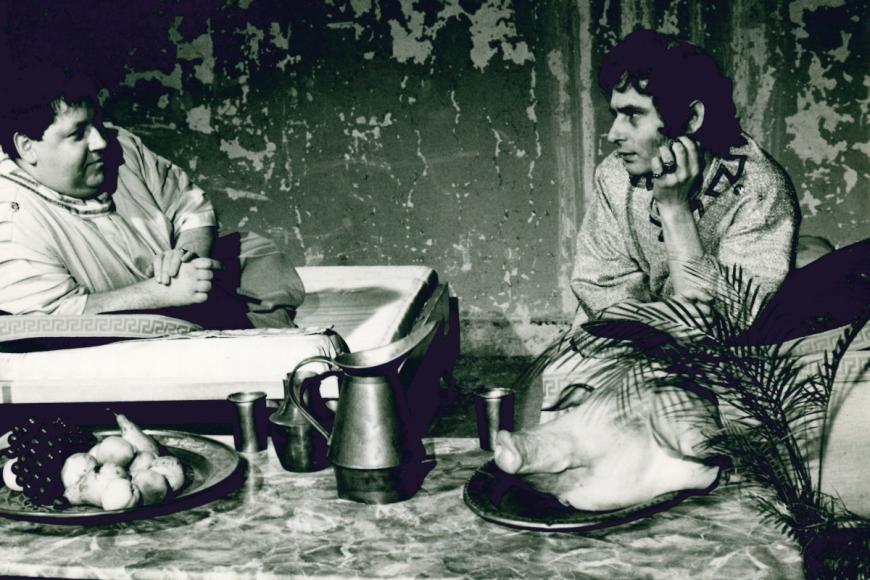
Filmstill Something Self Explanatory (15x)
Something Self Explanatory (15x)
Harun Farocki, Hartmut Bitomsky
An educational film about the Marxist vocabulary of commodity and labour, wages and labour power, exchange and use value - demonstrated with political stance and aesthetic actions.
Filmstill Something Self Explanatory (15x)

Something Self Explanatory (15x)

Eine Sache, die sich versteht (15x)
Harun Farocki, Hartmut Bitomsky
Retrospective 2024
Documentary Film
FRG
1971
64 minutes
German
Subtitles: 
English

This Marxist education offensive cast into actions and images is part of a bigger cycle of so-called educational films that, following Bertolt Brecht’s concept of the didactic experimental play, use lucid illustration to fill abstract terms with practical meaning. In fifteen learning unites, Harun Farocki and Hartmut Bitomsky address the basic concepts of Karl Marx’s main political work, “Capital”, discussing a section that, according to their own statements, they do not consider self explanatory. “The intention is to make a person who is walking think about walking so that he falls down,” as the two filmmakers noted about their project. It remains to be seen whether such a fall also makes the penny drop among the audience.

Sylvia Görke

Credits DOK Leipzig Logo

Director
Harun Farocki, Hartmut Bitomsky
Cinematographer
David Slama, Carlos Bustamante
Editor
Hasso Nagel
Producer
Larabel Film Harun Farocki
Sound
Johannes Beringer
Retrospective 2021
Media Name: db39208a-2c8d-428c-b4fc-78ce5c23410b.jpg
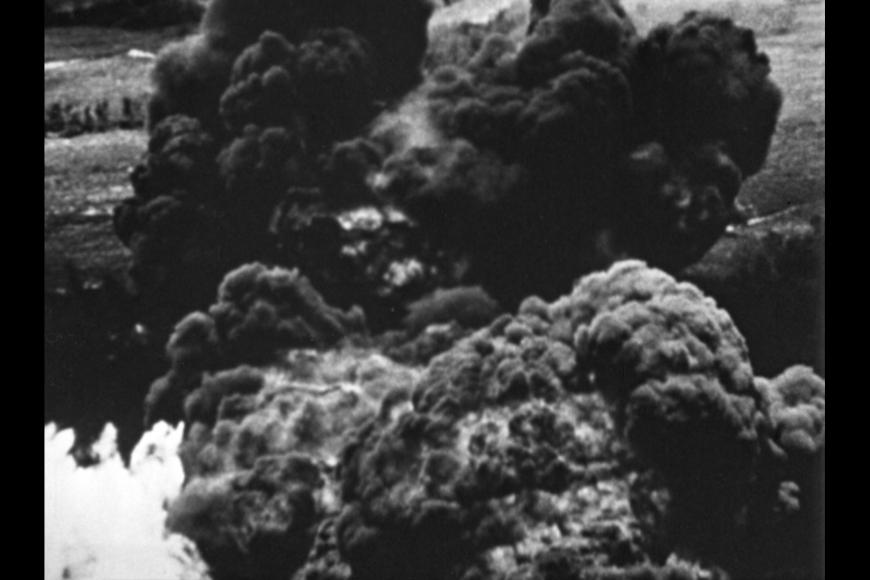
Introduction to Arnold Schoenberg’s Accompaniment to a Cinematographic Scene
Jean-Marie Straub
A film score to which no film was ever made – except this collage of words and images that deduces terrifying anti-Semitic continuities from letters and visual associations.
Media Name: db39208a-2c8d-428c-b4fc-78ce5c23410b.jpg

Introduction to Arnold Schoenberg’s Accompaniment to a Cinematographic Scene

Einleitung zu Arnold Schönbergs Begleitmusik zu einer Lichtspielscene
Jean-Marie Straub
Retrospective 2021
Documentary Film
FRG
1972
16 minutes
German
Subtitles: 
None

“Imminent danger, fear, catastrophe,“ the Austrian-Jewish composer Arnold Schönberg wrote on top of his film score in 1930, to which – except in this collage, swaying like a battered boxer between austere reading document, black film abysses and roaring tempests of images – no film was ever made. Schönberg’s letters articulate the forebodings of the disaster the National Socialists were to bring upon the Jews, describe anti-Semitism that was becoming systematic, marginalization and defamation. Inserted in between, as a look back and forward at historical continuities: bombers approaching Vietnam, the shot Paris Communards in coffins arranged like letter cases.

Sylvia Görke

Credits DOK Leipzig Logo

Director
Jean-Marie Straub
Script
Jean-Marie Straub
Cinematographer
Renato Berta, Horst Bever
Editor
Jean-Marie Straub, Danièle Huillet, Danièle Huillet
Producer
Jean-Marie Straub, Danièle Huillet
Sound
Jeti Grigioni, Harald Lill
Performer
Günter Peter Straschek, Peter Nestler, Danièle Huillet
Retrospective 2021
Media Name: 585feff5-8a77-4515-8500-07ad7524d827.jpg
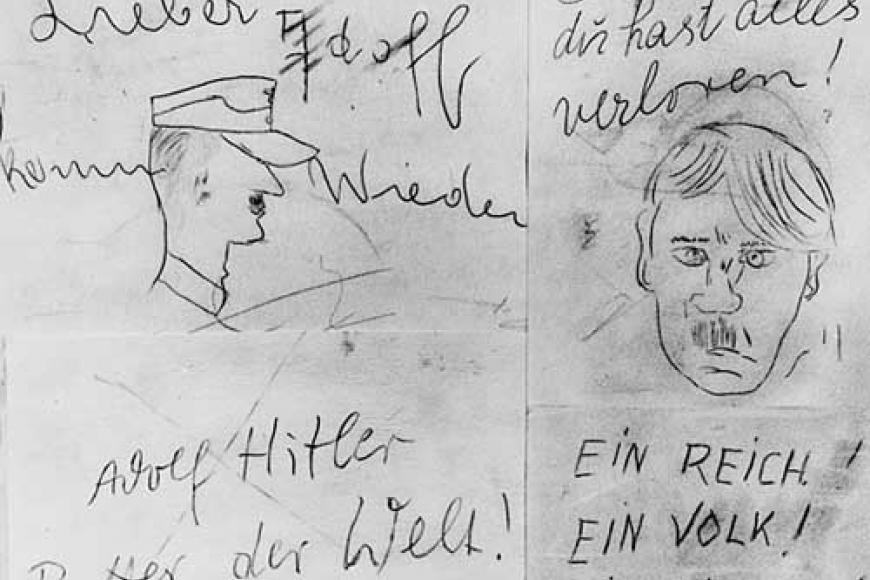
That Must Be a Piece of Hitler
Walter Krüttner
A belligerent documentary polemic about Führer tourism at Obersalzberg. The Federal German authorities have prohibited the iniquitous practice but are still cashing in big time.
Media Name: 585feff5-8a77-4515-8500-07ad7524d827.jpg

That Must Be a Piece of Hitler

Es muß ein Stück vom Hitler sein
Walter Krüttner
Retrospective 2021
Documentary Film
FRG
1963
11 minutes
German
Subtitles: 
None

Walter Krüttner is considered the only satirist among the signatories of the Oberhausen Manifesto, which was announced at the West German Short Film Festival in 1962. His film begins like those that the Oberhausen group wanted to put a stop to: with ländler music and a quote by regional poet Ganghofer. “Lord, the ones you love you let fall into this land.” Krüttner observes the tourist hustle and bustle at Obersalzberg: tour guides leading Führer travellers through the Nazi buildings. And Krüttner counts the profits West German authorities make by this. He himself profited by winning the “Silberne Lorbeer” (Silver Laurel) of Deutscher Fernsehfunk (German Television Broadcasting), awarded at the International Leipzig Documentary and Short Film Week 1963.

Sylvia Görke

Credits DOK Leipzig Logo

Director
Walter Krüttner
Script
Walter Krüttner
Cinematographer
Fritz Schwennicke
Producer
Cineropa-Filmproduktion
Score
Erich Ferstl
Retrospective 2024
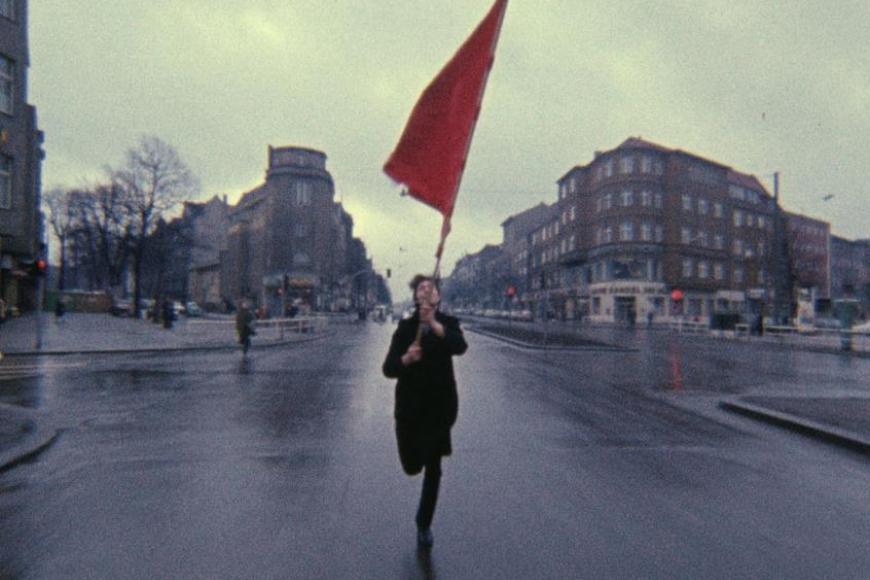
Filmstill Color Test. The Red Flag
Color Test. The Red Flag
Gerd Conradt
He carries a flag, and that flag is red: In 1968 Holger Meins takes part in this student flag run in West Berlin, in 1970 he joins the RAF and goes into hiding.
Filmstill Color Test. The Red Flag

Color Test. The Red Flag

Farbtest. Die Rote Fahne
Gerd Conradt
Retrospective 2024
Documentary Film
FRG
1968
13 minutes
without dialogue
Subtitles: 
None

An exercise on “colour” in Michael Ballhaus’s class at the DFFB in West Berlin went down in the history of cinema and subversion. In retrospect, this silent miniature became the harried document of a movement of departure that was to grow criminal powers. It was shot on 18 January 1968, five years after JFK’s statement of bloc affiliation, “Ich bin ein Berliner,” just before the murder of Benno Ohnesorg, a few months before the assassination attempt on Rudi Dutschke. Director-in-training Gerd Conradt and fourteen fellow students and friends organised a relay race to the Schöneberg town hall to raise the red flag there. The final leg was run by cinematography student Holger Meins, who was to become a terrorist with the Red Army Faction and starved himself to death in Wittlich prison in 1974.

Sylvia Görke

Credits DOK Leipzig Logo

Director
Gerd Conradt
Cinematographer
Charles Völsen
Producer
DFFB Deutsche Film- und Fernsehakademie Berlin
Retrospective 2024
Filmstill For the Palestinians
For the Palestinians
Edna Politi
1974, Palestinian reality in Israel and the West Bank, economic and political oppression – documented by an Israeli who wants to make a convincing appeal: the urgent need for dialogue.
Filmstill For the Palestinians

For the Palestinians

Für die Palästinenser
Edna Politi
Retrospective 2024
Documentary Film
FRG
1973
85 minutes
Arabic,
German,
Hebrew
Subtitles: 
German (Overvoice), German

Words of the poet Mahmoud Darwish open this film: “I do not hate people, I do not assault anyone, but if I get hungry, I eat the flesh of my usurper. Beware, beware of my hunger, and of my anger.” This is followed by the title, then the subtitle: “An Israeli reports.” Her name is Edna Politi; she was born in Lebanon, emigrated to Israel and was accepted into the German Film and Television Academy in West Berlin in 1971. Politi’s student film is explanatory: Where does the Palestinian rage, the desperation come from? Soberly and carefully, she compiles everyday observations, facts and figures to draw attention to the mechanisms of the economic and political disenfranchisement of the Palestinian people. Her aim is to convince, not persuade.

Sylvia Görke

Credits DOK Leipzig Logo

Director
Edna Politi
Script
Edna Politi
Cinematographer
Edna Politi
Editor
Edna Politi
Producer
DFFB Deutsche Film- und Fernsehakademie Berlin
Sound
Gad Freudenthal
Score
Mohammed Askari
Retrospective 2021
Media Name: ef5c7bbb-f481-4dec-b901-ef2bdaeec257.jpg
Paradise and Melting Pot
Herbert Viktor
Clean, neat, busy, enterprising – the Federal German view observes in Israel similarities to the FRG of the economic miracle years. A statement of sympathy.
Media Name: ef5c7bbb-f481-4dec-b901-ef2bdaeec257.jpg

Paradise and Melting Pot

Paradies und Feuerofen
Herbert Viktor
Retrospective 2021
Documentary Film
FRG
1958
78 minutes
German
Subtitles: 
None

Designed as a travelogue about Israel, Herbert Viktor emphasizes similarities to the FRG of the economic miracle years in his film: clean, neat, busy, enterprising. Haifa, for example, is described as having evolved from a “meeting place for Arabic caravans and robber bands” to the most modern port of the Levant. Viktor also pays tribute to the welcoming culture for the persecuted of the world, but omits to elucidate on the fates that lie behind them. The film, spiced up by staged intermezzi to become a statement of sympathy, was released in Federal German cinemas in 1959 under the patronage of Willy Brandt. It was not allowed on Israeli screens before 1962, when the death sentence against Adolf Eichmann had been upheld by the court of appeal.

Sylvia Görke

Credits DOK Leipzig Logo

Director
Herbert Viktor
Script
Herbert Viktor
Cinematographer
Heinz Hölscher
Editor
Ludolf Grisebach
Producer
Helmut Wisser
Sound
Reginald Beuthner
Score
Bernhard Eichhorn
Narrator
Herbert Viktor
Retrospective 2023
Filmstill Soviet Troops in Prague and Budapest (Panorama, 29.7.1968)
Soviet Troops in Prague and Budapest (Panorama, 29.7.1968)
anonymous
A curious look at the socialist reform experiment in Prague, with sceptical undertones: Will everything end like it did in Hungary in 1956? Soviet tanks are already being deployed along the border of the ČSSR.
Filmstill Soviet Troops in Prague and Budapest (Panorama, 29.7.1968)

Soviet Troops in Prague and Budapest (Panorama, 29.7.1968)

Sowjetische Truppen in Prag und Budapest (Panorama, 29.7.1968)
anonymous
Retrospective 2023
Documentary Film
FRG
1968
15 minutes
German
Subtitles: 
None

Prague in July 1968. The West German television magazine Panorama reports on the situation in the ČSSR, drawing parallels to the developments in Budapest in 1956. Curious and sceptical at the same time, the feature explores the possibilities of an independent reform movement, but also soberly concludes that the Soviet Union will not tolerate this. The tanks are already waiting at the border.

Katharina Franck, Andreas Kötzing

Credits DOK Leipzig Logo

Director
anonymous
Producer
ARD
Retrospective 2023
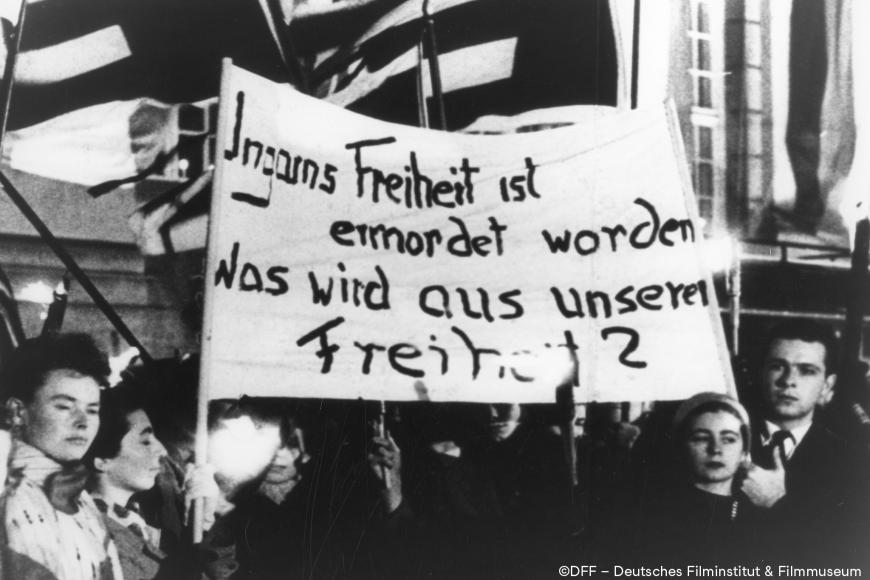
Filmstill Hungary in Flames
Hungary in Flames
Ferdinand Khittl, Stefan Erdélyi
The suppression of the 1956 Hungarian Uprising from the point of view of those affected. Dramatic material and an urgent appeal which the filmmakers could only complete abroad.
Filmstill Hungary in Flames

Hungary in Flames

Ungarn in Flammen
Ferdinand Khittl, Stefan Erdélyi
Retrospective 2023
Documentary Film
FRG
1957
83 minutes
German
Subtitles: 
None

A look back on Hungarian history ends in the bloody present of October 1956: The suppression of the uprising in Budapest, filmed from the point of view of those affected. The material was smuggled abroad and assembled there by refugee filmmakers. A direct contemporary document which at the end reflects the powerlessness of the West: Nobody came to help.

Katharina Franck, Andreas Kötzing

Credits DOK Leipzig Logo

Director
Ferdinand Khittl, Stefan Erdélyi
Script
Viktor de Sztankovics, Rudolf Stölting, Stefan Erdélyi
Cinematographer
Ferencz Vass, László Kovács, Vilmos Zsigmond
Producer
Karpat-Film
Score
Alexander Barta
Retrospective 2024
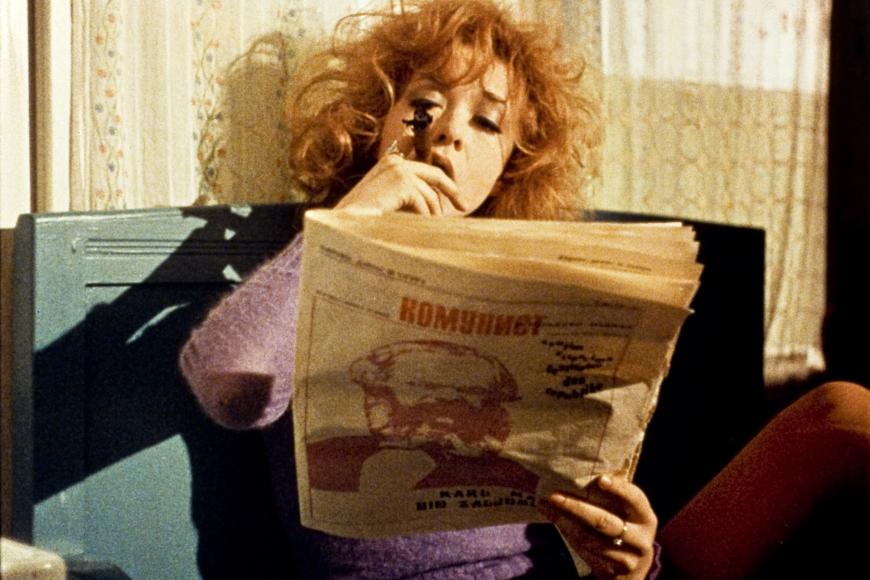
Filmstill W.R. – Mysteries of the Organism
W.R. – Mysteries of the Organism
Dušan Makavejev
Does the sexual revolution complete the communist revolution? Some believe that Makavejev himself invented subversion. This footage, fiction and Wilhelm Reich film seems to confirm this.
Filmstill W.R. – Mysteries of the Organism

W.R. – Mysteries of the Organism

W.R. – Misterije organizma
Dušan Makavejev
Retrospective 2024
Documentary Film
Yugoslavia,
FRG
1971
85 minutes
Serbian,
English
Subtitles: 
English

A Soviet figure skater, a female Yugoslav sex partisan, a Vietnam veteran, Father Stalin and the Austro-American orgasm researcher Wilhelm Reich rumble in the belly of this film. Some people believe that Dušan Makavejev invented subversion in the first place. He exploited the gaps of freedom in the Yugoslav brand of socialism and developed an exceptional cinematic model which irritated both the dos and don’ts of the medium as well as those of political unambiguousness. The Western world was amused by this collage of feature, documentary and sexual education that transgressed all boundaries of ideology and modesty, but the tolerance of the Yugoslav censorship authorities was overstrained – at least temporarily. The 1971 screening ban was lifted in 1986. In 1988, Makavejev returned to Yugoslavia from the West.

Sylvia Görke

Credits DOK Leipzig Logo

Director
Dušan Makavejev
Script
Dušan Makavejev
Cinematographer
Predrag Popović, Aleksandar Petković
Editor
Ivanka Vukasović
Producer
Neoplanta film, Telepool
Score
Bojana Makavejev