Film Archive

Sections (Film Archive)

Camera Lucida 2024
Filmstill Among the Palms the Bomb, Or: Looking for Reflections in the Toxic Field of Plenty
Among the Palms the Bomb, Or: Looking for Reflections in the Toxic Field of Plenty
Lukas Marxt, Vanja Smiljanić
The Salton Sea, a former nuclear testing ground on the brink of ecological collapse. The few people who still live here are campaigning to protect the abandoned area.

Filmstill Among the Palms the Bomb, Or: Looking for Reflections in the Toxic Field of Plenty

Among the Palms the Bomb, Or: Looking for Reflections in the Toxic Field of Plenty

Among the Palms the Bomb, Or: Looking for Reflections in the Toxic Field of Plenty
Lukas Marxt, Vanja Smiljanić
Camera Lucida 2024
Documentary Film
Austria,
Germany
2024
86 minutes
English
Subtitles: 
English

Where the sandy beach of the Salton Sea, the biggest lake in California, begins to crunch harder, it does not even consist of sand any more: Millions of dead fish, plants and insects pile up on the shore to form a highly toxic substance. This is how Derek explains it, a member of a Cahuilla tribe that managed to escape an attempted genocide in the 19th century to the Salton Sea and now sees itself as a protective force for the once flourishing but increasingly deserted area and its outcasts.
Derek is one of the many locals whose trails Lukas Marxt and Vanja Smiljanić calmly follow, gliding with them through the desolate landscapes. In the process, they pick up slivers of nuclear history time and again: During the Second World War, the area was a test site for the bombs that were dropped on Hiroshima and Nagasaki. The experiments continued through the Cold War; the armed forces are still training here. The film finds its starting point and end two states away: The nuclear devices were sent on their way from Wendover, Utah. The local Airfield Museum pays tribute to their development. Once, the camera performs an almost weightless dance around a model of the Hiroshima bomb “Little Boy” on display there, to the sounds of the indestructible World War classic “We’ll Meet Again.”

Felix Mende

Credits DOK Leipzig Logo

Director
Lukas Marxt, Vanja Smiljanić
Cinematographer
Lukas Marxt
Editor
Vanja Smiljanić, Lukas Marxt
Producer
Lukas Marxt
Co-Producer
Sonic Acts Biennial
Sound Design
Marcus Zilz
Score
Jung An Tagen
World Sales
Gerald Weber
Camera Lucida 2025
Filmstill Bulle Ogier, portrait d’une étoile cachée
Bulle Ogier, Portrait of a Hidden Star
Eugénie Grandval
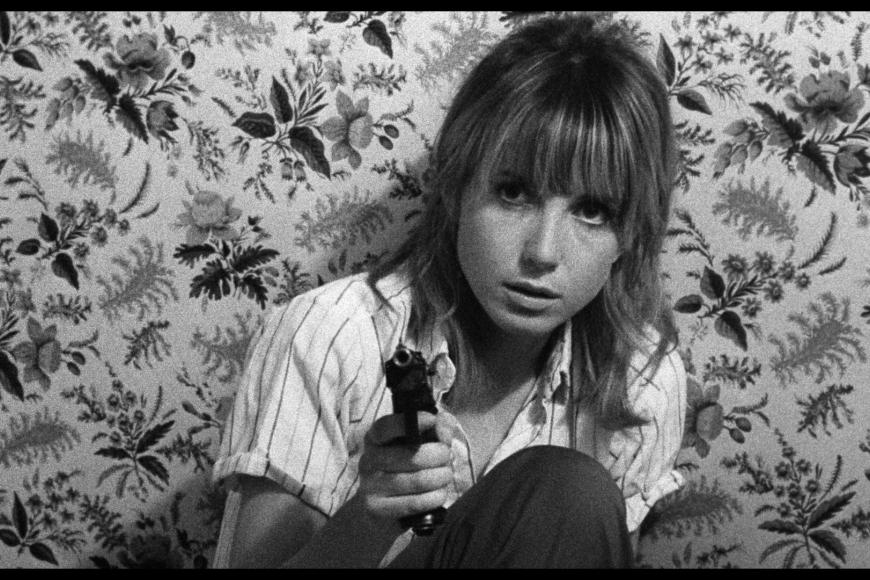
The life and work of French actor and icon Bulle Ogier, narrated by former contemporaries and in excellent film excerpts that leave you wanting more.
Filmstill Bulle Ogier, portrait d’une étoile cachée

Bulle Ogier, Portrait of a Hidden Star

Bulle Ogier, portrait d’une étoile cachée
Eugénie Grandval
Camera Lucida 2025
Documentary Film
France
2024
71 minutes
French
Subtitles: 
English

French philosopher Gilles Deleuze recognised „a new type of actor” in the films of the Nouvelle Vague: professional non-professionals who do not just recite dialogue but act as a medium for our perception. Two of them were uppermost in his mind: Jean-Pierre Léaud and her, Bulle Ogier. The French performer has appeared in nearly 100 films over a period of more than 50 years. However, the masterpieces she was involved in were often not appreciated as such by her contemporaries but, as critic Philippe Azoury puts it, regarded as child’s play.
This is what makes this cinephile biogram, which, apart from a few conversations, consists mainly of archive material and a wealth of intelligently selected and edited film clips, so special: Eugénie Grandval’s portrait recalls a time when cinema was bursting its bonds and anything seemed possible. Playing parts that were never repeated and yet followed an astonishingly consistent arc, Bulle Ogier not only became an icon of that period but something of a co-author of the directors she worked with, whether they were called Barbet Schroeder, Rainer Werner Fassbinder, Marguerite Duras or Jacques Rivette. Rarely has a film about film sparked such an appetite for rediscovery.

Christoph Terhechte

Credits DOK Leipzig Logo

Director
Eugénie Grandval
Cinematographer
Pierre-Hubert Martin
Editor
Grégoire Pontécaille
Producer
Sophie Faudel
Co-Producer
Régine Vial, Sophie de Hijes, Thomas Arbez
Sound
Benjamin Haim
Sound Design
Baptiste Amigorena
Camera Lucida 2024
Filmstill Collective Monologue
Collective Monologue
Jessica Sarah Rinland
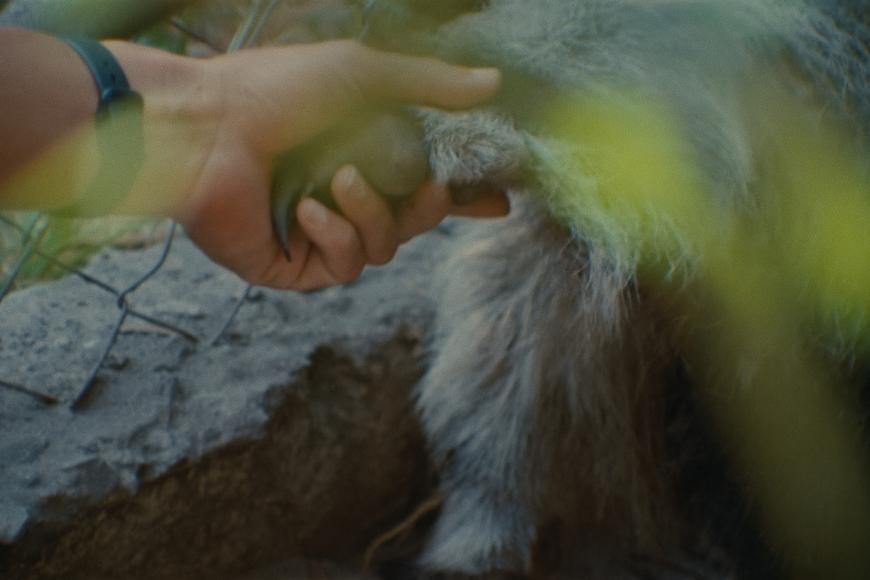
By examining different zoological facilities across Argentina, this experimental documentary crafts an intricate portrait of all the many facets that make up a zoo.
Filmstill Collective Monologue

Collective Monologue

Monólogo colectivo
Jessica Sarah Rinland
Camera Lucida 2024
Documentary Film
Argentina,
UK
2024
104 minutes
Spanish
Subtitles: 
English

Jessica Sarah Rinland visits zoological gardens across Argentina to craft a portrait not of a single institution, but rather its underlying concept: an observational, yet still ever-probing exploration of zoo itself. The different types of image and their textures she collects to this end—the silky 16mm that comprises the bulk of the film, the crisp surveillance footage, the grainy black-and-white cameras that capture creatures roving “undisturbed”, the yellowing photographs that pin down Indigenous people and animals alike – perfectly correspond to the varying perspectives she gathers on her subject: a place of imprisonment and colonial legacy, but now also one of everyday routine, conservation and even tenderness.
For all the ambivalence of its central theme, this is, like all of Rinland’s work, a film of extraordinary tactility: Human hands that clean, catalogue and caress, leathery trunks and furry fingers that reach between iron bars in search of comfort, plumage glistening in the sun. Jean Piaget coined the term collective monologue to refer to the developmental phase in which the child believes nature is created for them alone and can be controlled as such. It is so strangely moving to see control give way to care.

James Lattimer

Credits DOK Leipzig Logo

Director
Jessica Sarah Rinland
Script
Jessica Sarah Rinland
Cinematographer
Jessica Sarah Rinland
Editor
Jessica Sarah Rinland
Producer
Jessica Sarah Rinland, Melanie Schapiro
Sound
Philippe Ciompi
Camera Lucida 2025
Filmstill Conbody vs Everybody
Conbody vs Everybody
Debra Granik
Three quarters of released convicts in the United States end back up in prison within five years. Ex-drug dealer Coss is determined to beat the statistics, against all prejudices and setbacks.
Filmstill Conbody vs Everybody

Conbody vs Everybody

Conbody vs Everybody
Debra Granik
Camera Lucida 2025
Documentary Film
USA
2025
332 minutes
English
Subtitles: 
English

More than three quarters of the 650,000 inmates released from prison in the United States every year end up back behind bars within five years. Former drug dealer Coss wants to beat the statistics. After a long prison sentence, he returns to his family on New York’s Lower East Side in 2014, determined to build a legal existence for himself. Together with other former inmates, he opens a gym in his old neighbourhood which is rapidly being gentrified. If a guy like him can master this extreme challenge, can other ex-convicts do the same?
Filmmaker Debra Granik observed Coss’s efforts over a period of eight years. Through her camera, we experience frictions and obstacles, setbacks and successes, and learn what enormous stress it is to succeed against all odds in a racist environment that knows no mercy. Like a Bildungsroman – Granik explicitly refers to the social-realist literature of Charles Dickens –, the film is divided into chapters. The long form enables her to follow several narrative strands and focus on a variety of protagonists. This generates an increasing pull that soon makes us forget the time, lament every failure, and cheer every small victory.

Christoph Terhechte

Credits DOK Leipzig Logo

Director
Debra Granik
Cinematographer
Eric Philips-Horst, Kefentse Johnson, Sean Hanely
Editor
Victoria Stewart
Producer
Anne Rosellini, Joslyn Barnes
Camera Lucida 2022
Filmstill Danube
Danube
Agustina Pérez Rial
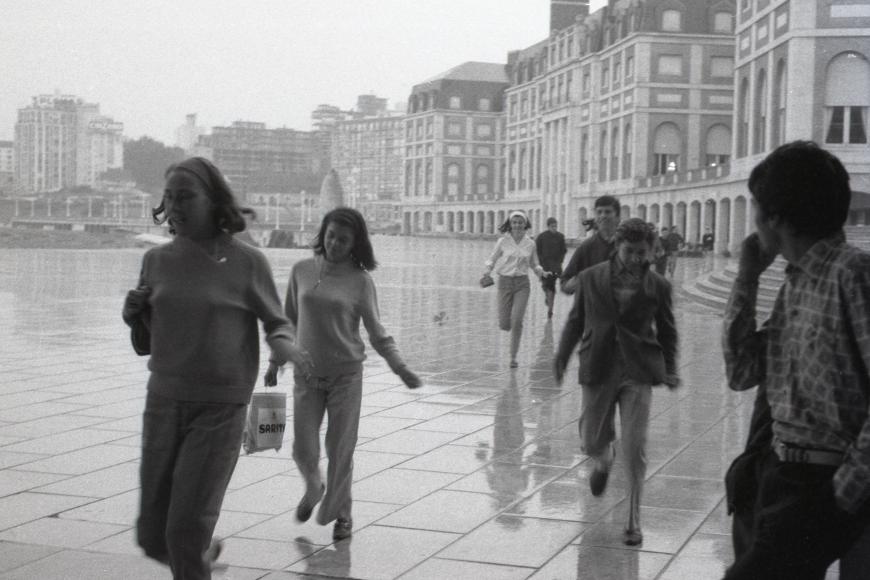
This brilliantly executed montage of historical footage and personal assumptions condenses into a possible history of events at the 9th Mar del Plata International Film Festival in 1968.
Filmstill Danube

Danube

Danubio
Agustina Pérez Rial
Camera Lucida 2022
Documentary Film
Argentina
2021
62 minutes
Spanish,
English,
Russian
Subtitles: 
English

Argentine director Agustina Pérez Rial’s debut feature-length film about the ninth edition of the International Film Festival in her native city of Mar del Plata from 1968 seems to find an uncommonly balanced solution to the primal dilemma of documentary storytelling. In an impressively brilliant montage of archive material, a story is constructed which, according to the director herself, is not necessarily true, but realistic.

Historical black and white photos of captivating beauty, film footage from various sources and documents from the now open archives of the surveillance authorities of the time are counteracted by a supposed witness report – de facto a female voice from offscreen. Pérez Rial is in subtle and intelligent control of her cinematic tools, pulling out all the stops: documentary and fiction, historical and contemporary, aesthetic, trivia and anecdotes. On the one hand, the meticulously researched facts unearth a forgotten microfacet of the Cold War, complete with militarisation, persecution and paranoia. On the other hand, they show a film festival as a node of ideologies and describe it as a highly politicised place. This opens unexpected spaces of reflection for the role assigned to such a cultural event – historical or current.
Borjana Gaković

Credits DOK Leipzig Logo

Director
Agustina Pérez Rial
Script
Paulina Bettendorff
Cinematographer
Pupeto Mastropasqua
Editor
Natalia Labaké
Producer
Agustina Pérez Rial
Co-Producer
Fiørd estudio, En otro orden de cosas
Sound
Manuel Embalse
Camera Lucida 2023
Filmstill Feet in Water, Head on Fire
Feet in Water, Head on Fire
Terra Long
In southern California, date palms from the Middle East grow, tales from One Thousand and One Nights are told and a volcanic eruption is expected. A document of enchanting simultaneity.
Filmstill Feet in Water, Head on Fire

Feet in Water, Head on Fire

Feet in Water, Head on Fire
Terra Long
Camera Lucida 2023
Documentary Film
USA,
Canada
2023
90 minutes
Spanish,
English
Subtitles: 
English

Not a single cloud ever seems to drift across this sky, the sun never ceases to send its powerful rays down. Here, in southern California, where the San Andreas Fault has created an unmistakable topography and invisible water currents run under the barren soil, date palms thrive best: feet in water, head on fire. Terra Long has looked around, traced the history of the plants which originally came to North America from the Middle East, and visited the parades and festivities dedicated to the sugary fruit. Layer by layer, she constructs her very own perspective on the landscape and the people, translates her haptic impressions into magnificent 16mm shots and designs a complex soundtrack.

Long manages to join the past and present and produce a concise, quasi sensual extract. The laborious manual pollination of the date palms plays a role in it, as do the collapsed ecosystem of the Salton Sea, archived dresses of Arabian Nights beauty queens and interviews that testify only to what is now historical; as do elderly white couples floating in their pools and walking across the lawns of golf courses. “Feet in Water, Head on Fire” is a document of simultaneity that captivates from the first minute to the last.

Carolin Weidner

Credits DOK Leipzig Logo

Director
Terra Long
Cinematographer
Terra Long
Editor
Kaija Siirala, Terra Long
Producer
Terra Long, Mireya Martinez, Sharlene Bamboat
Sound Design
Richy Carey
Camera Lucida 2022
Filmstill Foragers
Foragers
Jumana Manna
The battle of the herbs: Collecting edible plants is a political issue in the Israeli-Palestinian conflict, with economical, ecological and cultural implications.
Filmstill Foragers

Foragers

Al-yad al-khadra
Jumana Manna
Camera Lucida 2022
Documentary Film
2022
63 minutes
Arabic,
Hebrew
Subtitles: 
English

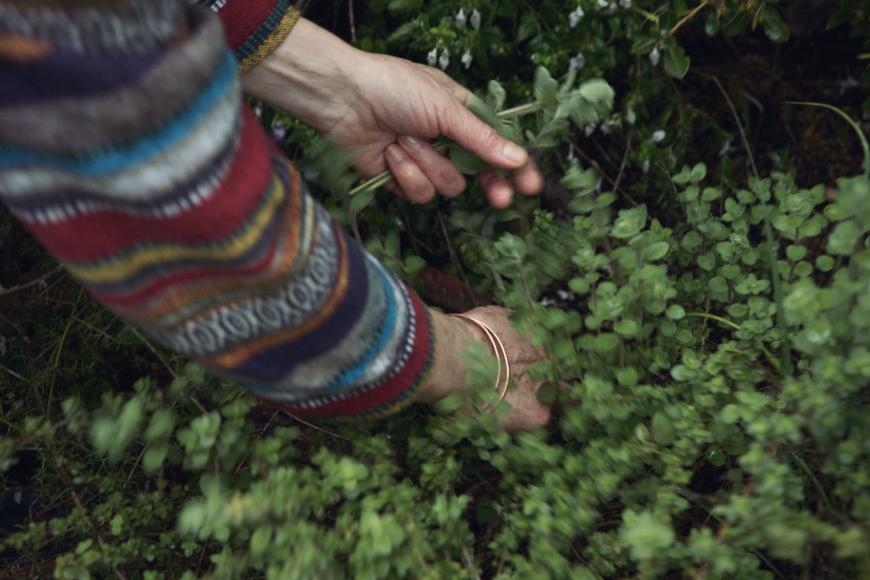
The herb dispute, in this case about ’Akkoub (gundelia) and Za’atar (wild thyme) is one of the more bizarre aspects of the Middle East conflict. These plants are much sought-after ingredients of Palestinian cuisine and have been collected for generations; for reasons of nature conservation, however, this is forbidden in the West Bank. Israeli park rangers thus find themselves in hot pursuit of their collectors for a fistful of greens. Jumana Manna humorously presents the poaching as civil disobedience.

The Berlin-based Palestinian artist combines documentary and scripted material with pop references. Once, when archival footage illustrates the hype surrounding the illegal herbs, we hear Jefferson Airplane’s “White Rabbit” and Morricone’s harmonica melody from “For a Few Dollars More”. The ban also has an economic side, since Israeli companies are selling Za’atar as a spice mix. Drone and panoramic shots suggest the absurd manhunt for elderly people picking for their own needs. One of them says: “I’ll also be caught in 2050 with my children and grandchildren.” Manna wrote the court hearings based on real cases with lawyer Rabea Eghbarieh. Not mentioned in the film is the political success the attorney of the Adalah NGO contributed to in 2019: According to the new directive of the Ministry of the Environment five kilogrammes of the plants may be picked.
Jan-Philipp Kohlmann

Credits DOK Leipzig Logo

Director
Jumana Manna
Script
Jumana Manna, Rabea Eghbarieh
Cinematographer
Marte Vold, Ashraf Dowani, Yaniv Linton
Editor
Katrin Ebersohn, Jumana Manna
Producer
Jumana Manna
Co-Producer
Eyal Vexler
Sound
Montaser Abu 'Alul
Score
Rashad Becker
Nominated for: Leipziger Ring
Camera Lucida 2024
Filmstill Just Above the Surface of the Earth
Just Above the Surface of the Earth
Marianna Milhorat
Conservationist on the trail of the sixth great mass extinction. An experimental portrait that tells of frogs, starfish and bats – and ultimately of us humans.
Filmstill Just Above the Surface of the Earth

Just Above the Surface of the Earth

Just Above the Surface of the Earth
Marianna Milhorat
Camera Lucida 2024
Documentary Film
Canada,
USA
2024
69 minutes
English
Subtitles: 
English

Highly focused groups of humans move through nature. It is night and they are listening. Or it is midday and they are counting. Sometimes they carry antennas on their backs and roam meadows at the edge of the forest. They are the witnesses of the so-called sixth extinction, the people who document the disappearance of biodiversity in the Anthropocene. Marianna Milhorat approaches them with patience, spending a long time with women who discuss the intensity of the croaking of frogs, while the roar of the streets can be heard in the background. Others report on the “sea star wasting disease”, a mysterious illness that turns starfish into a whitish mush.
“Just Above the Surface of the Earth” leaves little room for hope, but at the same time puts its faith in the indefatigable individuals who have at least decided not to close their eyes. It is to them that Milhorat dedicates this experimental portrait, sophisticated on all cinematic levels. For it is not only bats that flutter through the film, but also thoughts: by Cormac McCarthy, William Golding, Martin Heidegger, or about the mythical river of the dead, Styx. The score, composed by Brian Kirkbride, translates the various microcosms into immersive sound art, giving us access to a world that we often inhabit as if blind and deaf.

Carolin Weidner

Credits DOK Leipzig Logo

Director
Marianna Milhorat
Cinematographer
Marianna Milhorat
Editor
Marianna Milhorat
Producer
Marianna Milhorat
Sound Design
Marianna Milhorat
Score
Brian Kirkbride
Camera Lucida 2024
Filmstill Lapilli
Lapilli
Paula Ďurinová
After the death of her grandparents, the director finds an expression for her grief in surreal rock and landscape formations. An associative, free-floating tour of inspection.
Filmstill Lapilli

Lapilli

Lapilli
Paula Ďurinová
Camera Lucida 2024
Documentary Film
Slovakia,
Germany
2024
65 minutes
Slovak
Subtitles: 
English

Surreal formations, stalactites, rocks moulded by water and poisonous bubbling. The images that turn into an exploration of her own soul for Paula Ďurinová seem like a dream landscape. Grief plays a key role – Ďurinová’s grandparents both died during the Covid pandemic. She looks for them between the gases and fumes, dives through a body of water that has ceased to exist but in whose cool freshness her grandfather once bathed his feet and across which she used to swim with her grandmother.
“Lapilli” works in an associative and abstract way. At the same time, the minerals recovered by Ďurinová have something very concrete about them: compressed, buckled and broken, sharp-edged, corroded or gently polished. At one point, the director compares herself to a stone detached from its rock, questioning and without orientation, drifting around: “I don’t feel the ground anymore.” “Lapilli” leaves no doubt that feelings of pain and helplessness can harbour greater strength, but also a very special poetry and beauty. The interplay with an organic experimental soundscape opens up an intimate, almost universal experience.

Carolin Weidner

Credits DOK Leipzig Logo

Director
Paula Ďurinová
Script
Paula Ďurinová, Dane Komljen, Tamara Antonijević
Cinematographer
Paula Ďurinová
Editor
Paula Ďurinová, Deniz Şimşek
Producer
Matej Sotník, Viera Čákanyová
Co-Producer
Paula Ďurinová
Sound
Paula Ďurinová
Sound Design
Agnese Menguzzato, Paula Ďurinová
Score
Petra Hermanova
Nominated for: MDR Film Prize
Camera Lucida 2025
Filmstill Little, Big, and Far
Little, Big, and Far
Jem Cohen
Academic work and melancholy: Three scientists converse on their respective specialities, physics and astronomy, but also the uncertain future, climate change, intimacy and solitude.
Filmstill Little, Big, and Far

Little, Big, and Far

Little, Big, and Far
Jem Cohen
Camera Lucida 2025
Documentary Film
Austria,
USA
2025
122 minutes
German,
English
Subtitles: 
German, English

This new feature by American filmmaking legend Jem Cohen is like a strange cousin to his classic “Museum Hours,” another essay film given structure by fiction that swaps art for science and one time-honoured gallery in Vienna for a range of different institutions. Karl is an ageing Austrian astronomer and museum consultant. His wife Eleanor is a physicist based in the US, just like his young friend and colleague Sarah, a specialist in citizen science who is cautiously starting a new relationship. The three of them converse and hold forth on their respective specialities to mesmerisingly informative effect, but also keep returning to and interrogating the feelings that intertwine with their disciplines: politics and climate change, the uncertain future, solitude and intimacy – academic work as a pursuit for the melancholy.
Cohen’s camerawork shows them in frame, but also accompanies their voice-overs with his typical blissful digressions, wandering through museum corridors and exhibition spaces, fixing his gaze on heavenly bodies and scientific instruments, capturing city streets, oceans and landscapes, exploring and collecting with a curiosity equally studious and felt: tiny fragments, massive discoveries, stars at an infinite remove. Grasping the hugeness of the world might seem impossible, but it’s just about disentangling all the perspective: the big, the little and the far.

James Lattimer

Credits DOK Leipzig Logo

Director
Jem Cohen
Script
Jem Cohen
Cinematographer
Jem Cohen
Editor
Jem Cohen
Producer
Paolo Calamita, Jem Cohen
Sound
Jem Cohen, Leslie Shatz
Camera Lucida 2022
Filmstill Mamani in El Alto
Mamani in El Alto
Heinz Emigholz
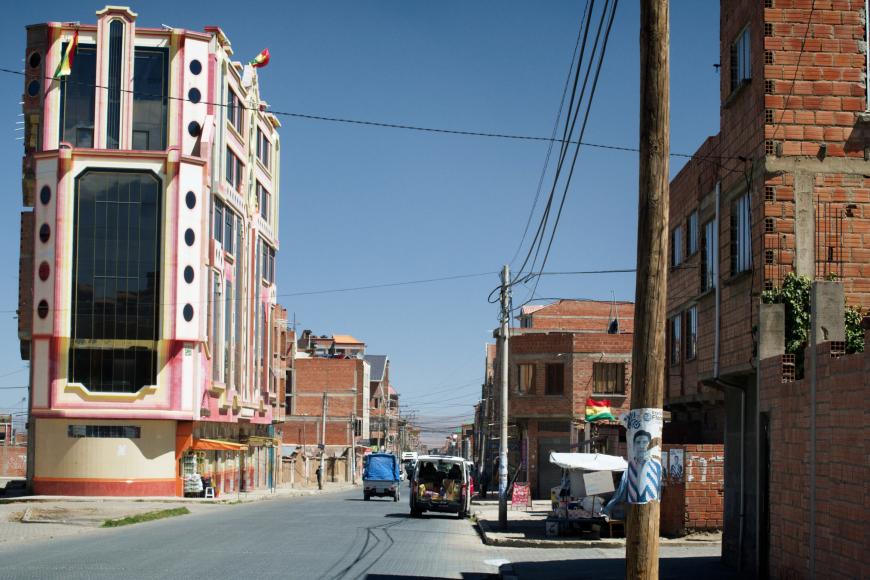
The Neo-Andean architecture of Freddy Mamani Sylvestre, influenced by indigenous culture, adorns the Bolivian city of El Alto. A psychoactive inspection at 4,000 metres above sea level.
Filmstill Mamani in El Alto

Mamani in El Alto

Mamani in El Alto
Heinz Emigholz
Camera Lucida 2022
Documentary Film
Germany
2022
95 minutes
without dialogue
Subtitles: 
None

As a pioneer of Neo-Andean architecture, Freddy Mamani Silvestre attracts attention far beyond the borders of Bolivia. His non-conformist designs are influenced by the culture of the Aymara, the biggest ethnical group in the country, echoing their myths and patterns. Buildings constructed between 2008 and 2021 are circled, inspected and captured, in part 35 of the ongoing series “Photography and beyond”.

Like giant jewels, the Cholets rise into the sky above the Bolivian city of El Alto, at 4,000 metres above sea level. Cholets, a neologism created from chalet and Cholo, the local term for indigenous people, are the creations of architect Freddy Mamani Silvestre, born in 1971. Several dozen buildings designed by him adorn the otherwise fairly unglamorous city otherwise mainly dominated by raw red brick. Mamani’s built fantasies, on the other hand, are striking, arrogant and bold. Snakes seem to be slithering up their facades, scattered diamonds cling to the glazing and occasionally the whole thing is crowned by a stand-alone residential building. But the Cholets are mainly used for festivities, because they house the so-called “salones de eventos”. Emigholz unlocks psychoactive places that evoke the interior of pinball machines and, in their confident splendour, triumph over the richer neighbouring city of La Paz.
Carolin Weidner

Credits DOK Leipzig Logo

Director
Heinz Emigholz
Script
Heinz Emigholz
Cinematographer
Heinz Emigholz, Till Beckmann
Editor
Till Beckmann, Heinz Emigholz
Producer
Frieder Schlaich, Irene von Alberti
Sound
Ueli Etter, Christian Obermaier, Jochen Jezussek
Score
Andreas Reihse
World Sales
Frieder Schlaich
Camera Lucida 2023
Filmstill Man in Black
Man in Black
Bing Wang
A theatre in Paris becomes the stage of an impressive encounter: The aged composer Wang Xilin is naked – and exposes the cruelties of the communist regime in China.
Filmstill Man in Black

Man in Black

Man in Black
Bing Wang
Camera Lucida 2023
Documentary Film
France,
USA,
UK
2023
60 minutes
Chinese
Subtitles: 
English

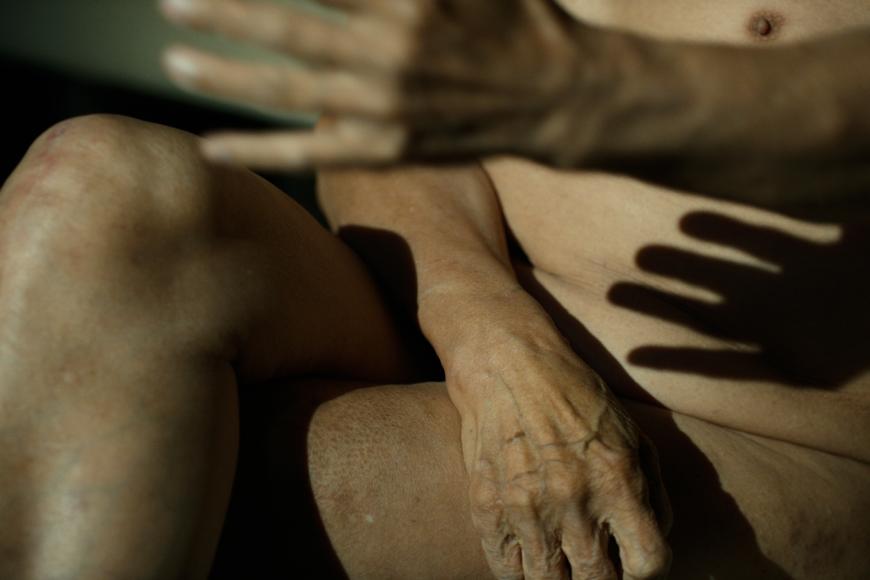
Wang Xilin does not enter the stage in a suite, as the title might suggest, but completely naked. He stretches and bends, appears to familiarise himself with his surroundings, does some vocal exercises, sits down at the piano. Wang Xilin is one of China’s most important composers of contemporary music, having written his first symphonies in his youth. Wang Bing gives the 86-year-old more than a little space. For his portrait, he presents him with the entire Théâtre des Bouffes du Nord in Paris.

This is where Wang Xilin reviews his life of torture and oppression, recapitulates the tribulations in communist China, reports knocked-out teeth and nightmares, suicides among intellectuals. His testimony is frequently underlaid, sometimes even drowned out by grandiose musical arrangements. When an orchestra thunders from offscreen, Wang Xilin’s body rears up – “Man in Black” is also an exorcistic oral history. The composer turns himself into his own instrument, into the medium of a violent epoch, sharing his emotions literally unveiled.

Carolin Weidner

Credits DOK Leipzig Logo

Director
Bing Wang
Cinematographer
Caroline Champetier
Editor
Claire Atherton
Producer
Lihong Kong, Sonia Buchman, Nicolas R. De La Mothe
Co-Producer
Karin Chien, Liza Essers
Sound
Erwan Kerzanet, Emmanuel Soland
Score
Xilin Wang
World Sales
Lya Li
-
Ying Wang, Xilin Wang, Xiaoxia Zhou
Camera Lucida 2023
Filmstill Play Dead!
Play Dead!
Matthew Lancit
Diabetes: Matthew Lancit lives in constant fear of the complications of his disease, so he simply anticipates the body horror himself. The result is equally funny and disturbing.
Filmstill Play Dead!

Play Dead!

Fais le mort!
Matthew Lancit
Camera Lucida 2023
Documentary Film
France,
Portugal
2023
80 minutes
English,
French
Subtitles: 
English

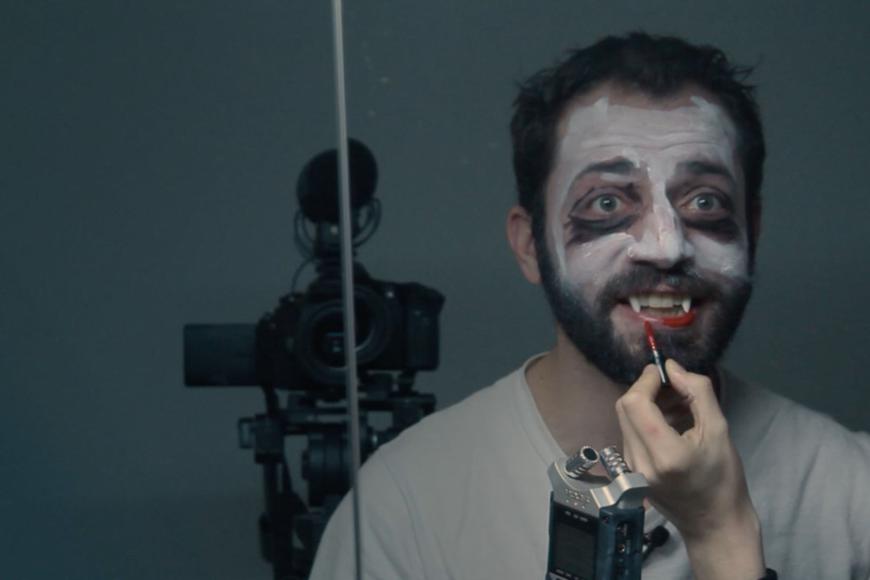
If there is one person Matthew Lancit can’t get out of his mind, it is his uncle Harvey. Dark rings around his eyes, pale, blind, his legs amputated. Like Harvey, the filmmaker also suffers from diabetes. He has the disease under control, but one question is always nagging at him: How much longer? His long-term (self-)observation reliably revolves around fears of infirmity and mutilation. He translates the feared body horror into film, stages himself as a zombie, vampire, a desolate figure. Lancit playfully anticipates his potential decline, serving up a whole arsenal of effects which – as video recordings prove – go back to his youth. It is not for nothing that the “dead” in the title is also reminiscent of “dad.” Because “Play Dead!” also negotiates his own role as a father.

Lancit deeply involves his family in his fantasies, letting them become demons and lurch through the living room together. The documentation of his own diabetes also allows us a look at a modern Paris family life with two small children and a partner who usually plays along sympathetically with her husband’s carryings-on. Lancit’s approach deliberately transgresses borders, opens body, soul and front door. The result is a humorous and occasionally disturbing self-testimony.

Carolin Weidner

Credits DOK Leipzig Logo

Director
Matthew Lancit
Script
Matthew Lancit
Cinematographer
Matthew Lancit
Editor
Ariane Mellet
Producer
Simon P.R. Bewick
Sound
Jules Wisocki
Sound Design
Jan Vysocky, Stéphane Rives
Score
Etienne Nicolas
Broadcaster
ARTE/LA LUCARNE
Camera Lucida 2022
Filmstill Salamone, Pampa
Salamone, Pampa
Heinz Emigholz
Concrete hubris looms over the Argentinean pampa around Buenos Aires. The buildings of Francisco Salamone (1897–1959) advertise a pitiless modern age.
Filmstill Salamone, Pampa

Salamone, Pampa

Salamone, Pampa
Heinz Emigholz
Camera Lucida 2022
Documentary Film
Germany
2022
62 minutes
without dialogue
Subtitles: 
None

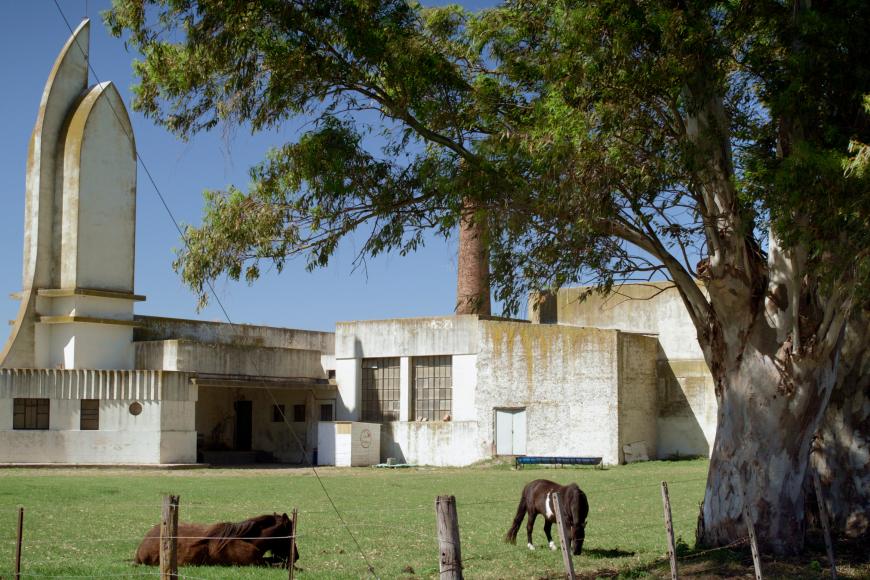
Slaughterhouses with concrete blades on top, monumental cemetery gates in the plains: Architect Francisco Salamone (1897–1959) shaped the image of the Argentinean pampa around Buenos Aires. In part 34 of his “Photography and beyond” series, Heinz Emigholz once more probes architecture for biographical traces. Salamone, who immigrated from Sicily as a child, realised his ideas between 1936 and 1940, when Mussolini’s Italy re-discovered architecture as an ideological craft.

Axes seem to be buried in the façade of the Coronel Pringles city hall. Elsewhere, stone tree fungi grow. And in front of the Saldungaray cemetery, viewed from the rear, a giant pancake or satellite dish forms, while in front the head of a suffering Jesus protrudes from the concrete. Monumental designs, occasionally incorporating elements of Art Deco or Italian Futurism, towering in the sky and advertising importance. Francisco Salamone worked in the years of the “Década infame”, that infamous decade followed shortly afterwards by the presidency of Juan Perón. The buildings seem inhospitable and full of hubris. They are supposed to herald modernity and progress and yet loomed terrifyingly over the peasantry of the country. Heinz Emigholz documents these intimidating buildings from every conceivable angle.
Carolin Weidner

Credits DOK Leipzig Logo

Director
Heinz Emigholz
Script
Heinz Emigholz
Cinematographer
Heinz Emigholz, Till Beckmann
Editor
Till Beckmann, Heinz Emigholz
Producer
Irene von Alberti, Frieder Schlaich
Sound
Esteban Bellotto, Christian Obermaier, Jochen Jezussek
World Sales
Frieder Schlaich
Camera Lucida 2022
Filmstill Swing and Sway
Swing and Sway
Chica Barbosa, Fernanda Pessoa
In the upheavals of 2020 – in the midst of pandemics, election campaigns and anti-racist protests – two friends begin a film dialogue between São Paulo and Los Angeles.
Filmstill Swing and Sway

Swing and Sway

Vai e vem
Chica Barbosa, Fernanda Pessoa
Camera Lucida 2022
Documentary Film
Brazil
2022
82 minutes
Portuguese (Brazil),
English,
Spanish
Subtitles: 
English

One film, two women, three rules: a one-year video correspondence, every three weeks and modelled on experimental female film artists. The two friends Fernanda Pessoa and Chica Barbosa begin their dialogue between São Paulo and Los Angeles in the upheavals of 2020 – in the midst of pandemics, election campaigns and anti-racist protests. In thoughtful, sometimes playful visual essays they also search for feminist cinematographic forms for the female body.

Marie Menken, Yvonne Rainer, Chick Strand, Cheryl Dunye and Ximena Cuevas are only some of the renowned experimental film inspirations for “Swing and Sway”. Sixteen references are listed in the opening credits and the stylistic variety is proportionately wide: black and white and colour, analogue and digital images, text inserts and voiceovers, CGI and stop motion, dissolves, overexposures, colour effects. In this cinephile potpourri, orientation is provided by clips of political events. “I left Brazil under Bolsonaro to come to Trump’s United States”, Barbosa reflects on her status as an immigrant denied political participation. Meanwhile, Pessoa becomes an activist during the São Paulo municipal elections and asks herself a question that other left movements will also ask looking back on 2020: “We didn’t win – but we moved forward?”
Jan-Philipp Kohlmann

Credits DOK Leipzig Logo

Director
Chica Barbosa, Fernanda Pessoa
Cinematographer
Chica Barbosa, Fernanda Pessoa
Editor
Chica Barbosa, Fernanda Pessoa
Producer
Jessica Luz
Sound
Chica Barbosa, Fernanda Pessoa
Score
Aline Araújo, Julia Teles, Thiago Zanato
World Sales
Renato Manganello
Camera Lucida 2023
Filmstill The Apocalyptic Is the Mother of All Christian Theology
The Apocalyptic Is the Mother of All Christian Theology
Jim Finn
Though consumed with antisemitism and fascism, historically the Apostle Paul was a revolutionary. A psychedelic montage, a wild ride through 2000 years of rabid propaganda.
Filmstill The Apocalyptic Is the Mother of All Christian Theology

The Apocalyptic Is the Mother of All Christian Theology

The Apocalyptic Is the Mother of All Christian Theology
Jim Finn
Camera Lucida 2023
Documentary Film
USA
2023
64 minutes
English
Subtitles: 
None

After Ulysses S. Grant, the victorious commander of the American Civil War, maverick Jim Finn has now tackled the Apostle Paul. Eighteen centuries lie between the two and yet those historical super-figures have a lot in common. The acts of both were epoch-making, both had to undertake prolonged expeditions to achieve them, and both have inspired a host of propaganda, including numerous board games that also serve as a visual framework for Finn’s latest film. Above all, both remain controversial to this day, though Paul’s actions, due to the thin factual basis, provided and still provide better groundwork for substantially more outlandish interpretations. The films quotes some of the more outrageous ones in an eclectic montage of red-tinged excerpts from biblical epics, Christian fundamentalist talk shows, cartoons, children’s books, dioramas, theme parks and performances by magicians and rapturous choirs.

The curious title refers to a paper of the German theologist Ernst Käsemann, whose research snatched Paul from the grasp of the Antisemites who had usurped him and placed him back in the tradition of Jewish mysticism. That is also the objective of Jim Finn’s film as it gleefully dissects two thousand years of appropriation and propaganda in a wild ride through history.

Christoph Terhechte

Credits DOK Leipzig Logo

Director
Jim Finn
Script
Jim Finn
Cinematographer
Jim Finn
Editor
Dean De Matteis, Jim Finn
Producer
Jim Finn
Co-Producer
Cat Mazza
Sound Design
Alexander Panos, Jesse Stiles
Score
Colleen Burke
Animation
Matt Loudon
World Sales
Tom Colley