Film Archive

Sections (Film Archive)

Filmstill A Simple Soldier

A Simple Soldier

A Simple Soldier
Artem Ryzhykov, Juan Camilo Cruz
Panorama: Central and Eastern Europe 2025
Documentary Film
UK,
Ukraine,
USA
2025
95 minutes
English,
Russian,
Ukrainian
Subtitles: 
English

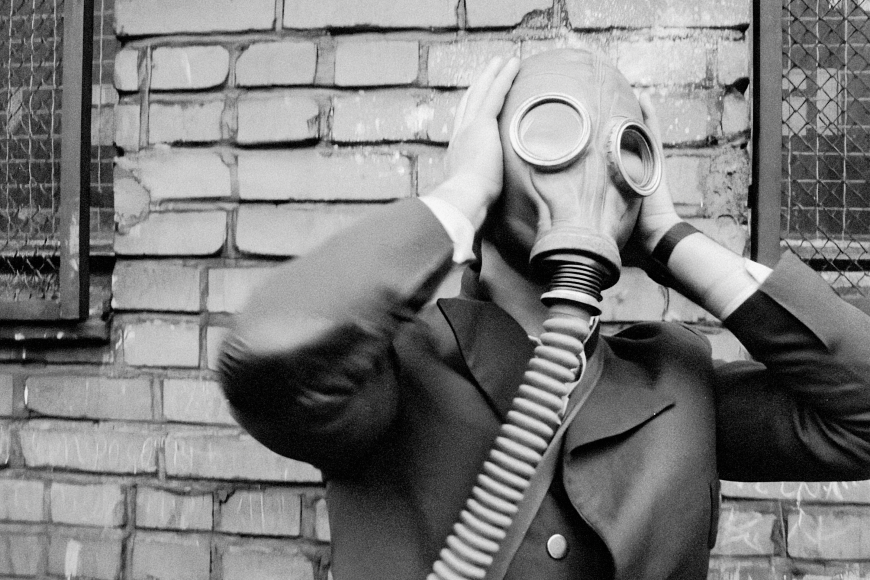
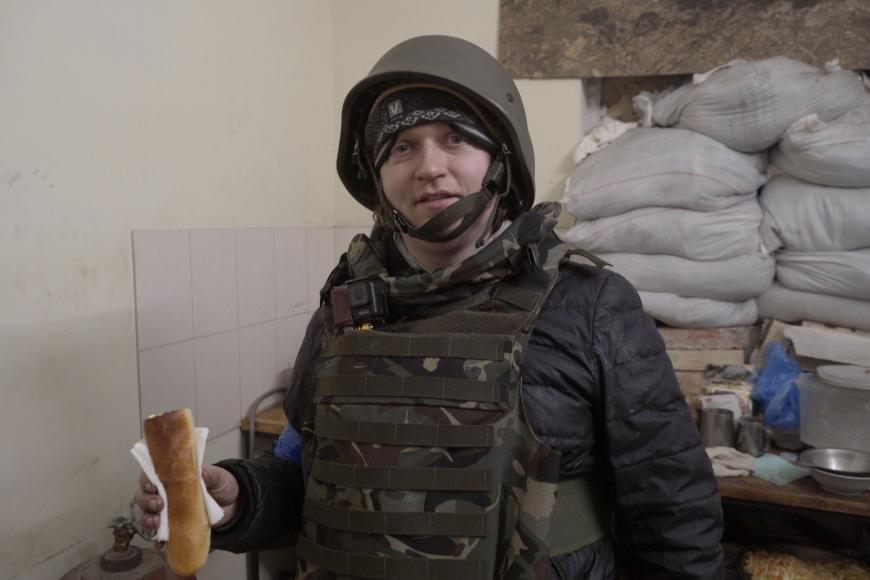
When the Russian invasion began on 24 February 2022, Artem Ryzhykov volunteered to join the Ukrainian army. Equipped with a machine gun and a camera, the filmmaker documents his life as a soldier. But soon it becomes obvious that imagination and reality are drifting apart. While at first exploding bombs shock him so much that he drops to the ground in the barricaded kitchen, and while burnt corpses of a defeated Russian military unit at the Irpin front line provide sensational images, euphoria and sensitivity gradually get lost on the battlefield. Ryzhykov slowly loses his observer’s perspective, the camera degenerates into a “toy” and is replaced by the weapon.

The war leaves traumatic marks. Ryzhykov is increasingly alienated from his own self and his private environment. The overwhelming emotional ballast is no longer easily catalysed, spaces for reflection shrink and the phone calls with his wife Irusya become colder and more tight-lipped. Co-director Juan Camilo Cruz has crafted a narrative strand of immediate power from more than one thousand hours of video material: an intimate insight into the life of a person who is trying to cope with all the chaos.

Philipp Hechtfisch

Credits DOK Leipzig Logo

Director
Artem Ryzhykov, Juan Camilo Cruz
Script
Juan Camilo Cruz, Jesper Osmund
Cinematographer
Artem Ryzhykov, Ruslan Girin, Ruslan Girin
Editor
Jesper Osmund, Inés Boffi Sae-Ammac
Producer
Howard Owens, Ben Silverman, James Packer, John Battsek, Marcel Mettelsiefen
Sound Design
Andrés Velásquez
Score
Úlfur Hansson
World Sales
Daniel Thunell
Nominated for: Leipziger Ring, MDR Film Prize
Winner of: Leipziger Ring
Filmstill A Year in the Life of the Country

A Year in the Life of the Country

Rok z życia kraju
Tomasz Wolski
Panorama: Central and Eastern Europe 2024
Documentary Film
Poland
2024
85 minutes
Polish,
English
Subtitles: 
English

In the early 1980s, Poland is in a state of emergency. The country’s democracy movement, represented by the free Solidarność trade union, is to be suppressed. To this end, President Wojciech Jaruzelski declares martial law on 13 December 1981. In collusion with the Soviet Union a threatening scenario is staged to justify the “stan wojenny”. As a result, Western nations like Great Britain and the USA impose economic sanctions on the Eastern Bloc state. This produces a complex field of tension in which the Polish population are confronted with existential shortages on the one hand but continue their struggle underground on the other – despite curfews, telephone surveillance and a media system controlled by the military.
In his found footage film, Tomasz Wolski brings the explosive, the everyday and the iconic together to provide an insight into a situation that is as absurd as it is dangerous. The extremely dynamic (and musical) montage illustrates the rapid and convoluted succession of events while at the same time intervening through comments, quite often with a notable sense of humour, for example, when Wolski helps a British news correspondent not always on top of events to a bit of retroactive glory: “Most fundamental is the … Hang on, sorry, sorry, could you … Photography and filming will be widely controlled …”

Carolin Weidner

Credits DOK Leipzig Logo

Director
Tomasz Wolski
Script
Tomasz Wolski
Cinematographer
Tomasz Wolski
Editor
Tomasz Wolski
Producer
Anna Gawlita
Sound
Marcin Lenarczyk
Score
Jerzy Rogiewicz
Nominated for: Leipziger Ring, MDR Film Prize
Filmstill A Year of Endless Days

A Year of Endless Days

Godina prođe, dan nikako
Renata Lučić
Panorama: Central and Eastern Europe 2024
Documentary Film
Croatia,
Qatar
2024
70 minutes
Croatian
Subtitles: 
English

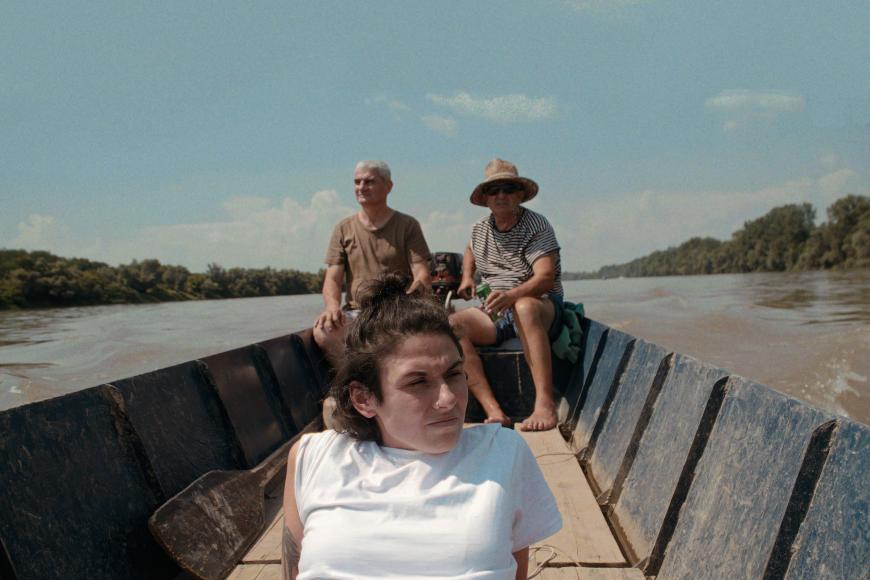
Renata Lučić, both director and protagonist, returns to her hometown to visit her father in a small village in the Croatian part of Slavonia, near the Bosnian border. She has always hated the rural area on the banks of the river Sava, “those endless meadows and gardens,” as she reveals right in the opening sequence. Even as a child she knew that she would leave. Like her older brother, like her mother. And like 124,667 other women who “went West” after the war, usually to Germany or Austria, to work – and never to return.
She now hangs out in the almost abandoned and womanless village with her estranged father Tomislav and his best friend Joso. The men follow their routines, working in the forest or eating river fish they caught themselves. Emotional closeness and intimacy gradually form in at first seemingly trivial conversations and despite initial misunderstandings and distinctly different world views. The film project, which started as the story of an emigration, gradually turns into a sensitive study of loneliness, human relationships, friendship and love; about the beauty of the little things that leads to larger insights – not just for Renata.

Borjana Gaković

Credits DOK Leipzig Logo

Director
Renata Lučić
Script
Renata Lučić
Cinematographer
Marinko Marinkić
Editor
Karla Folnović
Producer
Tamara Babun Zovko, Matija Drniković
Sound Design
Ivan Zelić, Nina Ugrinović
Score
Mislav Lešić
Nominated for: MDR Film Prize
Filmstill Blue

Blue

Jestem błękitem
Weronika Szyma
Panorama: Central and Eastern Europe 2023
Animated Film
Poland
2023
7 minutes
Polish
Subtitles: 
English

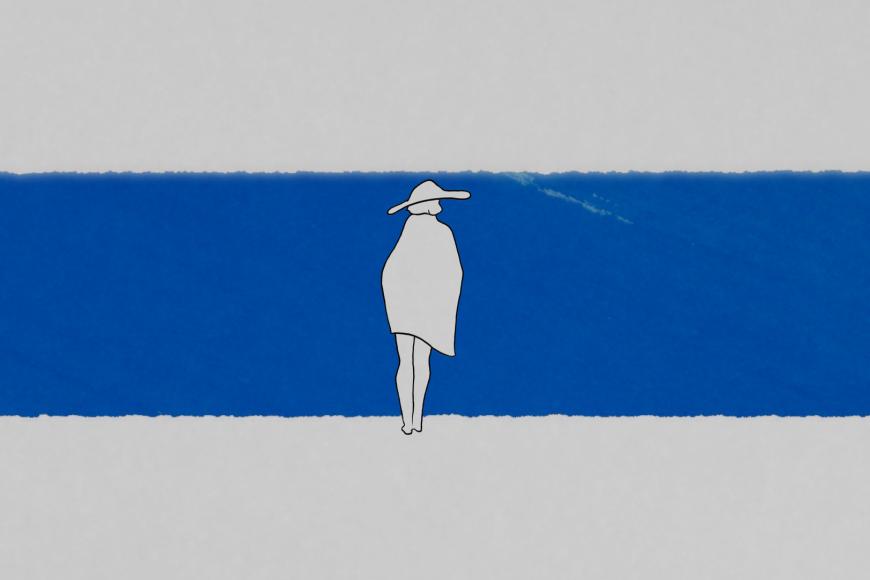
The sea on whose shore Weronika Szyma has set her film is a dense, pulsating blue. The beach and the family who are staying there, meanwhile, are limited to delicate black and white line drawings. Their minimalism makes the blue stand out all the more enchantingly: Sometimes represented as a horizontal strip that promises freedom but also fuels insecurity. Sometimes sloshing diagonally across the screen, swallowing up the image completely for a brief moment and marking a caesura. And there are quite a number of caesuras, because the seven film minutes span the story of several generations.

At one point the father disappears and the mother and her almost grown-up daughter are left to fend for themselves. They learn to comprehend the loss, support each other, turn gestures of distance into gestures of affection. Until the confidence grows to start all over again. The only thing that does not change here is the blue of the sea.

Felix Mende

Credits DOK Leipzig Logo

Director
Weronika Szyma
Script
Weronika Szyma
Editor
Filip Dziuba
Producer
Piotr Furmankiewicz, Mateusz Michalak
Co-Producer
Weronika Szyma
Sound
Tomasz Sierpiński
Animation
Weronika Szyma
Filmstill Dance with Me, Dad

Dance with Me, Dad

Zatańcz ze mną, tato
Małgorzata Goździk
Panorama: Central and Eastern Europe 2025
Documentary Film
Poland
2025
28 minutes
Polish
Subtitles: 
English

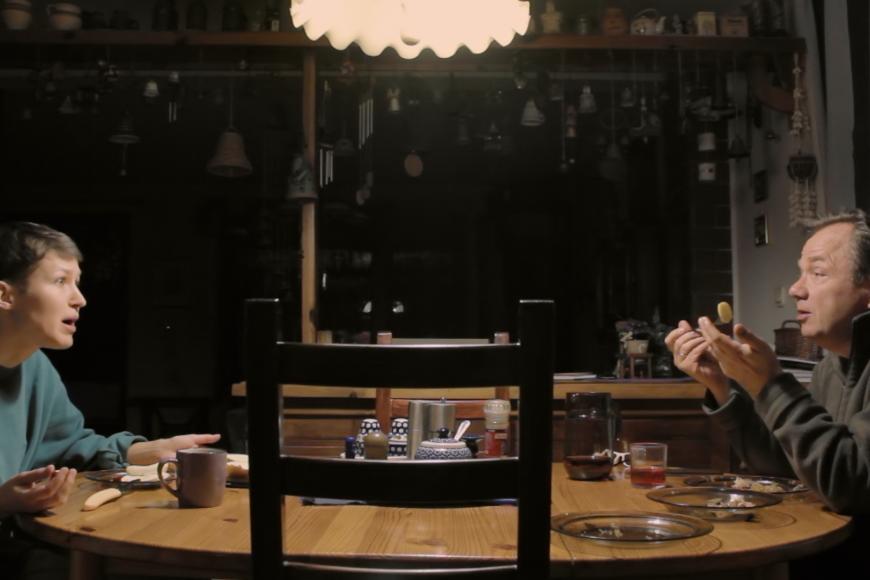
Days spent at your parents’ home are not always the easiest. Director Małgorzata Goździk knows what she is talking about, because today her loving relationship with her father is mainly documented in childhood recordings. Nowadays, Mirosław has mutated into a grumpy man who spends his time reading the news and answering quiz questions. In the course of “Dance with Me, Dad” it becomes clear that his dismissive behaviour hides a substantial depression. And that father and daughter may have more in common in terms of mental health than first assumed. In her film, Małgorzata Goździk ventures a bold intervention that exposes long-simmering painful issues. Could this radically honest exchange at the round family table mark a new beginning?

Carolin Weidner

Credits DOK Leipzig Logo

Director
Małgorzata Goździk
Script
Małgorzata Goździk
Cinematographer
Magdalena Bojdo
Editor
Sabina Filipowicz
Producer
Małgorzata Goździk, Jerzy Kapuściński, Magdalena Tomanek, Ewa Jastrzebska
Sound
Magdalena Bojdo, Małgorzata Goździk, Krzysztof Stasiak, Adam Mart, Mateusz Stasiak
Filmstill Dom

Dom

Dom
Massimiliano Battistella
Panorama: Central and Eastern Europe 2025
Documentary Film
Italy,
Bosnia & Herzegovina
2025
82 minutes
Italian,
Bosnian
Subtitles: 
English

Sarajevo–Rimini. This route once took ten-year-old Mirela to safety from the Bosnian War in 1992, when she was evacuated to Italy by a United Nations convoy along with a group of other orphans. Their stay was to be temporary, but no one came to pick her up. So Mirela began a new life on the Adriatic coast. As an adult, she returns to her homeland in search of a mother whom she last saw as a four-year-old, a journey accompanied by many questions: Why was she among the few who were sent to exile? Would it have been better to have stayed in Sarajevo, free of guilt? Mirela finds no clear answers. But from the traces she gathers and the threads that cross in her life, “Dom” weaves a sensitive meditation about identity and belonging.

Felix Mende

Credits DOK Leipzig Logo

Director
Massimiliano Battistella
Cinematographer
Emanuele Pasquet
Producer
Riccardo Biadene
Nominated for: MDR Film Prize
Filmstill Ever Since I Knew Myself

Ever Since I Knew Myself

Rats tavi makhsovs
Maka Gogaladze
Panorama: Central and Eastern Europe 2024
Documentary Film
Georgia
2024
87 minutes
Georgian
Subtitles: 
English

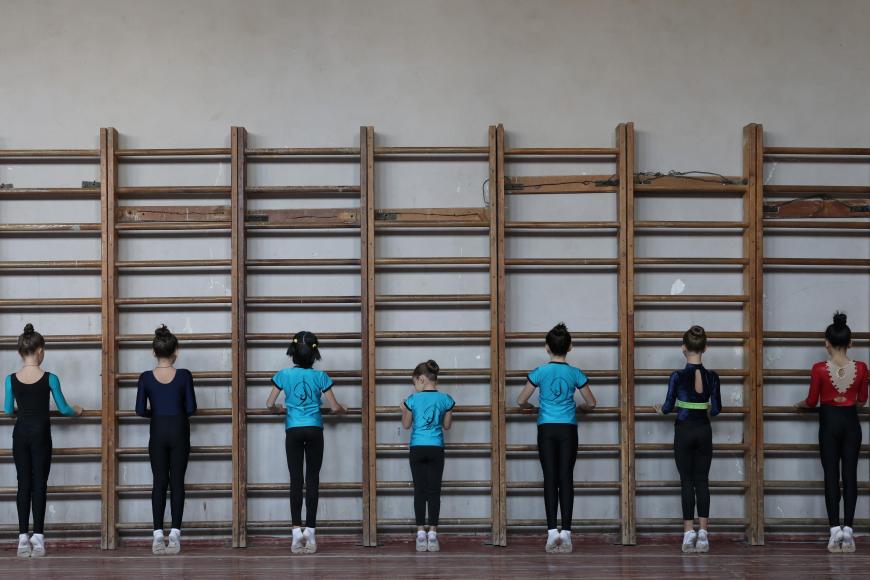
In her childhood, Maka attended her hated piano lessons in tears. When she asks her mother about it, she is told that this torment is extremely important for discipline. The conversation prompts an examination of whether current pedagogical routine in Georgia has strayed far from such a concept of education. A music school in which brutal emotional and verbal pressure is part of the curriculum; a ballet school where little girls must endure intense pain while stretching; a primary school class where even the most passionate recitation of a patriotic poem about the heroes of the motherland is cause for criticism. We plunge into a somewhat surreal, at times hilariously rigid world, reminiscent of a Palaeolithic dinosaur desperately trying to save itself in the present day.
“Steel is tempered by fire,” says the mother. Her words express the burden of responsibility for her beloved daughter and convey many warm, previously unspoken feelings. “But I am a human being first,” Maka replies. The loving daughter insists that the idea of humanity based on authoritarian power structures must be overcome, because it is still reproduced in the most private relationships, including those between parents and children.

Vika Leshchenko

Credits DOK Leipzig Logo

Director
Maka Gogaladze
Cinematographer
Maka Gogaladze
Editor
Maka Gogaladze
Producer
Maka Gogaladze
Sound Design
Vano Arsenishvili
-
Irma Gogaladze, Nino Nergadze
Nominated for: MDR Film Prize
Filmstill Imago

Imago

Imago
Déni Oumar Pitsaev
Panorama: Central and Eastern Europe 2025
Documentary Film
France,
Belgium
2025
109 minutes
Chechen,
Russian,
Georgian
Subtitles: 
English

A piece of land awaits Déni Oumar Pitsaev in the Pankisi Gorge, a Chechen enclave in the Georgian part of the Caucasus. His mother bought it for him, hoping to bring her son, who was socialised in Western Europe, back to his Chechen roots. When he arrives, he realises that the gift comes with strings attached: Relatives and friends from the neighbourhood constantly ask when the 40-year-old Déni with his receding hair intends to start a family. When he counters with his own vision – building a treehouse for adults ten metres from the ground, a childhood dream – he triggers complex debates about the relationship between the individual and society and what historical conditions it is subject to: The region is deeply scarred by the effects of the Chechen War, the wounds extending even to his estranged relationship with his father. In all this, Pitsaev’s manner of confrontation is always extremely delicate, never turning into an attack. With expert curiosity, he approaches a world that is both completely alien and home to him.

Felix Mende

Credits DOK Leipzig Logo

Director
Déni Oumar Pitsaev
Cinematographer
Sylvain Verdet, Joachim Philippe
Editor
Laurent Sénéchal, Dounia Sichov
Producer
Alexandra Mélot
Co-Producer
Anne-Laure Guégan, Géraldine Sprimont
Sound
Marie Paulus, André Rigaut, Joseph Squire
Sound Design
Marie Paulus, André Rigaut, Joseph Squire, Hélène Clerc-Denizot, Emmanuel De Boissieu
World Sales
Jing Xu
Nominated for: MDR Film Prize
Filmstill Night Sky Elevator

Night Sky Elevator

Night Sky Elevator
Csanád Baksa-Soós
Panorama: Central and Eastern Europe 2025
Animated Film
Hungary
2025
9 minutes
without dialogue
Subtitles: 
None

Cutout animation in limbo: crafted meticulously and in great detail, but at the same time as if dabbed from the unconscious. In Csanád Baksa-Soós’s work, butterflies land on ladies’ shoes and fly away with them, a river of headlines flows through a city, a violet, swirling solar eclipse makes glowing knives shoot out of the earth to the sky, stone lips disgorge a ball of light. The images do not follow a fixed order – each of them opens a new world, takes a deep breath, moves on. Leitmotifs appear and disappear. What’s left are enchanting colours and textures which extend even to the soundtrack: The scratching of a maltreated cello, nocturnal saxophone sounds from the barely soundproofed neighbouring flat, eery clarinet etudes in an echoing rehearsal room nestle congenially against the images.

Felix Mende

Credits DOK Leipzig Logo

Director
Csanád Baksa-Soós
Editor
Csanád Baksa-Soós
Producer
Zsuzsanna Vincze
Sound
Csanád Baksa-Soós
Sound Design
Csanád Baksa-Soós
Animation
Csanád Baksa-Soós
Filmstill Photophobia

Photophobia

Photophobia
Ivan Ostrochovský, Pavol Pekarčík
Panorama: Central and Eastern Europe 2023
Documentary Film
Slovakia,
Czech Republic,
Ukraine
2023
71 minutes
Ukrainian,
Russian
Subtitles: 
English

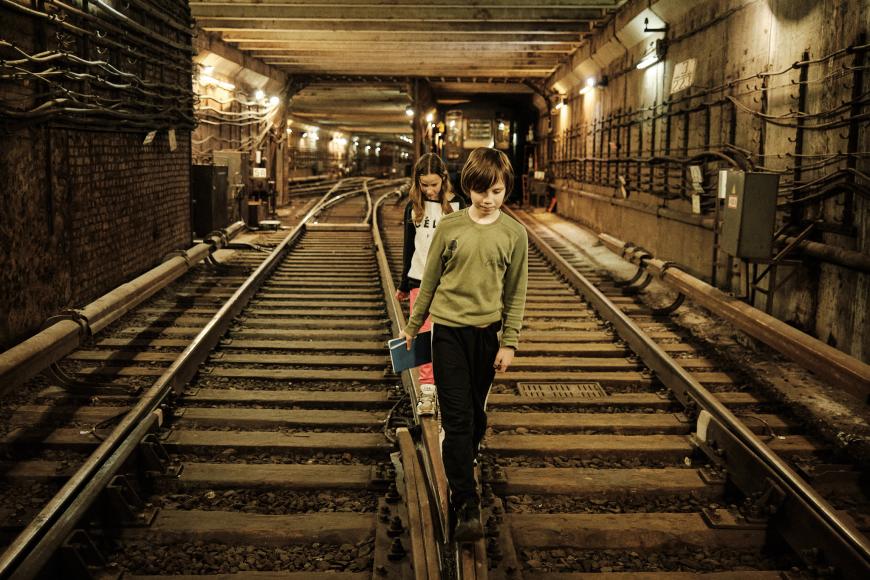
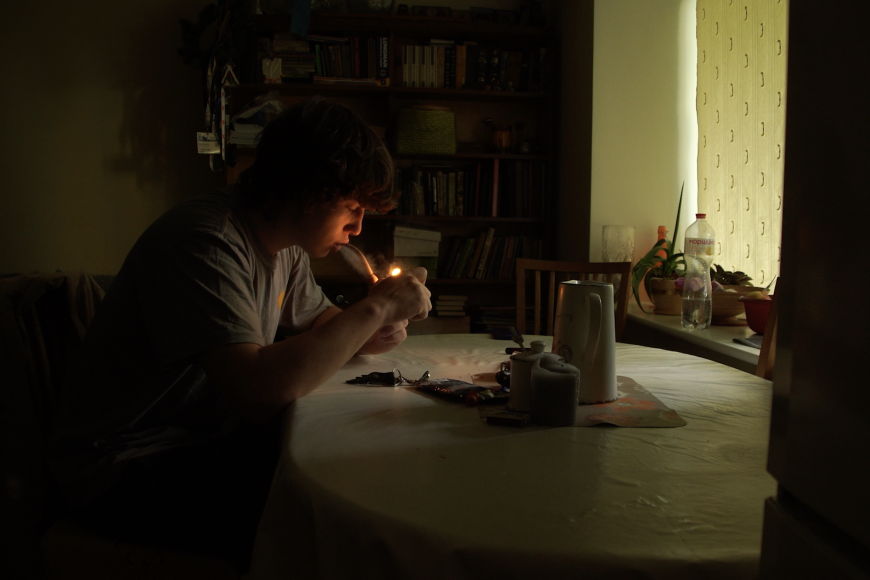
12-year-old Nikita and his family have been staying in an underground station in Kharkiv for weeks. The place promises protection from Russian attacks, but there is not much distraction down here. The glaring lights and provisionally furnished carriages create a surreal to dreary atmosphere, pets roam the aisles, an aging musician plays songs on his guitar.

Ivan Ostrochovský and Pavol Pekarčík condense the first months of the war in Ukraine into an oppressive but not hopeless narrative, because the station is also a place of encounters. Niki soon meets Vika, who is his age and who coaxes the lethargic boy out of his shell. Together they roam the underworld, but while Vika is permitted to go to the surface at least once in a while, Niki’s radius of movement ends at the stairs on which sunlight falls occasionally. And yet an outside exists which the two directors make visible by Super 8 shots scattered in between. They show a damaged Kharkiv: destroyed vehicles, a charred bed, provisionally protected monuments. “Photophobia” is a hybrid, introspective film that manages to find something like tender romance in an unreal situation.

Carolin Weidner

Credits DOK Leipzig Logo

Director
Ivan Ostrochovský, Pavol Pekarčík
Script
Marek Leščák, Ivan Ostrochovský, Pavol Pekarčík
Cinematographer
Ivan Ostrochovský, Pavol Pekarčík
Editor
Ivan Ostrochovský, Pavol Pekarčík, Martin Piga
Producer
Ivan Ostrochovský, Albert Malinovský, Katarína Tomková, Tomáš Michálek, Kristýna Michálek Květová
Co-Producer
Helena Osvaldová, Denis Ivanov, Jakub Mahler, Pavol Pekarčík
Sound
Dušan Kozák, Jakub Jurásek
Sound Design
Jakub Jurásek
Score
Roman Kurhan, Michal Novinski
World Sales
Michaela Čajková
Nominated for: MDR Film Prize, Leipziger Ring
Panorama: Central and Eastern Europe 2023
Filmstill Self-Portrait Along the Borderline
Self-Portrait Along the Borderline
Anna Dziapshipa
Abkhazia, a place of memory and at the same time a blind spot for the director. Almost impossible to enter from Georgia, she chooses an associative and personal approach to the split-off territory.
Filmstill Self-Portrait Along the Borderline

Self-Portrait Along the Borderline

Avtoportreti zghvarze
Anna Dziapshipa
Panorama: Central and Eastern Europe 2023
Documentary Film
Georgia
2023
50 minutes
Georgian,
Russian
Subtitles: 
English

Parts of the house director Anna Dziapshipa traces in her autobiographical roamings through the past look like straight out of a horror film: cobwebbed, dark, derelict. It is located in Abkhazia, the region officially off-limits to Georgians, protected by Russia and not recognised as an autonomous republic by the international community.

One half of Dziapshipa’s family comes from here, including a football player who once was a key player for Dinamo Tbilisi. The filmmaker edits footage of his sports activities into “Self-Portrait Along the Borderline,” but also shows the splendour of the former Soviet holiday paradise. It is a personal, associative approach in which Dziapshipa analyses and reflects on her own experiences as a child with both Georgian and Abkhazian family backgrounds. Discrimination plays a role, as do solemn and disturbing things. Time and again, spiders crawl through the frame, weaving their webs and thus connections.

Carolin Weidner

Credits DOK Leipzig Logo

Director
Anna Dziapshipa
Cinematographer
Anna Dziapshipa
Editor
Eka Tsotsoria
Producer
Anna Dziapshipa
Co-Producer
Niko Mikadze
Sound
Anna Dziapshipa
Sound Design
Paata Godziashvili
Score
Nika Paniashvili
Nominated for: MDR Film Prize
Filmstill Signs of Mr. Plum

Signs of Mr. Plum

Znaki Pana Śliwki
Urszula Morga, Bartosz Mikołajczyk
Panorama: Central and Eastern Europe 2025
Documentary Film
Poland
2025
72 minutes
Polish
Subtitles: 
English

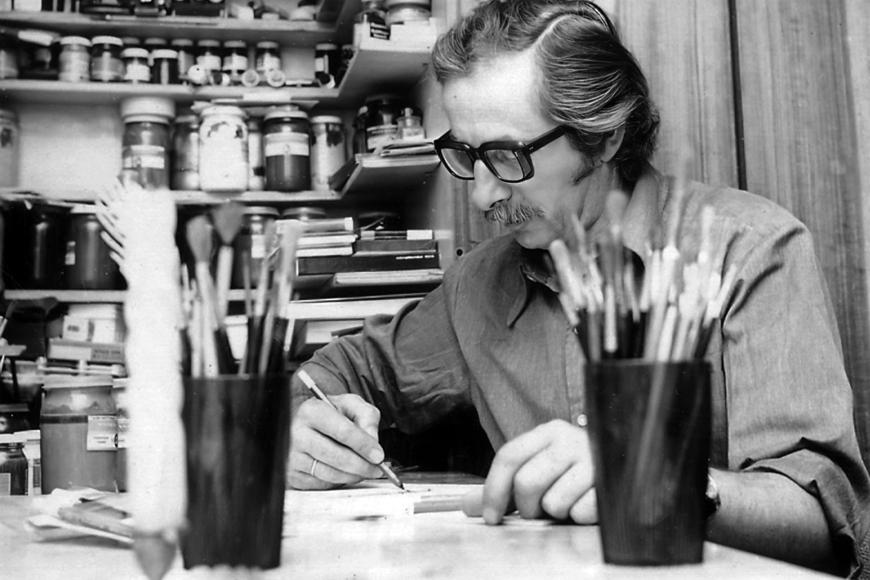
When Karol Śliwka (1932–2018) opens his drawer, dozens of tools jump out: scissors, compasses, rulers, and knives. For Śliwka’s equally famous and elegant graphic designs are purely handmade. They are displayed on consumer goods and advertising posters, even became iconic symbols of the United Nations. His career was far from predestined: Having suffered a serious eye injury in a childhood accident and bound to take over his parents’ farm, Karol Śliwka’s turn to art could be seen as an act of rebellion. It has paid off, as proved not only by the numerous awards he won during his long career. Via home videos, “Signs of Mr. Plum” also gives us insights into his joyful marriage to an opera singer. Bartosz Mikołajczyk and Urszula Morga skilfully connect Karol Śliwka’s designs with contemporary history, capturing the mood of the 1960s and 1970s with a light hand and quick editing. Graphic design and biography merge into an accessible and highly amusing mixture.

Carolin Weidner

Credits DOK Leipzig Logo

Director
Urszula Morga, Bartosz Mikołajczyk
Script
Urszula Morga
Cinematographer
Bartosz Mikołajczyk
Editor
Anna Koc-Wikels, Dominik Jagodziński
Producer
Stanisław Zaborowski, Daria Maślona
Co-Producer
Ubi Leones, Jan Borowiec, Mazowia
Sound
Radosław Ochnio MPSE
Sound Design
Radosław Ochnio MPSE
Score
Michał Jacaszek
Broadcaster
TVP
Funder
PFI
Nominated for: MDR Film Prize
Filmstill Smoke of the Fire

Smoke of the Fire

O fumo do fogo
Daryna Mamaisur
Panorama: Central and Eastern Europe 2023
Documentary Film
Portugal,
Ukraine,
Belgium,
Hungary
2023
22 minutes
Portuguese (Portugal),
Ukrainian
Subtitles: 
English

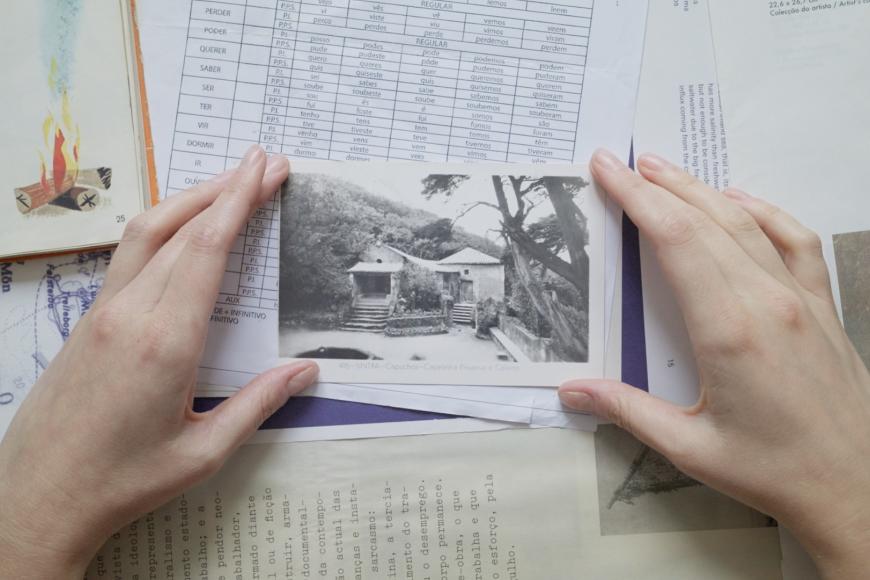
Learning a foreign language is like creating another self. How can you speak it without losing your own sound, without dissolving completely in it – and still be heard and noticed? This film is a charming and intellectually fastidious attempt to navigate the complexities of language, identity and trauma.

To do this, the filmmaker resorts to her own biography. Because Russia invaded Ukraine when Daryna Mamaisur, who comes from Kyiv, was in Portugal for a Doc Nomads graduate course. Home and the search for it became the defining factors of this work, as well as the traumatic situation of only being able to “witness” the difficult situation from a distance. She, the Ukrainian in Portugal, learns Portuguese. She lets the new words for “war,” “explosion” and “attack” roll off her tongue. She compares them with the soft, intimate sound of her native language, with the sound of Kyiv. Friends send audio and visual recordings from Ukraine which, combined with animations, become a multilayered essay and finally a testimony – for the resilience of language and culture, no matter where they are spoken and lived, and not least for the power of the artistic documentary, which can make speech and sound possible.

Victoria Leshchenko

Credits DOK Leipzig Logo

Director
Daryna Mamaisur
Cinematographer
Shaheen Ahmed, Daryna Mamaisur, Svitlana Vostrikova
Editor
Daryna Mamaisur
Producer
Frederik Nicolai, Daryna Mamaisur
Sound
Ghada Fikri, Juliette Menthonnex, Tetiana Usova
Sound Design
Anna Khvyl
World Sales
Valentina Zalevska
Filmstill The Birds Are Silent

The Birds Are Silent

Movchat’ ptakhy
Leo Dzhyshyashvili
Panorama: Central and Eastern Europe 2025
Documentary Film
Ukraine,
Germany
2025
8 minutes
Ukrainian,
Russian
Subtitles: 
English

In the evening of 9 February 2022, four young men sit around a table in Kyiv. The friends are discussing the situation: 120,000 Russian soldiers are stationed right at the Ukrainian border. What is going to happen? In “The Birds Are Silent”, director and cinematographer Leo Dzhyshyashvili captures an equally private and historical moment. What is striking is the clarity with which Andriy, Olexandr, Ivan and Sasha assess the consequences of the imminent attack: Potential decisions about their own future are mixed with concerns about relatives and the bewilderment at being thrown into a situation that provokes both helplessness and disgust. But there is a glimmer of hope – perhaps the imagined horror scenarios are nothing but a waste of energy? Cut. Some of the debaters have become soldiers; one has barricaded himself in the bathroom with a narrow mattress and a meal. Within eight minutes, Dzhyshyashvili has tied together a before and after that make you shudder.

Carolin Weidner

Credits DOK Leipzig Logo

Director
Leo Dzhyshyashvili
Cinematographer
Leo Dzhyshyashvili, Ivan Baliuk, Dmytro Makarov
Editor
Leo Dzhyshyashvili, Daria Penkova
Producer
Luisa Nöllke
Filmstill The Box

The Box

Škatla
Tomaž Pavkovič
Panorama: Central and Eastern Europe 2023
Documentary Film
Slovenia
2023
22 minutes
Croatian
Subtitles: 
English

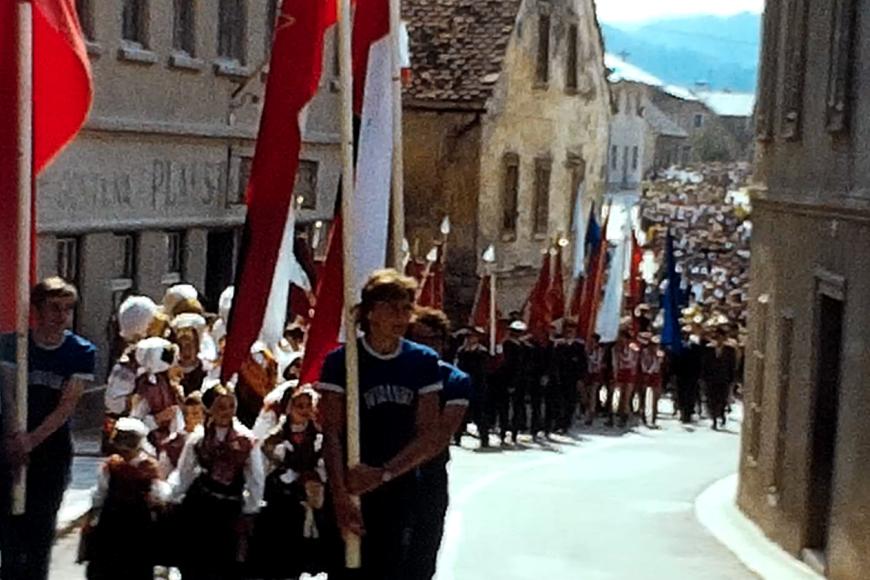
Tomaž Pavkovič finds reams of film material in a box that tells not only the story of his family but of a whole country: His father’s life ran almost parallel to the development of Yugoslavia, which permeates each of his recordings. The parades in the countryside, later the move to the city and life as a working-class family, in between always President Tito, even if only as a tattoo on a diver’s chest. The sons are left with the abstract memory of a state that has ceased to exist, that is itself a box. Do the images you find in the box tell you something about yourself, too?

The essayistic off-text by the Croatian poet Marko Pogačar, written in close collaboration with the director, frequently describes scenes that are shown at an entirely different point in the film – gaps yawn between the representation and one’s memory that can only be approached by circling them. To do this, not the least tools the film uses are an idiosyncratic, driving selection of music and a good dose of dry humour.

Felix Mende

Credits DOK Leipzig Logo

Director
Tomaž Pavkovič
Script
Marko Pogačar, Tomaž Pavkovič
Cinematographer
Franci Pavkovič
Editor
Tomaž Pavkovič
Producer
Tomaž Pavkovič
Sound Design
Rok Kovač
Narrator
Marko Pogačar
Filmstill The Last Relic

The Last Relic

Viimane reliikvia
Marianna Kaat
Panorama: Central and Eastern Europe 2023
Documentary Film
Estonia,
Norway
2023
104 minutes
Russian
Subtitles: 
English

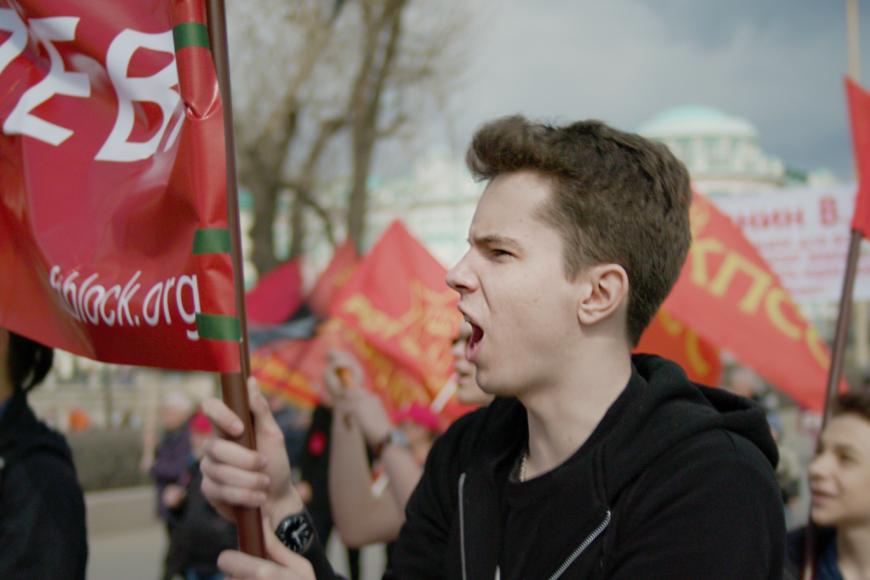
In the passing busses and trams, people look out of the windows in disbelief. The reverse shot shows a crowd of protesters. Two dozen people perhaps, some holding signs, one shouting “Putin behind bars!” It is a symbolic image of the pathetic state of the Russian opposition. The year is 2017, the war of aggression against Ukraine is still to come. Over a period of several years, “The Last Relic” portrays people from different opposition groups: a student from the Marxist-Leninist “Left Block,” a teacher with sympathies for Navalny; a digger driver demands the redistribution of resources. These activists lack support, but not courage. One of them has just been released from prison and survived a hunger strike. The others must expect to be prosecuted at any moment.

The setting of this film is the Ural metropolis of Yekaterinburg. The bulk of the population, an insert announces, dreams of a “return to imperial glory.” Estonian director Marianna Kaat, born in 1965, has spent a considerable part of her life in the Soviet empire. She shows the majority society as a uniform crowd at military parades, contrasting it with the individuals of the opposition. Few films offer such insights into the latter’s continuing precarious situation.

Jan-Philipp Kohlmann

Credits DOK Leipzig Logo

Director
Marianna Kaat
Script
Marianna Kaat
Cinematographer
Kacper Czubak
Editor
Jesper Osmund
Producer
Marianna Kaat
Co-Producer
Mette Cheng Munthe-Kaas, Tobin Auber
Sound
Boris Frolov
Sound Design
Israel Banuelos
Score
Lauri-Dag Tüür
World Sales
Anja Dziersk
Winner of: MDR Film Prize