A Still Small Voice
Luke Lorentzen
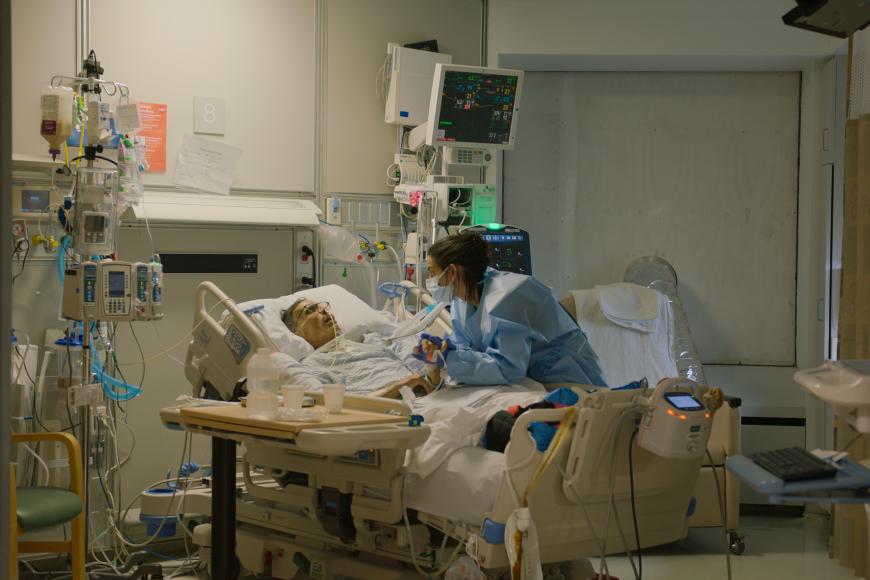
Mati, a New York hospital chaplain in training, must watch herself and her own strength when she looks after patients. An intimate insight, up close and sensitive.


Mount Sinai Hospital in New York is one of the largest and oldest hospitals in the United States. Mati, an aspiring hospital chaplain, works here. She is about to complete her one-year residency in the department of “Spiritual Care,” a branch of palliative medicine. Patients struggling with insecurity, trauma and grief get emotional and spiritual support here. The film follows Mati and her colleagues through 2020 and 2021, the years with the highest number of deaths in the history of the USA. Mati herself must struggle daily to find her balance. Because, as her supervisor puts it, if one’s own bandwidth is used up, there is simply no room left for the tougher things. It is therefore an important part of the work of a counsellor to get support and guidance for oneself.
Luke Lorentzen observes this cosmos with great sensitivity and, despite being so close, with pleasant restraint. The calm camera often keeps its distance, especially in moments of doubt or when observing conflicts in the team. A film unafraid of intimacy that spans a thought-provoking arc: between questions of faith, loss and professional sustainability.

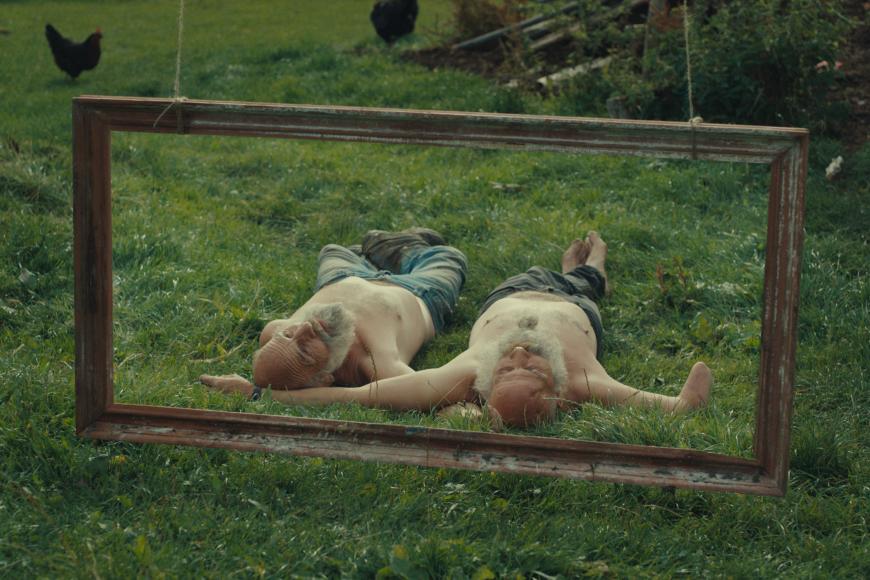
Two quarrelsome brothers with impressively full beards live on a remote farm in the Bohemian Forest, surrounded by a rugged landscape: At one point, Franta and Ondra themselves become aware that this setting has an almost Old Testament feel to it, but cannot agree on who might be Cain and who Abel in this scenario. They rarely agree in any case: Daily squabbles are the big constant in the life of the identical but otherwise dissimilar twins. When Franta embarks on another breakneck adventure, Ondra wants nothing more than to smoke in peace. Nonetheless, they occasionally exchange hugs and nose kisses. In their early 60s, Franta and Ondra spend their time working in the fields, playing jokes with the animals, or competing in left-hand arm-wrestling duels. The facts that Franta lost his lower right arm in an accident or that the twins took part in the 1989 revolution in Czechoslovakia belong to an apparently distant past. With a domestic cow as narrator, the leitmotif of a huge mirror, and a classical soundtrack, Miro Remo finds a wonderful form for the portrait of these idiosyncratic people.

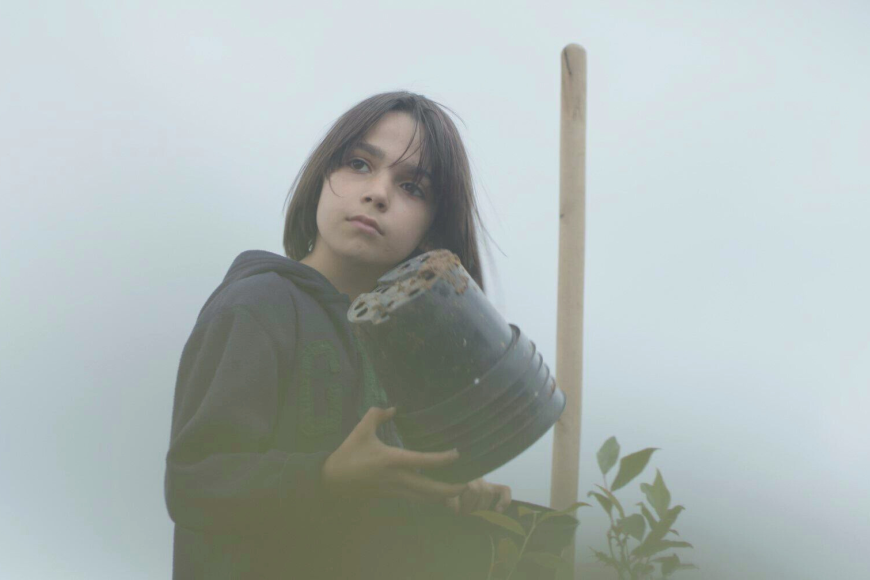
In the north of Georgia, twelve kilometres from the Russian-influenced region of Abkhazia, a family are realising their dream. Under the optimistic motto “Plant the Future,” the Georgian government has launched a funding programme that enabled the people in this state which has been shaken by wars and crises for years to make a fresh start on their own farmland. With this support Soso, a retired engineer, took the big step in 2021 with his wife and two young sons and began growing blueberries.
Director Elene Mikaberidze and a dynamic camera follow the bold endeavour of the greenhorn farmers as they settle into their unfamiliar new life month by month. In the evenings, they pass the time with games and conversations, while the television is on in the background: images of a Ukraine under attack, news of the escalation in the Middle East remind the adults of the Russo-Georgian War sixteen years ago. Soso, the head of the family, contemplates his homeland in the midst of an escalating global situation. What dreams will still find a place there? Mother Nino is worried about her children’s future. She wants them to have the freedom to go their own way, to travel abroad and leave Georgia behind. Whether these ideas correspond with Soso’s remains to be seen.
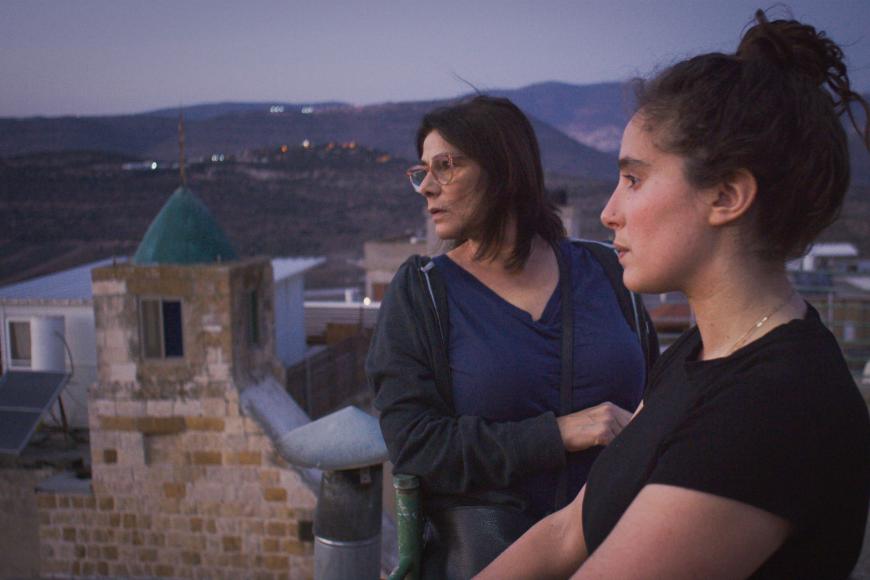
The actor Hiam Abbass, who lives in France, is one of the greatest movie stars from the Middle East. She played leading roles in the award-winning films of Israeli director Eran Riklis, acted in Steven Spielberg’s “Munich” and recently in the U.S. hit series “Succession.” She served on the juries of the big Festivals in Cannes and Berlin, presented her own directing debut in Venice. But she is also a mother, daughter and sister in a large Palestinian family full of resourceful women. In this real role she steps in front of the camera in her daughter Lina Soualem’s work and travels back to her hometown of Deir Hanna in northern Israel – an Arab village in the Jewish state.
“Don’t open the gate to past sorrows,” the director quotes a kind of family dogma. It refers, among other things, to the family’s traumatic expulsion from Tiberias, the city on the Sea of Galilee, in the 1948 Palestine War. But with her confrontation of the family history, Soualem also opens gates to past joys and allegedly discarded identities. Between home videos, historical archive footage, photos and letters, Abbass is a touching and approachable screen presence as she returns to her roots. The long shadow of her origins also falls on a woman of the world.
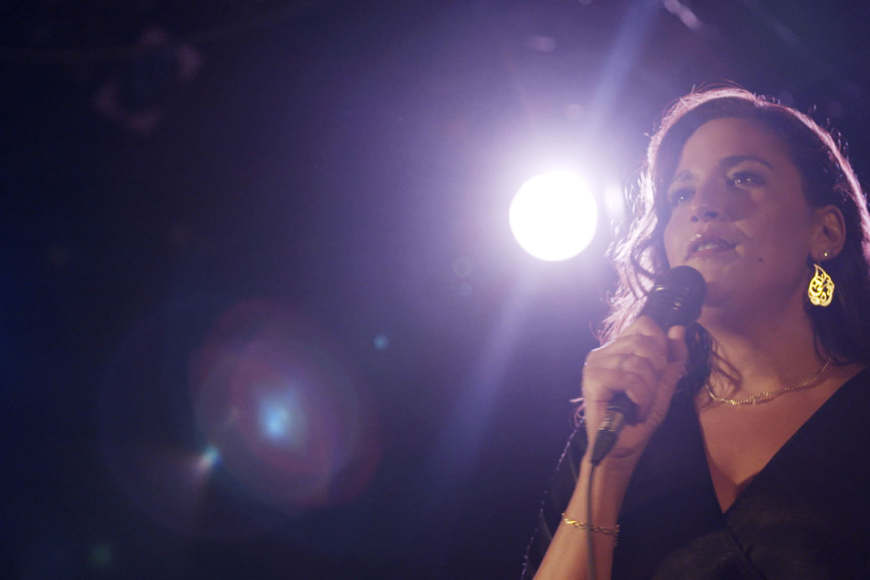
The name of her village stands for a utopia that has shaped Noam Shuster Eliassi from childhood: Newe Shalom (Hebrew) or Wahat al-Salām (Arabic) roughly translates as “Oasis of Peace.” This small community of 300 people from Jewish and Arab families which was founded in 1969, located in Israel at the border with the West Bank, is a test of solidarity in practice. Thus, Noam, who is Jewish, and her Palestinian friend Ranin become ambassadors of mutual understanding even as children, for example when Hillary Clinton or Jane Fonda come to visit. They seem predestined for a career in the United Nations.
In her comedy show “Coexistence, My Ass!”, which director Amber Fares uses as a leitmotif, Shuster Eliassi strikes a harsher tone. Her career shift from diplomacy to political comedy – in English, Hebrew or Arabic, depending on the audience – shows her as a critic of the Netanyahu government, both before and after the Hamas terrorist attack on 7 October 2023. Her example also reflects the division in parts of the Israeli left: Shuster Eliassi’s deep pain of having lost loved ones herself is followed by anger about the Gaza war. What is humour able, what is it allowed to do in this situation? Perhaps help us mourn the suffering of two nations and, despite everything, not give up the utopia of peace.
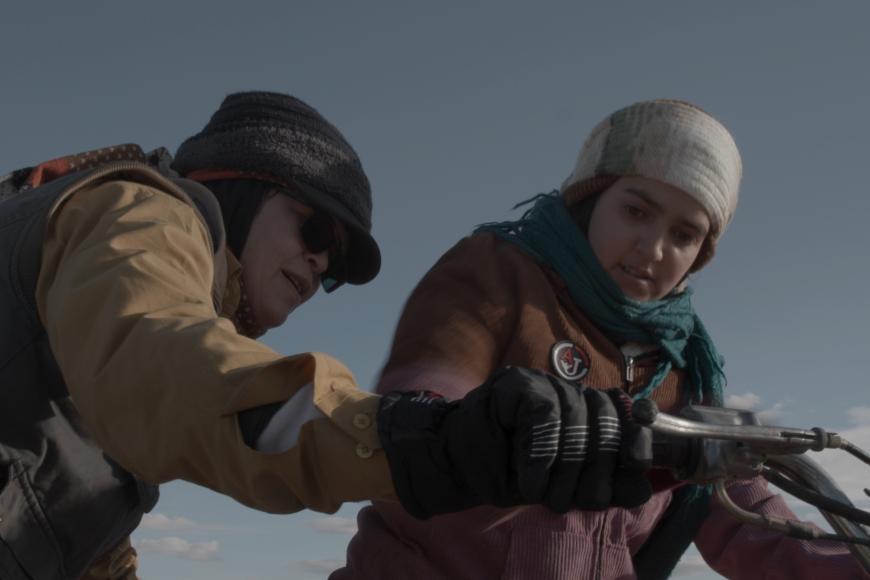
The “Woman, Life, Freedom” protests in Tehran and other major cities seem far away from the place where Sara lives. But in her rural community in northwestern Iran, the protagonist of this film advocates the same feminist values in a practical, everyday way. Again and again, we are reminded by the images that her father once taught her to ride a motorbike – to the disapproval of the whole village. A small favour with big consequences: For Sara, it paved a way outside patriarchal marriage. Mobile on two wheels, she works as a midwife and has delivered many girls for whom she now wants to fight: At the start of the film and in middle age, Sara decides to be the first woman in the history of her community to run for the local council. A step which earns her enthusiastic support on the one hand; on the other, she must endure open hostilities and an interrogation by the moral enforcers of the Islamic Republic. In “Cutting Through Rocks”, Sara Khaki and Mohammadreza Eyni capture these power structures and their individual impact as precisely as the gestures of solidarity and self-determination.
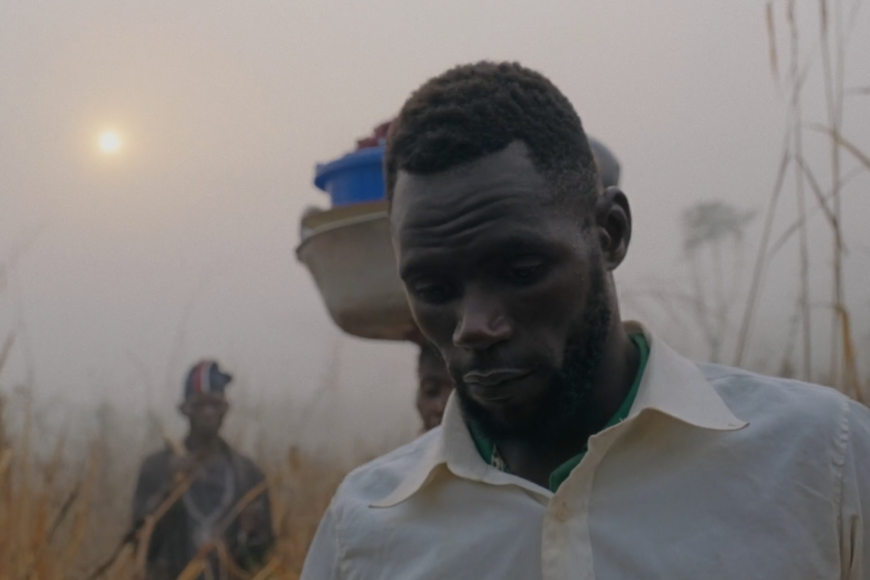
A man on a river at dawn. He prays, dives into the water, and comes back up with a bucket of sand. The single father Thomas Boa toils away as a sand diver in Bangui, the capital of the Central African Republic. The sand eventually ends up at the construction site of Jianmin Luan, a Chinese construction manager who went to Africa to further his career. Luan pays a price for this opportunity: He lives very simply, plagued by power failures and fears of malaria, typhoid, and civil war. After years abroad, he has become estranged from his family in China; his wife is mentally unwell.
Directors Ningyi Sun and Pascale Appora-Gnekindy tell a story of globalisation, poverty, and labour, asking how life can be lived with dignity. Instead of perpetuating clichés they introduce us to two men (and their families) who are tiny cogs in the gears of a global competition machine. There is a lot of inequality in this system and next to no winners. But there are also moments when it all seems worthwhile: when Luan’s wife visits Africa and intimacy is suddenly rekindled, or when Thomas cultivates a field and is finally able to look ahead. A visually powerful, enthralling and horizon-expanding film that skilfully evades stereotypes.
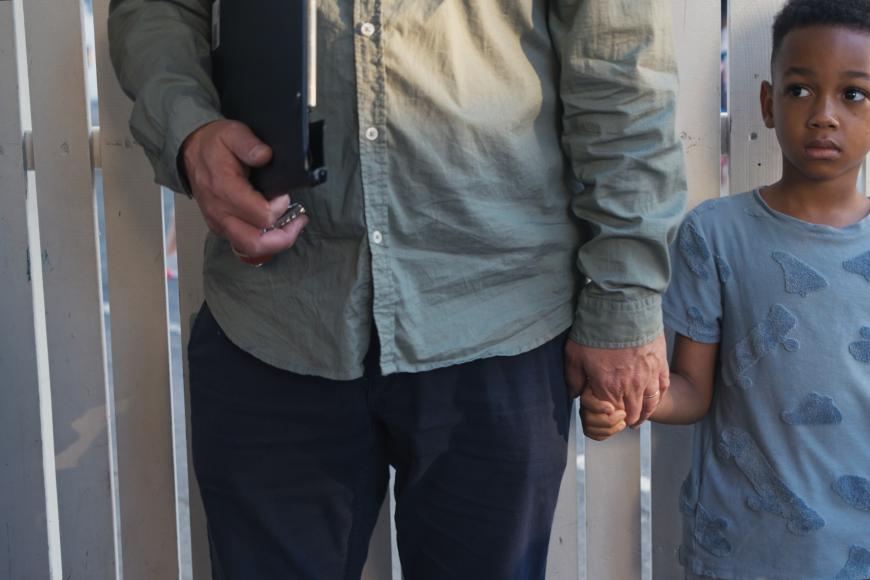
Claire Simon’s filmic observation focuses on the institution of school. But instead of a systematic analysis of the objectives and workings of this place of education, her emphasis is on the daily interactions between children and teachers. How are disputes resolved? How do you teach consideration, forbearance, empathy? The film explores these questions calmly and with an unobtrusive camera, using as example the Anton Makarenko primary school in Ivry-sur-Seine, just outside the south-eastern outskirts of Paris.
Parents arrive with their children. The teacher shakes hands with a newcomer – a gesture of encouragement. In class, the instructors seldom raise their voices, authoritarian shouting is out of place here. The staff rely on dialogue instead, which in turn depends on trust and mutual respect. Claire Simon immerses herself in the life of this school and lets the captured moments between children and adults speak for themselves. A sensitive mosaic unfolds: moments of deeply felt learning and teaching bliss, boat trips on the Seine, turmoil in the schoolyard. All these details feed into the vibrant image of a pedagogical mission carried by small and big shoulders.
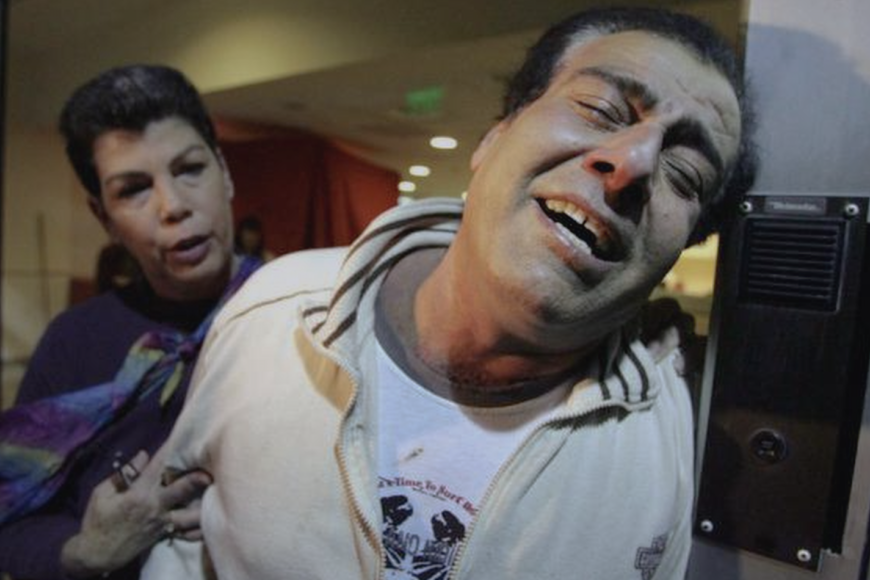
Dr. Izzeldin Abuelaish has been nominated for the Nobel Peace Prize several times. As a Palestinian gynaecologist practising in an Israeli hospital he was able to pass the strictly guarded checkpoints to Gaza without a hitch. His humanist perspective is expressed in words like these: “Do we need to be sick in order to understand that we are equal?” When the Israeli army attacked Abuelaish’s home in Gaza in January 2009 and three of his daughters died, he picked up the phone. On the other end of the line was Shlomi Eldar, a Channel 10 reporter who decided to broadcast his friend’s despair live to the Israeli audience. A historic television moment; the shelling of Gaza was terminated soon afterwards.
Director Tal Barda has given her portrait the same title as Izzeldin Abuelaish’s book, which was published in 2011. More than ten years after the publication of this memoir, the doctor as well as his now grown-up children speak out in her film, talk about traumas, their new beginning in Toronto and the struggle to obtain an official apology from Israel. “I Shall Not Hate” addresses the complicated ties between the fates of Palestine and Israel. Izzeldin Abuelaish’s conviction that peaceful coexistence is the only chance of survival remains unbroken.
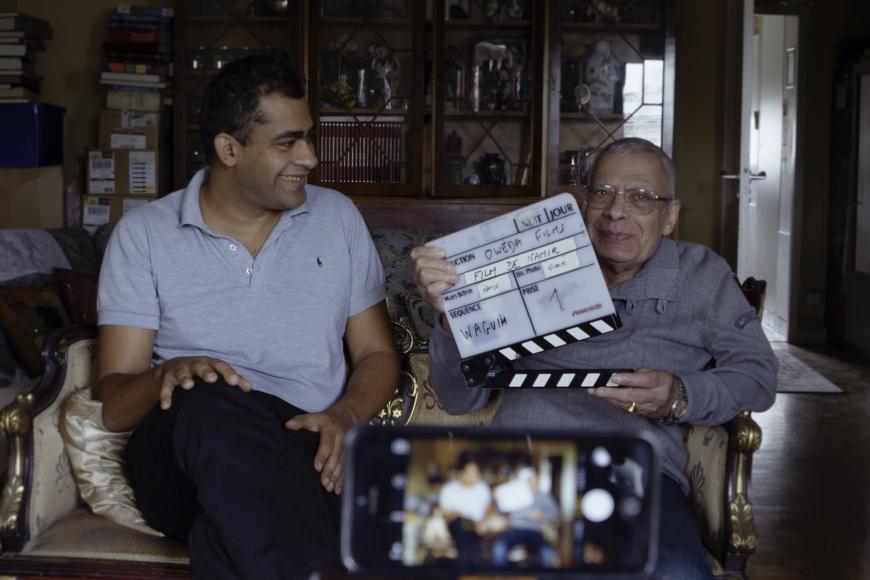
For Namir, the realisation that his beloved mother is not immortal is painful. He had actually intended to make a film with Siham. Now he is mourning in the church with his father Waguih and his children, who seem too young to understand death – and allowing himself to be filmed. “As always, I’m counting on cinema to help me.” He is convinced that cinema can turn tragedy into comedy – and preserve memories that would otherwise fade away.
Namir Abdel Messeeh has already worked through his family’s biography between Egypt and France, their Christian faith and love of cinema in “The Virgin, the Copts and Me” (2011). But it was Siham’s wish that her son finally realise a film with acting stars rather than his own relatives. Instead, Namir Abdel Messeeh recounts his mother’s love, her longing, and her mysteries using the power of cinema. A montage of home videos, family memories and Egyptian film classics by Youssef Chahine makes Siham appear almost “larger than life”.
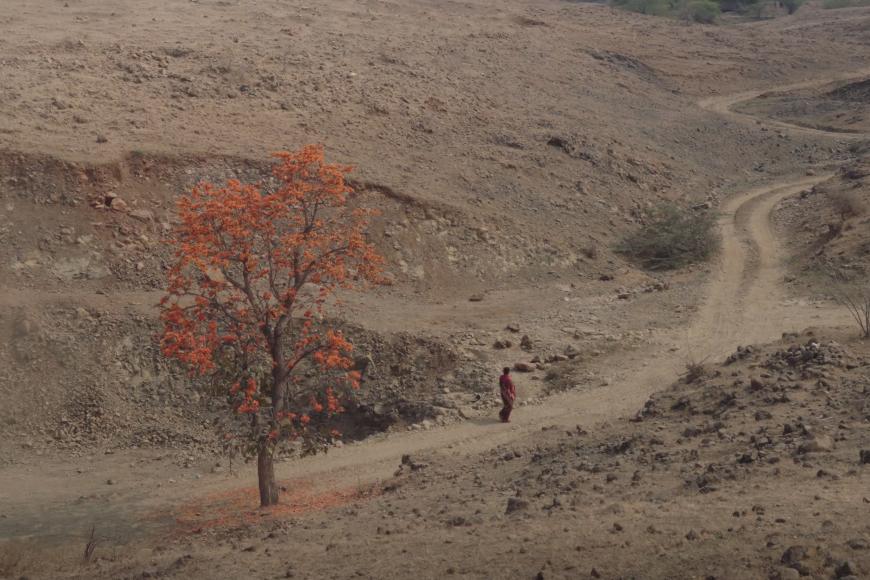
Sanjivani, a young woman from a rural area in the state of Maharashtra in central India, is a loving and tender mother. After her husband’s suicide, she lives with her brother-in-law who makes her work in the fields. She is now solely responsible for her two kids, faced with a mountain of debt left by her husband and the structures of a patriarchal society that incapacitates and renders invisible widows like her. It is only when she joins a group of women who suffered similar fates that she slowly gains some self-confidence. She is not alone with her despair and grief – the suicide rate among peasants who took their lives in the face of crop failures and dumping prices on the globalised market is harrowing: 400,000 in the last twenty years.
Kinshuk Surjan not only observes people and circumstances with compassion; he also stands for a cinema that makes a difference. The women’s group he follows here only came together as a result of his film project. In impressive images and with great empathy for the protagonists he portrays, he not only succeeds in producing a careful representation of highly complex contexts, but also a truly documentary intervention into unacceptable conditions – with the aim of improving them.
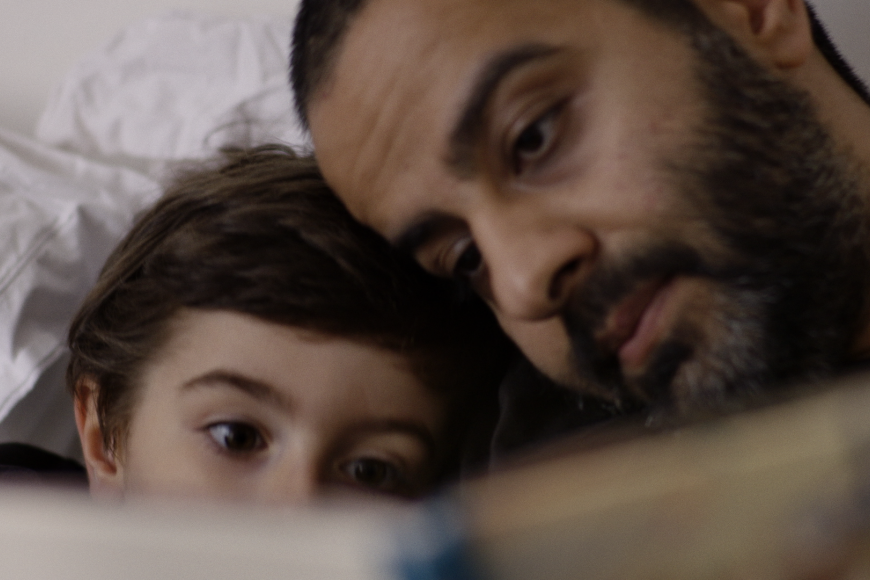
Twenty years ago, filmmaker Wiam Al-Zabari fled Baghdad with his family in the middle of the night. His father, a dissident former ambassador, had already escaped from Iraq and was waiting for them in the Netherlands. Since then, no one in the family has ever spoken about the events. What exactly happened was always a taboo. Now that Wiam has become a father himself, he realises that his past life is catching up with him and that more and more questions are arising, the biggest being: Why did they have to flee in the first place? Wiam wants to finally find out. For the first time, he breaks the silence and begins to research the past in dialogues with his parents and siblings. Above all he wants to prevent passing on these traumatic experiences to his son.
In this filmic family therapy, he addresses Nour, his little son, directly. Wiam promised himself and the boy this film to clear up the long-suppressed themes in a way that will allow Nour to feel firm ground under his feet when he is grown up. In doing so, Wiam is unsparingly honest with himself and his relatives and chooses a number of unusual artistic tricks. For example, he inserts himself as a director from offscreen, critically analysing his own position in the fabric of speaking and silence: an attempted inside view from the outside.
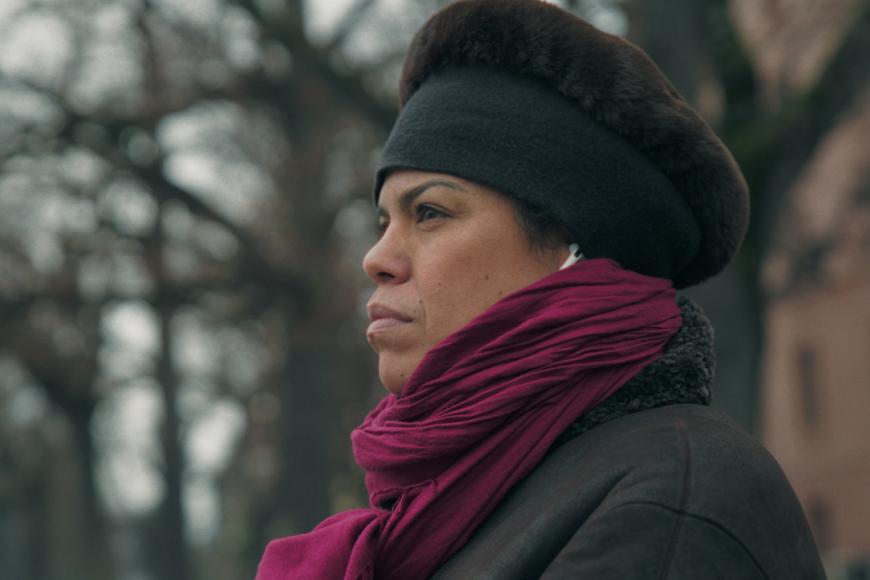
There are documentary heroes of such strength and vitality that you fall in love with their charm from the very first moments. As a viewer, you are ready to follow them through fire and water. Naima is exactly such a case – undoubtedly enhanced by the directorial talent and masterful dramatic work of Anna Thommen. Both fire and water will be present.
Naima’s story is the story of a migrant in Europe who has to start her life from scratch when she moves from Venezuela to Switzerland. She used to work in marketing for international companies, but now she ekes out a living with various service jobs. Naima does not give up and fights for the chance to be with her children again. Due to her financial difficulties, the two teenagers live with her ex-husband. When she is given the opportunity to undergo the desired training as a nurse and a preparatory internship in a psychiatric ward, Naima faces significant challenges. Her supervisor dislikes her, which practically leads to the internship not being credited. So there is no shortage of fire and water for our heroine. But Anna Thommen’s portrait is a testament to the human spirit’s ability to endure and even overcome conflagration. It is a must-watch for anyone seeking an inspiring and emotionally touching documentary.

Once upon a time there was a town on the banks of the Mississippi. The streets are still lined with neo-classicist Antebellum houses. Horse-drawn carriages full of tourists move through the streets, a travelling organist performs on a truck bed. Time seems to stand still in Natchez. But while the descendants of the European colonists, dressed up as “Southern Belles” in historical hoop skirts, welcome their guests and feed them Southern nostalgia, the façades are beginning to crumble. Built on the shoulders of children, women, and men in chains, the epicentre of cotton capitalism and the second-largest slave market in the US, with 750,000 Black exploited persons, emerged here in the mid-19th century.
This part of the former “Cotton Kingdom” is practically absent from the whitewashed version of history. On the contrary, it is dripping with romanticisation and racist clichés. But people like the Black pastor and tour guide Rev are breaking with this tradition and shattering the nostalgically glorified illusion of an ideal world. Suzannah Herbert directs the clash of different perspectives and characters with an unerring eye for direct and indirect contradictions. At the same time, she exposes a rift in society that extends far beyond the Natchez microcosm.
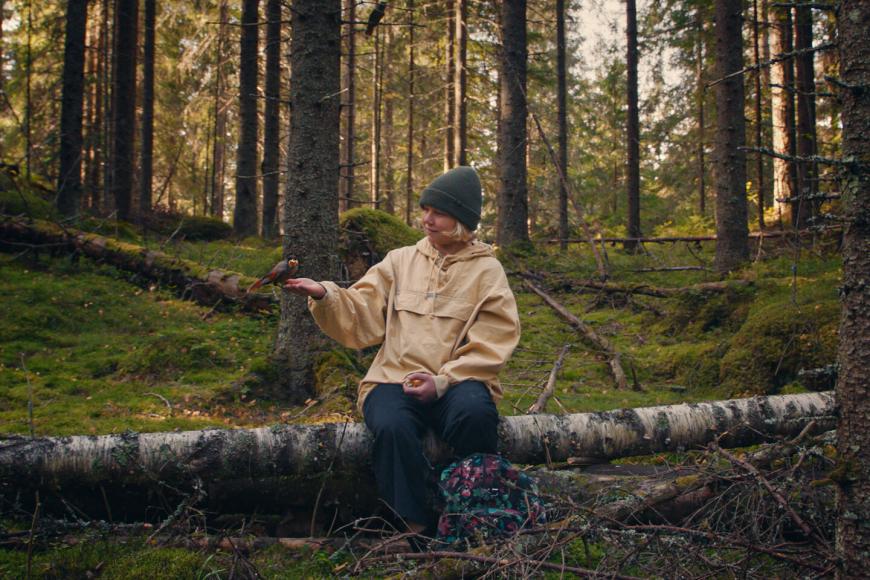
Young people roaming through thickets, bathing under birches in clear lake water, dewdrops glistening in the sunlight, animals scurrying, flying and crawling through the undergrowth. What at first looks like a modern fairy tale film soon lands rather rudely in today’s reality. Finland, the most densely forested European country with its boreal vegetation acts, together with Sweden, as the green lungs of the continent. There is a scientific consensus that preserving forests is one of the most effective measures to counteract climate change and halt the massive extinction of species. Despite this immensely important task, around ninety percent of Finland’s forests are currently threatened by deforestation, partly for the paper industry.
Her love of trees and her equally great anger at their destruction suddenly puts 22-year-old Ida at the forefront of a new environmental movement. Together with many like-minded people she takes on the giants of the Finnish forest industry. At the same time, she realises that her family, too, share the deeply rooted conviction that the forest is “cropland” meant to ensure Finland’s prosperity. One thing is certain: The committed young activists must fight a tough battle against economic interests, the political system and the prejudices of generations.
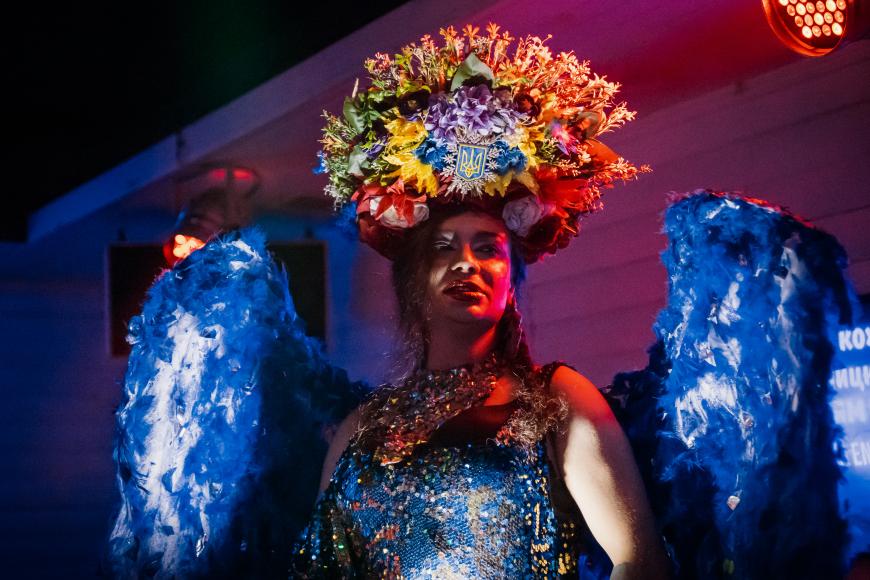
“Today, we’re raising funds for the 206th Territorial Defence Brigade”, Diva Monroe announces at a drag show in a Kyiv basement club. Whether on the front line or by civilian actions: A lot of people from the Ukrainian LGBTQ+ community are fighting against the Russian attacks – many of them even before the 2022 invasion. It would be understandable to flee from war and discrimination. For a long time, there was next to no social acceptance for queers in the Ukraine. But since Kremlin propaganda no longer reaches Kyiv, things have improved. That is what Olga Gibelinda’s film narrates via the example of three drag queens: Monroe, who remembers the empowerment of the Maidan protests and has worked for television and as an influencer since. Aura, at that time still siding with the pro-Russian government, today serving in the army under Commander-in-Chief Zelensky. And Marlen, who suffered abuse as a trans woman in the past and spreads joy on stage today.
The film establishes a poignant contrast between the show world and the private lives of the drag queens, while leaving space for their political demands. These include the call for the recognition of queer partnerships at this time to give relatives of those killed or wounded in action equal legal claims.