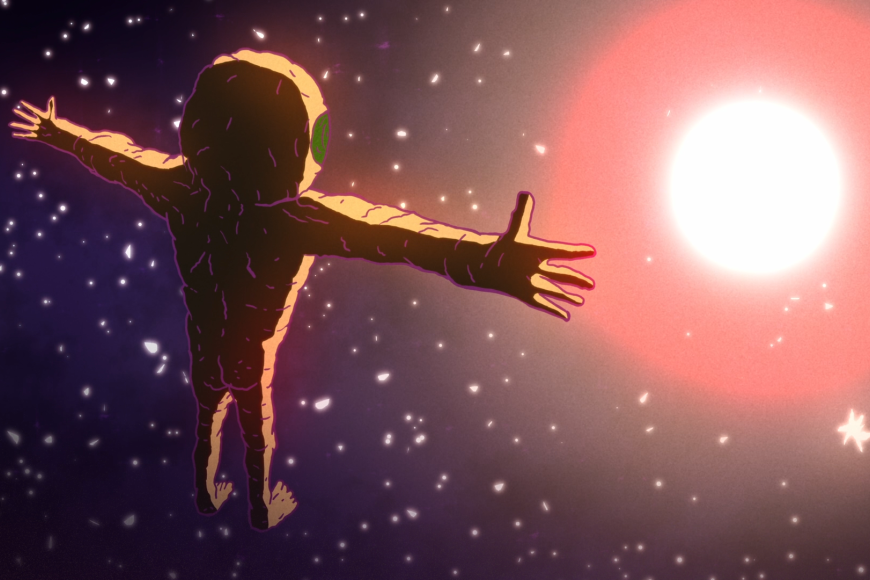
Frankie feels terminally ill, but nobody cares. Then his body transforms into a wild planet where evolution fast forwards from creation to destruction.
Contemplating your naked body, drenched in tomato sauce, on a frozen pizza – that is the epitome of alienated wage work. Especially if it is the mass product whose quality has to be checked hundreds of times a day at the assembly line. Is it this alienation, the multiple daily consumption of precisely this meal or simply the absence of significant human relationships that make Frankie feel terminally ill and ready to say goodbye to an existence he feels is worthless and empty? Nobody cares, until his body transforms into a wild planet where evolution happens in fast-forward mode: the genesis of life, miniature Frankies performing absurd penis dances, cannibalism, Darwinism, mutual destruction, the eradication of other species – and finally the Frankie planet itself burning out. Levi Stoops makes us laugh out loud – and yet we feel the bitter taste of self-destruction on our tongue. Will Frankie have the courage to risk a change of life after this apocalyptic experience? Or does the system have him so firmly in its claws that wholesome nature documentaries of exotic flowers are comfort enough – instead of cooking shows where the stone-baked pizzas are tossed into the air with verve?
Irina Rubina
Credits
Director
Levi Stoops
Script
Levi Stoops
Editor
Levi Stoops
Producer
Annemie Degryse
Sound
Paulo Rietjens
Sound Design
Paulo Rietjens
Score
Wiet Lengeler
Animation
Camiel Hermans, Sarah Menheere, Karolien Raeymaekers, Neyrouz Jemour, Jana Leeuwerck
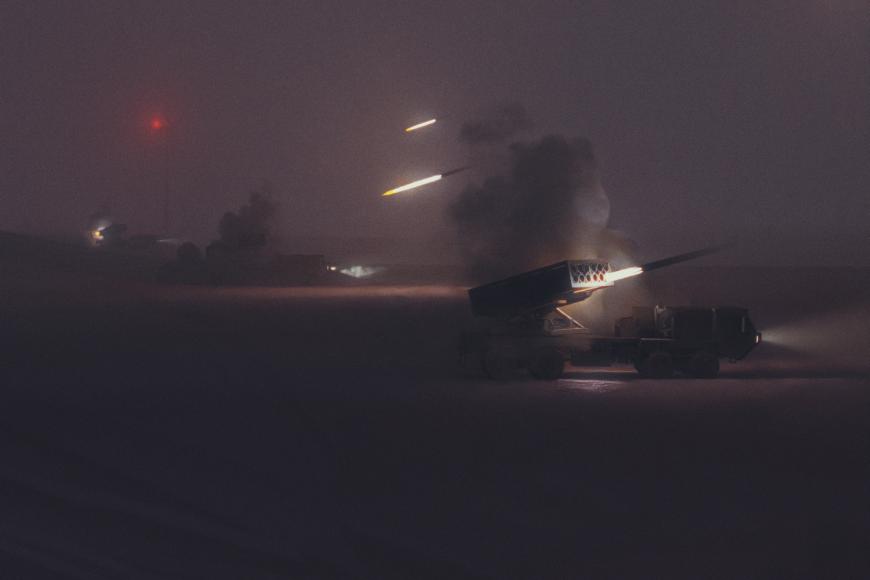
A man on an e-scooter on the outskirts of the city. Only the rifle over his shoulder irritates. The mood of high alert is deceptive. The disaster has already happened.
On the outskirts of the city, the new modern buildings are silent and the motorway bridge drones. Birds are circling in the sky, a young man, concealed by his hoodie, is riding his e-scooter along a park path. The only irritating element is the rifle over his shoulder.
Anton Cla’s film depicts a mood of high alert, while the disaster has in fact already happened. Unexplainable scenes that could not be more disconcerting and grow increasingly drastic unfold calmly. The screaming silence is decisively enhanced by the imperceptibly accumulating mixed drone of the daily sounds of a mechanised world: motorway, tramway, clicking indicators, pulsating emergency signals. What the soundscape adamantly refuses to deliver is a loud discharge that would release the tension. The suburban landscape is steeped in a red theatrical warning light, blurs restrict the view. The 3D computer design masks neither the artificiality nor the computer-based deformations of the images of a normality that has become a combat zone – the machine matrix seems to rule already.
A relationship on the rocks, naked under the scorching sun and disoriented on a vast holiday sea. In search of funny dolphins, Aurora and Jeremy are paddling for their lives.
She and him, naked on the holiday seas in the bright sun. It may sound idyllic, but it is hell for Aurora and Jeremy. In search of funny dolphins, the two are paddling without orientation in the limitless expanse of water, no land in sight. Complete with dangers from above and below in the shape of heat and sharks. And at the centre of events is a near-defunct relationship. The roles are well-practised and grating, uptight lust is satisfied only solo.
Instead of roaring waves, it is above all the relentless silence of the sea surrounding them that provides the tension of the film. It is occasionally released in brilliant miniatures, for example a witty argument, or clumsy physical comedy. Another time, we are shocked by action-filled horror moments triggering absurd chain reactions. Whether it is the glaring light on the brutally calm water and the clueless couple, the visual fumes of decay one can almost smell, or a super dynamic dive – Levi Stoops’ direction is magnificent and timed with utmost precision.
André Eckardt
Credits
Director
Levi Stoops
Script
Levi Stoops
Cinematographer
Camiel Hermans, Sarah Menheere, Karolien Raeymaekers, Levi Stoops
Editor
Levi Stoops
Producer
Annemie Degryse
Sound
Paulo Rietjens, Arnout Colaert
Sound Design
Paulo Rietjens
Score
Mick Lemaire
Animation
Camiel Hermans, Sarah Menheere, Karolien Raeymaekers, Levi Stoops
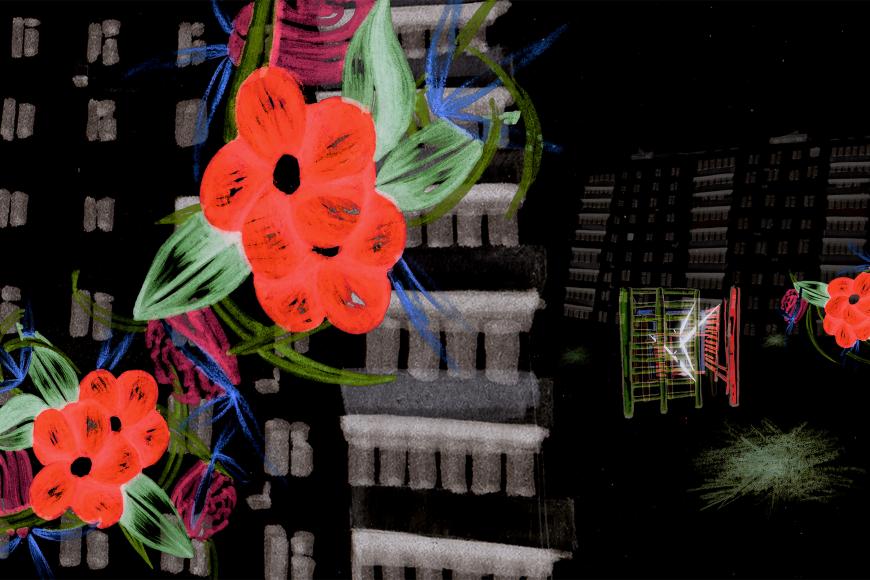
White drawings on light-sensitive material. This film about the ambivalence of memory builds a bridge to our childhood ability to find everyday magic in the smallest objects.
Only light lifts the outlines of the world from darkness. In cyanotype, light-sensitive material is used to make white drawings materialize on a blue background. Tata Managadze challenges the light-sensitivity of our mind. She uses reflections and mirrors to expose the sensitive, gossamer-thin material of association in ways that make ephemeral memories and emotions visible. The poem at the beginning tells us how soothing and at the same time brutal her protagonist – light – can be. Like children in a playground, we are seduced by and forever searching for the dance of lights. Flower patterns on the dishes in the sink begin to spin when our eyelids grow heavy and sleep is approaching. Everything moves. In the transitory state between waking and dreaming, a different kind of life stirs in the prefabricated building estate: The stars of the restaurant leap from the sign and scratch traces into the wall. Or are these scars that must still heal? Perhaps scars from the Soviet era? Again and again, well-known fragments are re-assembled. This non-narrative animated documentary takes us on a spiral of remembrance to an untraceable origin, building a bridge to our childhood ability to find magic in the most mundane things.
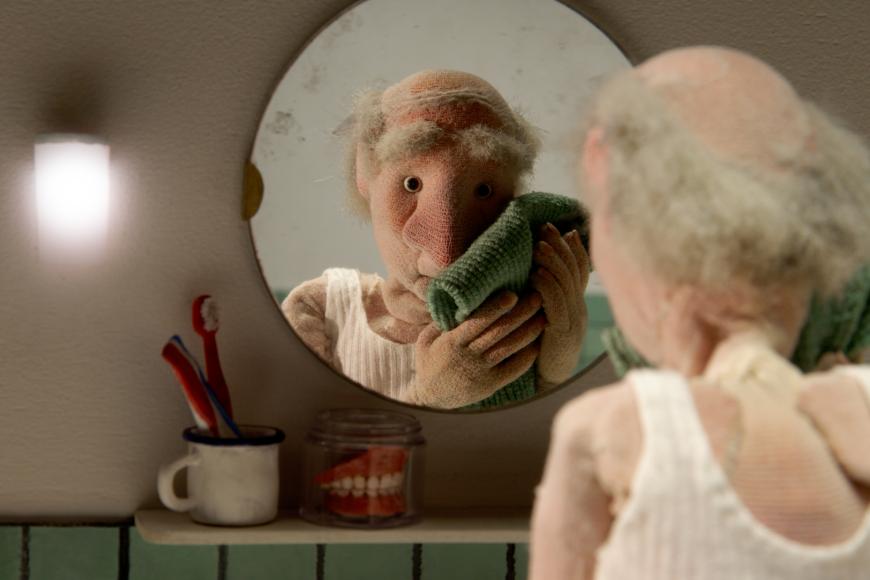
Starlings circle in flocks above the retirement home. What does the end of life feel like? A man grows the first feathers and senses that he is gradually drifting from this world.
Flocks of starlings are circling above the retirement home. These impressive natural spectacles are called murmurations because from a distance they sound like collective murmuring. Not everyone hears or sees them, but the old man notices. Sometimes the starlings send a single twittering messenger to his window. Often, the birds are more present to him than his fellow humans, more present than the old demented fellow resident who regularly waters a still life of flowers, more present than his neighbours in the amateur choir. And then it happens: The old man finds a first feather in his hair, then a second, then several. Soon he grows a beak so that instead of singing he can only caw. The last phase of life we witness here is lovingly animated: The puppet animation was created with gauze bandages, a beautiful approach to the vulnerability that comes with aging. The farewell to life shown here is devoid of pathos, not even that over-produced grief we know from many narratives of dying. Even the retirement home is a completely mundane place, neutrally portrayed. Instead, we follow this feathered farewell as a quiet but growing alienation from the world, a no-longer-belonging. And one day we will all grow the wings that go with it.
Marie Ketzscher
Credits
Director
Janneke Swinkels, Tim Frijsinger
Script
Janneke Swinkels, Tim Frijsinger
Cinematographer
Janneke Swinkels, Tim Frijsinger
Editor
Janneke Swinkels, Tim Frijsinger
Producer
Peter Lindhout
Co-Producer
Annemie Degryse, Janneke Swinkels, Tim Frijsinger, Ben Tesseur
Sound
Corinne Dubien
Sound Design
Corinne Dubien
Score
Roos Rebergen, Sjoerd Bruil
Animation
Rosanne Janssens, Mirjam Plettinx, Geertrui de Vijlder
Rough poetry in images, words and sounds. Full of emotional power, this film uses photography, painting, collage and video to negotiate the tipping point between physical desire and emotional injury.
Powerful poetry in image, word and sound – Max Ferguson’s work is a rough diamond that testifies to an emotional, unpolished force and whose light is refracted in many colours. Mixing elements from photography, painting and collage with short video sequences, Ferguson finds strong verbal and visual images to mark the tipping point between physical desire and emotional violation. Rough aesthetics and a gloomy atmosphere reminiscent of early underground films are combined with extreme delicacy and a constantly alert, almost animalistic curiosity. They manifest a very contemporary female self-image. The balancing act between pain and self-respect takes place in a sound cosmos of electronic thunder and nervous buzzing. While the brawny truck cannot leave its lane, the deer follows its instinct and finds a (new) way, even if it must learn from the wolf.