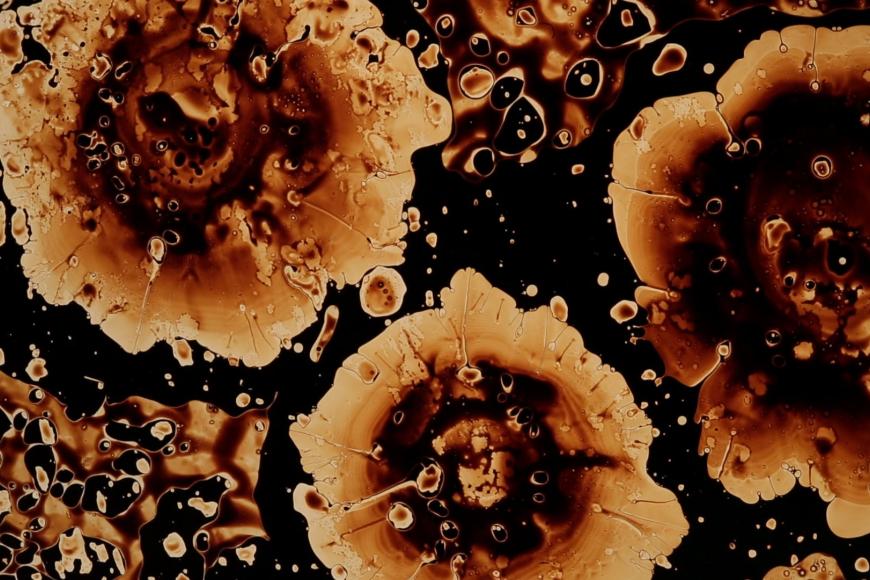
An oily liquid oozes across the frame. Wafting windows in the black mass draw the eye to the levels below. Everything is in motion. Hypnotic music enhances the viscosity of the soft body until we believe that we see a “Liquid Light Show” from the 1960s. But these are the dark revenants of psychedelic hippie visuals that put us into a black trance.
The painter Ruttmann takes out a patent for a process to produce moving image: glass sheets mounted on top of each other are painted with oil paints and photographed from above with a camera.
Like many artists of his time, Walter Ruttmann discovered film as a medium of experimentation with revolutionary forms of expression. He gave up easel painting in 1918 and acquired the first German patent for an animation stand in 1920, thus creating the technical prerequisites for his “Opus” series: abstract elements of painterly gestures and cardboard moved by stop-motion.
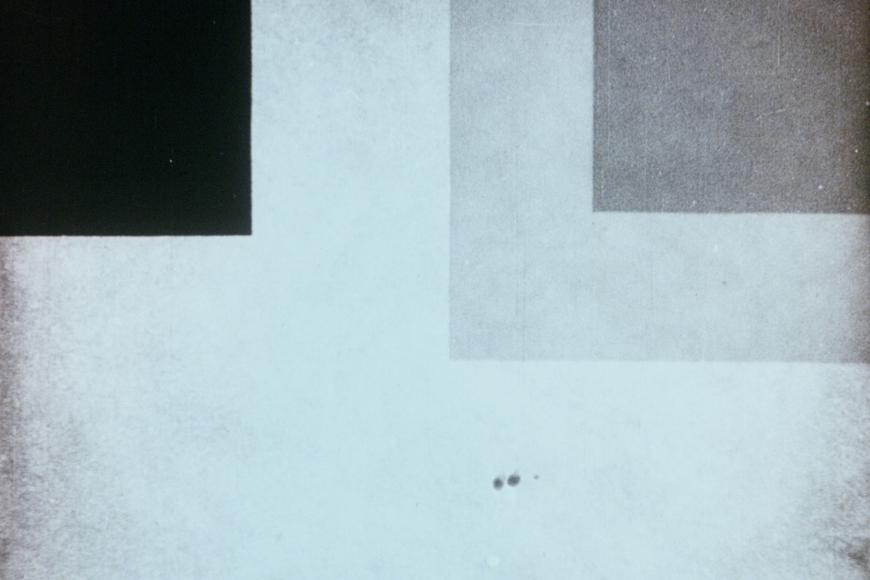
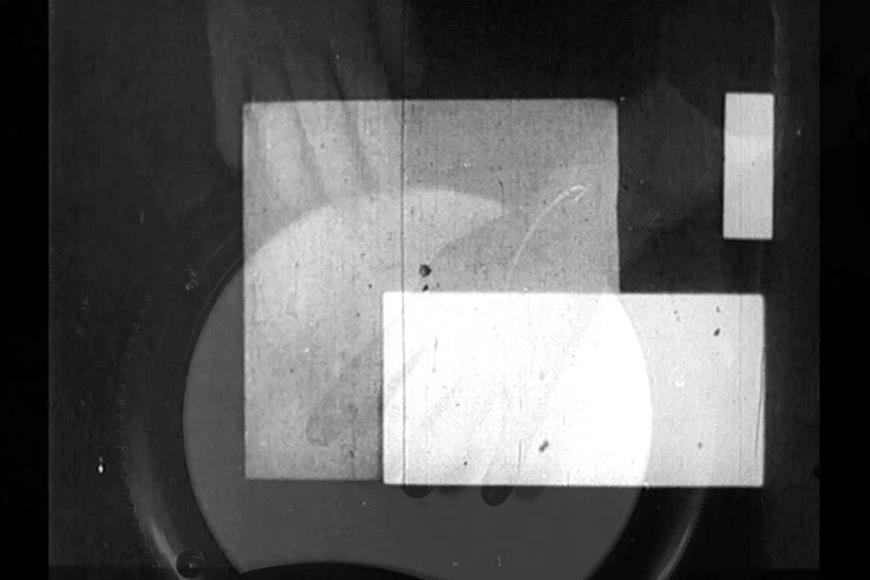
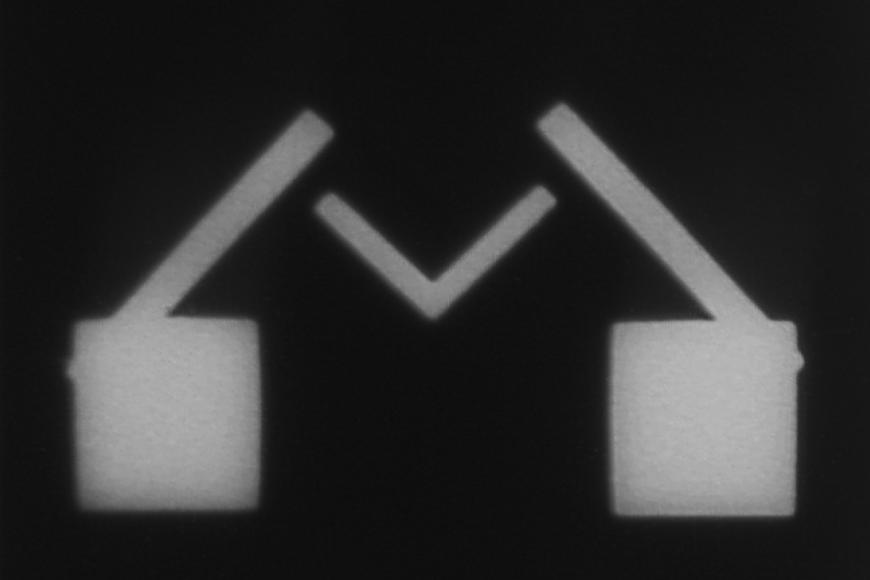
The figure 21 in the title of Hans Richter’s film is not necessarily indicative of the date of origin of this milestone in abstract moving images, which has been lost in the mists of history. The fact that “Rhythmus 21” was screened at the matinee “The Absolute Film” in Berlin in 1925, however, is documented. Rectangles move through space on fixed paths, growing and shrinking to create an illusion of depth.
This originally soundless film generates sound in our mind: Geometrical forms break free from their strict paths of movement and arrange themselves into a complex rhythm.
Delicate lines complement the rectangles that dominate Hans Richter’s film experiment “Rhythmus 21”. It almost seems as if a nod to Viking Eggeling had sneaked into the visual worlds of this important masterpiece. The shapes break free from their rigid paths of movement, boldly slanting away from their right angles. The rhythm of the visual elements is impetuous and self-determined.