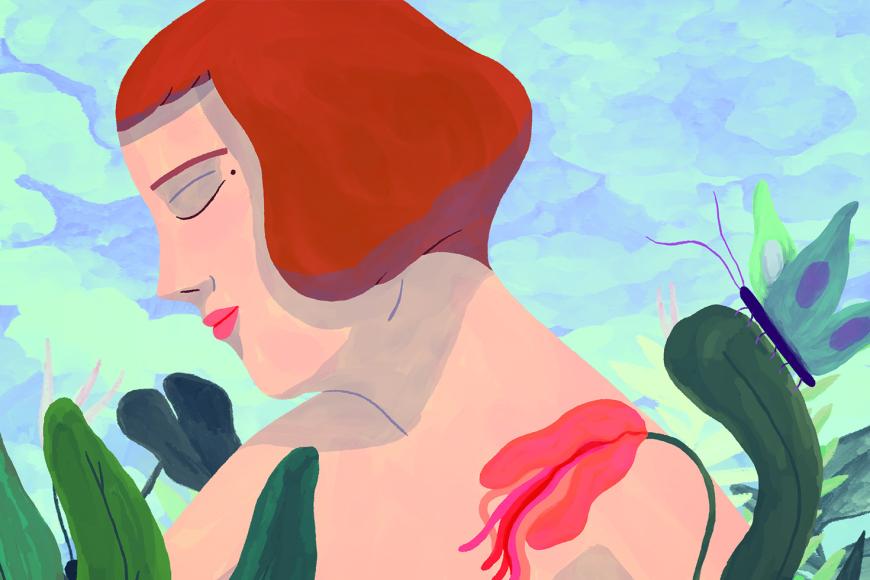
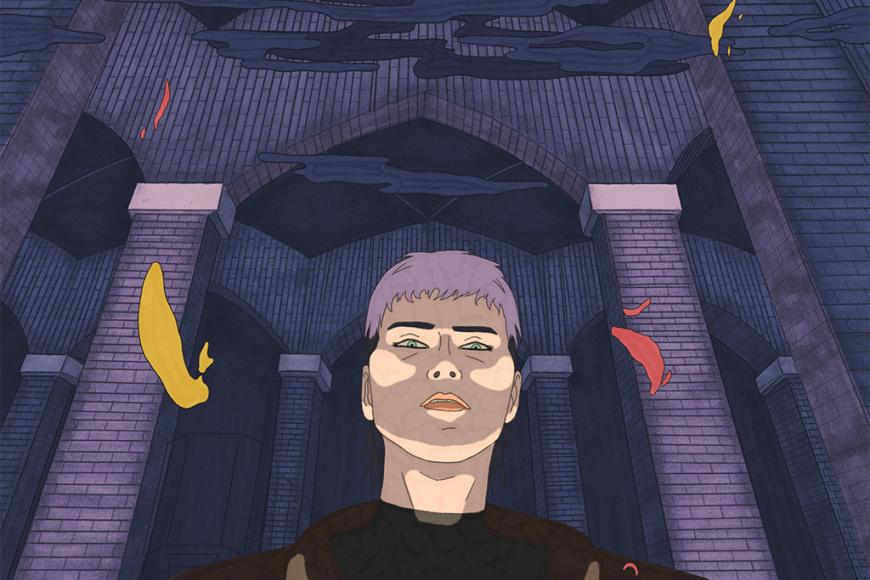
A bicycle accident causes a crack in the protective shell Alice has grown to be able to bear the oppressive confinement of her daily life. Can she finally dance her way out?
It is Alice’s 27th birthday today. She lives in her old room in her parents’ apartment. Her mother coddles her like a little child. Her kid brother gets on her nerves. The only space for self-realisation and living out her sexual desires is in her imagination, if at all. For economic reasons, she and many other young people are denied the chance to live an independent life in their own four walls. So Alice has to endure the confinement.
On the night of her birthday, she goes pub-crawling with a buddy and dances, free at last for a few moments, at a party on the roof of a high-rise. Looking at the nocturnal city and sobering up after all the exuberance, though, her dilemma re-surfaces again: Where is her private space where body and soul can unfold unobserved? Haunting, colourful, with a fantastic soundtrack and full of eroticism, the film describes the depressing situation of a whole generation.
Franka Sachse
Credits
Director
Flóra Anna Buda
Script
Flóra Anna Buda
Editor
Albane du Plessix
Producer
Emmanuel-Alain Raynal, Pierre Baussaron, Gábor Osváth, Péter Benjámin Lukács
Sound
Péter Benjámin Lukács
Score
Mári Mákó, Rozi Mákó
Animation
Zoltán Koska, Gábor Mariai, Luca Tóth, Borbála Zétényi, Flóra Anna Buda
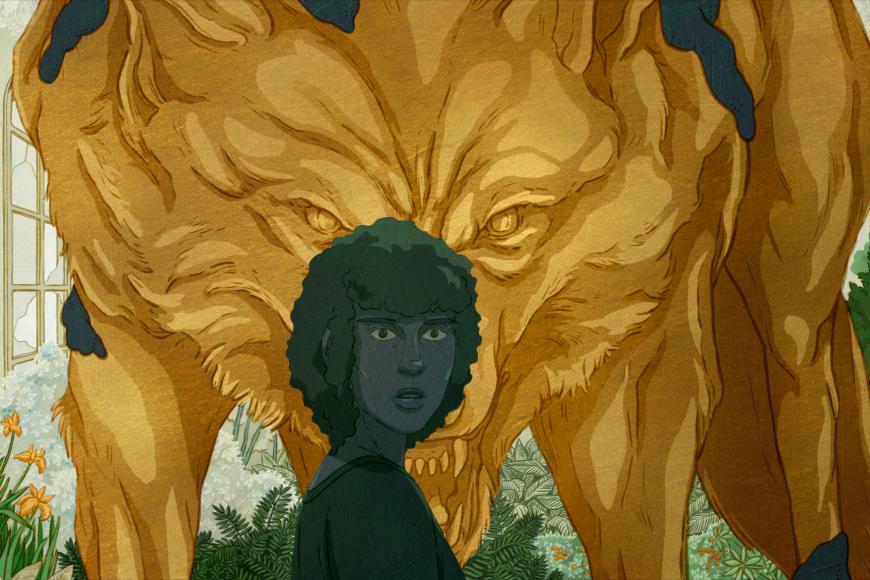
A group of young activists raid a posh mansion. The revenge campaign fails. Only Hélène gets a fatal second chance and is sucked into a surrealistic vortex.
When Marc confesses his love to his girlfriend Hélène, all she answers is “Later!” The timing of his confession could not be worse, as there is a whole other dimension to Hélène’s reply. Both belong to a group of activists who have just burned their mobile phones and tackled the ultimate important questions in the forest. Questions of fear, power, courage, loyalty, and doubts. Following this, they attack a rich and influential retired couple in their posh mansion, representing those guilty of the dilemma of this world in their eyes. The armed attack ends in a bloodbath. In the midst of the shootout, though, Hélène is struck with a strange kind of paralysis and soon afterwards sucked into the surrealistic maelstrom of a fatal second chance. Canadian director and writer Félix Dufour-Laperrière says, he writes “with colours in mind, with transformations, dreamlike sequences, mental images that take shape on screen.” Hand-drawn templates unfold in a powerful symbolic 2D animation of flowing figures and silhouettes that neither shrinks from aggressively formulated messages nor from the exuberant magic of the format.
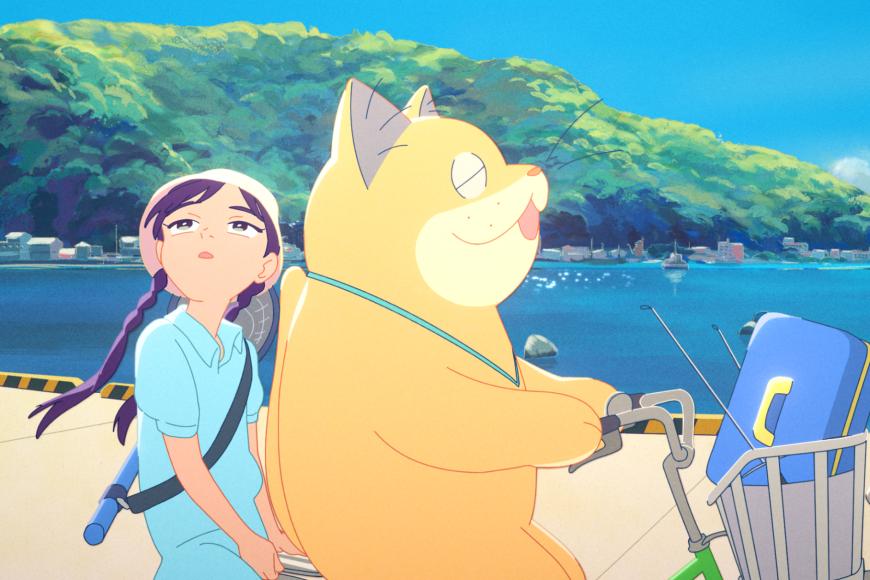
Left alone by her father, eleven-year-old Karin makes friends with a talking monster cat. This launches a wild and fantastic tour de force through fabulous and hellish worlds.
Eleven-year-old Karin is spending the summer in the country, where she makes friends with a giant talking cat. So far, so cute. But there is more to come. Her father has run up debts with gangsters who will beat him half to death. The god of poverty stalks Karin. He will take her to hell, where her deceased mother is spending eternity as a cleaning lady. Does this still sound cute? If “Ghost Cat Anzu” is meant to be a children’s film, it is the most merciless one you can imagine. The cat demon, or Bakeneko, is a well-known character in Japanese mythology. And there are other familiar patterns in Takashi Imashiro’s manga on which this film is based: the portal to a parallel world, the mythical creatures in the forest … But the devil is in the details, for comic and adaptation handle the traditions with an astonishing degree of irreverence; humans and ghosts often behave like unmitigated louts, and the entrance to hell is through a toilet bowl. First-time director Yôko Kuno and the renowned Nobuhiro Yamashita, who has co-directed an animated film for the first time here, work with rotoscoping. The quirky, cartoon-like figures and painterly backgrounds contrast so harmoniously, the highlights are so lovingly placed that one can feel, taste, smell and grasp the sultry summer atmosphere.
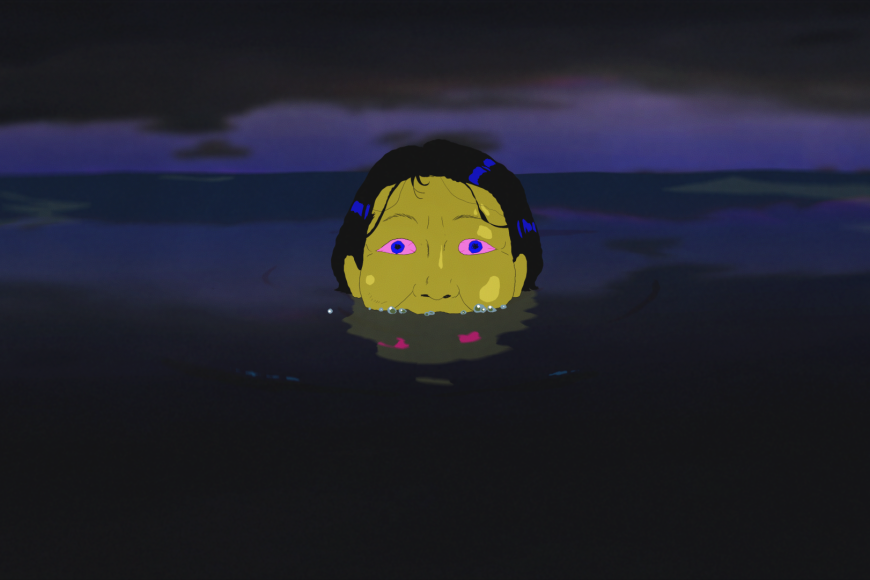
Ariel and Paul have no idea that this boring TGV ride is going to turn into a psychotrip. A film about primal fears, the power of the subconscious, and the hubris of playing God.
The train ride is deadly boring. The landscape rushes past as a buzzing surrealist kaleidoscope of colours and Ariel and Paul pass the time by drawing their worst nightmares for each other. For Paul it is his mother swimming towards him on the open sea to drag him underwater, for Ariel it is the confrontation with a psychotic woman in the bathtub. What starts out as a game turns uncanny when fellow traveller Gilda joins them – and begins to tell them that the eeriest thing ever happened to her. She hypnotised her demented husband in his sleep. The one who answered her had been none other than God. An indignant God, a disgruntled God and finally a downright angry God, for she had absolutely refused to stop asking her sleeping husband: “Why do we exist?” With an incredibly precise sense for the moment when the profane suddenly develops the potential for horror, Jocelyn Charles takes us on a magnificent psycho-trip. The director leaves it to the audience to determine whether to watch the 2D animation as spot-on genre entertainment or whether to take in the undertones: the hubris of humans who constantly play God and want to solve every mystery, for example. A hubris that does not remain without consequences.
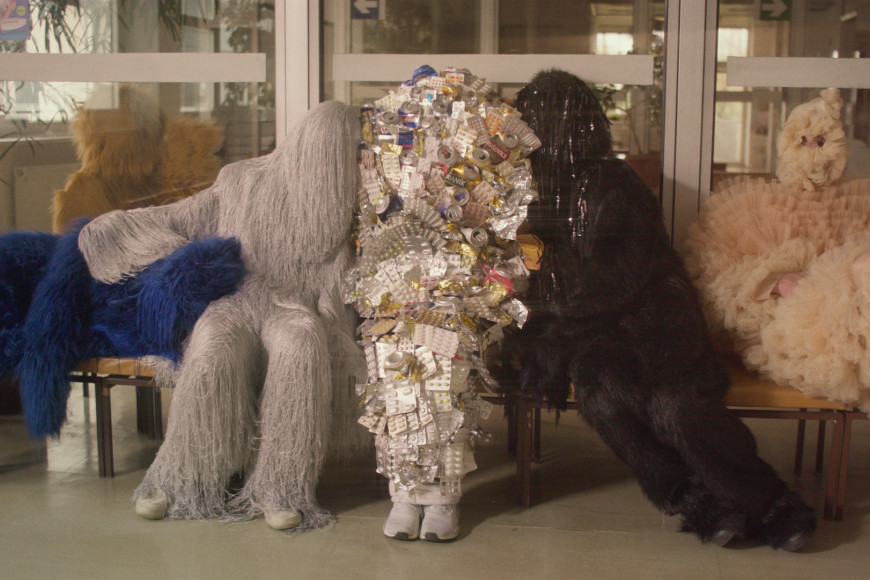
An encounter with the King of Chaos: Hun Tun drives you on, Hun Tun gives you the strength for countless hours of overtime and all-nighters – and in return robs you of your sleep and changes you.
In a fantastic sphere somewhere between animation, live-action film and performance, a tale of Hun Tun, King of Chaos, unfolds. Hun Tun cheers you on, Hun Tun drives you forward, Hun Tun keeps you awake. He gives you strength for countless hours of overtime and endless leisure activities. But in return, Hun Tun robs you of your sleep and transforms you. Fragments of everyday life – cups, bottle caps, pill packages – speak of sleepless nights and complete exhaustion, of wanting to sleep and being unable to. Superimpositions of elegantly animated, delicate sand elements introduce rhythm and texture. Danced narrative moments in expressive costumes bring lightness and at the same time convey intense moods, with a precise overarching sound design weaving the various levels into a gripping reflection on a very personal conflict.
Franka Sachse
Credits
Director
Magdalena Hejzlarová
Script
Magdalena Hejzlarová
Cinematographer
Zdena Sýkorová
Editor
Alexander Kashcheev
Producer
Karolína Davidová
Co-Producer
Romain Bent
Sound
Alexander Kashcheev
Sound Design
Alexander Kashcheev
Score
Gosheven
Animation
Eliška Kerbachová, Magdalena Hejzlarová, Anna Belova
A Prague food stall has run out of beer. Regular Hurikán takes matters into his own hands. An epic parkour in the drowsy but steep side streets of the city begins.
Beer is out in Prague … well, actually only at a food stall away from the touristy Old Town. But that doesn’t make the death rattle of the spigot less dramatic for Hurikán, a regular who spends his days and much of his nights at these haunts of lost souls. With a crush on the stall manager, Hurikán takes matters into his own hands. Things get rolling, just like the empty barrel he wants to have filled. An epic parkour begins, starting with small mocking gestures and rapidly expanding into a breakneck chase through the drowsy but steep side streets of Prague’s Žižkov neighbourhood. With brilliant timing and tongue-in-cheek humour, Jan Saska weaves typical genre elements from comics and action movies together, all revolving around a guy whose life is not easy. This time he needs luck if he does not want to die of thirst.
André Eckardt
Credits
Director
Jan Saska
Script
Jan Saska, Václav Hašek
Editor
Jan Saska
Producer
Kamila Dohnalová, Martin Vandas
Co-Producer
Antoine Lietout, Ivan Zuber, Juraj Krasnohorsky, Mladen Đukić, Alena Vandasová
Sound Design
Jiří Gráf
Animation
Marek Pokorný, Michaela Večerková, Jan Saska, Camille Chao, Hugo de Faucompret, David Štumpf, Jean-Christophe Lie, Félicia Gillibert, Delphine Grelet
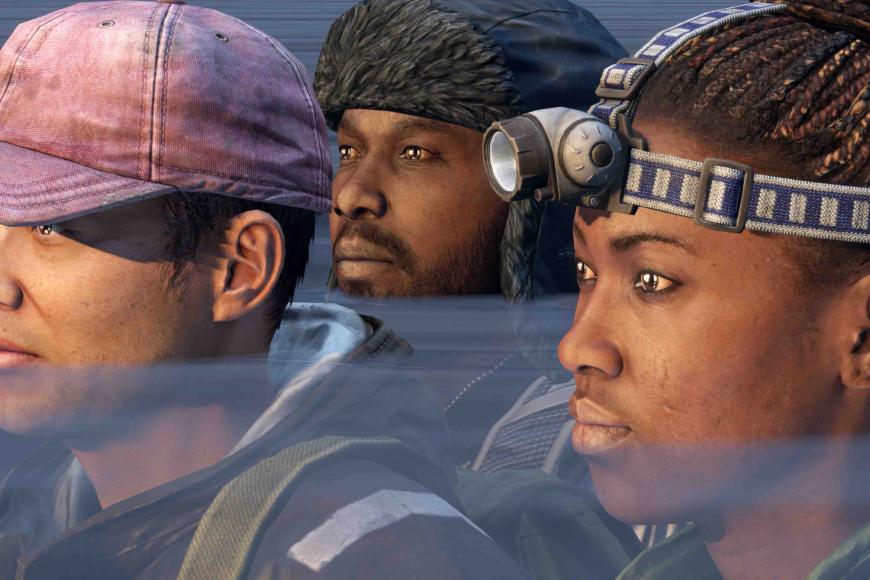
A documentary film crew spends 963 hours in a video game interviewing gamers. Little by little, they drop their masks and give insights into their “real” lives.
Running. Rapid breathing. A shot in the silence. The opening strikes the keynotes: caution, curiosity, thrills. A documentary film team spend 963 hours on the adventure playground of the video game DayZ. Online gamers explore the territory of a post-Soviet disaster province, permanently exposing themselves to the risk of being killed by hostile gamers. Despite their “press” badges, Guilhem, Ekiem and Quentin, as avatars, are subject to the same rules when they interview the gamers in their virtual world. The community is heterogenous: marauding gangs, cowboys with Samaritan ethics, curious wanderers.
Reality is never far away. The gamer “Feesh” is torn from her console during the interview because her IRL (in real life) child is crying. In the course of their conversation, “Iris” shoots her “toy”, a prisoner, before the eyes of the shocked documentary team – a conflict of documentary work opens up. “Knit’s Island” is a disturbing, melancholy to heartwarming tour of chance meetings and friendships of sleepless persons in the artificial world. Some avatars constantly twitch nervously and grotesquely because they act out darkest desires. Others “trick the game” and enter fascinating techno-psychedelic spheres. Game-playing and role-playing persona – sometimes they are one, sometimes two.
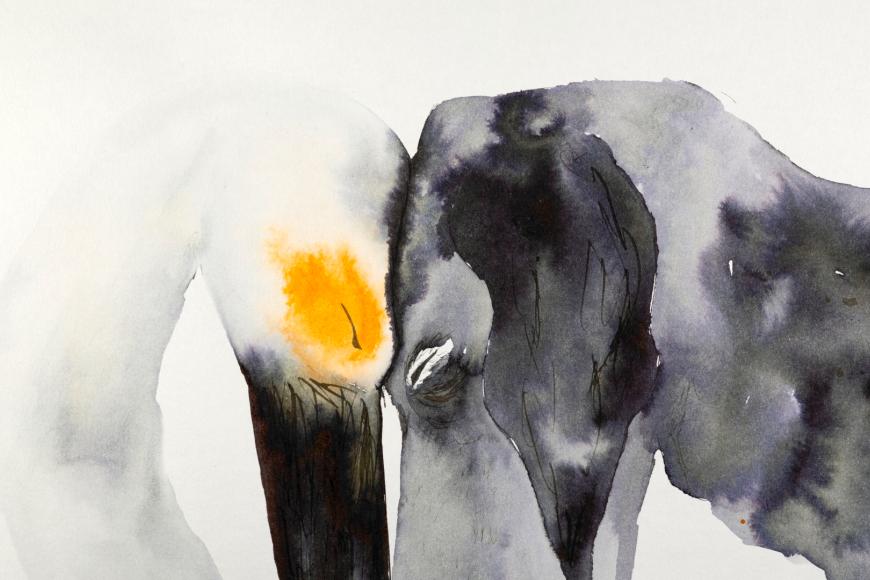
The breasts are in place, the feathers are smoothed, off to the date! Her daughter does not comprehend the ritual of desire yet … Erotically crude, with pointed beaks in the conflicts.
Breasts lifted, bottom tight, feathers smoothed. She is ready for her date. But her daughter clings and refuses to let her go to this as yet incomprehensible, repulsive ritual of desire. Very soon the fully-fledged adolescent will indulge in sexual lust herself … and experience disappointments. In the conflicted world of the two women, men evade partnership and fatherhood. The faithful bitch offers the only support.
As in her previous film, Carla Melo Gampert transfers her impressive but uncompromising analysis of family relationships to the lives of wading birds. Human traits show through in the anatomy, but the bird’s bodies including their feathers and sounds lend themselves perfectly to the apt exaggeration of emotions. Delicate strokes turn into cuttingly sharp movement lines of the animal characters, both in their erotically crude acts of love and their “hands-on” disputes. Soft splashes of watercolour glow incandescently in the heat of lust and warningly in the hopeless fury.
Leipzig, 1989. A young punk, detained in a mental hospital, longs to be close to her boyfriend. A doomed love story in the midst of the collapse of the GDR.
The end of real-socialist oppression, doomed love and tacit double morals unfold in colourful felt-pen images and clear lines. Leipzig, 1989. The city still belongs to the blue shirts of the Free German Youth, there is still talk of a flourishing country in festive speeches. Locked away in a mental hospital for belonging to the Leipzig punk scene and abused as “belonging to an enemy faction” that undermines the GDR from within: Margarethe can stand it. Ultimately, however, the lack of briquettes and the cold water in the communal shower make the young woman dream of being close to her boyfriend Heinrich. While the protests in the streets are growing, Heinrich and his band play church-organised punk concerts that hint at the prospect of freedom. But Stasi spies are more present than ever – until the newly gained freedom to travel scatters them to the winds along with the lights of the fireworks.
Jana Kraft
Credits
Director
Lucas Malbrun
Script
Lucas Malbrun, Marie Larrivé
Cinematographer
Lucas Malbrun
Editor
Clara Saunier, Vincent Tricon
Producer
Nicolas de Rosanbo, Céline Vanlint
Sound
Elodie Thevenin
Sound Design
Quentin Romanet
Score
Mael Oudin
World Sales
Miguel Español Celiméndiz
Artistic Design
Morgan Curt, Hippolyte Cupillard, Jean-Baptiste Peltier, Charlie Belin, Jonas Schloesing, Daria Skripka, Yehor Bondarenko, Angelina Dorozhinskaia
1945. The Red Army are moving into Germany. A child, a Soviet soldier, a Nazi officer and a Hitler Youth have been stuck in a hotel ever since, which binds them together for years in bizarre ways.
In 1945, the Red Army are advancing on German territory, the Second World War is drawing to an end. Families are still trying to escape to America, but many plans fail. Five-year-old Sophie also loses her father and mother during the flight. They are killed by Nazi officer Scharf and a Soviet soldier named Vasily, with Hitler Youth Beckmann as a witness. The gruesome event takes place in an extremely strange hotel which henceforth will bind the four survivors to its premises in bizarre ways, no matter which rooms of the truly scary building they find themselves in. Up in the lounge, where the new customers arrive one by one, down in the kitchen, where the now grown-up Sophie prepares food, or even in an alcove near the elevator shaft, where Beckmann hides with the rats. The involuntary permanent guests age but never tire of courting Sophie. Heinrich Sabl has built an excitingly disturbing dollhouse decorated with quotes from reality for the German-Soviet history of guilt and coping. In his first feature-length animated film, on which the director worked for more than twenty years, he sends extraordinary characters on an equally extraordinary visual and acoustic time journey through the war-damaged suites of the 20th century.
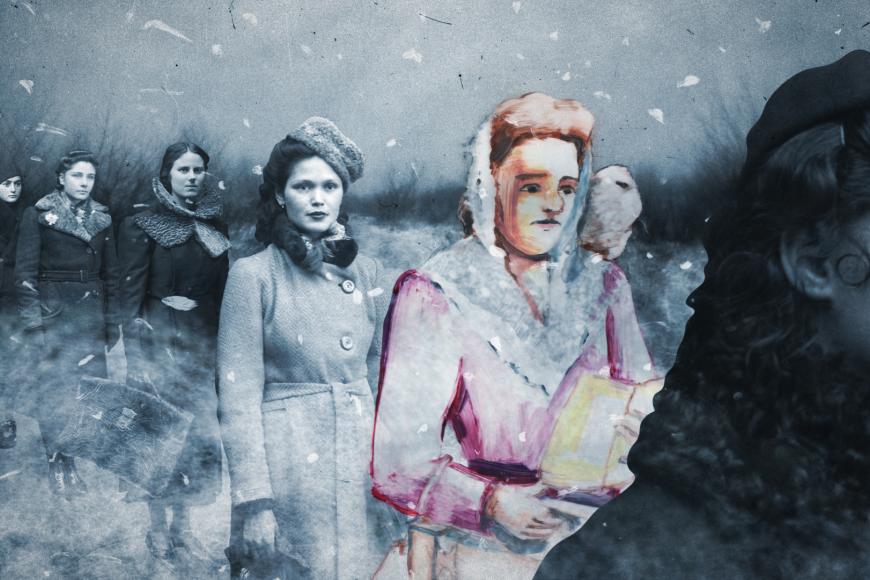
Inspired by the estate of a Romanian photographer in which 5,000 glass plate negatives from the 1930s to the 1950s survived undiscovered for a long time, a touching love story evolves. In 1939, Anna Florea meets the young soldier Jean Mihail in her home village in Bukovina. A moonshine kiss seals their affection. But all too soon, Jean is ordered to the frontline. His passionate letters keep the connection alive. But when Anna must flee the site, the contact breaks off. Their great love is fragile, damaged by war and time – just like the old studio and everyday photographs this animated documentary uses to illustrate optimism and impending loss. Anna Florea herself narrates the film: in retrospect, at the age of 91. Her warm and gentle voice reanimates the memories seemingly stored in these pictures. Those “frozen” on the photographic plates begin to move, are made to glow in oil-on-glass overpaintings, blossom and take us with them into the past.
Franka Sachse
Credits
Director
Mélody Boulissière, Bogdan Stamatin
Editor
Billie Belin, Annabelle Basurko, Nina Gerolt
Producer
Marc Faye
Co-Producer
Mathieu Rolin, Mihai Mitrică
Sound
Yan Volsy
Animation
Mélody Boulissière, Charlotte Arene, Andrei Berculescu, Dorel Mărgărit, Cosmin Tudor Sîrbulescu
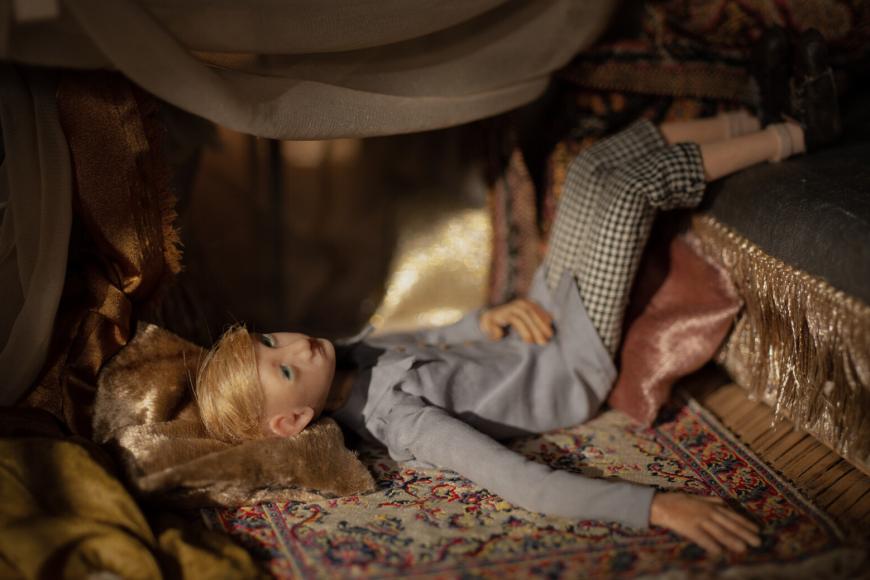
András and his daughter Zsófia enjoy a relaxed Sunday in their stately city mansion, just before the collapse of the Austro-Hungarian monarchy. But soon the silence in the house is disturbed by an escaped pig, closely followed by an unexpected visit: András’ brother, his large family and lots of luggage barge in through the front door. Running children and garrulous relatives bring noise and bedlam to all floors. Art objects are handled without permission, furniture is moved, objects fall to the ground. The visitors have brought chaos. Zsófia’s father and the maid try in vain to restore calm and order. Though András and his brother get closer to each other, the old house is not up to the changed circumstances. A leaking water pipe heralds a finale that at least makes them all stand still together.
Franka Sachse
Credits
Director
Lea Vidaković
Script
Lea Vidaković
Cinematographer
Lea Vidaković, Damien Buquen
Editor
Iva Kraljević
Producer
Draško Ivezić, Jean Francois le Corre, Nikolina Vucetic Zecevic
Sound Design
Zoran Maksimovic
Animation
Marion le Guillou, Bilitis Levillain, Violette Delvoye