Film Archive

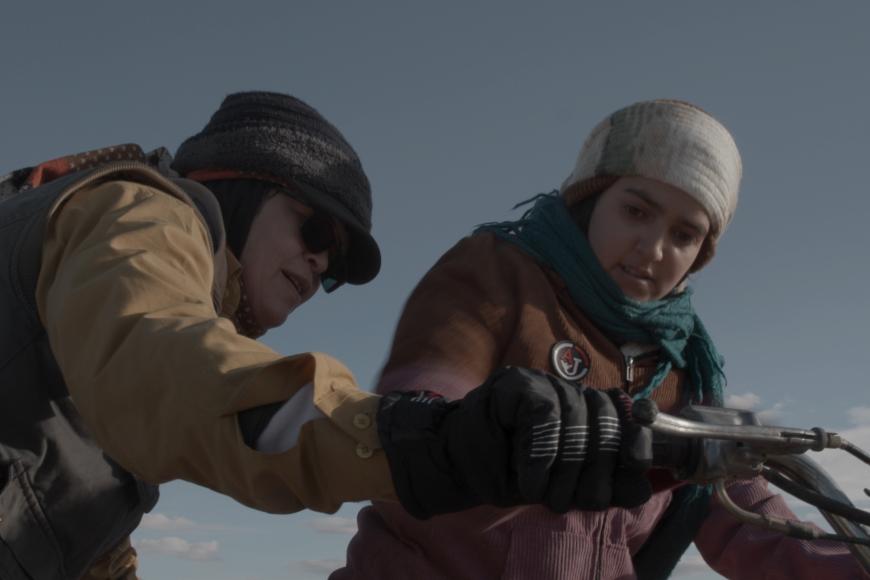
Filmstill Cutting Through Rocks

Cutting Through Rocks

Uzak yollar
Sara Khaki, Mohammadreza Eyni
Audience Competition 2025
Documentary Film
USA,
Iran,
Germany,
Netherlands,
Qatar,
Chile,
Canada
2025
94 minutes
Azerbaijani,
Farsi
Subtitles: 
English
The “Woman, Life, Freedom” protests in Tehran and other major cities seem far away from the place where Sara lives. But in her rural community in northwestern Iran, the protagonist of this film advocates the same feminist values in a practical, everyday way. Again and again, we are reminded by the images that her father once taught her to ride a motorbike – to the disapproval of the whole village. A small favour with big consequences: For Sara, it paved a way outside patriarchal marriage. Mobile on two wheels, she works as a midwife and has delivered many girls for whom she now wants to fight: At the start of the film and in middle age, Sara decides to be the first woman in the history of her community to run for the local council. A step which earns her enthusiastic support on the one hand; on the other, she must endure open hostilities and an interrogation by the moral enforcers of the Islamic Republic. In “Cutting Through Rocks”, Sara Khaki and Mohammadreza Eyni capture these power structures and their individual impact as precisely as the gestures of solidarity and self-determination.
Jan-Philipp Kohlmann

Credits DOK Leipzig Logo

Director
Sara Khaki, Mohammadreza Eyni
Script
Sara Khaki, Mohammadreza Eyni
Cinematographer
Mohammadreza Eyni
Editor
Sara Khaki, Mohammadreza Eyni
Producer
Sara Khaki, Mohammadreza Eyni
Sound
Karim Sebastian Elias
Sound Design
Miguel Hormazabal
World Sales
Stephanie Fuchs
German Distributor
Stephanie Fuchs
Nominated for: Leipziger Ring
Winner of: Golden Dove (Audience Competition)
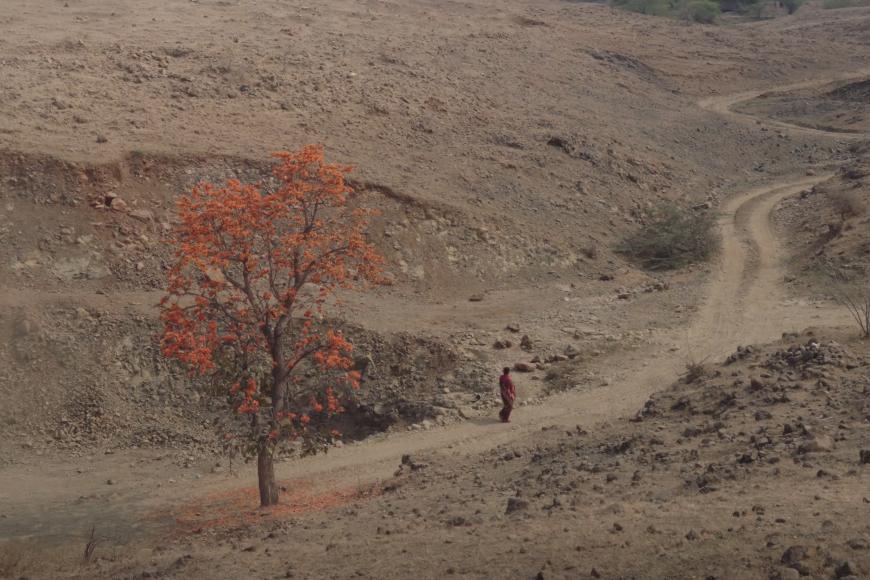
Filmstill Marching in the Dark

Marching in the Dark

Andhārātlyā mashālī
Kinshuk Surjan
Audience Competition 2024
Documentary Film
Belgium,
Netherlands,
India
2024
109 minutes
Marathi
Subtitles: 
English
Sanjivani, a young woman from a rural area in the state of Maharashtra in central India, is a loving and tender mother. After her husband’s suicide, she lives with her brother-in-law who makes her work in the fields. She is now solely responsible for her two kids, faced with a mountain of debt left by her husband and the structures of a patriarchal society that incapacitates and renders invisible widows like her. It is only when she joins a group of women who suffered similar fates that she slowly gains some self-confidence. She is not alone with her despair and grief – the suicide rate among peasants who took their lives in the face of crop failures and dumping prices on the globalised market is harrowing: 400,000 in the last twenty years.
Kinshuk Surjan not only observes people and circumstances with compassion; he also stands for a cinema that makes a difference. The women’s group he follows here only came together as a result of his film project. In impressive images and with great empathy for the protagonists he portrays, he not only succeeds in producing a careful representation of highly complex contexts, but also a truly documentary intervention into unacceptable conditions – with the aim of improving them.
Borjana Gaković

Credits DOK Leipzig Logo

Director
Kinshuk Surjan
Cinematographer
Leena Patoli, Carl Rottiers, Vishal Vittal
Editor
Joëlle Alexis
Producer
Evelien De Graef, Hanne Phlypo
Co-Producer
Arya Rothe, Digna Sinke
Sound
Puneet Dwivedi, Imtiyaz Jumnalkar
Sound Design
Mark Glynne, Olmo van Straalen
World Sales
Anna Berthollet
Audience Competition 2023

My Father, Nour and I

Wiam Al-Zabari
Twenty years ago, the filmmaker fled from Bagdad with his family – why has always been a taboo. For his son, he breaks his silence in this filmic family therapy.
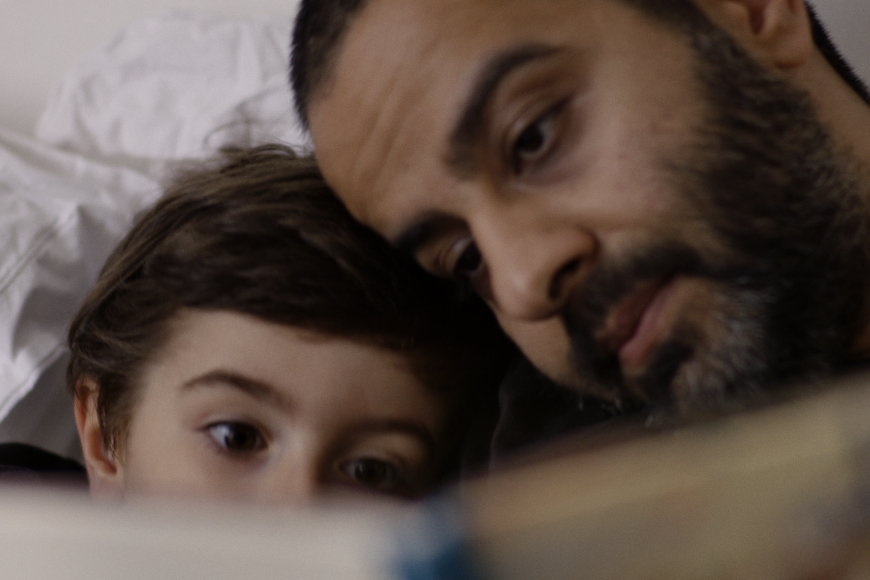
Filmstill My Father, Nour and I

My Father, Nour and I

Mijn vader, Nour en ik
Wiam Al-Zabari
Audience Competition 2023
Documentary Film
Netherlands
2023
56 minutes
Dutch,
Arabic
Subtitles: 
German Subtitles for deaf and hard-of-hearing, English
Twenty years ago, filmmaker Wiam Al-Zabari fled Baghdad with his family in the middle of the night. His father, a dissident former ambassador, had already escaped from Iraq and was waiting for them in the Netherlands. Since then, no one in the family has ever spoken about the events. What exactly happened was always a taboo. Now that Wiam has become a father himself, he realises that his past life is catching up with him and that more and more questions are arising, the biggest being: Why did they have to flee in the first place? Wiam wants to finally find out. For the first time, he breaks the silence and begins to research the past in dialogues with his parents and siblings. Above all he wants to prevent passing on these traumatic experiences to his son.

In this filmic family therapy, he addresses Nour, his little son, directly. Wiam promised himself and the boy this film to clear up the long-suppressed themes in a way that will allow Nour to feel firm ground under his feet when he is grown up. In doing so, Wiam is unsparingly honest with himself and his relatives and chooses a number of unusual artistic tricks. For example, he inserts himself as a director from offscreen, critically analysing his own position in the fabric of speaking and silence: an attempted inside view from the outside.
Lina Dinkla

Credits DOK Leipzig Logo

Director
Wiam Al-Zabari
Cinematographer
Niels van Koevorden, Jefrim Rothuizen, Wiam Al-Zabari
Editor
Augustine Huijsser, Renko Douze, Wiam Al-Zabari
Producer
Hasse van Nunen, Iris Lammertsma, Renko Douze, Boudewijn Koole
Sound
Tim van Peppen, Gideon Bijlsma
Sound Design
Jacob Oostra
Score
Alaa Arsheed, Haian Arsheed
Audience Competition 2025

The Lions by the River Tigris

Zaradasht Ahmed
Remembering and preserving is part of survival in Mosul after the IS terror. Fakhri collects relics, Bashar dreams of saving his parents’ home. Their paths cross in front of an ancient portal.
Filmstill The Lions by the River Tigris

The Lions by the River Tigris

Løvene ved elven Tigris
Zaradasht Ahmed
Audience Competition 2025
Documentary Film
Norway,
Netherlands,
Iraq
2025
92 minutes
Arabic
Subtitles: 
English
“It’s nice here, let’s play,” says Fakhri, holding a small loudspeaker for Fadil, the violinist. But there is no audience. The two men are standing in the ruins of Mosul. Three years of occupation by the Islamic State terrorist militia have left the old town almost completely destroyed. Along with the buildings, the 8,000-year history and culture of the second-largest Iraqi city seemed to have been wiped out forever. Life returns slowly. Art treasures are being restored, there are theatres, music again, and Fakhri’s small private museum where he collects anything he can lay his hands on: wooden doors, bronze figures, soap from1910, a ventilator. He has already amassed 7,000 exhibits and is especially fond of an ancient portal with two lions. Damaged, but perhaps still salvageable, it sits enthroned in the ruins of Bashar’s parents’ house like a peace time relic. Bashar visits it almost daily, hoping that reconstruction is possible. But Fakhri turns out to drive a hard bargain – he wants this portal at all costs …
With a steady hand, Kurdish-Norwegian director Zaradasht Ahmed tells a deeply human story, intertwining the darkest and lightest side of the species: the mania of destruction and the strength to go on.
Andreas Körner

Credits DOK Leipzig Logo

Director
Zaradasht Ahmed
Cinematographer
Zaradasht Ahmed
Editor
Eva Hillström
Producer
Thorvald Nilsen
Co-Producer
Harmen Jalvingh, Janneke Doolaard, Sylvie Baan, Hester Breunissen
Sound
Luuk Hoogstraten, Zita Leemans
Score
Daan Hofman