Film Archive

Filmstill A Year in the Life of the Country

A Year in the Life of the Country

Rok z życia kraju
Tomasz Wolski
Panorama: Central and Eastern Europe 2024
Documentary Film
Poland
2024
85 minutes
Polish,
English
Subtitles: 
English
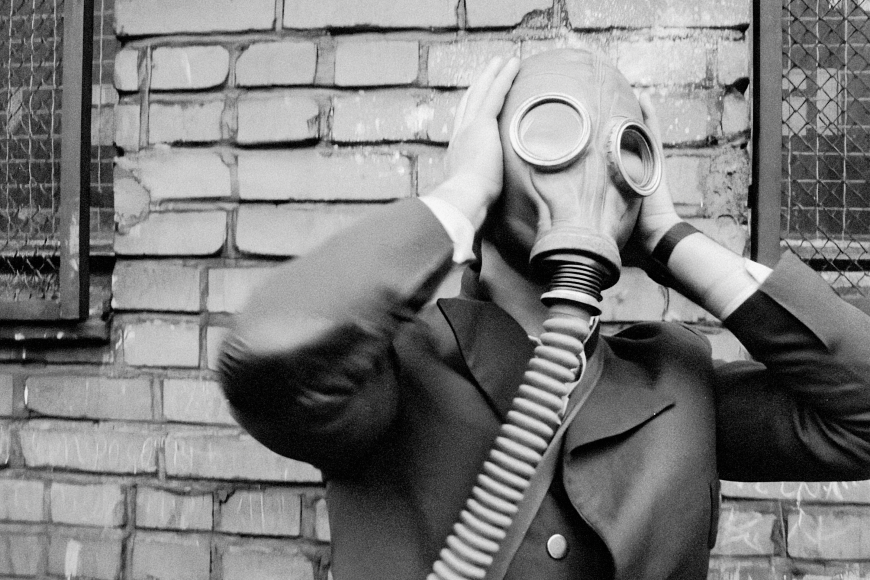
In the early 1980s, Poland is in a state of emergency. The country’s democracy movement, represented by the free Solidarność trade union, is to be suppressed. To this end, President Wojciech Jaruzelski declares martial law on 13 December 1981. In collusion with the Soviet Union a threatening scenario is staged to justify the “stan wojenny”. As a result, Western nations like Great Britain and the USA impose economic sanctions on the Eastern Bloc state. This produces a complex field of tension in which the Polish population are confronted with existential shortages on the one hand but continue their struggle underground on the other – despite curfews, telephone surveillance and a media system controlled by the military.
In his found footage film, Tomasz Wolski brings the explosive, the everyday and the iconic together to provide an insight into a situation that is as absurd as it is dangerous. The extremely dynamic (and musical) montage illustrates the rapid and convoluted succession of events while at the same time intervening through comments, quite often with a notable sense of humour, for example, when Wolski helps a British news correspondent not always on top of events to a bit of retroactive glory: “Most fundamental is the … Hang on, sorry, sorry, could you … Photography and filming will be widely controlled …”
Carolin Weidner

Credits DOK Leipzig Logo

Director
Tomasz Wolski
Script
Tomasz Wolski
Cinematographer
Tomasz Wolski
Editor
Tomasz Wolski
Producer
Anna Gawlita
Sound
Marcin Lenarczyk
Score
Jerzy Rogiewicz
Nominated for: Leipziger Ring, MDR Film Prize
Filmstill Blue

Blue

Jestem błękitem
Weronika Szyma
Panorama: Central and Eastern Europe 2023
Animated Film
Poland
2023
7 minutes
Polish
Subtitles: 
English
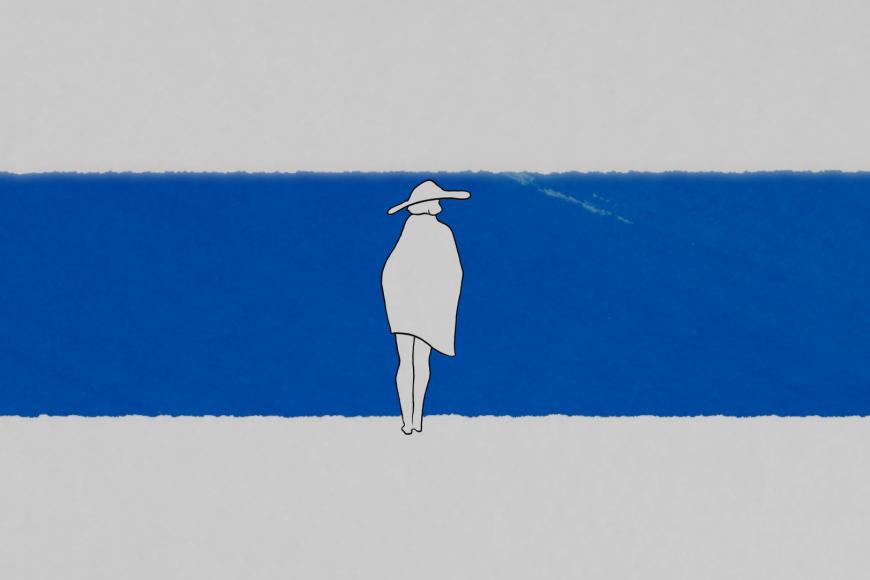
The sea on whose shore Weronika Szyma has set her film is a dense, pulsating blue. The beach and the family who are staying there, meanwhile, are limited to delicate black and white line drawings. Their minimalism makes the blue stand out all the more enchantingly: Sometimes represented as a horizontal strip that promises freedom but also fuels insecurity. Sometimes sloshing diagonally across the screen, swallowing up the image completely for a brief moment and marking a caesura. And there are quite a number of caesuras, because the seven film minutes span the story of several generations.

At one point the father disappears and the mother and her almost grown-up daughter are left to fend for themselves. They learn to comprehend the loss, support each other, turn gestures of distance into gestures of affection. Until the confidence grows to start all over again. The only thing that does not change here is the blue of the sea.
Felix Mende

Credits DOK Leipzig Logo

Director
Weronika Szyma
Script
Weronika Szyma
Editor
Filip Dziuba
Producer
Piotr Furmankiewicz, Mateusz Michalak
Co-Producer
Weronika Szyma
Sound
Tomasz Sierpiński
Animation
Weronika Szyma
Filmstill Signs of Mr. Plum

Signs of Mr. Plum

Znaki Pana Śliwki
Urszula Morga, Bartosz Mikołajczyk
Panorama: Central and Eastern Europe 2025
Documentary Film
Poland
2025
72 minutes
Polish
Subtitles: 
English
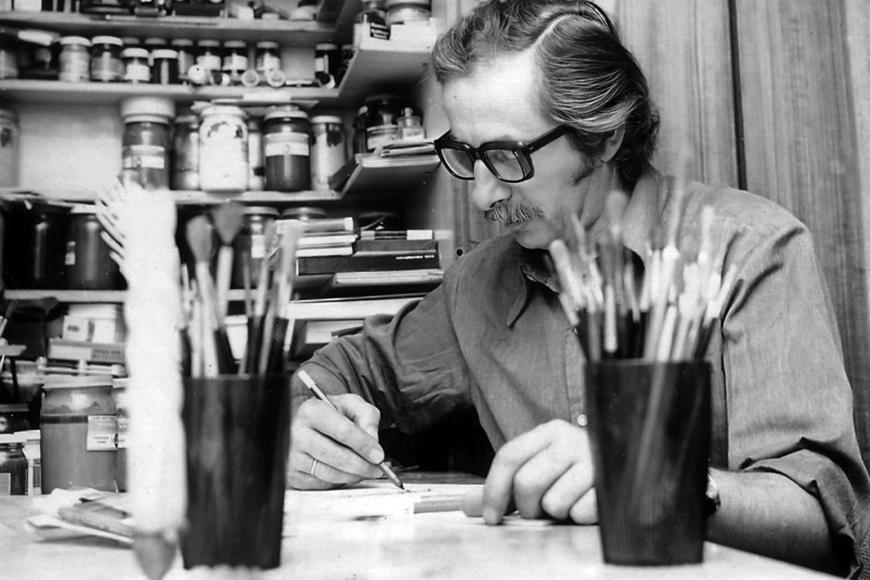
When Karol Śliwka (1932–2018) opens his drawer, dozens of tools jump out: scissors, compasses, rulers, and knives. For Śliwka’s equally famous and elegant graphic designs are purely handmade. They are displayed on consumer goods and advertising posters, even became iconic symbols of the United Nations. His career was far from predestined: Having suffered a serious eye injury in a childhood accident and bound to take over his parents’ farm, Karol Śliwka’s turn to art could be seen as an act of rebellion. It has paid off, as proved not only by the numerous awards he won during his long career. Via home videos, “Signs of Mr. Plum” also gives us insights into his joyful marriage to an opera singer. Bartosz Mikołajczyk and Urszula Morga skilfully connect Karol Śliwka’s designs with contemporary history, capturing the mood of the 1960s and 1970s with a light hand and quick editing. Graphic design and biography merge into an accessible and highly amusing mixture.
Carolin Weidner

Credits DOK Leipzig Logo

Director
Urszula Morga, Bartosz Mikołajczyk
Script
Urszula Morga
Cinematographer
Bartosz Mikołajczyk
Editor
Anna Koc-Wikels, Dominik Jagodziński
Producer
Stanisław Zaborowski, Daria Maślona
Co-Producer
Ubi Leones, Jan Borowiec, Mazowia
Sound
Radosław Ochnio MPSE
Sound Design
Radosław Ochnio MPSE
Score
Michał Jacaszek
Broadcaster
TVP
Funder
PFI
Nominated for: MDR Film Prize