Film Archive

Audience Competition 2023

A Still Small Voice

Luke Lorentzen
Mati, a New York hospital chaplain in training, must watch herself and her own strength when she looks after patients. An intimate insight, up close and sensitive.
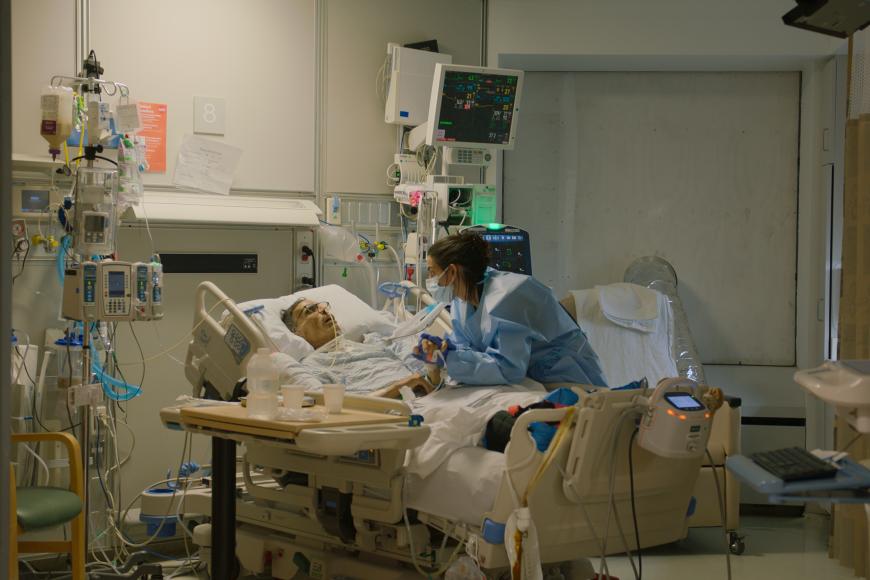
Filmstill A Still Small Voice

A Still Small Voice

A Still Small Voice
Luke Lorentzen
Audience Competition 2023
Documentary Film
USA
2023
93 minutes
English
Subtitles: 
German Subtitles for deaf and hard-of-hearing
Mount Sinai Hospital in New York is one of the largest and oldest hospitals in the United States. Mati, an aspiring hospital chaplain, works here. She is about to complete her one-year residency in the department of “Spiritual Care,” a branch of palliative medicine. Patients struggling with insecurity, trauma and grief get emotional and spiritual support here. The film follows Mati and her colleagues through 2020 and 2021, the years with the highest number of deaths in the history of the USA. Mati herself must struggle daily to find her balance. Because, as her supervisor puts it, if one’s own bandwidth is used up, there is simply no room left for the tougher things. It is therefore an important part of the work of a counsellor to get support and guidance for oneself.

Luke Lorentzen observes this cosmos with great sensitivity and, despite being so close, with pleasant restraint. The calm camera often keeps its distance, especially in moments of doubt or when observing conflicts in the team. A film unafraid of intimacy that spans a thought-provoking arc: between questions of faith, loss and professional sustainability.
Lina Dinkla

Credits DOK Leipzig Logo

Director
Luke Lorentzen
Cinematographer
Luke Lorentzen
Editor
Luke Lorentzen
Producer
Kellen Quinn, Luke Lorentzen
Co-Producer
Ashleigh McArthur, Robina Riccitiello
Sound
César González Cortés, Javier Quesada
World Sales
Andrea Hock
Audience Competition 2025

Coexistence, My Ass!

Amber Fares
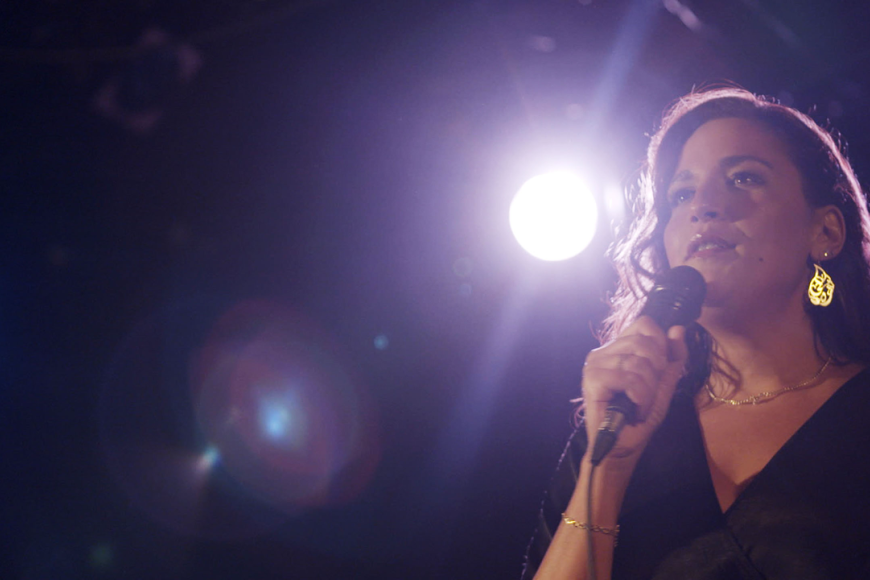
Noam Shuster-Eliassi grew up in a Jewish-Arab peace village in Israel, worked for the UN and is doing stand-up comedy on the Middle East conflict in English, Hebrew and Arabic.  
Filmstill Coexistence, My Ass!

Coexistence, My Ass!

Coexistence, My Ass!
Amber Fares
Audience Competition 2025
Documentary Film
USA,
France
2025
93 minutes
English,
Hebrew,
Arabic
Subtitles: 
English
The name of her village stands for a utopia that has shaped Noam Shuster Eliassi from childhood: Newe Shalom (Hebrew) or Wahat al-Salām (Arabic) roughly translates as “Oasis of Peace.” This small community of 300 people from Jewish and Arab families which was founded in 1969, located in Israel at the border with the West Bank, is a test of solidarity in practice. Thus, Noam, who is Jewish, and her Palestinian friend Ranin become ambassadors of mutual understanding even as children, for example when Hillary Clinton or Jane Fonda come to visit. They seem predestined for a career in the United Nations.
In her comedy show “Coexistence, My Ass!”, which director Amber Fares uses as a leitmotif, Shuster Eliassi strikes a harsher tone. Her career shift from diplomacy to political comedy – in English, Hebrew or Arabic, depending on the audience – shows her as a critic of the Netanyahu government, both before and after the Hamas terrorist attack on 7 October 2023. Her example also reflects the division in parts of the Israeli left: Shuster Eliassi’s deep pain of having lost loved ones herself is followed by anger about the Gaza war. What is humour able, what is it allowed to do in this situation? Perhaps help us mourn the suffering of two nations and, despite everything, not give up the utopia of peace.
Jan-Philipp Kohlmann

Credits DOK Leipzig Logo

Director
Amber Fares
Cinematographer
Amber Fares, Philippe Bellaiche, Amit Chachamov
Editor
Rabab Haj Yahya
Producer
Amber Fares, Rachel Leah Jones, Valérie Montmartin
Sound
Rachel Leah Jones, Ibrahim Zaher, Sharon Luzon
World Sales
Stephanie Fuchs
Nominated for: Leipziger Ring
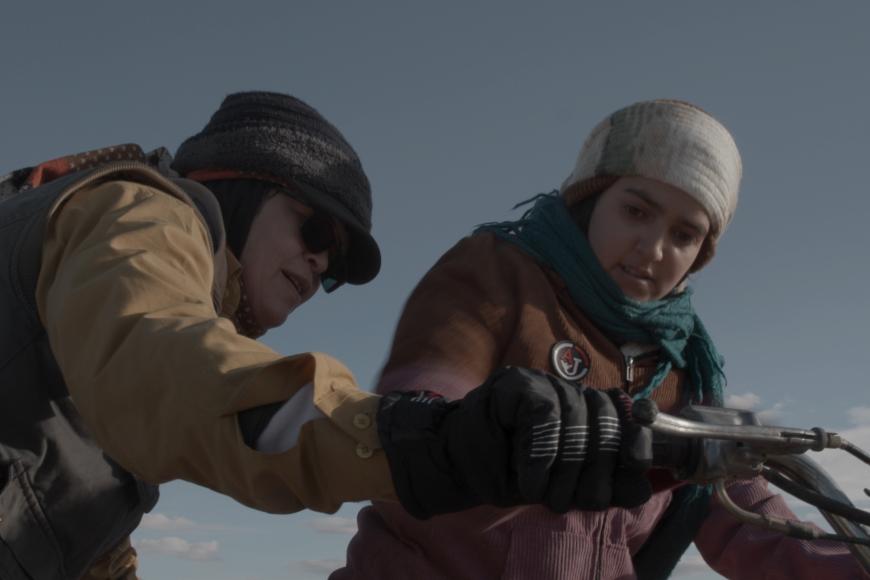
Filmstill Cutting Through Rocks

Cutting Through Rocks

Uzak yollar
Sara Khaki, Mohammadreza Eyni
Audience Competition 2025
Documentary Film
USA,
Iran,
Germany,
Netherlands,
Qatar,
Chile,
Canada
2025
94 minutes
Azerbaijani,
Farsi
Subtitles: 
English
The “Woman, Life, Freedom” protests in Tehran and other major cities seem far away from the place where Sara lives. But in her rural community in northwestern Iran, the protagonist of this film advocates the same feminist values in a practical, everyday way. Again and again, we are reminded by the images that her father once taught her to ride a motorbike – to the disapproval of the whole village. A small favour with big consequences: For Sara, it paved a way outside patriarchal marriage. Mobile on two wheels, she works as a midwife and has delivered many girls for whom she now wants to fight: At the start of the film and in middle age, Sara decides to be the first woman in the history of her community to run for the local council. A step which earns her enthusiastic support on the one hand; on the other, she must endure open hostilities and an interrogation by the moral enforcers of the Islamic Republic. In “Cutting Through Rocks”, Sara Khaki and Mohammadreza Eyni capture these power structures and their individual impact as precisely as the gestures of solidarity and self-determination.
Jan-Philipp Kohlmann

Credits DOK Leipzig Logo

Director
Sara Khaki, Mohammadreza Eyni
Script
Sara Khaki, Mohammadreza Eyni
Cinematographer
Mohammadreza Eyni
Editor
Sara Khaki, Mohammadreza Eyni
Producer
Sara Khaki, Mohammadreza Eyni
Sound
Karim Sebastian Elias
Sound Design
Miguel Hormazabal
World Sales
Stephanie Fuchs
German Distributor
Stephanie Fuchs
Nominated for: Leipziger Ring
Winner of: Golden Dove (Audience Competition)
Audience Competition 2025

Natchez

Suzannah Herbert
A small town in Mississippi: Many come here to bask in Dixieland nostalgia, oblivious of history. Black tour guides expose the white gaps in the narratives.
Filmstill Natchez
Filmstill Natchez

Natchez

Natchez
Suzannah Herbert
Audience Competition 2025
Documentary Film
USA
2025
87 minutes
English
Subtitles: 
English
Once upon a time there was a town on the banks of the Mississippi. The streets are still lined with neo-classicist Antebellum houses. Horse-drawn carriages full of tourists move through the streets, a travelling organist performs on a truck bed. Time seems to stand still in Natchez. But while the descendants of the European colonists, dressed up as “Southern Belles” in historical hoop skirts, welcome their guests and feed them Southern nostalgia, the façades are beginning to crumble. Built on the shoulders of children, women, and men in chains, the epicentre of cotton capitalism and the second-largest slave market in the US, with 750,000 Black exploited persons, emerged here in the mid-19th century.
This part of the former “Cotton Kingdom” is practically absent from the whitewashed version of history. On the contrary, it is dripping with romanticisation and racist clichés. But people like the Black pastor and tour guide Rev are breaking with this tradition and shattering the nostalgically glorified illusion of an ideal world. Suzannah Herbert directs the clash of different perspectives and characters with an unerring eye for direct and indirect contradictions. At the same time, she exposes a rift in society that extends far beyond the Natchez microcosm.
Philipp Hechtfisch

Credits DOK Leipzig Logo

Director
Suzannah Herbert
Cinematographer
Noah Collier
Editor
Pablo Proenza
Producer
Darcy McKinnon, Suzannah Herbert
World Sales
Axelle Jean
Audience Competition 2024

Sabbath Queen

Sandi DuBowski
“Only transgression will bring salvation!” Amichat Lau is a rabbi, drag queen, father and revolutionary. The long-term portrait of a man to whom his faith is as important as his freedom.
Filmstill Sabbath Queen

Sabbath Queen

Sabbath Queen
Sandi DuBowski
Audience Competition 2024
Documentary Film
USA
2024
105 minutes
English,
Hebrew,
Yiddish
Subtitles: 
English
“Who are you to change anything!?” Yisrael Meir Lau, once Ashkenazi Chief Rabbi of Israel, rages against non-orthodox movements in Judaism. His nephew, queer activist Amichai Lau-Lavie, has an answer that packs a punch: born in 1961 on Israel’s Independence Day, 38 generations of rabbis in his family tree, son of a Holocaust survivor, drag queen, today also an ordained rabbi and spiritual leader of an interdenominational Jewish congregation in New York. Amichai wants to be a “virus inside the system” to break patriarchal traditions and make Judaism more humane, more open. His drag alter ego urges: “Redemption will only come through transgression!”
Director Sandi DuBowski followed his protagonist over more than twenty years. The long production period enabled him to document different phases in Amichai’s life, to show him celebrating, crying, doubting and triumphant. Supporters and critics comment on every decision and life change. The result is a complex portrait that sensitively introduces not only Amichai but also his family and congregation. An inspiring story that gives us hope.
Daria Janke

Credits DOK Leipzig Logo

Director
Sandi DuBowski
Script
Francisco Bello, Jeremy Stulberg, Sandi DuBowski
Cinematographer
Kirsten Johnson, Wolfgang Held, Dan Gold, Laela Kilbourn, Dror Lebendiger, Sandi DuBowski, Nadia Hallgren
Editor
Jeremy Stulberg, Francisco Bello, Jeremy Stulberg, Kyle Crichton, Philip Shane
Producer
Sandi DuBowski
Co-Producer
Simon Mendes, Ben Lowy
Sound
Judy Karp, Sean O'Neil
Sound Design
Tom Paul
Score
Joel Goodman
Animation
Yaron Shin
Nominated for: Leipziger Ring
Audience Competition 2024

The Battle for Laikipia

Daphne Matziaraki, Peter Murimi
In Laikipia, Kenya, indigenous shepherds and white ranch owners live in a fragile balance. But climate change and unresolved colonial tensions are increasingly calling this into question.
Filmstill The Battle for Laikipia

The Battle for Laikipia

The Battle for Laikipia
Daphne Matziaraki, Peter Murimi
Audience Competition 2024
Documentary Film
Kenya,
USA,
Greece
2024
94 minutes
Swahili,
English,
Samburu
Subtitles: 
English
“It is places like Laikipia that make some Kenyans begin to ask: Are we really independent?” For centuries, this region in the central Kenyan highlands has been a grazing area for the Samburus’ animals. With colonialisation, white people began to settle there, built ranches and farmed cattle. After Kenya’s independence in 1963, they stayed on. So far, relations between them and the locals have been alright, albeit distant. Climate change, however, increases the potential for conflict in the country and intensifies the competition for resources.
Laikipia has been suffering from the effects of global warming for several decades. Long periods of drought destroy the grassland the Samburu and their herds depend on. The white cattle farmers’ ranches and not least the privately managed and strictly guarded nature reserves cut through their traditional migration routes and block off the paths with electric fences. When elections are near, the disputes threaten to escalate. Daphne Matziaraki and Peter Murimi followed Kenyans of all parties over a period of five years and give them a chance to tell their stories in this film.
Seggen Mikael

Credits DOK Leipzig Logo

Director
Daphne Matziaraki, Peter Murimi
Cinematographer
Daphne Matziaraki, Peter Murimi, Maya Craig
Editor
Sam Soko
Producer
Toni Kamau, Daphne Matziaraki
Co-Producer
Maya Craig
Score
William R. Fritch
World Sales
Jenny Bohnhoff
Nominated for: Leipziger Ring