Are humans capable of understanding the suffering of other species? A cinematic manifesto against species extinction, framed as an artistic and personal warning.
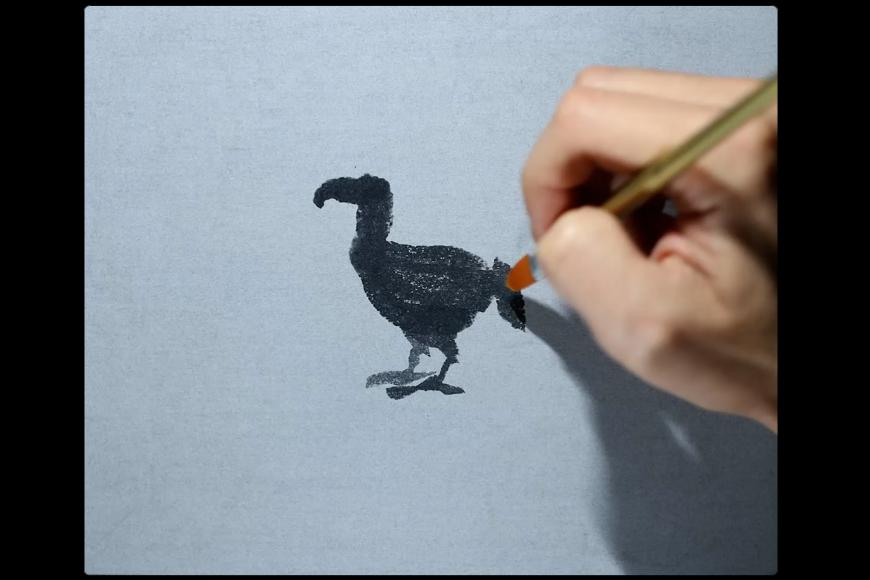
“Can we be moved by the disappearance of rhinos if we have never experienced the feeling of a butterfly walking on our hand?” Marcel Barelli asks not without pathos, but hitting the mark, in his animated manifesto. He is quoting Daniel Pauly’s Shifting Baseline Syndrome Theory: We humans always measure normality by our own experience and not by historical changes and therefore tend to accept environmental destruction. This is not the only allusion in Barelli’s compact three-minute-film: He references the “sixth extinction”, the current human-caused extinction of the species, and the hourglass symbol of the Extinction Rebellion movement. His film, however, which should definitely be understood as a call for active resistance, embeds these reflections artistically. With his evaporating water animation on paper, Barelli has chosen a simple and consistent animation technique whose ephemeral character perfectly captures species extinction and oblivion. Archive material is added. Unlike the “Cinétracts” pamphlet films from 1968 that he admires, but just as forceful, he has chosen a contemporary, personal approach. He touchingly weaves his theses into his own biography: Family pictures point to a time when Barelli himself “played with dinosaurs and ate chicken”.
Design as a political act? In this animated collage, a contemporary advertising graphic designer explores the uncompromising work of the photomontage pioneer and anti-fascist John Heartfield.
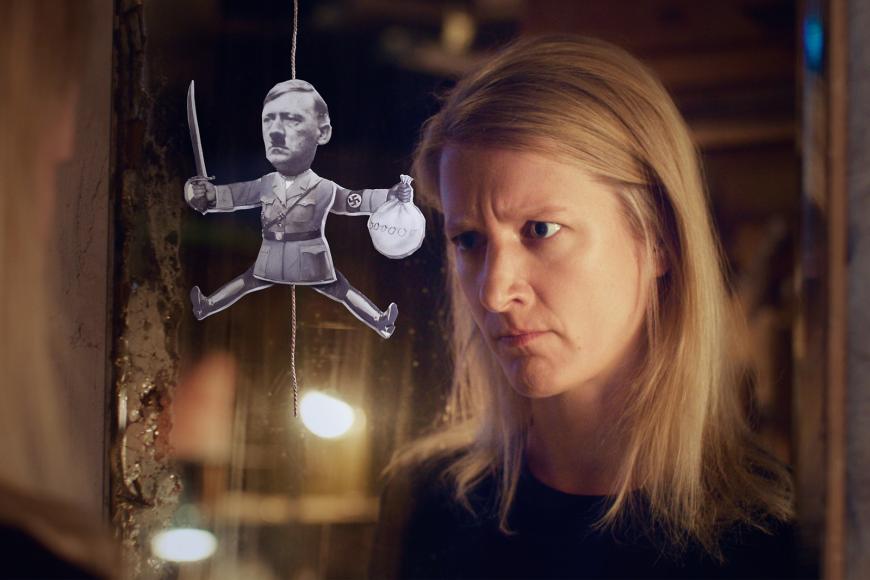
As she visits an exhibition, a graphic designer is mesmerised by the photocollages of the anti-fascist John Heartfield, who became known as the “montage dada.” Stefanie falls through a vortex of paper and photo snippets into an old-fashioned looking studio. A pair of scissors – an analogue tool she herself hardly uses – attracts her attention. She begins to cut a figure out of cardboard, a miniature version of the artist who at once addresses her and explores his life and works with her. The studio turns out to be a living archive that ceaselessly produces documents and information about Johnny. The research gives Stefanie, stressed and disappointed by her job, new motivation, and the courage to choose a different path as a designer.
Both protagonists have the same profession and find themselves facing the same questions about the significance and recognition of their work. Both are struggling in their own way with frustration and fears, caused by the different social and political circumstances of their generations. The different elements of this animated documentary come together in a dialogic collage that reflects on the mission of art, its educative and critical power, and its potential to bring about changes in our society.
Franka Sachse
Credits
Director
Katrin Rothe
Script
Katrin Rothe
Cinematographer
Thomas Eirich-Schneider, Richard Marx, Manon Pichón
Editor
Hannes Starz
Producer
Gunter Hanfgarn, Andrea Ufer, Ralph Wieser, Sereina Gabathuler, Werner Schweizer
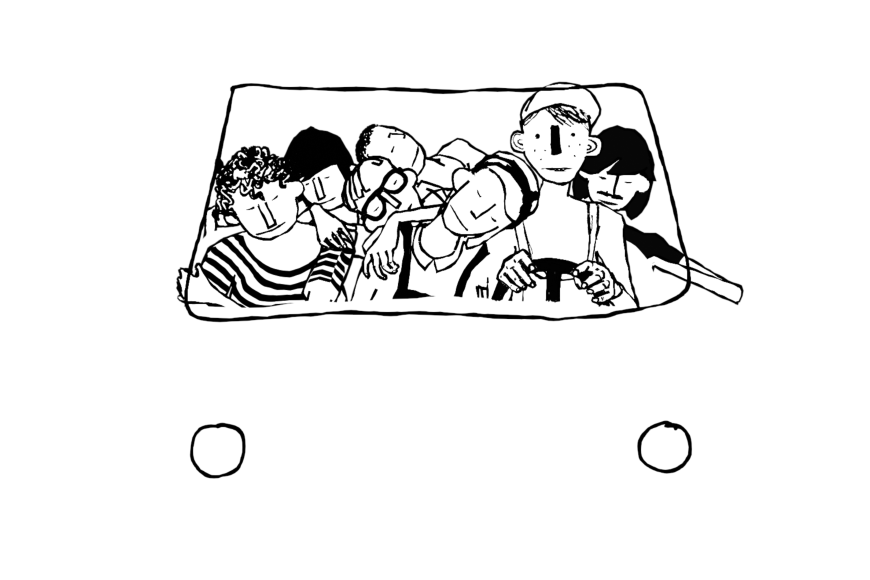
Poland, 1981. There is hardly any food, no fuel, only limited freedom. Six friends squeeze into an old car and set out for the Baltic Coast – and perhaps beyond.
Poland, 1981. Six friends squeeze into an old car that is far too small and set out for the Polish Baltic coast, fuelled by their longing for freedom. The further they come, the clearer the decrepit state of their country emerges. The pension where they spend the night has nothing that could be served for breakfast. Food and fuel are also in short supply elsewhere. There is a shortage of everything. The only thing one can buy anytime and anywhere is booze, which is plentiful. Just like the country, the car also falls apart piece by piece. But the trip continues, past demonstrating crowds, tanks, barricades and armed policemen. Singing, laughing and carefree, Leszek and his companions finally make it to the sea. Is this the end of their journey? Or should they join the hundreds of thousands who have already left Poland? The borders of the frame, at least, are open. The sparse, fragmented graphic elements on the empty white background hardly seem an incentive to stay. There is no obstacle that could keep the friends from setting off for new shores.
Franka Sachse
Credits
Director
Jadwiga Kowalska
Editor
Fee Liechti Seigner
Producer
Jadwiga Kowalska
Sound
Thomas Gassmann
Score
Christian Aregger, Roland Bucher
Animation
Jadwiga Kowalska, Marco Ellensohn, Jérémie Dupraz, Laure Clemansaud