The last syllable on the lips of a dying man is “da”. Koji Yamamura translates a short story by author Hideo Furukawa into a thrilling and highly dynamic film.
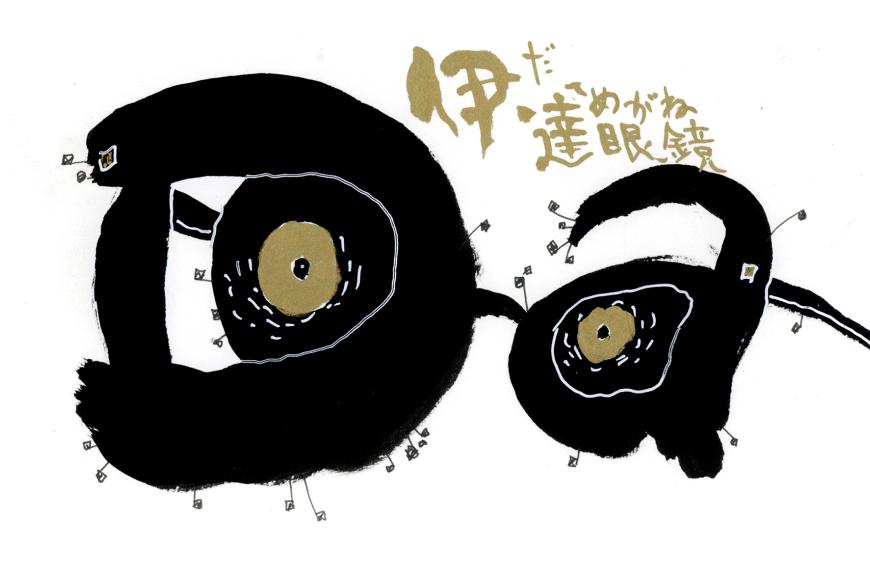
Life is short, extremely short. The time between birth and death seems to fly by. Snip your finger – and it’s all over. The last seconds are just long enough to pronounce the syllable “da”. It is precisely this syllable, spoken with someone’s last dying breath, that is picked up by a man who looks for the shortest of all things in the streets of Tokyo. The syllable whirls through his thoughts, triggering a torrent of reflections on the Japanese language that he gets more and more worked up about. In a dadaist manner, the “da” words hurtle at us like notes in jazz. Bold ink drawings move across the white background, sometimes fluidly, sometimes explosively. A last “da” completes the extemporisation and brings to a standstill all the energetic circling and vibrating that dominated the image before. The dying man closes his eyes. But the end is followed by a new beginning. “Extremely Short” marks the start of the series “Bungaku Bideo” – literature videos – which, commissioned by the Yanai Initiative, makes innovative accomplices of contemporary Japanese literature and international animation. In this case, Koji Yamamura encounters a piece of prose by Hideo Furukawa, listens to the monologue recited by the author himself and translates his linguistic furor into an exciting visual form.
Left alone by her father, eleven-year-old Karin makes friends with a talking monster cat. This launches a wild and fantastic tour de force through fabulous and hellish worlds.
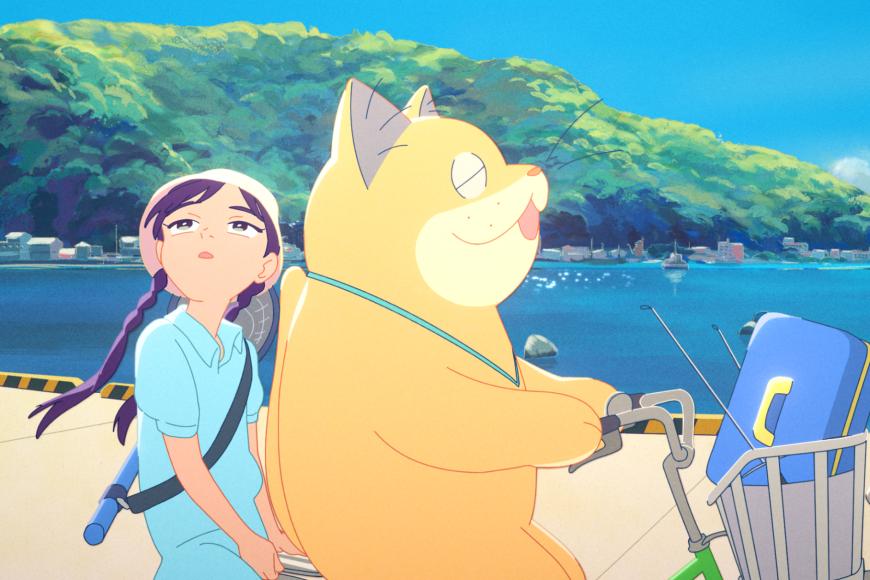
Eleven-year-old Karin is spending the summer in the country, where she makes friends with a giant talking cat. So far, so cute. But there is more to come. Her father has run up debts with gangsters who will beat him half to death. The god of poverty stalks Karin. He will take her to hell, where her deceased mother is spending eternity as a cleaning lady. Does this still sound cute? If “Ghost Cat Anzu” is meant to be a children’s film, it is the most merciless one you can imagine. The cat demon, or Bakeneko, is a well-known character in Japanese mythology. And there are other familiar patterns in Takashi Imashiro’s manga on which this film is based: the portal to a parallel world, the mythical creatures in the forest … But the devil is in the details, for comic and adaptation handle the traditions with an astonishing degree of irreverence; humans and ghosts often behave like unmitigated louts, and the entrance to hell is through a toilet bowl. First-time director Yôko Kuno and the renowned Nobuhiro Yamashita, who has co-directed an animated film for the first time here, work with rotoscoping. The quirky, cartoon-like figures and painterly backgrounds contrast so harmoniously, the highlights are so lovingly placed that one can feel, taste, smell and grasp the sultry summer atmosphere.
The life of a nameless orphan, from reluctant J-Pop idol to futuristic god figure. A hellish ride through the depths of human depravity, visualized with imagination and love.
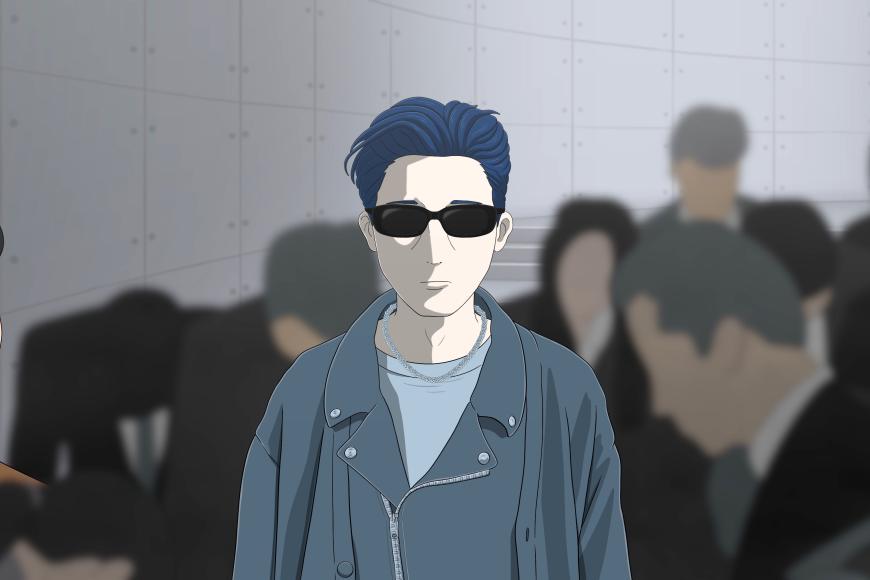
The original title of this film can be roughly translated as “A Nameless Life” and there is really no other way to sum up the story. We will never learn the protagonist’s real name, but in the one hundred lonely years that we accompany him for 90 minutes of cinema, we see ever new facets of him. The film opens with a seemingly innocent montage of taxi rides in 1994. But as nonchalantly as the scenes are strung together here, it is important to pay attention to the subtleties if you want to stay on top of things during the ensuing century-long trip. The journey begins in the northern Japanese province and takes us through the J-pop world of Tokyo’s hip Harajuku district to a post-apocalyptic future where Fernand Léger and Stanley Kubrick shake hands. Ryuya Suzuki is considered an outsider in contemporary Japanese animation. He is the sole author, director, animator, editor, and musician here. “Jinsei” is entirely his vision, a film about life and death, fate and rebellion, about power and powerlessness, unsparing and emotional. The 2D animation is imaginative, surprising, usually minimalist, always irritating, occasionally contemplative and then explosive. A hellish ride through human abysses, produced with so much attention to detail that new spaces open up every time you watch it.
A consensual union becomes a brutal assimilation that ends in death and a new beginning. Powerfully moving colours and fascinating sounds transport irritating emotions.
The two main characters of this film seem made for each other. They literally fit together, merge into each other, melt into a colourful, psychedelic, swirling whole. They function together, until one of them disconnects. The madness of this riot of colours turns into a dark nightmare when the one left behind re-absorbs the other by force. Against her will, the renegade must now be sewn to her partner. The once flourishing relationship degenerates into an irritating visual and audio chaos of aggressively twitching drawings and shattered sounds. Impaled on a gnarly tree, the couple’s bodies decay. As they are dying away, darkness turns into light and fresh blossoms open on the pale bones.
Franka Sachse
Credits
Director
Xu Yuan
Producer
Tomokazu Nomura
Sound Design
Nanami Sato
Animation
Xu Yuan
Nominated for:
Gedanken Aufschluss Prize,
mephisto 97.6 Audience Award