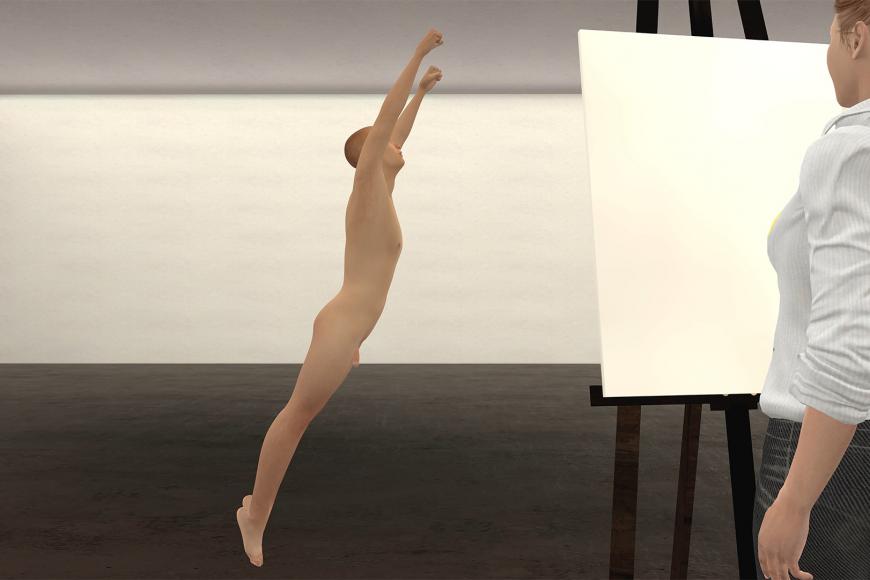
AIVA is an artist, animated by algorithms. But above all she is the soberingly limited male tech vision of what more diversity in the arts could look like.
AIVA is an artist, animated by algorithms. But above all she is the soberingly limited male tech vision of what more diversity in the arts could look like. In her paintings AIVA prefers the vertical, to some acclaim. A naive and cliché-ridden “art documentary” lets us participate in her work. Precisely observed, with sparse gestures and trenchant wit, Veneta Androva reflects a current status quo in her computer-animated future fiction.
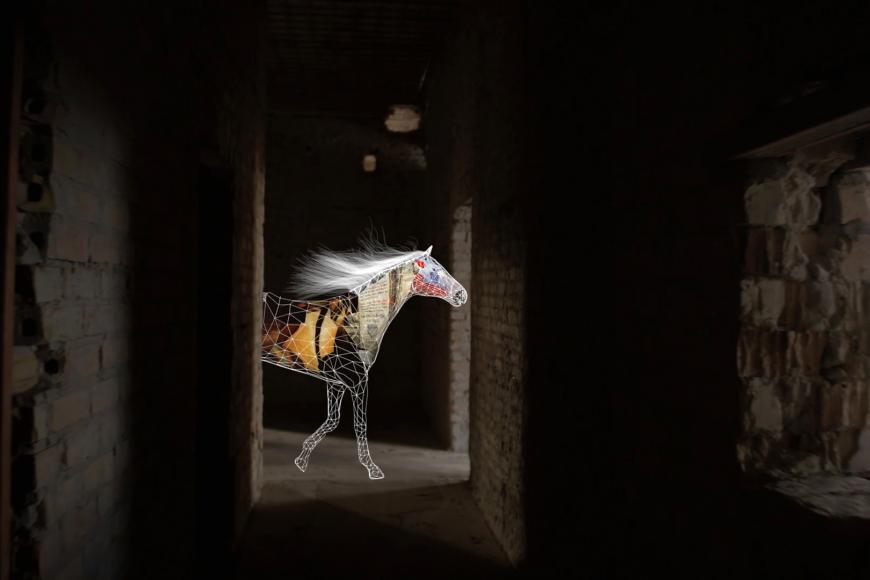
A media-historical interrogation of the German fascination with the colonialist construct of “Red Indians” which leads right up to its instrumentalization by the “New Right”.
Partly rhetorical, partly ironic and partly profound, the film deals with the Germans’ strange, three-hundred-year-old relationship to their stereotypical ideas of America’s native population. This includes the question of how the audience themselves feel about this ominous object of fascination. The backdrop and starting point of a floating journey through the history of various stereotypes are the ruins of the former U.S. embassy in East Berlin, where an exhibition on the subject took place in 1986.
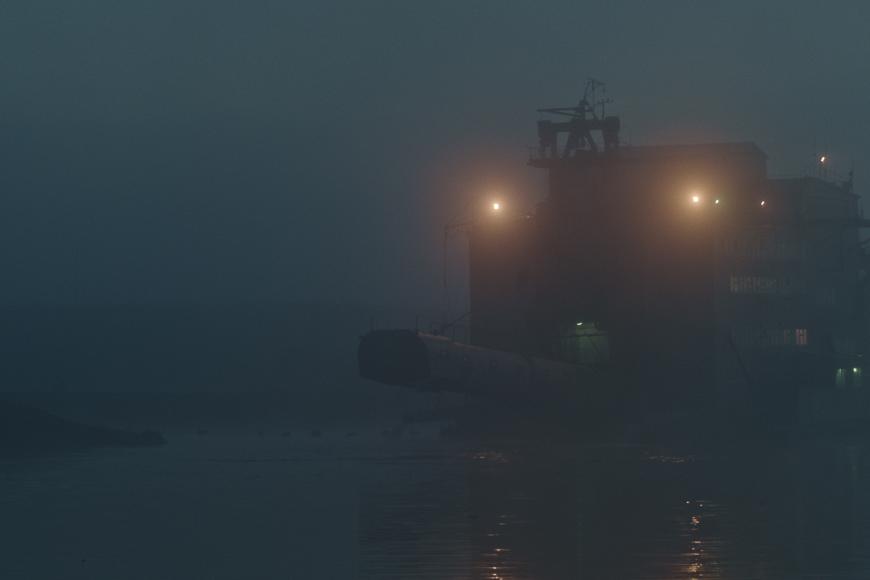
The technological and ideological traces of humans have transformed the earth from dark matter to a dark affair which despite everything brings forth new forms.
Quiet, dark shots of nocturnal fog, of a mine, a dump truck or a wreck, of huge earth craters and new surface contours created by excavation. Raw material extraction, economisation and exploitation of nature are the themes of this visual study. It’s accompanied by an unobtrusive, but threatening and assertive sound that underlines the mystic quality of the images. Post-industrial landscapes become post-apocalyptic.
England, mid-19th century: children keep the flow of air going in narrow, sooty chimney flues. The report of a chimney sweep of the time is brought to life by pencil drawings.
In the mid-19th century, a massive fireplace was the centrepiece of every stately home in England. Children are agile enough to keep the flow of air going in the narrow and dark flues. Their young skin is scraped raw by the sooty stone walls. Their fear of falling is as strong as their fear of the master’s punishment. Black-brown-red cross hatching and unusual camera perspectives bring to life the report of a chimney sweep of the time.
Due to Legal Reasons This Film Is Called Breaking Bert
Anne Isensee
Most accidents happen at home. Thus the appeal to one’s personal political responsibility comes as a surprise. Randomly reading a Brecht text inspires to take action.
Due to Legal Reasons This Film Is Called Breaking Bert
Dieser Film heißt aus rechtlichen Gründen Breaking Bert
Anne Isensee
German Competition Short Film 2020
Animated Film
Germany
2020
5 minutes
German
Subtitles:
English
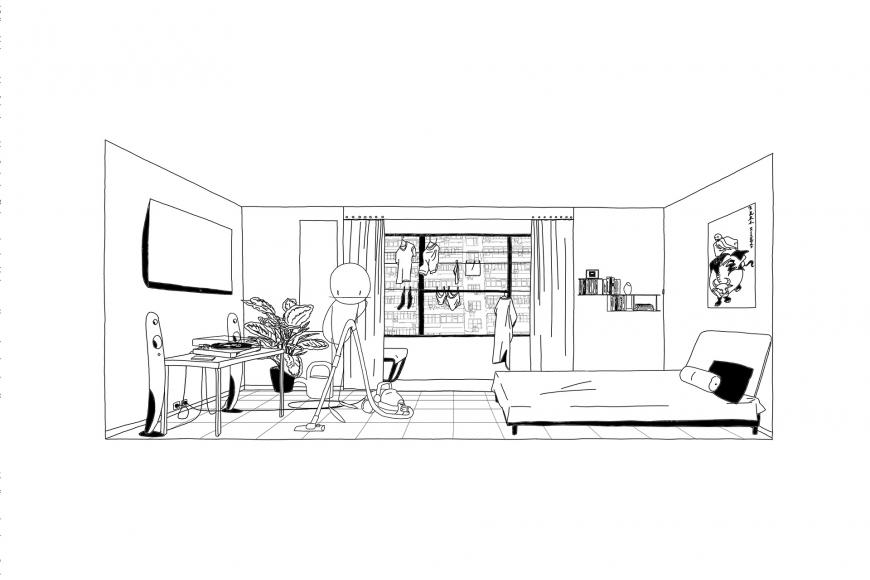
Most accidents happen at home. Thus a likeable, jazz-loving drawn figure is unprepared for an appeal to his own political responsibility. A random Brecht reading spurs her to do something – at the very least so as not to end up on the wrong track or wrong side of things. Pointed, tidy, and full of humour and affection for human dithering, Anne Isensee questions the illusion of a permanent contradiction in reality.
André Eckardt
Credits
Director
Anne Isensee
Script
Anne Isensee
Editor
Anne Isensee
Producer
Filmuniversität Babelsberg KONRAD WOLF, Lorena Junghans
A trauma therapy on film for an uprooted elephant cow – a social creature that, like all of us, needs security and a home to form stable relationships.
The biography of the female elephant Bibi, who is considered to display abnormal behaviour, is marked by misfortunes: Born in Zimbabwe in 1985. Lost her mother shortly after birth. Imported by the East Berlin zoo in 1989. Deported to the Halle zoo in 2008. On the basis of an empathic reappraisal of these traumatic events the film reflects on the significance of social issues and how to deal with exclusion today: a therapy by proxy on film that will hopefully have a long-distance healing effect on Bibi.
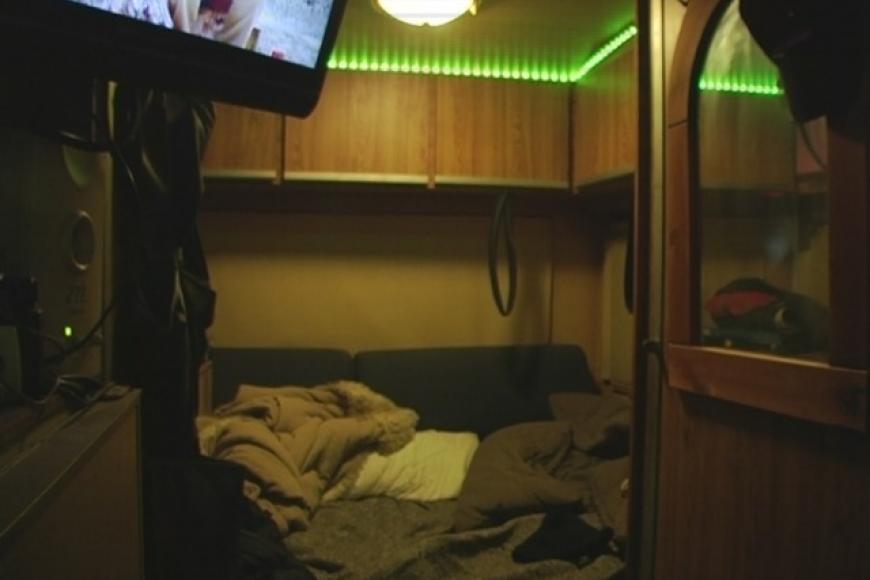
A mobile home in his front garden is Erwin’s refuge. Here he drinks his coffee and writes applications, here he satisfies his desire for men. Jan Soldat comes to visit.
58-year-old Erwin introduces himself as “old but horny”. He has declared the mobile home in his front garden his favourite refuge, where he has everything he needs: a computer, a bed, a coffee machine. Two webcams link Erwin to other men who satisfy his carnal desires. In this tiny space, Jan Soldat comes close to him, of course. He learns of love affairs, as great as extinguished, of a complicated family web and worries about the future.
Carolin Weidner
Credits
Director
Jan Soldat
Cinematographer
Jan Soldat
Editor
Jan Soldat
Producer
Jan Soldat
Winner of:
Silver Dove (German Competition Short Film)
A portrait of a happy cynic and lateral thinker who has persevered for years in a legal dispute over his dilapidated house with authorities in the luxury spa town of St. Moritz.
Is he crazy or a genius? An impoverished compulsive hoarder or a millionaire? Many legends surround octogenarian Adolf Haeberli, who lives in a cramped and dilapidated house in the luxury spa town of St. Moritz. For some residents his home is an eyesore, while for others it’s a creative place of resistance. Haeberli himself thinks he was born under a lucky star. In this humorous but never exposing portrait of a lateral thinker, every voice is heard.
Annina Wettstein
Credits
Director
Moritz Mueller-Preisser
Script
Moritz Mueller-Preisser
Cinematographer
Holger Jungnickel
Editor
Hauke von Stietencron
Producer
Elena Erbenich, Hochschule für Fernsehen und Film München
A gloomy filmic contribution to sea rescue and a concentrated revelation of the mechanisms of systematic flight prevention in the Mediterranean and the people responsible for it.
A person swims for their life in the open sea. A European merchant vessel starts its engines and sails away from them. The pilot of a civilian aerial reconnaissance plane admonishes the captain and appeals to his conscience. The Libyan coast guard and the swimming person reach the decks of the European merchant vessel at the same time. Outcome unknown. The world turns in circles. This is not a film about the alleged refugee problem but one about the problem called Europe.
This cinematic search for traces takes us from silkworm breeding in a Leipzig allotment garden to the island of Crete. Idyll and war begin to converge – historical, scenic, complex, surprising.
What’s the parallel between a Leipzig allotment club and the Wehrmacht’s invasion of Greece? Alert to historical lines of connection, outstanding archive material and enchanting images of the austere Cretan landscape, the complex links between silkworm breeding here and German war crimes there are laid bare. The focus is less on settling questions of guilt than on depicting the inner dynamics of war, resistance and forgetting.
Luc-Carolin Ziemann
Credits
Director
Deborah Jeromin
Script
Deborah Jeromin
Editor
Deborah Jeromin, Sofia Hernández
Producer
Deborah Jeromin
Sound
Pedro de Sousa Pereira
Funder
Kulturstiftung des Freistaates Sachsen, Stiftung Maecenia